
When we first got chickens, I was told that they would be thrilled to eat our table scraps. But I wasn’t really sure what chickens could eat, or what they would like and dislike.
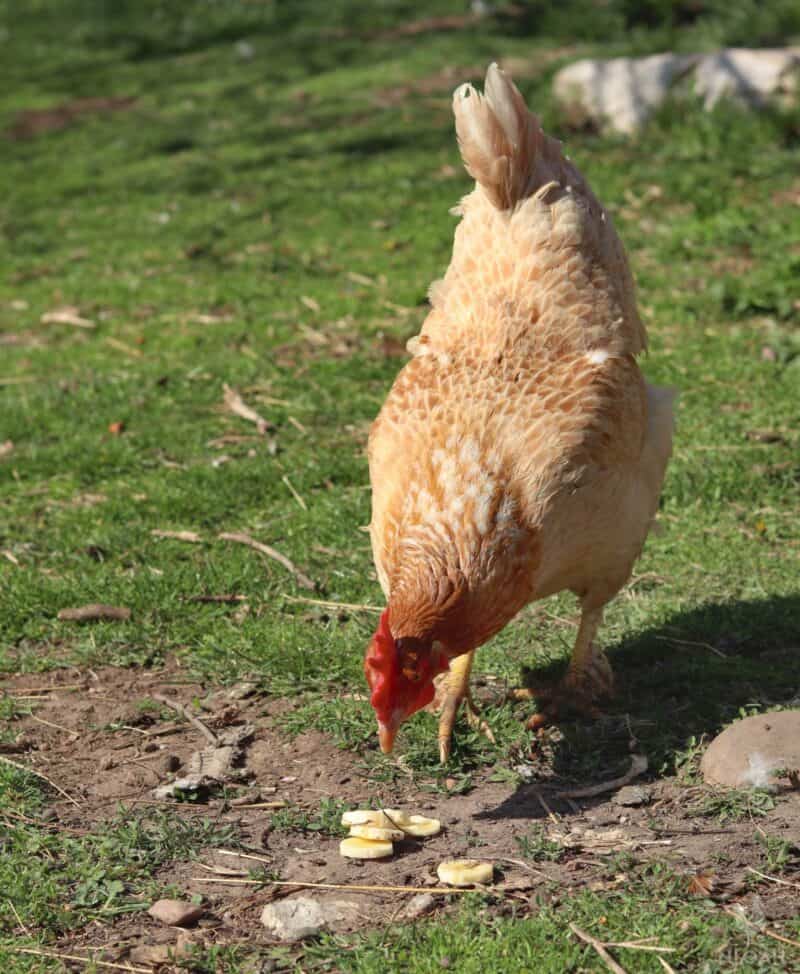
Then at some point, I found a list that tells you everything that is safe to feed your chickens, and what you should never give them.
I was glad to learn that our flock could eat almost anything we had to throw at them! Here’s what the experts recommend…
Table of Contents:
Why a Balanced Diet is Important For Your Chickens
If you’re going to raise chickens, the most important aspect of day-to-day care is feeding them the proper diet. Get it right, and you’ll be rewarded with a happy flock of hens who lay tons of eggs for you!
Fail to do it correctly, though, and your chickens will not only fail to be productive in their egg laying, but they may also succumb to a variety of health problems, too.
Luckily, feeding chickens is pretty straightforward – though it does depend on their age. For active, egg-laying birds, you’ll want to start with a basic layer feed (this can be formulated as a mash, crumble, or pellet).
For adult chickens, a pellet is usually recommended as it occurs in a more solid form and will be easier for them to eat without creating a ton of waste.
Mash and crumble are both fine, too, but they can be a bit messy. These are more easily digested by young chicks, though.
The pellet, mash, or crumble, regardless of the form you choose, should be specifically formulated and adjusted to meet the needs of your birds in all stages of their lives, from chick to adulthood. If you are raising laying chickens, you’ll need a different feed than if you are raising meat birds, too – so that’s something else to keep in mind.
Besides commercial feed, you’ll also want to feed your chickens some treats from time to time! Not only can throwing in a few treats cut down on the amount you have to spend at the feed store (as long as you are feeding treats you already have lying around, like table scraps), but it can supplement their diet with valuable nutrients even if when aren’t able to free range.
Ideally, your feed should be high in protein (the percentage varies depending on the age of your chickens, with baby chickens needing more protein than adult birds).
Free-range chickens rarely overeat, but they might gorge themselves on commercial feed (though this, too, is rare). Just make sure you don’t leave feed out overnight, as this can attract pests.
The exact amount your chickens need to be fed will vary depending on a multitude of factors. How many birds are you raising? What breed are they? Are they egg layers or meat producers? What time of year is it, and are your chickens free-ranging?
As a very general rule of thumb, most chickens need about a pound and a half of chicken feed each week. This is very much a ballpark figure, though, so make sure you adjust accordingly depending on the needs of your unique flock.
You can feed your chickens once a day or more or less often, depending on your needs. Invest in a high-capacity feeder, and you may find that you need to add food only once a week or so.
If you have lots of chickens, it may be worth your time to invest in multiple feeders even if you have a high-capacity feeder. That way, more dominant chickens won’t bully more submissive ones away from the food supply.
Pay close attention to the diet of your chickens. If you notice any change in their eating habits or health, there could be something off with the feed.
Some signs that the diet needs to be adjusted are pretty obvious. For example, you might notice that your chickens stop laying as many eggs. Sometimes, this drop in egg production has to do with the time of year. Chickens naturally lay fewer eggs during the colder months.
However, if that’s not the case, check the feed. The same goes for if your eggs are looking small or abnormal in any way.
Finally, if your chickens seem to be acting differently toward each other – perhaps they are more lethargic, or they are experiencing general unrest or unwanted behaviors like feather picking – it might be time to reevaluate what you are feeding your birds.
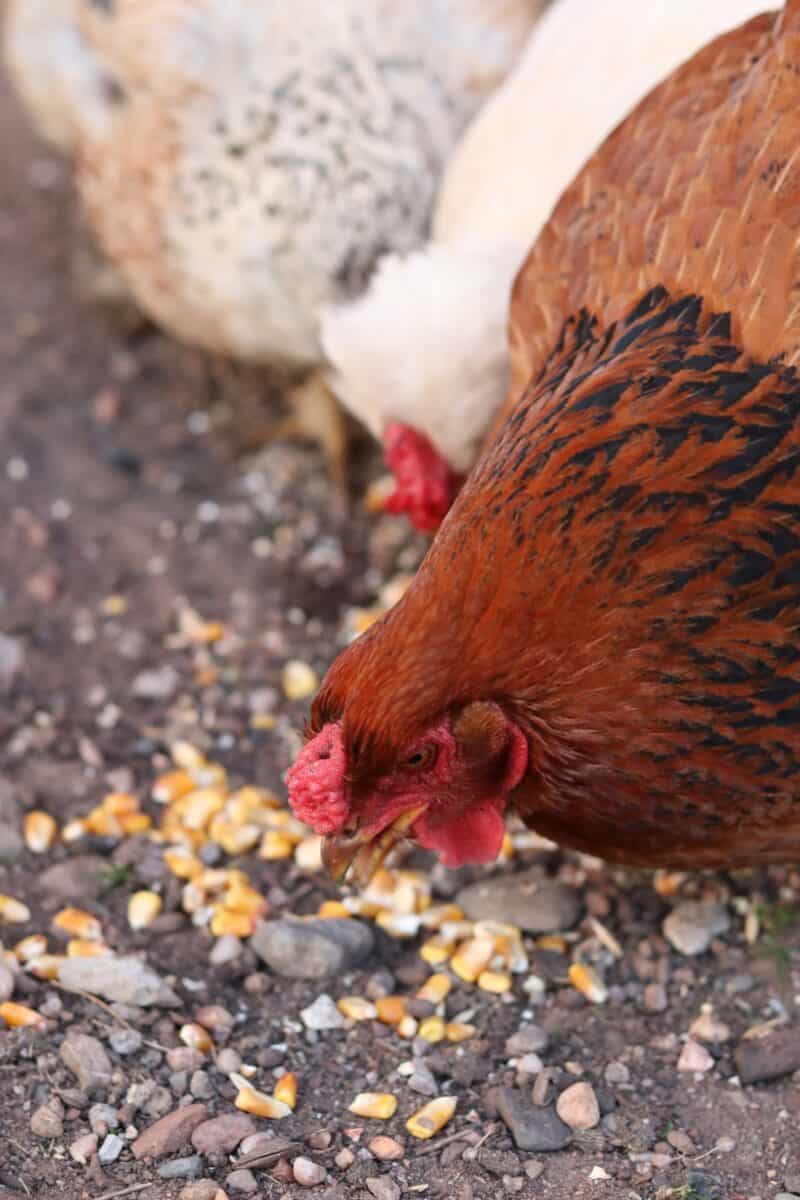
A Balanced Chicken Diet
While the right balance of nutrients for your chickens will depend based on the many factors I listed above, you’ll want to make sure your chickens are getting at least 90% of their nutrients from their chicken feed. Read the labels!
A good feed will have protein, usually a plant-based protein, which is necessary for growth and energy. It will also have carbohydrates for energy along with certain vitamins and minerals. Chicken feed should also contain enzymes and fats which help your chickens absorb vitamins and digest their food properly.
Don’t Forget the Water
Water is just as important as feed – in some cases, even more so. While your chickens may be able to find the food that they need while foraging around the run, they are going to have a harder time finding water if you don’t supply it to them.
Make sure your chickens have access to fresh, clean water at all times. Buy a drinker designed specifically for chickens to use and never let your birds run out.
Although this is especially important in hot weather, it’s equally important in the cold.
Remember that water in the waterers can and will freeze, so you may want to invest in a heated waterer – otherwise, you’re going ot need to break up the ice each morning.
Best Commercial Chicken Feeds
Once you start looking around, you’ll find that there are thousands of chicken feeds you can choose from. There’s no single best chicken feed for every flock.
However, you may want to consider one of the following options. Each offers the right combination of nutrients for chickens at various stages of life and production.
However, some are organic (which may or may not be important to you) while others have unique special features that may be more attractive to you instead. This list is not, of course, exclusive – as long as you find a chicken feed in your budget that has all the nutrients your chickens need, you will be good to go.
- Manna Pro Chick Starter
- Prairie’s Choice Non-GMO Backyard Chicken Feed
- Healthy Harvest 1 Piece 17-Percent Layer Pellets For Poultry
- Kaytee Chicken Supplements Scratch Grain
- Kaytee Laying Feed
- Nutrena Country Feeds Layer Pellets
Affordable Chicken Treats
While the cornerstone of your chickens’ diets should be one of the commercial feeds mentioned above, there is also nothing wrong with giving your chickens some treats from time to time.
After all, treats add a great deal of nutrients to your flock’ diet. It’s also fun to hand-feed your birds and watch them play!
Some of the best options include those that are high in protein and vitamins, like worms, pumpkins, apples, broccoli, and warm oatmeal (especially during the winter months). I’ll give you some more ideas for chicken treats below.
In general, you can feed your chickens just about anything in moderation.
Steer clear from anything bad for you, as a human (like alcohol, sweets, and heavily processed foods) along with toxic foods like rhubarb and avocado. There are a few other foods that should be avoided, too.
You can buy store-bought chicken treats, like freeze-dried mealworms and maggots, but these really aren’t necessary. Your chickens will love the homemade versions of treats just as much!
One word of caution though – when you feed your chickens treats, make sure you feed them off the ground. Do not put the treats on the ground in the coop, as this can lead to the spread of disease and parasitic infections.
Instead, use a dedicated “treat” feeder or hang the treats from the ceiling of the coop.
In addition, don’t overfeed treats – your chickens will always eat these before they eat their regular feed. While that’s perfectly fine for some treats, others won’t have all the nutrients that your chickens need to thrive. They will have some nutritional deficits if they constantly ignore the feeder for the fresh treats you are offering.
Unless it’s bitterly cold in the winter, you should try not to feed your chickens treats any more often than once a day. Do this in the evenings- it will get them ready for bed.
University of Georgia has this to say about treats:
Table scraps—stale bread, leafy vegetables and peelings—can also provide variety and decrease overall feed costs, but limit these treats to what the birds can devour within 10 to 20 min. If you overfeed them on scraps, they may not eat a balanced diet. Scraps must be fresh. Never use any type of spoiled feedstuff.
Management Guide for the Backyard Flock
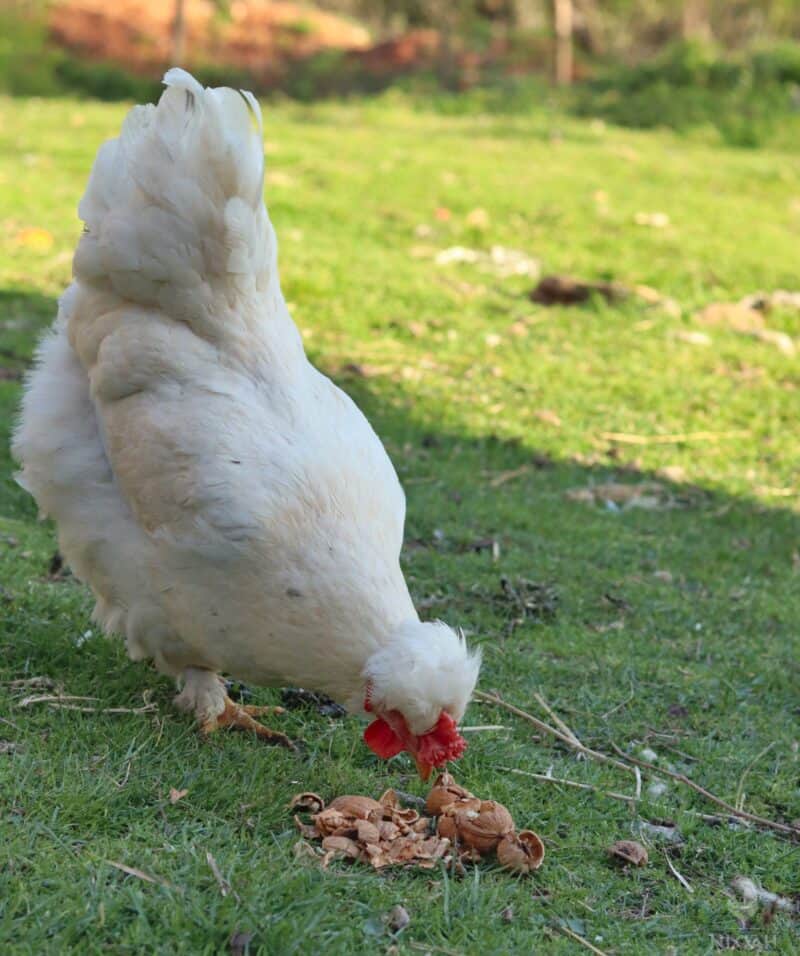
Safe Foods For Chickens:
- ✅ Almonds
- ✅ Apples
- ✅ Artichokes
- ✅ Peeled Bananas
- ✅ Asparagus
- ✅ Herbs, such as basil, nettles, comfrey, chickweed, and cilantro (basil, in particular) boost the immune system)
- ✅ Cooked Beans (though I read this can make the eggs taste funny.)
- ✅ Beets and beet greens
- ✅ Juniper Berries
- ✅ Bread (feed bread and other starches in moderation, as they have little nutritional value)
- ✅ Broccoli
- ✅ Cauliflower
- ✅ Cabbage
- ✅ Brussel Sprouts
- ✅ Carrots
- ✅ Kiwi
- ✅ Strawberries
- ✅ Quinoa
- ✅ Lemons (in moderation, they’re good for them but they probably won’t eat them)
- ✅ Cereal (not a sugary kind)
- ✅ Cheese (including cottage cheese, not too much though)
- ✅ Cooked meat, including chicken
- ✅ Corn
- ✅ Corn husks
- ✅ Cucumbers
- ✅ Cooked Eggs
- ✅ Eggplant (just not the plant itself – only the fruit)
- ✅ Fish/Seafood
- ✅ Fruit
- ✅ Grains
- ✅ Grapes
- ✅ Cooked Grits
- ✅ Lettuce and other leafy greens
- ✅ Melon
- ✅ Oatmeal (raw or cooked)
- ✅ Cooked Pasta (in moderation – too many carbs)
- ✅ Peas
- ✅ Peppers
- ✅ Pomegranates
- ✅ Popped Popcorn (no butter or salt)
- ✅ Cooked Potatoes (no green skins!)
- ✅ Pumpkins
- ✅ Pumpkin seeds
- ✅ Fodder
- ✅ Winter and summer squash (cut them in half and let the chickens eat the seeds and flesh)
- ✅ Raisins
- ✅ Sprouted lentils and grains
- ✅ Cooked Rice
- ✅ Duckweed (exceptionally high in protein and easy to grow)
- ✅ Sunflower Seeds
- ✅ Oregano
- ✅ Black soldier fly larvae or Japanese beetles (you can easily make traps and bags to contain these and then feed them to your birds)
- ✅ Dandelion
- ✅ Purslane
- ✅ Fermented feed
- ✅ Cantaloupe seeds
- ✅ (Ripe)Tomato fruits
- ✅ Cranberries
- ✅ Elderberries
- ✅ Turnips
- ✅ Watermelon
- ✅ Yogurt (plain is best)
- ✅ Milk (sour or curdled is fine)
- ✅ Sweet potatoes
- ✅ Cornbread
- ✅ Nuts (in moderation)
- ✅ Pet or livestock feed, such as dog food, cat, or goat feed (wet cat food, in particular) – can be fed as occasional treats and in small amounts
- ✅ Bone meal
- ✅ Grass clippings (do not use clippings when pesticides or fertilizers where applied)
- ✅ Cover crops (such as alfalfa, oats, sorghum, or buckwheat)
- ✅ Butchering scraps (ideally cooked)
- ✅ Flowers (make sure they haven’t been treated with pesticides – good options include pansies, nasturtiums, marigolds, zinnias, etc)
- ✅ Mealworms
- ✅ Red winter wheat
- ✅ Zucchini
- ✅ Hay
- ✅ Straw
- ✅ Grape Vines
- ✅ Dogwood Berries
- ✅ Blueberries
- ✅ Celery
- ✅ Dates
- ✅ Green Beans
- ✅ Figs
- ✅ Moss
- ✅ Swiss Chard
- ✅ Clover
- ✅ Radish
- ✅ Napier Grass
- ✅ Magnolia leaves
- ✅ Quince
- ✅ Peanut Butter
- ✅ Raspberries
- ✅ Mint
- ✅ Lambsquarters (as an occasional forage due to high oxalate content)
- ✅ Kumquat
- ✅ Jackfruit
- ✅ Peach
- ✅ Pineapple
- ✅ Kidney Beans
- ✅ Arugula
- ✅ Mango
- ✅ Honey
- ✅ Poison Ivy (Toxicodendron radicans)
- ✅ Parsley
- ✅ Rosemary
- ✅ Limes
- ✅ Jalapenos
- ✅ Raw potato (non-green, peeled, a.k.a the flesh)
- ✅ Dill
- ✅ Ginger
- ✅ Lemon Balm
- ✅ Sage
- ✅ Kale
- ✅ Fennel
- ✅ Catnip
- ✅ Knotweed
- ✅ Lavender
- ✅ Roses
- ✅ Daisies
- ✅ Queen Anne’s Lace (make absolutely sure you don’t mistaken it for poison hemlock!)
- ✅ Kelp
- ✅ Lilacs
Can Chickens Eat Dandelion?
Yes, chickens can eat dandelions.
Dandelions are very easily recognizable and are a common weed found throughout most parts of the world. They are rich in calcium, iron, potassium, magnesium, phosphorous, and zinc.
They also have large amounts of fiber and vitamins (A, B, C, E, and K). So, next time you find dandelions in your garden don’t just throw them away; rather give them to your birds – they’ll appreciate it!
Can Chickens Eat Avocado flesh?
Every part of the avocado is toxic for chickens, including the flesh. While the flesh has small amounts of persin, a fungicidal toxin, there is no established safety limit for it. Best to avoid it and focus on the dozens of other safe treats.
Pears
Chickens can eat pears safely as a periodic treat. Pears are a good source of energy and have some vitamins and minerals that will benefit them, but they’re too sugary to be a regular part of their diet. Pear seeds should not be fed to chickens.
A word of warning, though: pears, like every fruit these days, are heavily treated with pesticides at all phases of growth and if you get them from the grocery store, those residues will be consumed by your chickens even if you peel them and wash them.
These chemicals are toxic and especially dangerous for birds, so I strongly recommend that, if you don’t grow the pears yourself, you get them from a trusted provider that doesn’t use pesticides…
Baby chicks can have them, too, but only once they’re old enough to start eating other foods safely, typically around 5 or 6 weeks old.
A few small nibbles of pear are unlikely to cause problems, but watch them closely for any signs of loose stools or diarrhea.
Can Chickens Eat Grains?
Yes, chickens can eat grains. Adding grains to your birds’ diet has a variety of benefits including helping to promote gizzard health and prevent digestive problems.
Can Chickens Eat Sorghum?
Yes, chickens can eat sorghum.
Sorghum has around the same amount of nutritional value as corn (though they aren’t identical). Its high protein content isn’t as digestible as other grains, but sorghum has been observed to reduce cardiovascular disease and the mortality rate that comes with it. It also reduces cholesterol levels and improves digestion.
Can Chickens Eat Seedless Grapes?
Yes, chickens can eat seedless grapes.
There are several health benefits that chickens get from grapes. For one thing, it makes digesting fresh food easier, and grapes are high in vitamins and minerals that help to promote healthy weight gain and bone development, and control diabetes in your birds.
They also ensure a healthy gut and strong immune system and contribute to making the eggs your hens lay much healthier. Keeping all that in mind, you should only feed your birds grapes in moderation.
Grapes are sweet and chickens love them, but they can eat too much. Overeating grapes can cause bloating and/or digestive issues.
There’s also a potential choking hazard where they may try to eat the grapes whole. Your birds will also become fussy eaters creating a pretty serious health risk. They don’t get all the nutrition they need to stay healthy because all they want to eat are grapes.
Can Chickens Eat Cooked Grits?
Yes, chickens can eat cooked grits.
Chickens can eat both cooked and uncooked grits, although they may prefer the texture of the cooked grits over the uncooked ones.
Provided you keep your flock’s diet balanced, you can feed them grits often, just make sure that you’re giving them unseasoned grits (stuff without unhealthy additives i.e. syrup).
Can Chickens Eat Winter and Summer squash?
Yes, chickens can eat winter and summer squash.
Zucchini or squash plants are highly nutritious, they’re packed with vitamins, minerals, fiber, and antioxidants. They’re also 95% water which is great for digestion and, in summer, hydration. You should feed your birds squash in moderation or they’ll miss out on other important nutrients.
Can Chickens Eat Sprouted lentils and grains?
Yes, chickens can eat sprouted lentils and grains.
Sprouted lentils and grains are a great way for your birds to get fresh greens into their diets. This is especially true if your birds aren’t free-ranging.
Can Chickens Eat Purslane?
Yes, chickens can eat purslane.
Also called duckweed, common purslane has a high level of Omega-3 fatty acids and can be added to chicken feed to increase egg production and egg weight. There are also high levels of oxalic acids which can cause serious problems in large amounts in certain parts of the plant so don’t give your birds too much.
Can Chickens Drink Milk?
Yes, chickens can have milk. Milk can be a good protein supplements and is particularly for young birds, laying hens, and fattening (meat) birds. It supplies the vitamin riboflavin which improves hatching quality. This one isn’t a standard recommendation for chickens’ diets, but it is safe.
Can Chickens Eat Cat Food?
Yes, chickens can eat cat food.
Cat food is safe for chickens – it’s also fine to feed as an occasional treat. Cats need a lot more protein in their diets and so their food is aimed at giving them that protein. The high protein content can be great for short-term, occasional use as a treat during molting season but it won’t be very good or healthy in the long run…
Can Chickens Eat Herbs?
Nettles
Yes, chickens can eat nettles.
Nettles have been used for centuries for a variety of things including animal food. Their strong antioxidants promote general health for your chickens. Blood and blood clotting were also improved.
Comfrey
Yes, chickens can eat comfrey.
Comfrey is a low-fiber green that’s high in protein making it ideal for your chickens. It’s high in vitamins A and B12 which contribute to nicer, healthier eggs.
Can Chickens Eat Watermelon?
Chickens love watermelon. It’s 90% water which aids in temperature regulation (cooling them down on a hot day) and hydration. Watermelon also helps to improve their moods and, courtesy of its vitamin and fiber content, aids in digestion.
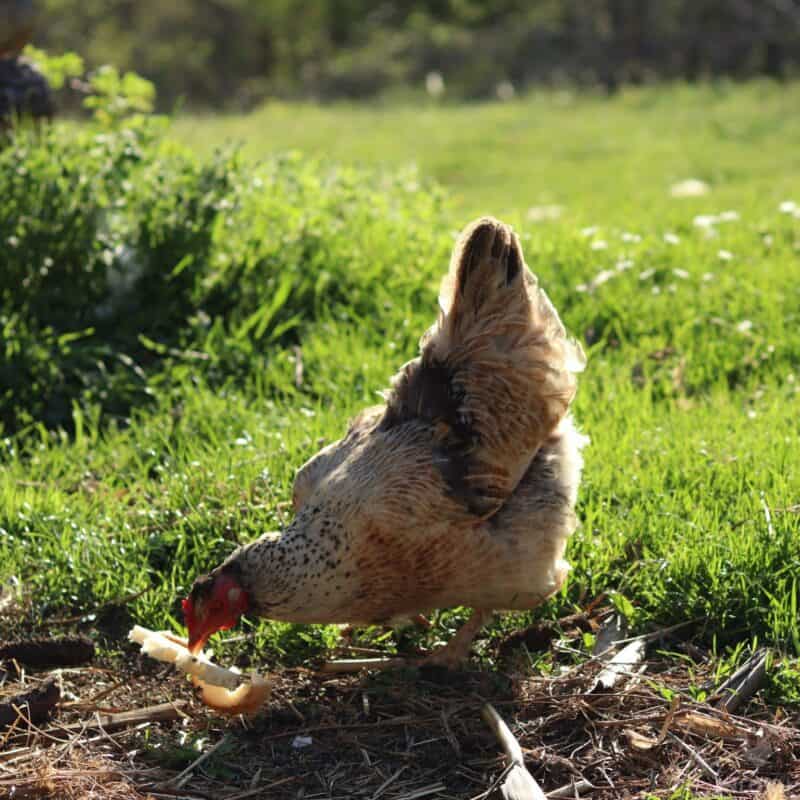
What You Should Not Feed Your Chickens
- ❌ Raw potato peel (while these aren’t necessarily toxic raw or cooked, any green parts of potatoes can be dangerous to chickens, just as they are to humans)
- ❌Green tomatoes
- ❌ Dried or undercooked beans
- ❌ Avocado skin or pit
- ❌ Raw eggs (they are safe to eat, but eating them regularly encourages them to eat their own eggs)
- ❌ Sugary stuff
- ❌ Butter (too fatty)
- ❌ Really salty stuff
- ❌ Rotten or moldy food
- ❌ Chocolate or candy
- ❌ Anything containing caffeine
- ❌ Leaves from tomato or eggplant leaves (these are part of the nightshade family, and while the fruits of these plants are fine, unripened fruits or the plant itself should be avoided)
- ❌ Seeds or pits from fruits like apples, apricots, peaches, and pears (these contain cyanide)
- ❌ Rhubarb
- ❌ Raw meat (due to the high risks of pathogen contamination and spoilage)
- ❌ Ferns
- ❌ Onions
- ❌ Uncooked Rice
- ❌ Spinach (fine in moderation, but only as an occasional treat as the oxalic acid in it isn’t good for your girls)
- ❌ Maggots (only commercial feeder maggots)
- ❌ French Fries
- ❌ Thorns
- ❌ Lantana
- ❌ Pickles
- ❌ Ice Cream
- ❌ Honeysuckle
- ❌ Maple Leaves (some species are safe, though)
- ❌ Irises
- ❌ Leeks
- ❌ Hemlock
- ❌ Avocado flesh
- ❌ Acorns
- ❌ Eucalyptus
- ❌ Garlic
- ❌ Jasmine
- ❌ Holly
- ❌ Foxtail
Saving Money on Chicken Feed
Consider growing your own cover crops or extra perennial plants within your chickens’ reach so that they can graze freely on low-maintenance foods.
To save money, you might also consider checking with local farmers’ markets and grocery stores to see if they have any produce or other chicken-friendly foods to throw away.
Chickens will also enjoy pecking through your compost pile if given the chance, as this gives them access to scraps and nutrient-dense bugs while also helping to aerate your pile. But if the pile has rotten food or various contaminated materials, they can easily get sick.
You can string up larger pieces of food (like a head of cabbage) for the birds to peck at for fun, or you can put them in a wire container that they can peck the food through.
Alternatively, you can also throw scraps into a large tray or bowl, or container of some sort. Whatever you do, it’s best to try to keep the food off of the ground to keep it out of manure.
You might also consider building a grazing box. If you have limited space and aren’t able to allow your chickens to free range, these can be a great way to feed chickens confined in runs.
Grazing boxes allow chickens to eat freely or rotationally even while they are protected from predators.
Feeding your chickens table scraps is a great way to save a little money on feed, and your chickens will go crazy for your leftovers!
In addition, providing your chickens with scraps and leftovers is a great way to add variety to their diets, especially during a cold winter when free-range nutrients are scarce.
In general, chickens can and will avoid poisonous foods, but the cases when they don’t and get themselves sick are plenty and well documented. Never assume they know what’s best for them and keep an eye out on the plants that they encounter while free-ranging, and on your compost pile to make sure it’s free of rotten or unsafe foods.

Your Printable PDF Checklist
In case you want these two lists in printed format, you can get this PDF and print it out on your printer.

Get your gift and learn things like:
- how to make this really quick pest spray
- how to prevent egg waste
- two cheap automation devices that will make your life easier

A city girl learning to homestead on an acre of land in the country. Wife and homeschooling mother of four. Enjoying life, and everything that has to do with self sufficient living.
I cook oats and mix with their food when it cold i add herbs to mix and I believe it slowed down how often. I fill they containers i am hoping i am doing this correct
This is a great list, but I have read in many places that chickens can’t eat Tomatoes or Potatoes but you say they can on this list? I know the plants are bad but I thought the fruit was too.
They sure can, unless the tomato is still green. This was mentioned lower in the article but I’ll be sure to amend it to specify the tomato needs to be ripe.
Can chickens eat dates? I’ve searched for this information but can’t find the answer! Many thanks
From everything I have read they can eat them but the dates are high in sugar so should be given in small quantities.
Please can you do ducks or guineas can eat PLEASE
Is it safe to feed snap peas in the pod? I read some where that sweet peas are toxic. Just want to make sure I don’t feed anything that could harm them.
I cook my potato skins in the microwave for 20 minutes,
then let it cool. The chickens love them.
After I realised that we couldn’t give the chickens raw potato skin I said to mum “hey it says that they can’t eat raw potato skins” because my dad gave them some raw potato skin so now that we know, we won’t do it again
Thanks for showing the list of things they can eat and what they can’t eat. I’ve got 5 chickens mine is called Annabelle.
That’s great i am watching 14 chicken for some of my friends and didn’t know whay to feed them this help so much although they loved beans and the eggs tasted fine to be
Dad usually love chickens and I’m proud to know most important things can be necessary for our chickens own good on what things they can eat and can’t eat. Thanks and I really enjoying reading this. We from Kiribati.
That’s great
can chickens eat uncooked quick cooking grits?
Anonymous, I don’t see why not. It’s a grain. 🙂
Our chicks eat quick grits
My chickens love beans. I have never noticed that it changes the taste in eggs. They have a great game of chicken football when they get them. Quite entertaining!
Ok Kendra, after reading your post, I thought, ooohhhhh a chicken eating chicken? Canabalism!! Well, I made roasted chicken tonight for dinner and after taking most of the extra meat off for another meal, giving the skins and innards to the outside dog for a treat, I still had a little bit of meat left in areas that I didnt feel I would eat (I am very picky about how the meat looks…strange, I know. I picked off that meat and stuck the rest of the carcass in a pot to make stock. I gave a small amount to the outside cat and to the inside dog and thought about the chickens. Well, let me tell you, they LOVED it. They actually fought for it. I put in a piece and two fought after it and one got it. I put in another piece and the first abandoned her piece (which allowed the second to grab it)to get this new piece. A third hen came out to the run and saw the commotion and tried to get some of the other two hen’s treats and got pecked. I threw in a third piece and the three fought and the first one won again. A fourth piece got thrown in and the third hen wasnt about to lose this time and grabbed it from one of the other’s beak and ran off with it. The fourth hen stayed in the coop and missed out on the yummy treat. It was great entertainment for about five minutes!
Jessica-
That’s too funny!!
my chickens wont eat cooked
chicken go figure
Morally superior chickens, clearly.