
Corn is the most ubiquitous grain eaten in the United States. Corn, or one of its derivative products, is in literally everything you can think of. For those of us living in farm country, there are literal oceans of the stuff growing everywhere.
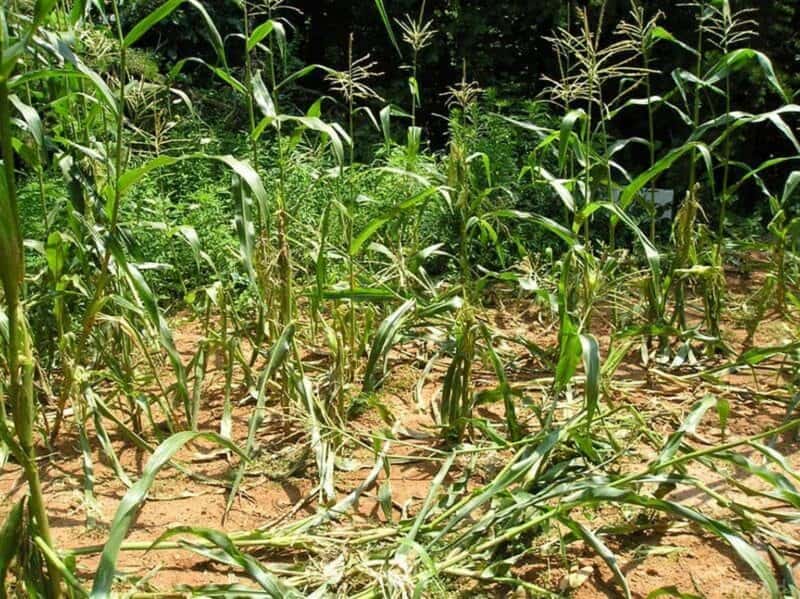
It might seem strange to grow your own corn in your garden or on the homestead because it’s so ubiquitous, but it can be a lot of fun and super delicious, of course!
Corn is really thirsty and grows very tall, throwing intense shade on plants below it. This can make it tricky to manage, but if you choose the right companion , your corn and the rest of your garden can thrive together!
I’ll tell you about 12 of the best companions for corn just below…
Green Beans
Beans are a classic companion plant for corn, comprising one of the so-called Three Sisters of Native American folklore: corn, beans, and squash.
Beans work wonderfully alongside corn because tall corn plants basically act as a trellis for the beans, and beans in return are nitrogen-fixing, putting nitrogen back in the soil for the corn to make use of.
Green beans also love sunshine and lots of water, just like corn, meaning this duo is painless to manage.
In turn, corn will grow taller and stronger and develop more foliage so they can keep growing. Once you harvest the beans at the end of the season, their decomposing roots will continue to release nitrogen for the following planting.
Peas
Peas are just another type of legume, or bean, and so have pretty much all the same advantages that green beans do as a companion plant for corn. Corn serves as a trellis so the peas can grow, and the peas will fix nitrogen in the soil that the corn can make use of.
Peas love sun and lots of water, and the great thing about peas is that they dry out quickly even if they get a bit too much water.
Considering that many corn varieties growing in ideal conditions may need as much as an inch or even a little more water a week, you won’t have to worry about drowning your peas.
Winter Squash
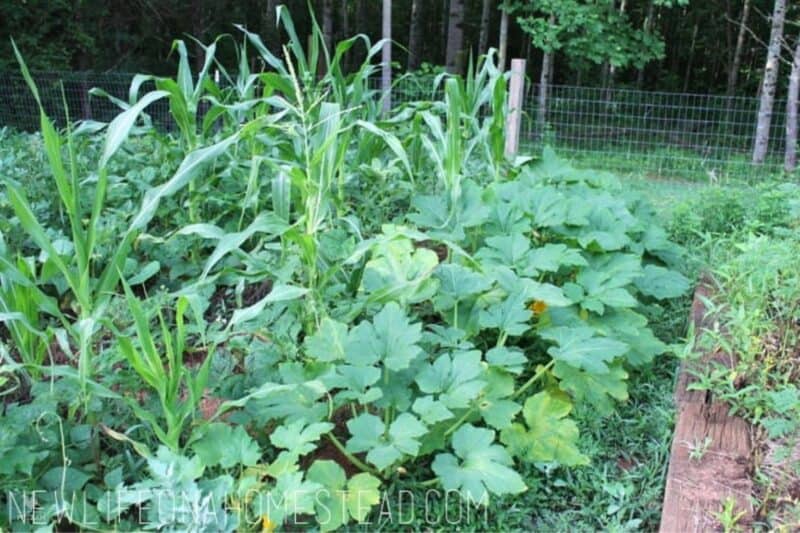
Squash is the third sister in the Three Sisters, and as a ground-covering plant, acts as a weed suppressant, erosion control, and temperature regulator for soil and the roots of corn.
Any winter squash variety that you want to use will work wonderfully, including favorites like butternut, acorn, and spaghetti squash.
And remember, you’ll need to plant winter squash at the same time as your corn because it has a really long growth cycle: it’s harvested in the winter (or late fall), not planted!
Melons
Melons are a really inspired choice for growing next to corn…
The broad fruit and leaves of melons function as an effective ground cover that will help the soil stay moist and cool, benefiting corn, and also suppress weeds and other unwanted growth which might interfere with its roots.
Plus, all kinds of melons are extremely thirsty and need tons of water, just like your corn, so you can water them to your heart’s content and not worry about harming them either.
The only trick with growing melons around your corn is to keep a close eye on the vines and prevent them from climbing up the corn and establishing themselves; they are simply too heavy to be supported by corn stalks alone.
Pumpkins
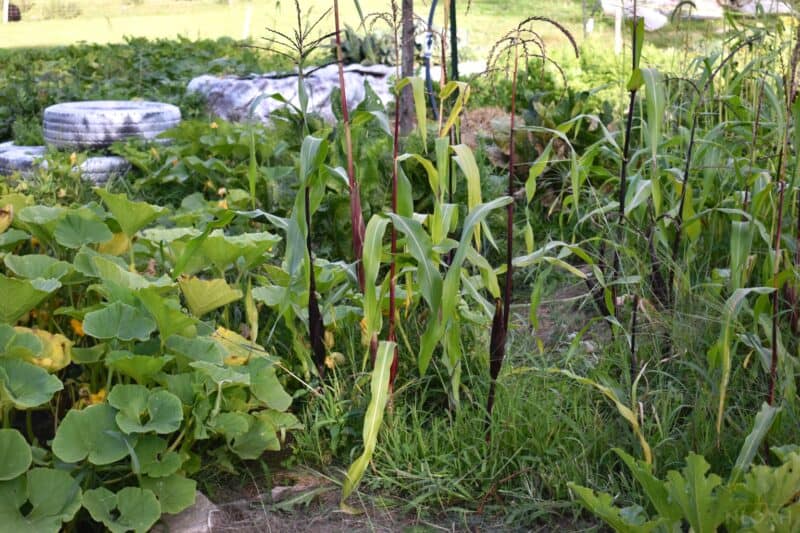
Another huge ground-covering veggie, pumpkins are technically one of the Three Sisters, and can be used in place of squash if you prefer.
Pumpkins work so well for maintaining soil moisture and temperature levels and also protecting corn roots. These are hungry plants that will need regular fertilization since both it and corn are big feeders with intensive nutritional requirements.
The only other thing to watch out for is the vining tendencies of pumpkins. They’ll start to grow up your corn stalks and, as you might imagine, only the tiniest varieties can be supported.
Keep those vines off of the stalks and keep the pumpkins growing on the ground where they belong.
Potatoes
Potatoes and corn belong together. And not just in recipes!
Potatoes are one of the best ways to maximize the efficient use of space in your garden since they will easily grow all around and between your rows of corn, and benefit hugely from the summertime shade.
However, need to plan this mutually beneficial arrangement carefully because potatoes still need some sun. In the northern hemisphere, a north-south arrangement with rows of corn running east to west south of the potatoes should work out perfectly.
Lettuce
Lettuce is one of the best companion plantings for corn because it’s a garden staple that is extremely easy to manage compared to other low-growing veggies which will be shaded out by those tall corn stalks.
You can harvest lettuce as needed once it is established, and it will benefit greatly from the shade corn provides it.
Don’t worry about planting it too close: most lettuce varieties have very shallow roots that won’t bother your corn at all. If the two plants do start to get a little too close for comfort, remember that you can harvest lettuce anytime and it will be edible and tasty.
Spinach
Spinach is much like lettuce when planted as a corn companion. Corn can actually extend the growing season of spinach a little bit by protecting it from intense late spring and early summer sun.
You can plant your spinach between corn plants or just alternate rows of each according to your preferences.
Spinach absolutely loves water, so waiting until your spinach is established prior to planting your corn means that competition for water won’t be quite as fierce.
Cucumbers
Cucumbers are a multi-purpose companion for your corn plants.
Depending on the variety and your approach, you can plant cucumbers and train them to behave as a ground cover to provide shade and help keep a little more moisture in the soil, or allow them to climb up the corn stalk as a trellis, just like you would with beans.
However, heavier cucumber plants might require additional trellising from you to prevent them both from toppling over.
Cucumber plants, however you’re growing them, also benefit from the shade that corn can provide them, because they don’t do well when they’re under the sun all the time.
Additionally, blooming cukes attract lots of beneficial pollinators like butterflies and bees, meaning all of your other plants will benefit from their visits.
Dill
Dill is a fragrant, delicate, and delicious kitchen herb that adds a bright and bracing grassy taste to many dishes. If you plan on making your own pickles with your cucumbers, this is another great option to plant alongside both it and the corn.
Dill is attractive to various beneficial garden insects and pollinators. Several species of parasitic wasps that wipe out caterpillars, beetles, and various grubs and insect larvae that feast on corn will come for the dill but stay for the buffet of insects.
Dill is also known to attract ladybugs which, as you already know, massacre aphids.
Just make sure you don’t plant the dill too close to the corn: its long roots can cause problems as the two plants can get tangled up and start to compete. One-foot spacing or planting dill all around the perimeter of your corn growth is the best approach.
Mint
Mint can be one of the best plants for keeping pests out of your garden and away from your corn, and not just insects! The strong menthol compounds present in mint are repulsive to many mammals, too.
But mint requires skill and wisdom to use as a companion for corn…
Few things in your garden will grow quicker and spread faster than mint, so you only want to plant it in the ground and let it carpet around mature corn plants. It can easily suppress young sprouts and seedlings…
A smart move is to plant it all around the perimeter where you are growing your corn and then keep it trimmed back so it doesn’t get too invasive.
Alternately, place a few strategic containers around to keep it contained and keep pests at bay.
Thyme
Another popular kitchen herb, thyme is a special-purpose companion for corn. Thyme loves dry, well-drained soil, and that means it will never get along if actually planted next to corn. You’ll drown it trying to keep your corn watered.
But, you can stick it in containers or in nearby planting boxes or raised beds to protect your corn from the hated corn earworm, which will devastate your crop.
A compound that thyme releases repels larvae and adults easily. If you have extra room at the end of your garden where you’re growing the corn, you can try putting thyme in the ground if you are sure that you can control the amount of water it receives.

Get your gift and learn things like:
- how to make this really quick pest spray
- how to prevent egg waste
- two cheap automation devices that will make your life easier
I’ve taken over this blog from Kendra Lynne around 2018, and turned it into one of the best an most comprehensive homesteading website out there. I was raised partly in the countryside living a very frugal life ever since I can remember.