
Whether you have a bountiful garden, productive raised beds, or beautiful landscaping, you’re going to have to weed them. No matter how hard you try, weeds are just a fact of life and an annoying chore.
But what is a weed? It just means an unwanted plant, right? Yes, that’s what it means, but that’s not all that weeds are…
Many are edible, nutritious, and absolutely delicious in their own right! They can be used as seasonings, side dishes, or greens in a tasty salad.
And even better news: many of the most common weeds in North America fall into this category! Knowing that, you might look forward to weeding just a little bit!
Keep reading, and I’ll tell you about 24 edible weeds that might be in your garden right now…
A Quick Note on Safety
Before we get to the list, something to keep in mind is that even though all of these weeds are safely edible, some people might show sensitivity to them or even allergies, as with any other food.
Sample them carefully and consult your doctor if you are unsure about any of them. Or just don’t eat them if you are worried or have a history of sensitivity with lots of other plants, and especially related ones.
Likewise, even though all of these plants are fully safe for people to eat, the same cannot be said for animals, particularly dogs and cats. Don’t let your animals eat them unless you know for sure that they are safe for them.
Garlic Mustard (Alliaria petiolata)
You know everything you need to about the flavor of garlic mustard from the name: it has the bracing, airy taste of mustard with a hint of garlic in it.
A common weed that is persistent, pervasive, and found all over the North American continent, it makes a great salad veggie, topping for sandwiches, addition to soups, or a boiled green.
Note that you should eat it sparingly when raw because the plant contains precursors to cyanide that can build up when it’s digested.
Cooking the plant greatly reduces these compounds, and otherwise, every part of the plant is safe to eat. I found a bunch of recipes with it here.
Onion Weed (Asphodelus fistulosus)
Onion weed isn’t an onion at all, but it sure smells like one! It tastes like it smells, so if you like onions, you’ll always have a use for this one. And, not for nothing, it sprouts tight knots of pretty, delicate white blooms.
Given a little bit of cultivation and care, I think it’s a worthy addition to a garden generally and a great border plant! If you want to eat it, eat just the leaves. The whole plant is safe, but the rest isn’t very good.
Also, a note on removal: if you break or pluck the plant out of the ground and leave any part of it behind, it will start to regrow and spread vigorously. Gently dig it up in its entirety to eliminate it and stop spreading.
Check out more on this weed plus how to add it to a delicious salad!
Pigweed (Amaranthus spp.)
Pigweed, which is properly referred to as various species of amaranth, has many alternate common and regional names, including the names of other distinct plants we’ve already talked about on our list.
This can make positive identification challenging, and you don’t want to mix it up with dangerous look-alikes.
But assuming you have actual pigweed in front of you, you can harvest it and enjoy its salty, citrusy taste as boiled or steamed greens. The seeds are also edible, nutritious, and tasty.
Think twice before completely eliminating pigweed from your garden because it can help to repel certain insect and mammalian pests, like aphids, squash bugs, deer, and groundhogs.
And if you decide to cook it, here are some tips.
Kudzu (Pueraria montana)
Arguably the single most hated invasive species in North America, and one that’s becoming a true ecological disaster in some areas because it’s taking over entire swaths of forest. Maybe if we got enough people interested in eating kudzu, we could nip the problem in the bud!
Jokes aside, kudzu leaves, roots, and flowers are all edible, and the plant is said to have a taste that is somewhere between beans and snow peas.
Kudzu also has toxic, indigenous look-alikes, so look for broad leaves that grow in groups of three with burgundy flowers to identify.
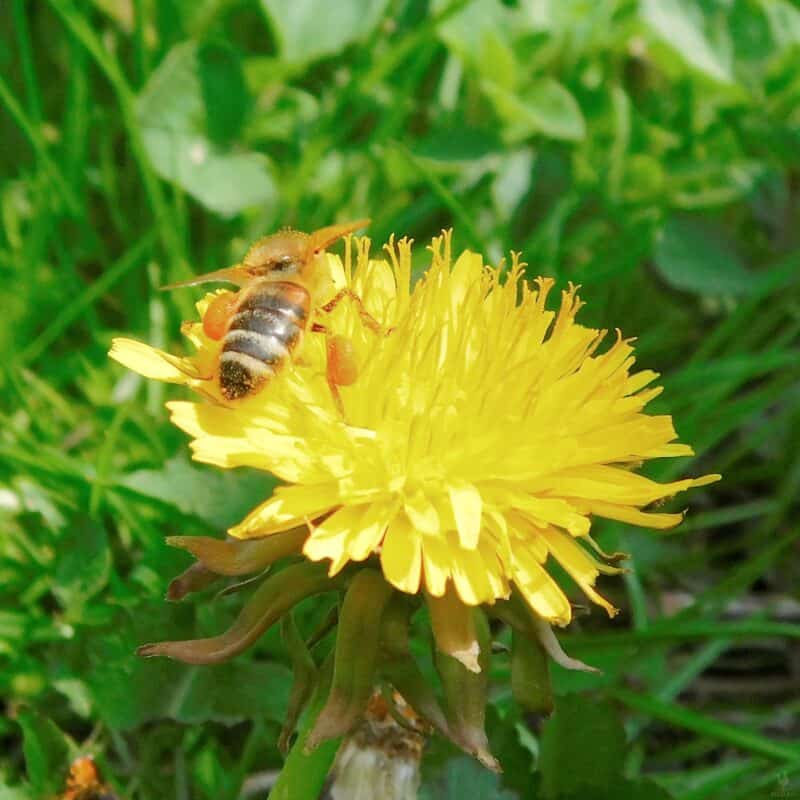
Dandelion (Taraxacum spp.)
I know for most gardeners, this annoying weed is public enemy number one: those cheery yellow blooms are almost mocking in their persistence.
But now you’ve got a good reason to put down that jug of weed killer. Dandelions taste great and are amazingly nutritious, being a great source of many different vitamins and minerals and a versatile veggie in the kitchen.
Different parts of the plant have different flavors, too, with the roots being chicory or coffee-like and the greens having an almost nutty flavor. You can put it into salads, or use it in a bunch of recipes – you can even make wine!
And one word of caution: never harvest dandelions from any place where there’s even a chance that they might have been sprayed with herbicides or other chemicals. They’re one of the very most common targets for them!
Violets (Viola sororia)
What? Violets are weeds? Well, to some folks they are…
Violets are one of the hardiest and most tenacious flowers out there, and that means they can spring up in the middle of your lawn, garden, or anywhere else you don’t want them to be. Love the look or not, they can be annoying!
But happily, they are also edible, versatile, and nutritious. The flowers and leaves make a great inclusion in any salad, and the flowers can also be turned into jelly or preserves.
But the same warning I mentioned with dandelions applies here: these are highly likely to be sprayed with herbicides, so only harvest ones that you know to be safe or from places where there was no chance they were sprayed. Always wash thoroughly in any case!
Yellow Dock (Rumex crispus)
A tall, common weed that is routinely seen growing alongside ditches, culverts, and roadsides, yellow dock can be identified by its dangling clumps of small, lily pad-shaped leaves that have rough, curling edges.
When young, the leaves are edible and have a tart taste that’s similar to lemongrass. They can be eaten raw at this stage, but older plants should be cooked to reduce the levels of oxalic acid they contain.
Note that eating large quantities or eating the plant too regularly can cause significant indigestion and may intensify issues with kidney stones.

Shepherd’s Purse (Capsella bursa-pastoris)
This is another weed that’s despised for its persistence and ubiquity, but it’s also one of the tastiest that you can use in the kitchen.
Both young and old plants are edible, but it tastes a lot better when it’s young, and it often compares favorably with radishes and turnips.
You can easily identify Shepherd’s purse thanks to its hairy leaves and, when it goes to seed, because of its heart-shaped seed pods. Forage carefully: it has toxic look-alikes in some regions, so only harvest if you have a 100% positive ID.
Lamb’s Quarters (Chenopodium album)
I know so many people who consider lamb’s quarters a weed, and that’s a reputation that it just doesn’t deserve. In addition to being nutritious with a unique flavor, it’s also great for the soil in your garden or raised beds.
The leaves can make a great component in a mixed salad, boiled or roasted, added to soups, or diced and used as a topping. Note that they have a distinctly salty flavor, so adjust your recipe accordingly!
Bittercress (Cardamine hirsuta)
Often found near water and on well-irrigated soils, this mustard relative has an annoying, spreading growth habit that can lead it to tangle up and take over all neighboring plants.
Despite the name and the taxonomy, it actually has a crisp, fresh, grassy flavor that goes great with all salads and many other recipes calling for fresh greens. It doesn’t taste bitter at all with the exception of the flowers themselves.
Chickweed (Stellaria media)
Fuzzy, low-growing, and dense, chickweed is easily confused for other kinds of spreading plants and indeed is often easily lost among tangled, mixed growth. You can usually spot it by the bifurcated petals on its delicate blooms.
In regards to eating, it’s surprisingly nutritious and can be used as a garnish or as a side dish, though it has a strongly grassy taste that benefits from cooking. It has been eaten as a spinach substitute in all kinds of regional cuisines throughout history.
Check otu some chickweed recipes here.
Chicory (Cichorium intybus)
Chicory is a surprisingly attractive and tasty plant, with delicate, violet or purple-blue blooms adorning tall stems. Indeed, that leggy appearance is why it is so often removed as a weed.
Nutritionally, it’s a good source of vitamins and minerals, and the roots are used to make coffee substitutes and other drinks. The rest of the plant has a spicy, resinous taste. Stick to eating just the leaves and the roots as the flowers just aren’t good.
Stinging Nettle (Urtica dioica)
One of the most hated weeds out there and one that you won’t soon forget if you have a close encounter with it.
The incredibly fine, needle-like translucent hairs covering the stems of stinging nettle contain a ferociously irritating cocktail of chemicals that will break you out in blisters.
How surprising, then, to find out that not only is the plant edible when cooked but it also tastes a lot like spinach or mustard greens! It is also amazingly healthy. Harvest carefully, brush off the stems, and then cook to make it safe to eat.
Milk Thistle (Silybum marianum)
At first glance, milk thistle looks like the last thing you’d want to try and eat: the buds are covered in a dense forest of sharp spines, and the leaves also have sharp stickers at the ends!
But, with a little preparation or careful selection, it is safely edible and the taste is often compared to spinach or Brussels sprouts.
Simply choose young plants that don’t have any spines, as the stalks, roots, and flowers are all safe and nutritious. For mature plants, prune off all of the spiny bits.
Wood Sorrel (Oxalis spp.)
The large, clover-like leaves of wood sorrel are instantly recognizable and they have a fresh, citrusy taste that can be a wonderful accompaniment to other salad greens.
Although considerably larger than most other types of common clover, you can always tell it apart because its branches grow at a 90° angle to the main stem.
Harvest the plant when young for the best flavor and texture, and eat it in a salad or add it to soups and other dishes.
Pineapple Weed (Matricaria discoidea)
Another weed that is “truth in advertising”, you might say, pineapple weed has the aroma and also the flavor of pineapple. Commonly mistaken for chamomile, you can always tell the two apart by aroma alone.
Pineapple weed leaves are commonly eaten as a vegetable or steeped to make a nutritious herbal tea.
Burdock (Arctium spp.)
If you can prepare burdock properly, you’ll be shocked at the flavor of it: it has that earthy, creamy taste of artichoke, and works wonderfully in dips, soups, and all sorts of other dishes.
But if you’re familiar with the plant, you already know that the preparation is fairly intensive: this is another spiny, spiky plant that can be a choking hazard if you try to eat it as is! If you’re up to the task, harvest the stems, buds, and leaves.
Also, take care to keep the plant from going to seed in your garden as it is already horribly invasive in some places.
Mallow (Malva spp.)
This weed already has a proper culinary history and is sometimes grown especially for its showy, striated pink and purple blooms.
The entirety of mallow is edible, from the roots and stems to the leaves and flowers. The leaves have been used for ages as a thickening agent when boiled, and most parts of the plant have a pleasantly nutty taste.
Sheep Sorrel (Rumex acetosella)
If you like arugula, you’ll love sheep sorrel, and you can consider it just one more reason to get this tangly weed out of your garden. It tastes lemony, peppery, and slightly bitter, making it a good salad vegetable, and it’s just as good when steamed, boiled, or roasted.
Sheep sorrel has been used in various cultural recipes as a component in baked goods, soups, and other recipes for a long time, and its unique flavor is bound to be a big hit with anyone that you are serving.
Note that eating too much or eating it too often is likely to cause significant indigestion, so easy does it.
Mullein (Verbascum spp.)
This towering, spike-like plant is unmistakable, and despite how impressive it is, it will spread rapidly and grow readily in loose soil that has no other competing plants.
You’ll be able to recognize it by its growth habit, by its huge, velvety leaves, and its tall spike that is covered with small yellow flowers from top to bottom.
The leaves and flowers are both edible and nutritious, but the flavor is often compared with sour dirt. Cooking helps, but you can get most of the nutritional value out of it and enjoy much better flavor by drying it and using it as an herb (for e.g. to make tea).

Lady’s Thumb Weed (Persicaria maculosa)
This annual, also known as Jesus plant and red shank, is actually a member of the buckwheat family and is considered a highly invasive species in North America, having been introduced at some point in the 19th century.
Growing to nearly three and a half feet tall, the long, slender oval leaves are noted for having next to no stem and usually a brown or black spot in the middle. Lady’s Thumb also grows dense clusters of tiny, pink, tulip-like blooms. The leaves are edible as they prepared or as salad greens.

Purslane (Portulaca oleracea)
Purslane is an interesting inclusion on this list because some people love it and grow it on purpose, but elsewhere it grows as a pesky weed. Whatever the case, it is deliciously crisp and crunchy with a slightly tart and vaguely vinegar-like flavor.
Purslane can grow almost anywhere and is wonderful in salads, and you can easily identify it by its succulent-like, paddle-shaped leaves.
This is one of the very best edible garden weeds to try – with tons of recipes to try. I’ll bet you’ll start cultivating it yourself after you have it!
Borage (Borago officinalis)
The fuzz-covered drooping foliage of this plant might look a little strange, but the pale blue, powdery blooms are gorgeous and also highly attractive to pollinators.
Both the blooms and the leaves are safely edible and wonderful in salads or on sandwiches, but they’ve also been used in soups and even desserts.
The plant has a fresh, crisp taste that many compare to cucumber. Note that while the foliage is reliably safe to eat, some people have a sensitivity to borage seed oil, so be sure to remove them prior to eating if you’re unsure. Learn how to cook with it.

Yarrow (Achillea millefolium)
Another powerhouse pollinator that grows almost anywhere and spreads itself with alarming speed, the leaves are said to have a vaguely licorice taste. It’s a love-it-or-hate-it thing, but in any case, it’s definitely nutritious.
Yarrow is readily identified by its fern-like growth habit and dense clusters of small pinkish or white blooms that have five petals and a fuzzy yellow center. This is one plant that’s definitely bad for your pets, so be careful with it.


Get your gift and learn things like:
- how to make this really quick pest spray
- how to prevent egg waste
- two cheap automation devices that will make your life easier
Tom has lived and worked on farms and homesteads from the Carolinas to Kentucky and beyond. He is passionate about helping people prepare for tough times by embracing lifestyles of self-sufficiency.