
Taking care of chickens is just as much art as science. I say that because, even if you’re just a backyard chicken owner, getting them to live in harmony with the environment around them can be tricky…
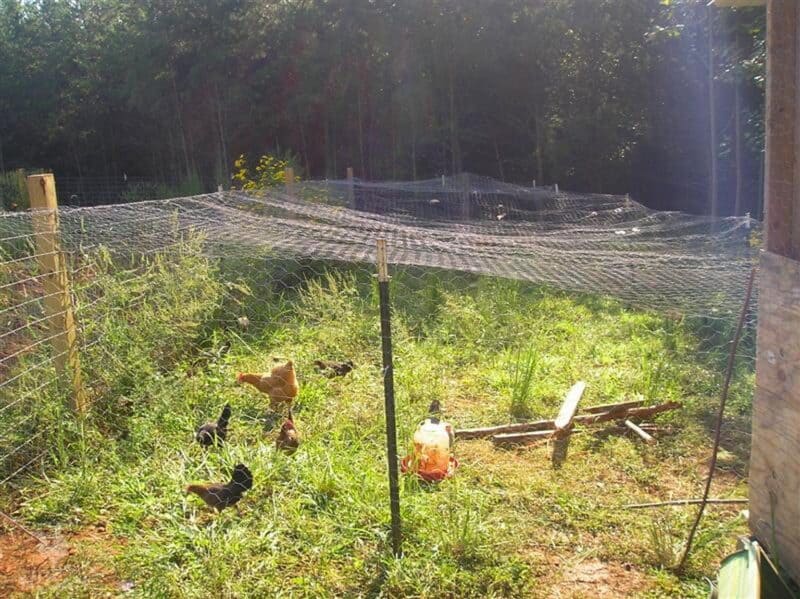
Chickens make a mess when they’re kept confined in the run for a long period of time, and they can be very hard on grass, plants, and insect populations.
But one great thing you can do to improve your property, soil health, and also the overall well-being of your birds is to place certain kinds of live plants in the chicken run.
The right, chicken-friendly plants can provide your flock with foraging opportunities and added nutrition, cover from predators, and even mask some of the more offensive odors that they create.
Just a little bit of extra effort on your part might make all the difference in your experience. Keep reading and I’ll tell you about 18 great choices below.
Won’t Chickens Tear Plants to Pieces?
Before we get to the list proper, it’s worth taking a quick detour to address the number one concern I hear come from people on this subject.
If we are planting plants that are edible by chickens, won’t the birds eat them right down to the root? That’s a possibility, but unlikely with the right approach.
For starters, we only want to use plants that are hardy and quick growing in addition to being healthy or otherwise beneficial for our birds.
And we want to plant enough that can service the entire flock. Too many chickens or too few plants means that your birds will ravage them.
Remember also that you’re still going to be feeding your chickens as normal, and if they aren’t starving they won’t be eating every last bit of greenery off of a plant.
Plus, as you might have expected you’ve got to protect young plants until they are mature and established.
This is easily done with cages or a little bit of surplus chicken wire. It really isn’t as much work as you think, and once you have healthy and thriving plants, you’ll be good to go. With that in mind, let’s get on to the list.
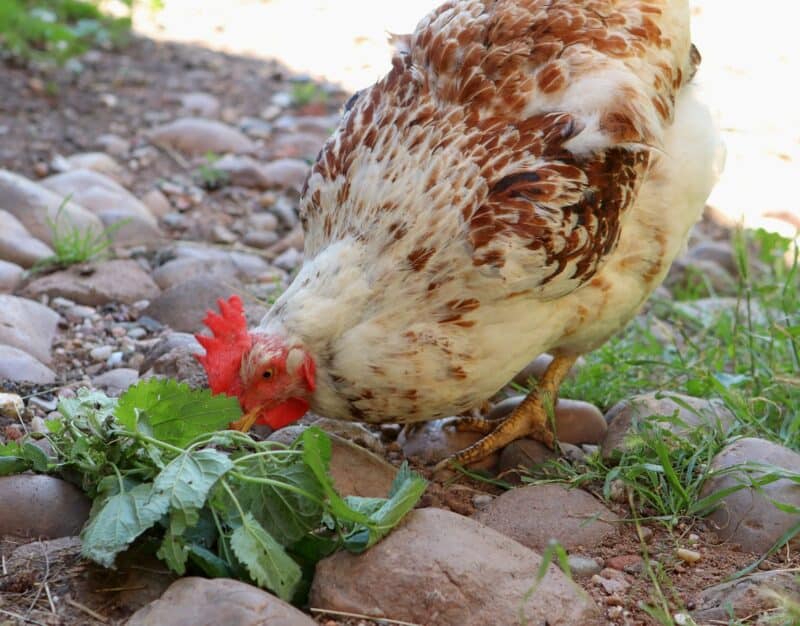
Nettle
Nettles, including stinging nettles, might seem like a downright offensive choice for inclusion in your chicken run, but as far as our birds are concerned that just isn’t the case.
All common varieties of nettles are edible by chickens and surprisingly nutritious with a great assortment of vitamins and minerals to offer them.
Even better, most nettles tend to grow quickly and are quite resistant to the attention of chickens. Stinging varieties, of course, sting and can actually provide a little bit of protection from mammalian predators.
All in all, a very good choice for a chicken run as long as you know how to handle stinging types without getting lit up.
Roses
I’ll bet that even mentioning roses on our list here has sent some readers into apoplexy…
Pretty much everyone I know that grows roses and also owns chickens will move heaven and earth trying to keep the chickens away from them! That’s because chickens love roses, and they’re always eager to nibble on leaves, petals, and the ever-delicious buds and hips right off of them.
But roses are also thought to have immune system-boosting properties and you just know they’ll add a touch of class and color to the run.
So, knowing that, why wouldn’t you plant some roses just for your chickens to enjoy? They are highly nutritious, surprisingly hardy if allowed to grow a little wild and if left with thorns intact can provide chickens with genuine cover from attack, especially from birds of prey.
Calendula
Calendula flowers are known for their intense, vivid, and showy blooms, and can grow in both annual and perennial varieties that make them suitable for any environment and any kind of run or coop setup.
They’re edible and safe for chickens, and reasonably nutritious but they do have one special property in that the pigments they contain will intensify the color of the yolks in chicken eggs.
Pretty neat, and can certainly make them more appealing on your own breakfast table or for your customers!
This is one plant that will definitely benefit from intensive protection until it is well established because young sprouts are extremely delicate and easy prey for hungry chickens. Give them time to get established and you should have good luck with them.

Berries
Chickens love berries, of all kinds, and wherever you live there is bound to be a variety that will grow wonderfully on your property.
Blackberries, raspberries, strawberries, and blueberries are all viable options, healthy, and have a dense, bushy growth habit that is wonderful for providing shade, cooling soil, and providing cover and camouflage for your birds while they’re in the run.
Really, the only downside to these bushes is that they are too appealing for our birds: they will pounce on berries the moment they find them and keep them stripped bare.
You need to be a bit cautious about making sure that chickens don’t get too much sugar in their diet for health reasons, even from something wholesome like berries. Other than that, another inspired choice.
White Clover
The bane of those who like a tidy yard, letting the clover win might actually be a winning strategy for your chicken run. It is extremely adaptable and weather-resistant, grows quickly, and is an excellent meal for your chickens to forage from.
Not only are all parts of the clover itself nutritious and edible, being particularly rich with minerals, but it also provides cover for all sorts of bugs which chickens can then eat in turn.
Clover is also known as a “nitrogen fixing” plant, so if you’re trying to bring soil levels back into proper balance, particularly if you have a chicken tractor that you move around, clover can be a great plant since it will repair the soil and establish itself quickly, allowing you to repeat the process every time you move your chickens around the yard.
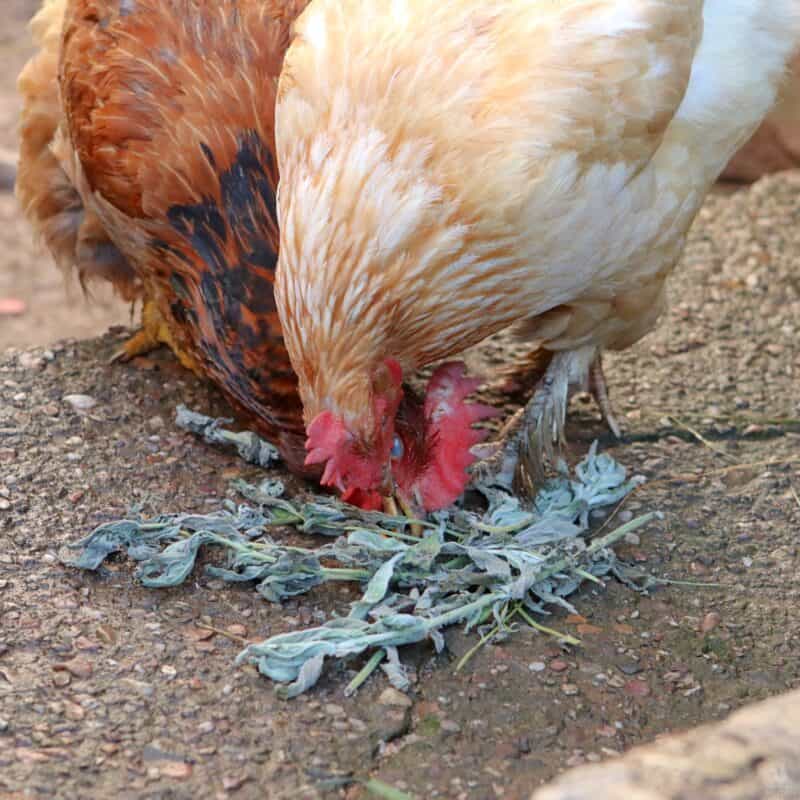
Mint
All kinds of kitchen herbs make for wonderful supplemental foods for our birds, and mint is no exception. It is nutritious, and chickens really do seem to enjoy its bracing, cooling flavor.
Even better, it is an all-natural and completely chicken-safe insect repellent, giving chickens a leg up on internal parasites and also repulsing some biting bugs before they even come close.
For your purposes, the fresh, aromatic smell of mint will help to mask any nasty odors coming from the coop, especially if you’ve been a little bit lackluster with cleaning it out!
The only downside to mint is that it tends to be very delicate and can quickly be wiped out by even a small flock of chickens that take a liking to it. This might be best if it is grown ahead of time or separately in containers before placing it in the run.
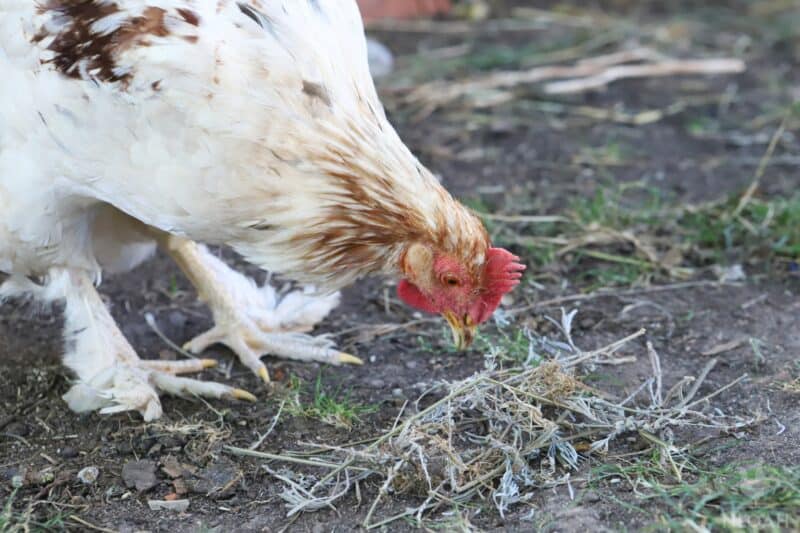
Lavender
Another herb, one that is known predominantly for its aroma, but still one with lots of benefits for chickens. Lavender is nutritious and attractive to all kinds of birds and has known antiseptic properties that can help you keep a handle on contagion.
Your chickens will benefit from the array of vitamins and minerals that it contains, and compared to mint it will stand up longer to their attention because of its denser growth habit and sturdier nature.
Although it grows relatively quickly, you’ll still need several weeks for it to mature, so this isn’t something you can plant and expect to benefit your flock in just a few days. Again, consider growing it in containers and then putting it in the run if you want to protect it while young.
Fennel
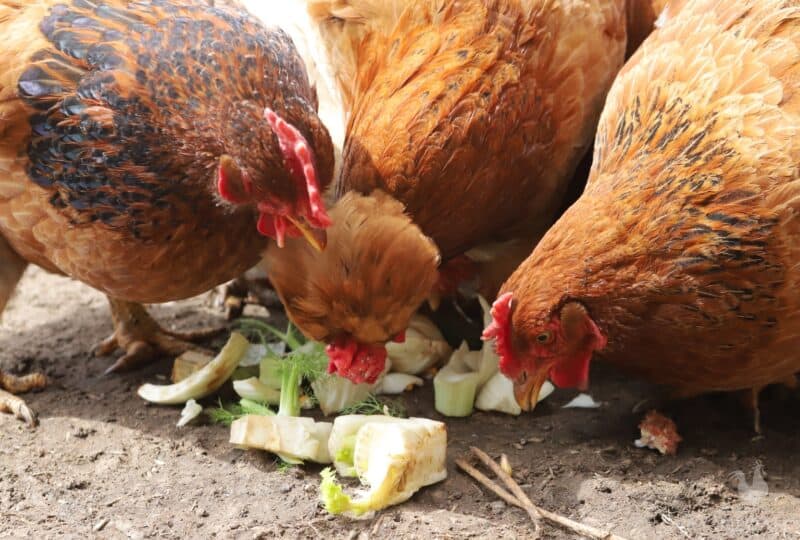
Whether you love or hate the licorice-like flavor that this herb lends food, I can guarantee you right now that your flock will flip for it.
Fennel is surprisingly a nutritional powerhouse, one that can provide chickens with plenty of macro and micronutrients. Even better, it has proven digestive benefits that will help maximize their gains from other foods.
Not much else to say about this one other than my recommendation you should plant plenty of it because your birds will be after it constantly.
Thyme
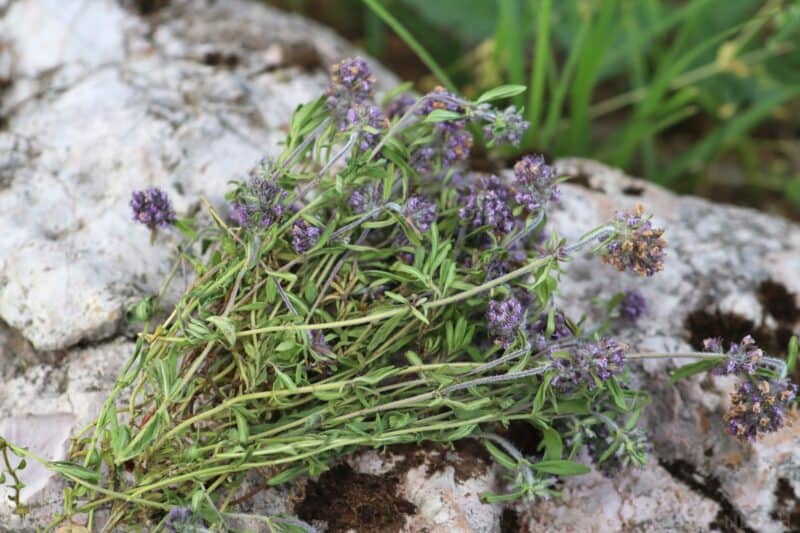
Yet another herb, and yet another great choice for growing in the chicken run. Thyme also has a highly fragrant aroma that can help mask unwanted odors, and it is also a nutritious snack for chickens.
It grows quicker than most other herbs, and is fairly sturdy, meaning you can stand up to constant attention.
Aside from the vitamin and mineral profile, time is also believed, like lavender, to have germ-fighting properties that can help chickens stay healthy and minimize contagion risks in and around the run. Don’t hesitate to plant this for your birds!
Dandelions
Another hated foe by those who love a pristine and emerald green lawn, dandelions get a really bad rap because there is so much to love about them.
Every part of the plant is edible, from the roots to the blooms, and not just by chickens. People can eat it too! And people and chickens alike should, because it is packed with vitamins in the form of vitamin A, vitamin C, and a lot more.
But, one thing I must caution you on: never, ever let your chickens eat dandelions that might have been treated with weed killer, insecticide, fertilizer (recently applied), or anything else.
These chemicals can be extremely dangerous for chickens and cause long-term health defects. Fresh, unbothered dandelions are fine.
Catnip
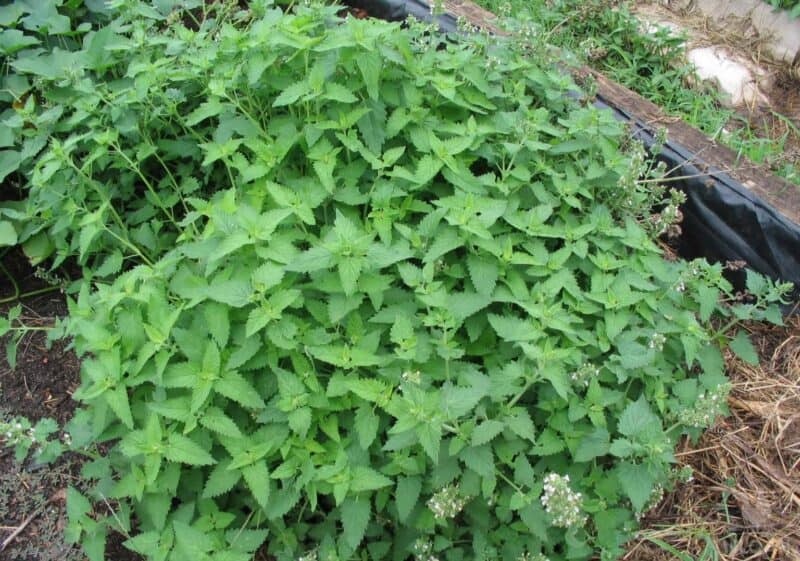
Does catnip have a stimulating effect on chickens like it does on felines? No, but it doesn’t change the fact that it is an herb, like all the others on our list, that’s attractive, fragrant, and good eating for them.
In my observation, they especially love pecking at it while looking for the choicest, tenderest bits to eat.
Like most of my recommendations here, catnip is a perennial with a fairly quick growth rate, and those two factors together mean that this is one plant you won’t have to babysit in the run once it is established.
Just keep in mind that if you have cats roaming around it will affect them, and you might not want them hanging around the run- especially if you have chicks!
Sunflower
Who doesn’t love the cheery, immense blooms of mature sunflowers? I know they look mildly ridiculous, but there’s just something about them that is fun and always reminds me of summer.
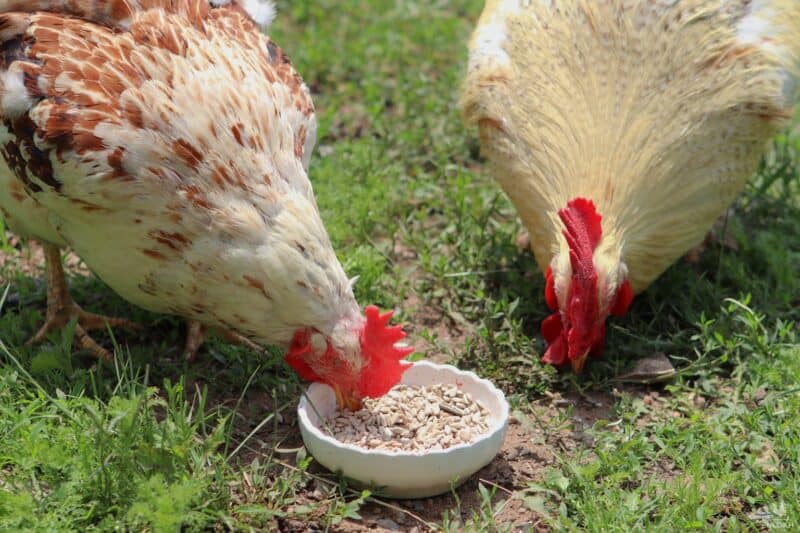
Your chickens will love sunflowers too, and though they might not admire the appearance they will delight in the nutritious and protein-packed seeds they provide.
Even better, sunflowers can provide excellent cover for chickens to retreat into, helping them to hide from predators, stay cool, and also enjoy cooler ground temperatures which will continually translate into more comfortable birds.
Just remember that you don’t want to pick a giant variety that could knock the cover off of your run if you have one and you’ll be so tall that chickens can’t reach the blooms!
Comfrey
Known for pulling lots of nutrients out of the soil and into its own tissues, and growing extremely rapidly, comfrey when mishandled can rapidly deplete soil levels but itself is a wonderfully nutritious forage option for our flocks.
One challenge that you might have to manage is that most varieties tend to grow quite tall, topping out at between 5 and 6 feet. This can again be troublesome if you have a cover over the run, and mature plants can be difficult for chickens to reach once they strip the lower parts, but this in kind makes comfrey valuable, too, for the shade and cover it provides.
Amaranth
Quick-growing and alluringly named, amaranth is a nutrient-packed powerhouse for poultry, with the leaves particularly being greatly desired by chickens.
Amaranth makes a fine choice for owners who don’t want to spend a lot of extra time maintaining their run plants, and you’ll always be able to depend on it for supplementing the forage available to your birds.
Note that amaranth, like many grains and pseudo-grains, is vulnerable to a wide variety of pests which can make management and long-term health challenging if you aren’t paying attention.
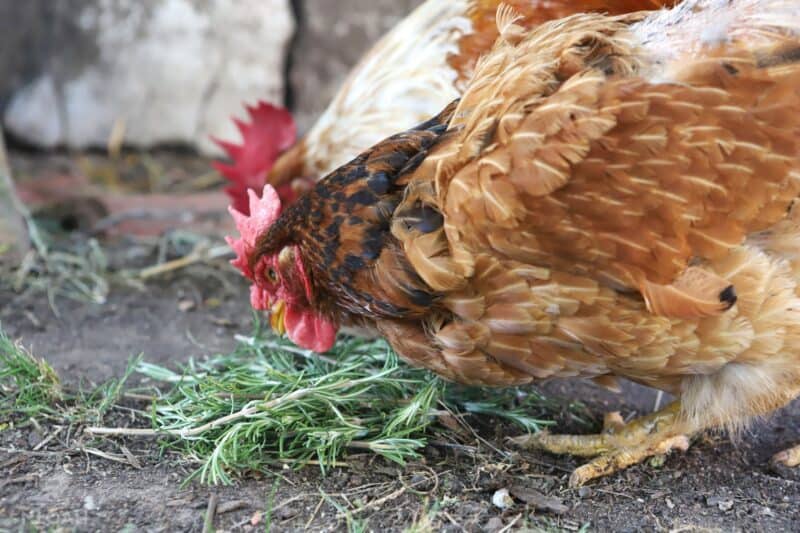
Rosemary
Arguably the queen of the kitchen herbs, Rosemary is intensely aromatic even when it’s growing fresh, and it is an excellent source of antioxidants and vitamins.
Although not as large and bountiful as some other plants on our list, it grows as a dense shrub that looks a lot like an evergreen, meaning it is a worthwhile provider of shade and visual cover from the attention of predators.
Chickens especially love young, tender, and bright green leaflets though they will often tend to avoid the older, tougher ones.
One thing to keep in mind is that the intense oils present in rosemary, the same ones that give it its flavor profile and nutrition, can be a little hard on a chicken’s stomach if they get too much so make sure they avoid the temptation to fill up on rosemary by sticking to the schedule with their other food.
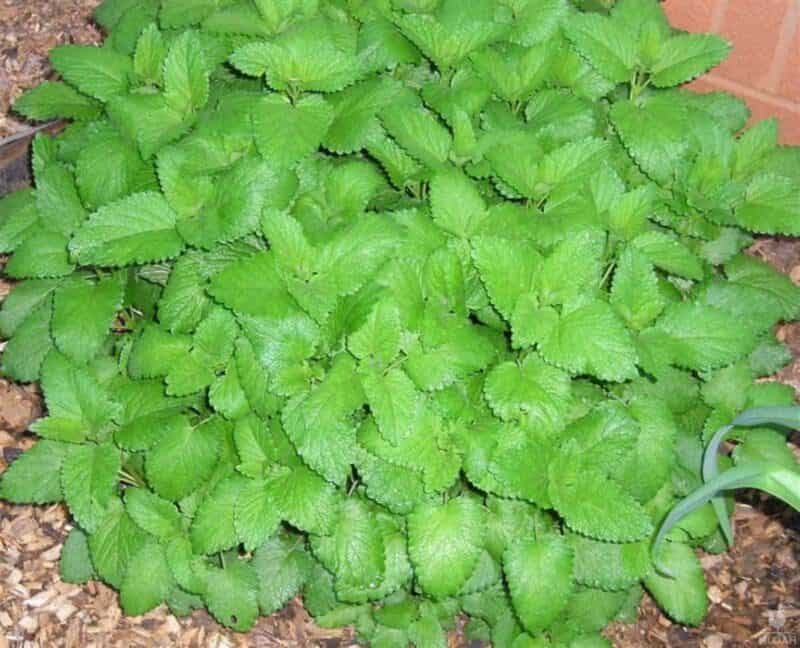
Lemon Balm
Ask any chicken owner who has ever had this stuff on their property, and they will tell you that there are birds that make a beeline for it with no mercy. The fresh, sweet taste of lemon balm is another chicken favorite, and a nutritious one that you can feel good about giving to them.
It grows as a perennial, but grows a little slowly, and is especially vulnerable to being eradicated when it’s very young.
Consider caging or covering it mandatory until it is well established. Fun fact: lemon balm also makes a great nesting box herb if you want to harvest some for that purpose.
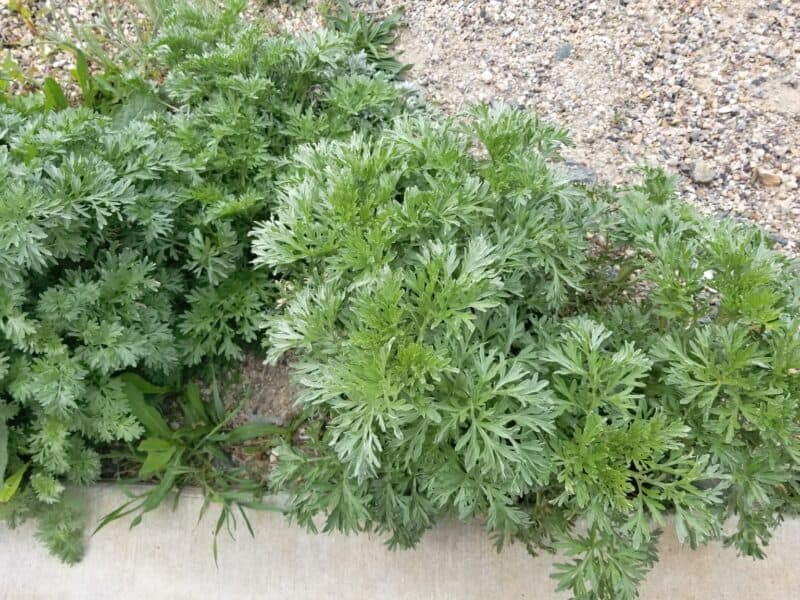
Sage
We aren’t done with herbs just yet, and the last though certainly not the least on our list is sage. That mysterious aroma is particularly intense when the plants mature, and the chickens can benefit from the leaves, buds, and young shoots which they will eat with great relish.
Reasonably nutritious, sage oil is another one that is believed to have antimicrobial properties that can help chickens stay healthy thanks to its germ-fighting power.
As with most of the other herbs on our list, make sure it is well protected until mature or grow it separately and then transplant it to the run or place it inside in a container.

Nasturtiums
One of the most bountiful, adaptable, hardy, and quick-growing plants on our list, nasturtiums are available in many different varieties, including annuals and perennials.
The young greenery is attractive to chickens, and has long been used as a traditional and all-natural vermifuge, or worm expeller.
If your chickens have been struggling with internal parasites, or there are known issues in your region, this might be just the ticket for planting in the run to give your birds a leg up on the nasty critters.


Get your gift and learn things like:
- how to make this really quick pest spray
- how to prevent egg waste
- two cheap automation devices that will make your life easier
Tom has lived and worked on farms and homesteads from the Carolinas to Kentucky and beyond. He is passionate about helping people prepare for tough times by embracing lifestyles of self-sufficiency.