
If there’s one appliance that we all tend to take for granted, it’s got to be the freezer. It’s difficult to overstate just how important freezing is when it comes to food preservation.

Compared to any room-temperature method, freezing food offers an excellent shelf life with very little effort, and frozen foods typically maintain a high degree of quality.
Just as importantly, freezing prevents waste, which saves you money, and it also keeps you from buying overpriced convenience options from the freezer case at the grocery store. Generally, if you can freeze it, you should do it.
Keep reading and I’ll tell you about 50+ foods you can freeze yourself to save thousands of dollars a year.
Dairy
If there’s one group of foods that most folks overlook when it comes to freezing, it’s dairy. You knew you can freeze milk easily enough, but did you know you can freeze butter, cottage cheese, sour cream, yogurt, and more?
This is a great way to stock up on the dairy products you use weekly while keeping your fridge clear for other perishable items, leftovers, and those things you reach for daily. I use a whole stand-up freezer in the garage just to keep a stash of milk and more!
The trick to making dairy foods come out great when freezing is to pay attention to packaging and portioning: milk can be frozen in sealed containers as long as you leave room for headspace. Butter works well in foil or parchment paper.
Learn the ins and outs of freezing different dairy products properly, and you’ll never face that late-night emergency trip to the corner store because you don’t have enough for your favorite recipe.
- Milk
- Butter
- Cottage Cheese
- Sour Cream
- Yogurt
Cheese
Yes, I know cheeses are technically dairy, but there’s so much variety in them that I feel like they deserve their own category. Most of us already know that prepared dishes containing cheese can freeze just fine, but many haven’t frozen cheese by itself.
Shredded cheese and cream cheese are two staples that work wonderfully in the freezer because they are easy to thaw and use.
Cream cheese can easily be brought back to room temperature using a gentle defrost cycle in the microwave. Shredded cheese can go directly into a hot pan with no ill effects because it’s so thin.
This method in particular is one I use all the time since I know it will be super fresh compared to the stuff I leave in the chiller drawer in the fridge.
Best of all, you can freeze entire blocks or slices of hard and soft cheeses. Hard cheeses last a long time at room temperature, yes, but they will last even longer and resist mold better in the freezer.
Soft cheeses work well, too, but you have to be a little more careful because of their moisture content: blocks can soften dramatically after thawing. I prefer to slice soft cheeses prior to freezing.
- Soft Cheese
- Hard Cheese
- Shredded Cheese
- Cream Cheese
Fruits
All kinds of fruits are naturally great candidates for freezing. That’s because most start to shrivel, brown, or mold very quickly at room temperature, and even refrigeration still leads to a steady drop-off in quality. Not so with freezing, especially if you take the time to blanch your fruit gently before you freeze it.
You can get respectable results just by tossing your produce into a container and then straight into the freezer, but a more nuanced approach will yield dramatically better, fresher fruit when you take it out.
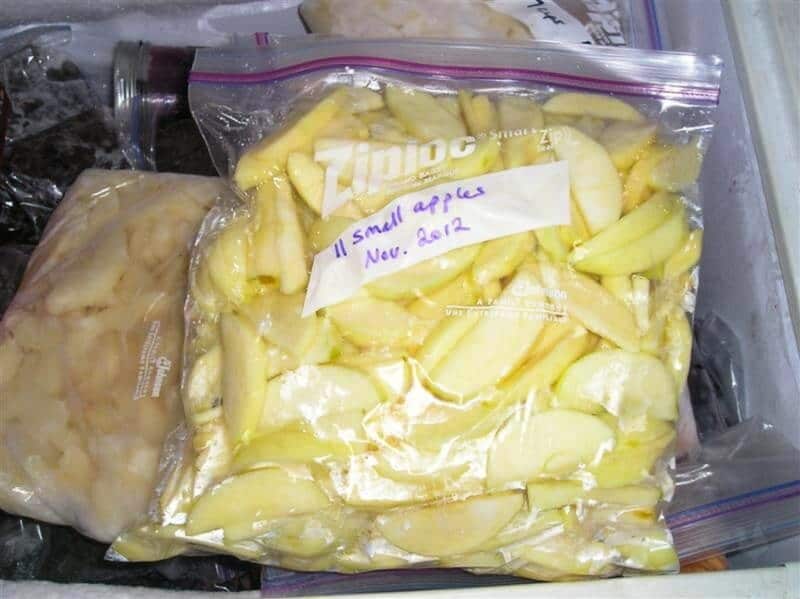
Some fruits, like apples, will do better in cubes or slices. Peaches should be pitted and peeled. Melons can be cubed or sliced, or even pureed if you prefer. Grapes can be frozen whole or sliced.
In most cases, you’ll get the best results by pre-freezing your individual pieces in a single layer on a baking sheet, then transferring them to a freezer bag or other container once they are rock-solid. This prevents the accumulation of moisture and sticking that often happens when you go straight into a container.
As with dairy above, learning the intricacies of different kinds of fruit to prep properly makes a huge difference. Don’t worry; it’s not hard in any case!
- Apples
- Pears
- Peaches
- Cherries
- Grapes
- Melons
Tropical Fruit
Out of all the many different kinds of fruit you can freeze, I think the best candidates overall are tropical fruits.
This is because, in the U.S. at least, logistical lag from shipping and unpredictable seasonal availability means you need to stock up while the stock is good and preserve what you aren’t going to eat right away before it goes bad.
Most tropical fruits spoil extremely quickly, so freezing is our best bet for keeping them on hand and easy to use throughout the year.
If you need more incentive, frozen tropical fruits are some of the most expensive items in the freezer section ounce for ounce! Avoid the rip-off by freezing your own.
Plus, tropical fruits are singularly delicious when blended into smoothies, and you can toss frozen chunks or slices straight into your blender with juice, milk, or other ingredients to whip up a refreshing treat in minutes.
Many tropical fruits freeze wonderfully, but the following are all fantastic choices:
- Banana
- Mango
- Pineapple
- Kiwi
Berries
Frozen berries are one of my very favorite frozen foods in general and my absolute favorite when it comes to fruit. They are so versatile, easy to prepare, and easy to use that I love having a broad selection on hand at all times.
Like tropical fruits, they are dynamite in smoothies and other beverages. Also like tropical fruits, they tend to spoil very quickly even if given ideal room-temperature conditions.
Harvesting berries takes time and a lot of effort, or you’ll be spending a not-insignificant amount of money at the farmers’ market, so don’t let them go to waste!
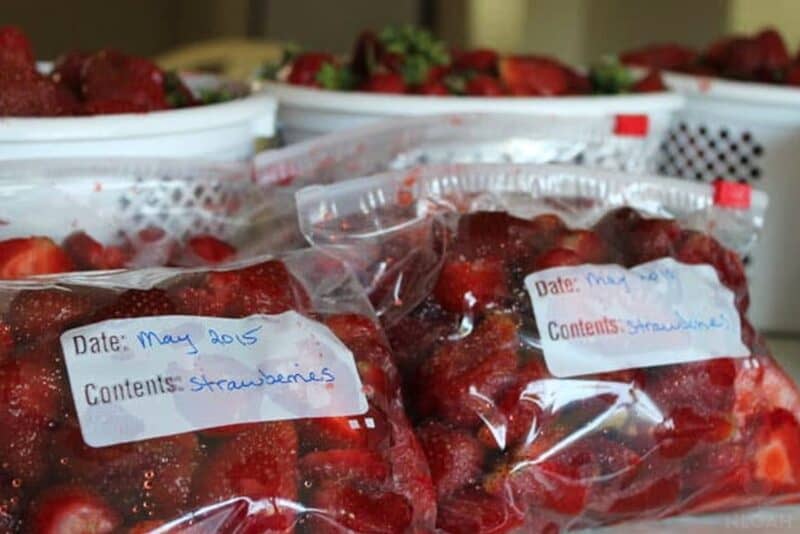
Like all other fruits, preparation is paramount if you want good outcomes: careful washing and, if needed, slicing or portioning along with flash freezing prior to packing makes a huge difference in taste, texture, and color.
- Strawberries
- Blueberries
- Blackberries
- Raspberries

Veggies
Just the ticket for easy sides, making soups and casseroles, or use in countless other recipes, nothing beats the convenience and ease of frozen veggies. And yes, they tend to be cheap enough at the grocery store, but those prices are skyrocketing along with everything else.
There’s just no reason to pay those prices when you can so easily freeze your own garden produce or produce that you buy anywhere else.
Compared to fruit, most kinds of veggies aren’t quite as fussy when it comes to preparation, but if you do nothing else, learn to blanch them right.
Blanching vegetables is critical for freezing because the quick dip in boiling water prior to a cold plunge completely deactivates the enzymes and microorganisms that cause darkening and a lowering of quality overall.
It’s tempting to skip this step, but I promise it’s the difference between limp and disappointing veggies versus ones that are as crisp and fresh as the day you popped them out of the ground.
Nearly every veggie you can think of will freeze well, with the few exceptions being those with very high water content like celery.
Meat
I constantly cook with meat at home, almost for every meal, and if your house is anything like mine, you do the same. If that’s the case, freezing meat is going to be your best bet since you can freeze meat when it’s raw or after it’s cooked, depending on your needs.
Beef, chicken, turkey, pork, venison, and pretty much everything else does great in the freezer, lasting for around a year or a little longer if you can protect it from freezer burn.
Cooked meat can easily be thawed or reheated for easy meals or inclusion in recipes, and you can move frozen raw meat to the fridge a day or two prior to when you need it so it’ll be ready to pull out and go.
If you’re freezing raw meat, butcher paper works best, but foil and plastic wrap are also serviceable.
Seafood
Freezing is an especially great way to preserve seafood. Seafood tends to spoil quicker than other kinds of meat in the fridge, and even when it’s fresh, it can be downright pungent if you know what I mean!
Freezing locks in those aromatic compounds so it won’t be stinking up your fridge, your kitchen, and potentially your whole house. (Sorry, I can’t help you when it’s time to actually cook it!)
Jokes aside, you’ll also find that all kinds of fish, shrimp, and more stay remarkably fresh and delicious when frozen.
Unless you are a connoisseur or talking about particularly delicate types, you’ll find it tastes great as long as you thaw it gently prior to cooking.
- Fish
- Shrimp
- Lobster
Rice (Cooked)
Seeing rice pop up on a list of the best foods to freeze in order to save money might seem strange to you at first. After all, rice is both very cheap, available everywhere in bulk, and extremely easy to store at room temperature, where it will keep basically forever.
Here’s the secret: you can freeze cooked rice for many months on end! You can cook up any kind of rice you want by boiling or steaming, or preparing it in a dish like pilaf or risotto, then freeze it so it’s ready to use in the future.
- White Rice
- Brown Rice
- Wild Rice
Beans (Cooked)
Beans are basically analogous to rice when it comes to freezing: you don’t need to freeze dry beans because they too will last indefinitely at room temperature if they are properly sealed in a good container.
But cooked beans don’t last anywhere near as long as most people would prefer using refrigeration alone. If you want to keep leftovers for any length of time or just keep side dishes ready to go for fast weeknight meals, freezing your cooked beans is the perfect solution.
- Black Beans
- Lima Beans
- Kidney Beans
- Pinto Beans
- Lentils
- Peas
Nuts
Nuts tend to go rancid over time when kept at room temperature. That’s just the way it is, and there’s nothing you can do about it.
If you’ve cracked your own harvest or you just want your favorite mix to stay fresh for up to a year, seal them in a plastic bag and stick them in the freezer!
One trick I use is to treat nuts like berries for the purposes of freezing; they’ll come out a lot better if you flash-freeze them in a single layer on a cookie sheet prior to sticking them in a bag or other container.
Also, try to protect them from condensation as much as you can; keep them in a freezer compartment that stays closed if possible.
- Almonds
- Hazelnuts
- Walnuts
- Cashews
- Pistachios
Soups
My great-grandma always had a seemingly limitless supply of delicious, filling homemade soup in the freezer. She’d make different recipes all year long, then store them in big gallon baggies or jars.
Yes, you can freeze liquids in jars as long as they’re designed for freezing and you leave enough room for headspace!
The great thing about frozen soup is that you can dump it right into the saucepan on the stovetop or stick it in the oven to warm it up. Whether you want a complete recipe or your favorite broth, stock, or consommé to use as a base, this is as easy as it gets.
- Broths
- Stews
- Consommé
Sauces
Your favorite sauces, homemade or store-bought, will likely freeze wonderfully in a jar or a zipper freezer bag.
Whether it’s for pasta, barbecue, chops, or anything else, chances are if you pour it over something else, it will do just fine in the freezer.
- Marinara
- Alfredo
- Meat Sauce
- Pesto
- Gravy
- Barbecue Sauce
- Curry
- Stir-Fry Sauce
Desserts
Whatever kind of desserts you are into, I promise you’ll be able to freeze them much of the time. Cakes, cookies, and pies all freeze wonderfully, even if they have icing or other toppings on them.
If possible, you’ll get better results by icing or frosting them after you pull them out and thaw them, but that’s not strictly necessary.
Also, keep in mind you can freeze dessert ingredients and pre-made components, too: pie crust and pie filling are two items that I keep on hand constantly since they allow me to whip up a perfectly fresh and delicious pie for a surprise dinner or gift in no time flat.
Even delicate stuff like muffins are a great candidate for freezing if you don’t want them to get stale and go to waste. Homemade caramel candies or sauces also do fine with no loss of quality for up to a year.
- Cookies
- Cakes
- Pies (or crusts or filling!)
- Muffins
- Caramel
Bread
I know lots of folks balk at freezing bread, but there’s no reason to worry: do it right, and it will stay delicious and can even crisp up when prepared properly.
Any kind of fresh-baked bread or bread dough freezes great, as do flatbreads like tortillas, which are fast to thaw and still super delicious.
One of my favorite tricks was taught to me by my grandma: portion out half a can of bread crumbs for use, and stick the other half in the freezer. That way, they won’t get old, stale, or moldy before you use them!
- Tortillas
- Bread
- Bread Crumbs
- English Muffins
- Pancakes


Get your gift and learn things like:
- how to make this really quick pest spray
- how to prevent egg waste
- two cheap automation devices that will make your life easier
Tom has lived and worked on farms and homesteads from the Carolinas to Kentucky and beyond. He is passionate about helping people prepare for tough times by embracing lifestyles of self-sufficiency.