
Gardeners know that one of the best possible resources you can use to improve the health of your plants is compost. This rich, all-natural mixture of decomposed organic matter provides tons of nutrition to help plants grow and produce, but it also improves soil structure.
Best of all, you can usually make it for free or very nearly for free. Simply add yard waste, plant clippings, and even kitchen scraps to a pile, then keep it moist and turned for a few months. Simple, but not easy. You’ve got to remember to do it and manage it properly, which can be quite a chore.
If you own chickens, though, you’ve got a secret ace in the hole. You can put your flock to work for you making compost by improving both its nutrient content and its structure. Sounds crazy? Too good to be true? It isn’t! Keep reading, and I’ll show you how.
Chickens Can Help Process and Contribute to Your Compost Pile
Your chickens can do double duty when it comes to making a wickedly good batch of compost.
They do this first by helping to process the ingredients in the pile and aerate it. You can throw piles of grass clippings or leaves into your chicken run, or leave them out when they are free-ranging, and your birds will shred them in no time. This helps the materials decompose faster once they are integrated into the pile.
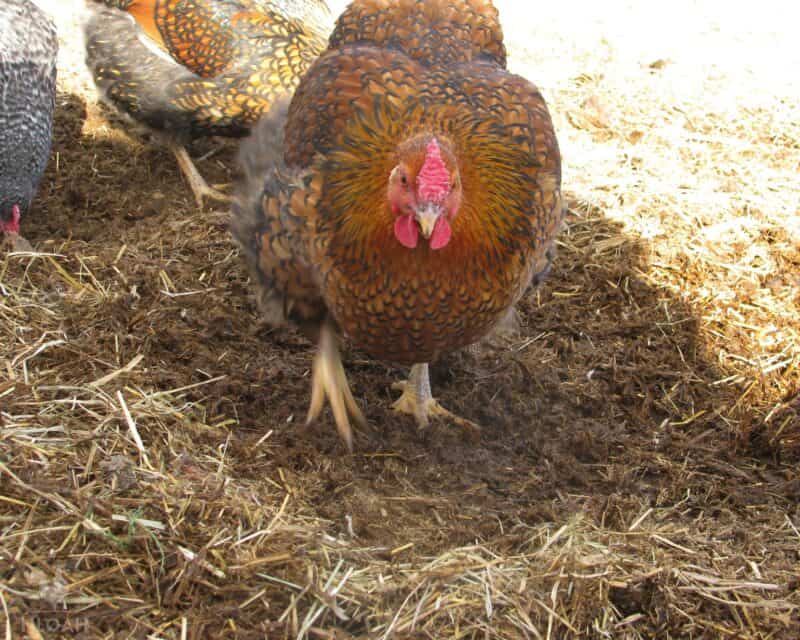
Chickens can also directly help the pile itself by climbing on it, scratching it, and pecking at it. It’s like having your own little crew of compost turners!
As you might have guessed already, your birds will also contribute to the pile in a very direct way: by pooping! Many gardeners already know that manure, of various kinds, can be a worthwhile “green” additive for compost—even though it’s brown!
Chicken Poop is Full of Nitrogen
Chicken poop is great for adding to your compost pile because it’s so rich in nitrogen, as well as other essential minerals and compounds.
In fact, chicken poop is far better than most other kinds of livestock manure: it contains 10 times more nitrogen than the same quantity of cow manure, and it’s still an excellent source of potassium and phosphorus, the other two elements of the Big Three that all good fertilizers bring to the table.
Whereas putting this super-nitrogenated manure directly on your garden soil would almost certainly cook your plants, letting it rot and break down in your compost pile makes it much safer—and a whole lot less smelly.
Let Chickens Shred Leaves and Other Yard Waste
Who needs a mulcher attachment on your lawn mower when you’ve got a flock of chickens?
Most of us will have tons and tons of dead leaves to deal with every year, and they add needed texture and minerals to the compost pile.
If you’ve ever left leaves on the ground while letting your birds out to free-range, you’ve probably noticed how enthusiastic they are about pecking at them and rampaging through the piles.
All you need to do is gather up a sizable quantity and then deposit them directly in the run if you have room, or build a temporary fenced area around the leaf pile and put your chickens in there.
In a matter of days, your chooks can reduce a waist-high pile of leaves to a finely minced one by pecking and scratching alone. You can then easily shovel the fresh clippings into your compost pile as needed.
Using a Deep Litter Method in the Coop Can Supercharge Your Compost Pile
One challenge chicken keepers often face is keeping the inside of the coop clean and fresh. Chickens poop a lot at night, and this naturally makes the floor or ground covering in the coop a giant mess. You’ll have to clean this stuff out on a weekly basis.
To extend the life of ground coverings and bedding, some folks turn to a deep litter method, basically layering different types of bedding on the coop floor and then turning it under as it gets soiled.
Over time, biological matter in the bedding breaks down – basically another example of composting in action! You can see where this is going: this used deep litter is solid gold for supplementing an existing compost pile or even starting a brand new one right.
The intricacies of this methodology are a bit too much to get into in this article, but I promise it’s easier than you think and something you can implement no matter what kind of coop your birds occupy.
Consider Putting the Compost Pile Right in the Run!
For the ultimate in efficiency, you can consider putting your compost pile right in the chicken run itself. Note this will only work if you use an open pile or 3-sided bin versus one that’s in a bucket or enclosed bin.
These birds just love messing around on a compost pile. It’s interesting to them, and they seem certain that they can find a few tasty bits in there.
Like I mentioned above, they will peck and scratch at it constantly, keeping the pile aerated and turned while they put their poop directly into the mix where it can do the most good.
Plus, this approach will save you some steps on your daily round of chores: you can take scraps right out to the run and distribute them to your birds or mix them into the pile as needed.
The only downside with this method is that there will be times when you need to keep your birds off of the compost. I’ll tell you more in the next section.
Dos, Don’ts, and Caveats
There are plenty of reliable rules of thumb for establishing and managing a compost pile, and happily, the same applies when it comes to getting our chickens to help with it.
Dos
Add manure right to the compost pile. Always integrate chicken manure into the compost and let it rot and break down completely before you use it as fertilizer.
As I said earlier, throwing manure directly onto your garden soil is very likely to scorch your plants through excess nitrogen, and it is also a health hazard.
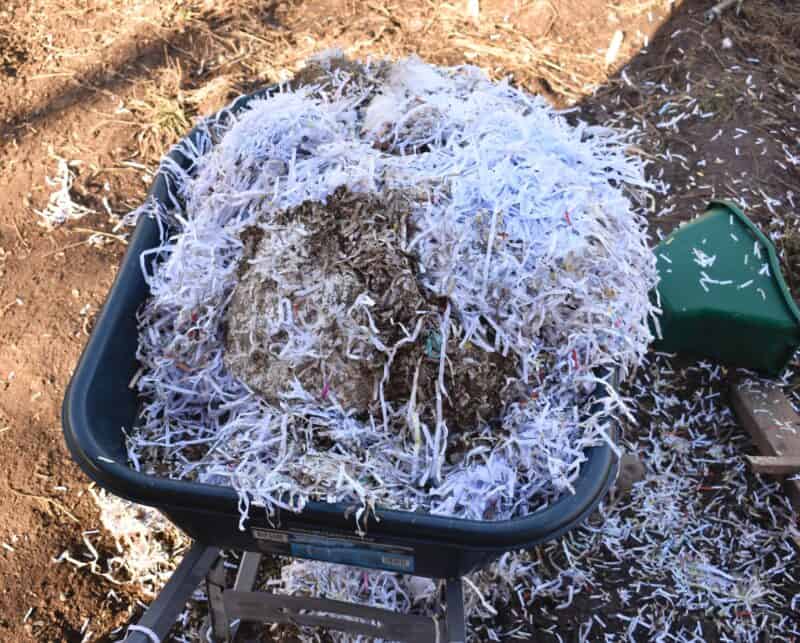
Save coop bedding for the pile. Virtually any kind of organic chicken bedding makes for a great compost ingredient: pine shavings, aspen shavings, leaves, pine needles, mulch, straw, and even dirt scraped up from the coop floor (in case it is sitting directly on the ground). What you don’t want to do is add inorganic material like ground rubber or sand.
Let chickens scratch on a healthy pile. Assuming you’ve managed the pile properly, there’s no harm in letting your birds scratch around on it. Scratching helps to aerate the pile and, over time, turn it so that decomposition can continue in a speedy fashion.
Monitor heat levels. Ask any gardener who has made their own compost before, and they will confirm it: compost can get hot, hot, hot! An average compost pile can reach temperatures of 140°F / 60ºC or even beyond.
As always, you’ll want to take care that it doesn’t get too hot lest it kill off beneficial organisms needed for the decomposition process, including microorganisms that are difficult to replace!
Don’ts
Let the pile dry out. Keeping a compost pile moist is essential for high productivity. If the pile is inside the run, this can sometimes be a conflict of interest because you don’t want your chickens running around in a muddy environment.
You’ll have to work around this by being more controlled with the application of water. Whatever happens and wherever you have your compost pile, don’t let it dry out.
Let birds turn it too much. Too much of a good thing is no longer a good thing, and that’s certainly the case when it comes to our yardbirds pecking, scratching, and flicking at the pile.
If they do it too much without your attention and management, they are likely to spread the pile too thin and dry it out quickly.
Sometimes they will scatter the pile entirely! Keep an eye on them and be prepared to get them away from it or relocate the pile as needed.
Ignore green/brown ratios. All the same rules for making compost still apply, and none are more important than managing your ratio of greens to browns.
For those not in the know, greens refer to nitrogen-rich ingredients and browns refer to carbon-rich ingredients. Depending on your application and methodology, this ratio is usually 2:1 to 4:1. It’s easy to blow it by adding too much manure, especially the super-nitro-rich chicken manure!
Add “bad” scraps to the compost. Bad scraps are ingredients that are likely to disrupt the delicate ecology of the compost pile itself. Meat and dairy are two notorious examples, and I mention them here because I know plenty of flock keepers who sometimes treat their birds with one or both.
It’s tempting to give these things to your birds and then toss anything they don’t eat into the pile if it’s nearby. Don’t do it!
Add toxic plants to the compost. Here’s an easy mistake to make in the other direction: you must be very cautious to avoid putting anything in the compost pile that your chickens might eat out of curiosity or accident. Deadly nightshade, boxwood, and castor bean are just three examples.
Caveats
Watch out for pests and predators. A compost pile, particularly one that’s not well decomposed yet, can be a magnet for pests like mice, rats, raccoons, possums, and more. The arrival of these critters, naturally, can spell major trouble for your chickens. Take care that you aren’t painting a bullseye on them by putting your compost pile inside the run.
Be mindful of plant material that might be treated with herbicide or pesticide. This isn’t the end of the world with a typical batch of compost, but you’ll have to be vigilant about throwing any plant matter in that has been treated with harmful or potentially deadly chemicals.
Herbicides and pesticides can both cause major health problems for chickens, so think through your inclusions carefully.
Be prepared to block chickens’ access to the pile. Ultimately, your chickens don’t know what you know. With skill and education, you’ll be able to tell what your compost pile needs to succeed. Your chickens neither know nor care; they just care about being chickens and finding something tasty to eat!
Accordingly, be prepared to keep them away from the pile or to move the pile out of the run if they are doing more harm than good with their explorations.


Get your gift and learn things like:
- how to make this really quick pest spray
- how to prevent egg waste
- two cheap automation devices that will make your life easier
Tom has lived and worked on farms and homesteads from the Carolinas to Kentucky and beyond. He is passionate about helping people prepare for tough times by embracing lifestyles of self-sufficiency.