
I don’t know about you, but I go through tons and tons of garlic in the kitchen, all year long. The stuff is just indispensable for cooking. After I got sick of getting rinsed at the grocery store, paying for bland, subpar bulbs in the produce department, I decided to start growing my own, and I never looked back.

Garden-grown garlic is superbly tasty, but there’s a logistical problem that I didn’t consider: I had to preserve my harvest if I wanted to enjoy it all year! Luckily, there are lots of good ways to preserve garlic according to your preferences, usage, and what kitchen tools you have access to.
Keep reading, and I’ll tell you about the six top, safe ways to preserve your garlic harvest.
Fresh
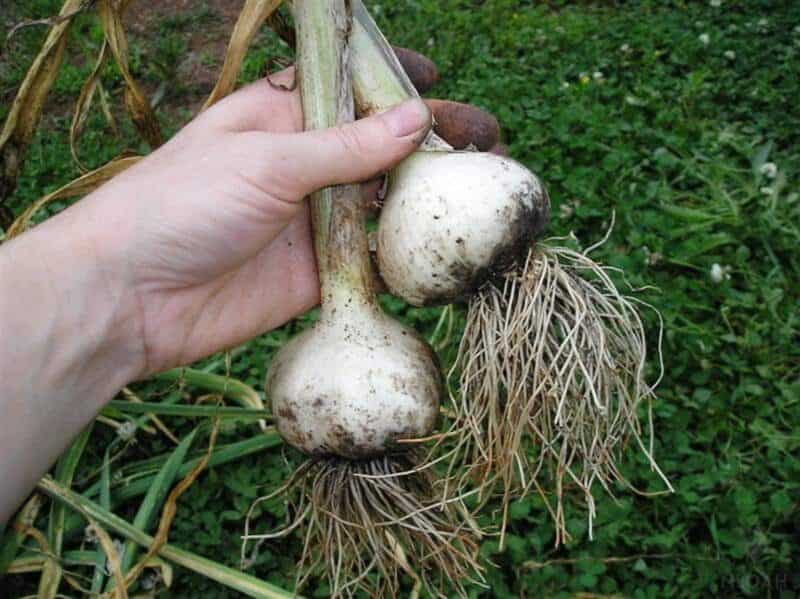
The oldest and, for many of us, best way to preserve garlic is to keep it fresh after harvest. Garlic can keep for many months fresh as long as you harvest it carefully, clean it well, and cure it prior to stashing it in a dark, dry, well-ventilated space around 60°F.
For most folks, this will be a root cellar, but a darkened pantry or other spot inside the house can work just as well.
The trick is to cure the garlic, a process by which you leave the harvested, cleaned garlic to dry out completely in a shady spot that has plenty of airflow. This is a lengthy process, taking anywhere from 2 to 4 weeks.
But patience is a virtue if you want to preserve your fresh garlic harvest. After curing, you can remove the outermost paper layer, braid the stems of the garlic together, and hang them up, or just dump the bulbs into a mesh bag and hang that.
The other key procedure is minimizing moisture in the storage location; moisture means mold, and that means ruined garlic!
Depending on the storage conditions and whether you’ve chosen a hardneck or softneck variety, your garlic can last up to 6 months, and potentially up to 8 in ideal conditions.
Dehydrated
Garlic gives up very little flavor when dehydrated, and it keeps for years on end, safely at room temperature. It’s also perfect for including in dried soup mixes and more, and that’s why I reach for my food dehydrator time and time again when it’s time to put away half my harvest. The other half I keep fresh.
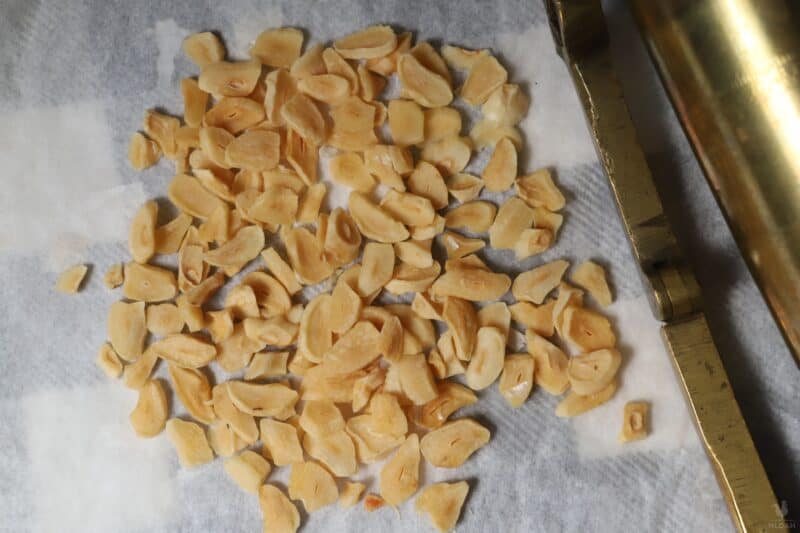
If you’re familiar with running a food dehydrator, this will be the picture of simplicity. All you need to do is peel the individual garlic cloves, cut off the woody bottoms, and then slice the cloves thinly, taking care to keep them as uniform as possible.
Then spread them out on your dehydrator trays in a single layer as usual, set the dehydrator to 125°F, and let them dry for about half a day.
The process takes anywhere from 8 to 12 hours, maybe a little bit more, depending on the specifics of your garlic and your machine. Once the planks snap cleanly when tested, they are good to go. Pop them into an airtight container and stash them in a cool, dark, dry place as usual.
Dehydrated garlic typically keeps for a year and a half with no problem, and up to 2 years with only a little loss of flavor and quality.

Powdered
Kind of a variation on dehydrated garlic, but since it is significantly more processed and has its own particular uses, it counts as a separate storage method.
Powdered garlic is simply dehydrated garlic that has been ground into a fine, grainy consistency. All you need to do to make your own is to dehydrate the garlic using the steps in the previous entry, then grind up the dried slices using a spice grinder or, if you’re feeling fancy, a mortar and pestle.
Pro tip: if you have neither one of these things or don’t want to go through the hassle, you can put your dehydrated garlic slices in a heavy-duty plastic freezer bag and then go back and forth over them with a heavy rolling pin on a cutting board. A little time and elbow grease will get it done, eventually!
Keep your homemade garlic powder in an airtight glass jar well away from all moisture and heat sources: because it is a powder, it’s even more sensitive to humidity than the sliced form.
Pickled
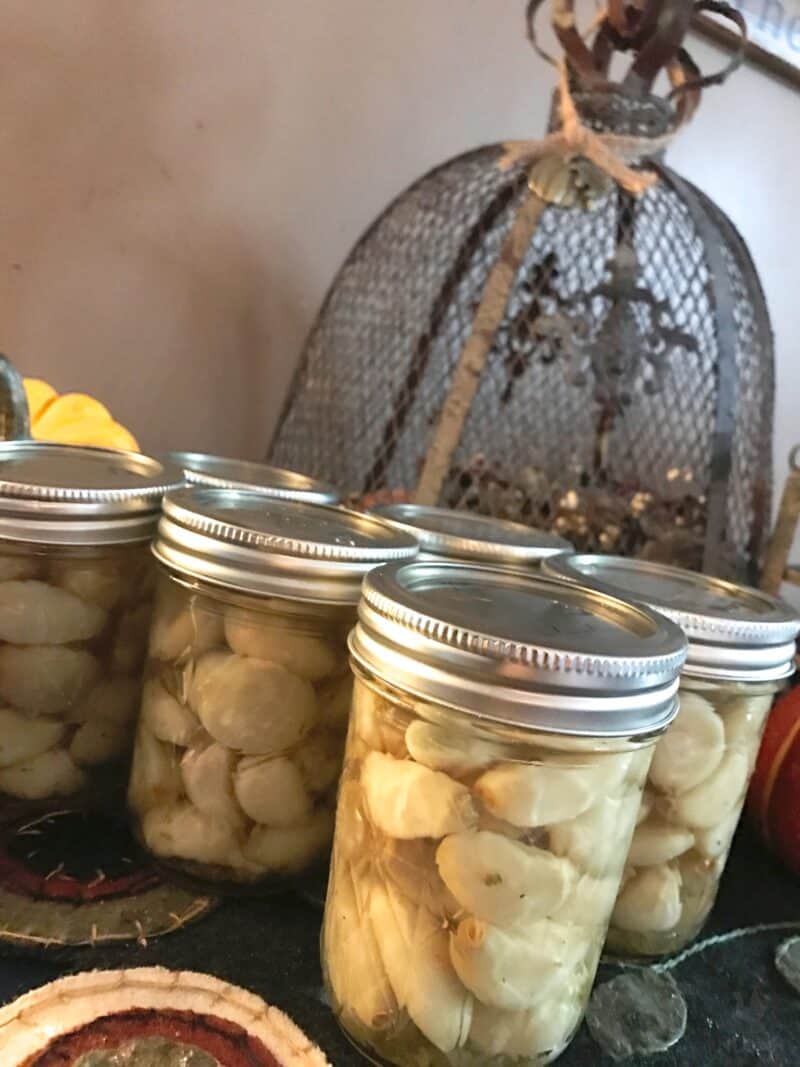
A truly delicious and versatile way to preserve garlic is by pickling it. Pickled garlic, if you’ve never had it, doesn’t taste like what you’re thinking: it’s still a little fiery and a little pungent but much smoother and overall milder compared to a fresh clove right out of its skin.
And it’s so easy to do, whether or not you have a canning setup or feel like messing with it.
All you need to do is prepare a good pickling brine using vinegar of some kind (distilled white vinegar, wine vinegar, or cider vinegar is fine as long as it is 5% acidity for safe preservation), salt, and then any other added seasonings or spices according to your chosen recipe. Peppercorns, mustard seed, dill, and other classic pickling add-ins are all good choices.
Once your brine is prepared, simply load your jars with the peeled cloves and pour the hot mixture over them, leaving about a half inch of headspace at the top of the jar before capping.
If you want to make “refrigerator” pickled garlic, you are done; let the jars cool down, then stick them in the fridge where they will last for about 3 months.
If you have a canning setup and want to go that route, though, your pickled garlic will last about a year. Either way, it’s absolutely delicious!
Fermented
Fermented garlic is sometimes confused with pickled garlic, and the processes are similar but still distinct. The fermentation process encourages the formation of healthy, beneficial bacteria that help to preserve the garlic by neutralizing certain enzymes responsible for decomposition.
Fermented foods, like sauerkraut, for instance, have a distinctly tangy flavor that many people love, and garlic is the same. Also, like other fermented foods, garlic increases the levels of natural, gut-healthy probiotics and makes it even better for you than normal!
Fermenting your own garlic starts with brine, and a simple variation is just salt and non-chlorinated water. The brine is poured over the garlic inside a fermentation crock or other specialized container and left to process for about a month or a little less.
Once the process is finished, you can stash fermented garlic in your refrigerator or other chilled environment for at least 6 months and potentially up to a year.
Frozen
Last but not least, one of the most convenient and flexible ways to store garlic is simply by freezing it. Whole, minced, sliced, or paste: it keeps its flavor and lasts for at least 6 months with excellent quality.
Whichever route you want to go, the garlic must be peeled first, and then it can be flash frozen by spreading whole cloves or slices on a baking sheet, or if minced or as paste, in ice cube trays covered by a little bit of olive oil or water if you prefer.
Once frozen, individual pieces can be transferred to freezer bags or other containers and used immediately when cooking.

Tom has lived and worked on farms and homesteads from the Carolinas to Kentucky and beyond. He is passionate about helping people prepare for tough times by embracing lifestyles of self-sufficiency.