
Some of my favorite garden plants are herbs. They’re generally easy to grow and take care of, and they are some of the most useful plants there are: fresh herbs are amazing in all kinds of recipes, and they also have health-boosting and aromatherapy benefits.
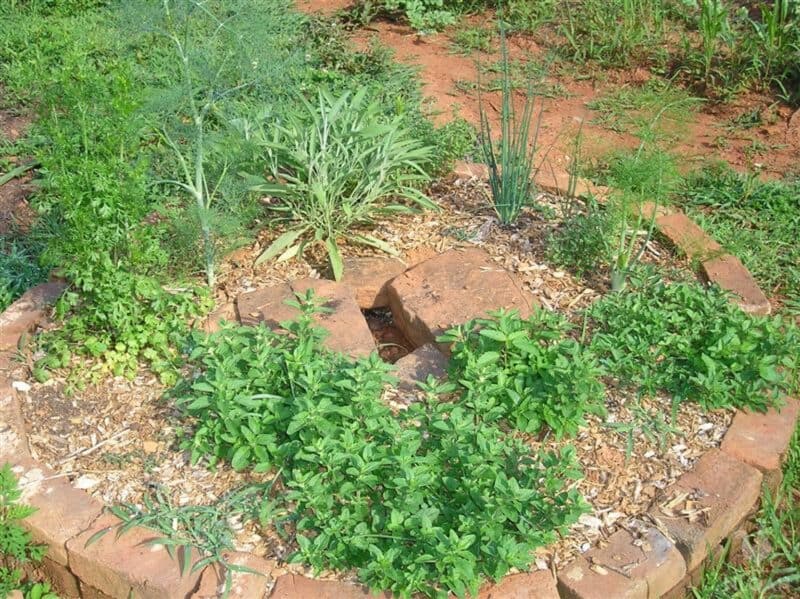
But what you might not know is that choosing the right pairing of herbs as companion plants can make your life a lot easier, whether you’ve got them in the ground, in raised beds, or in containers.
Smart pairings make for easy care, inspired combinations in the kitchen, and even special benefits for the rest of your garden.
Keep reading and I’ll tell you all about 14 pairs of herbs that work wonderfully together. We will get right into it below.
Sage and Marjoram
Two standouts in the Mediterranean herb category are marjoram and sage.
Both are commonly used in all sorts of culinary dishes, and growing them together is super convenient because both love full sun, well-draining sandy soil, and have only modest water requirements. Both are also drought-tolerant once they are well established.
Aside from great taste when making Greek chicken, when live, both of these will benefit the rest of your garden by attracting beneficial pollinators and pest predators, and repelling said pests in the first place.
Sage will drive off the bad ones, and marjoram brings in the good ones…
Rosemary and Thyme
Another stellar Mediterranean pairing, both rosemary and thyme love tons of sun and dry soils. If you are a forgetful waterer and have a reputation for killing more delicate herbs, these two won’t let you down.
In the kitchen, rosemary and thyme are often highly complementary and delicious on poultry and in various pasta dishes.
The resinous scent of rosemary is a wonderful contrast to the pungent, vaguely sweet smell of thyme, and they even complement each other when grown in close quarters…
Thyme tends to act more as a ground cover around rosemary, which can help the larger bushes retain more moisture and fight off weeds.
Rosemary and Lavender
One of my very favorite pairings, rosemary and lavender are two sun-loving plants that need minimal water.
Both also prefer well-draining, loose, and slightly alkaline soil, meaning they’re the perfect complement for growing in the same bed or in the ground on a south-facing patch of your property.
Both plants also have marked properties for deterring certain insect pests, mainly various beetles, grubs, and other species.
With few exceptions, what’s good for one is good for the other, and that makes caring for both a value proposition when it comes to your time and effort.
Lavender and Oregano
Not much of a surprise here, lavender and oregano also make for great neighbors due to their similar, modest watering needs, drought tolerance, and preference for loose, sandy, well-draining soil.
Both are also sun-loving herbs that need at least 8 hours a day for optimum performance and growth.
Although they’re rarely used together in dishes, both lavender and oregano have multiple culinary uses, with oregano especially being one of the most ubiquitous herbs enjoyed around the world.
Outside, lavender will bring in pollinators, while oregano will keep all kinds of pests, including mice and even deer, at bay.
Lavender and Thyme
Lavender and thyme make for a great pairing in the same way that lavender and rosemary do: soil, sun, and water requirements are very similar, and both need tons of sunshine.
What you might not know about these aromatic herbs is that both are also perennials that are quite frost-resistant if protected from the worst of winter lows.
Insulate their root area with lots of mulch and cover them with frost blankets if needed, and they’ll be ready to start producing again come spring.
Oregano and Marjoram
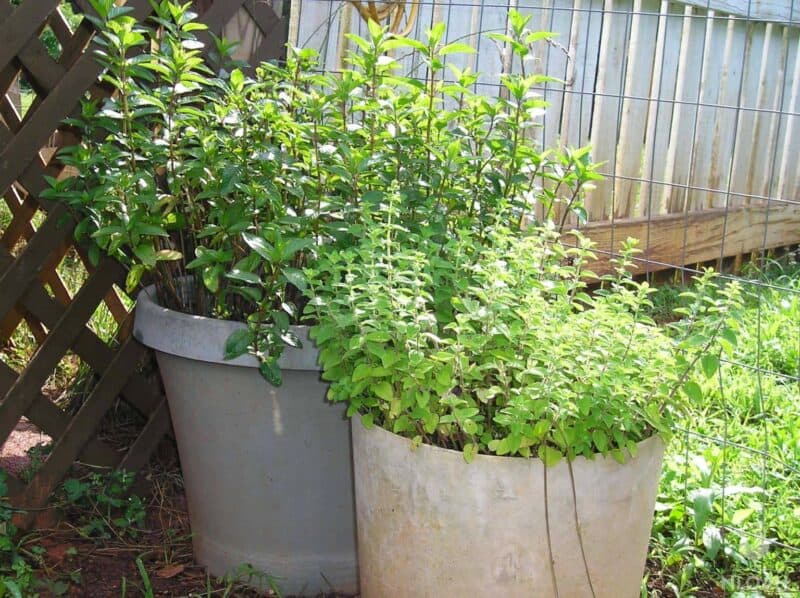
We’ve already learned that these two beloved Mediterranean herbs grow wonderfully alongside others, so it’s only natural they grow well alongside each other.
The flavor of each is very similar, so you might not get too much mileage in the kitchen out of this combo, but your garden will still definitely benefit as each attracts various pollinators and keeps insects, rabbits, rats, and even deer at a distance.
Just remember that if you can grow one, you can always grow the other!
Basil and Oregano
If ever there was a match made in heaven in the kitchen, it has to be basil and oregano. Mainstays of Italian and Mediterranean cooking, both herbs love well-drained, highly fertile soil.
Basil needs more water than oregano generally, but oregano will certainly tolerate moist soil as long as it’s not waterlogged. Both herbs also must be protected from frost.
Each of these herbs also has proven insecticidal and insect-repelling properties, so growing both of them together as a perimeter will give your garden great protection from aphids and other critters. This pairing is truly a win-win!
Basil and Parsley
Although not quite as stellar a combo as basil and oregano above, basil and parsley is still an inspired pairing.
Compared to oregano, parsley needs more water, which means if you’re going to be growing them in the same container or right next to each other, you can water them more freely.
Both of these herbs also benefit from lots of sun but are tolerant of partial shade. Where basil is predominantly insect-repelling, parsley is a magnet for beneficial pollinators and even a couple of species of parasitic wasps, which will decimate other insect pests.
Tarragon and Fennel
These two herbs, and fennel particularly, usually have a bad reputation for interfering with other nearby plants.
Tarragon for its growth habit, but fennel because its roots release a compound that can inhibit the growth of other nearby plants. Happily, they seem to do okay next to each other, but you can make a great case for containerizing them for best results.
Other care requirements are quite similar. Both need well-drained loamy soil. Both have moderate water requirements, though fennel needs more than tarragon. Both need tons of sun.
Cilantro and Chervil
Chervil, also known as French parsley, has a fresh, subtle taste that is often compared to weak anise.
Cilantro, you already know about: it either tastes citrusy, grassy, and delicious or like a bar of soap, depending on whether you like it or not!
One is a staple of cooking in Europe, the other in the southwestern United States, Mexico, and Central America.
If you want to flex your muscles in the kitchen, it’s easy to grow both of them together since they both need fertile, moist but well-draining soil and a little bit of shade along with cooler temperatures. Both will go to seed if temperatures climb too high.
Cilantro and Anise
Speaking of anise, it’s another good choice for growing alongside cilantro as both will thrive in similar kinds of soil, preferably soils that are slightly on the alkaline side.
Regular watering and moisture is a must, and though cilantro prefers cooler temperatures and anise prefers warmer, the latter is significantly more adaptable to temperature.
Dill and Chives
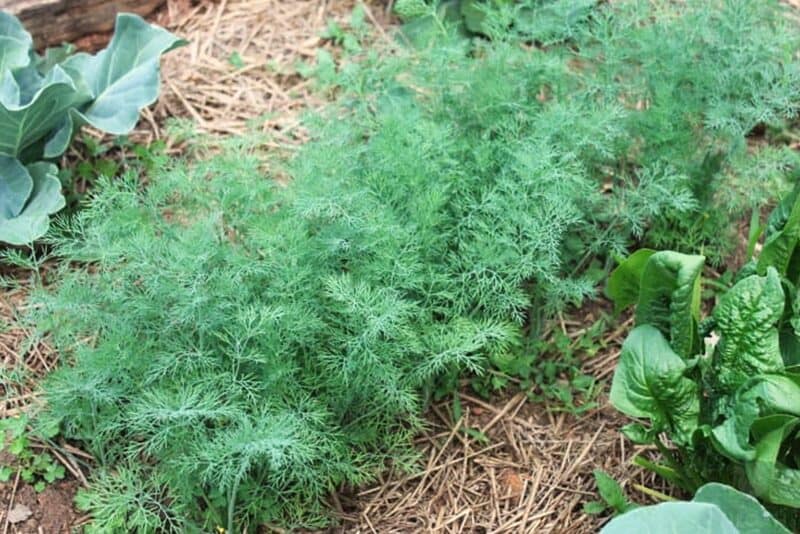
This is another herbal pairing that is a match made in heaven! Dill and chives are both mainstays of pickling, salads, dips, and a whole lot more.
They both prefer regular watering and moist soil, and most varieties are equally adaptable to full sun or partial shade. Cooler temps are best, but both can also deal with warmer temperatures readily enough.
Dill also has a couple of marked benefits for our gardens: for starters, it attracts lots of different pollinators, and also has the effect of enhancing the growth of other nearby plants, including chives.
Mint and Lemon Balm
Some of the botanists out there reading might raise a complaint on this pairing since mint and lemon balm are both members of the mint family of plants, but both are different enough culinarily that I’m allowing it!
These plants do have a lot in common, particularly their growth habit as both grow quickly and spread voraciously, making them problematic with their neighbors.
But that won’t be a problem if you start both of them in the same container next to each other. Mint and lemon balm require nutritious soil, regular watering, and do best with a little bit of shade, so the care requirements are basically identical.
Mint and Catnip
Like with lemon balm above, mint and catnip have nearly identical care requirements for temperature, light, water, and soil, and both are rapid and aggressive spreaders.
Although I urge you to plant them in containers unless you’re really going to stay on top of controlling them out in the garden, neither will give the other too much trouble as companion plants.
If you have a kitty of your own, the appeal of catnip will be obvious, but even if you don’t, it is known to keep certain insect pests like aphids, cabbage moths, and some other harmful creatures from getting too close, and mint does much the same.
Planted strategically at the corners of your garden, both can form a force field of sorts to protect the rest of your crops.


Get your gift and learn things like:
- how to make this really quick pest spray
- how to prevent egg waste
- two cheap automation devices that will make your life easier
Tom has lived and worked on farms and homesteads from the Carolinas to Kentucky and beyond. He is passionate about helping people prepare for tough times by embracing lifestyles of self-sufficiency.