
We’ve put in four grapevines this spring; two white grapes, and two Concords. I planted them in a bed bordering the outer side of my garden fence. The plan is to train them especially in the wire fencing. But since the vines will grow vertically, the entire ground of the bed will be bare of growth.

It’s such a shame to me to waste all of that space, so I started looking into what might be good to plant there; which plants will benefit my grapevines, and which should I avoid putting too close to them?
Here’s what I’ve found out…
Table of Contents:
Why Do Grapes Need Companion Plants?
As any gardener knows, grapevines are notoriously difficult to grow. They’re susceptible to all sorts of pests and diseases, and they need just the right amount of sunlight and water. However, one of the best ways to ensure a healthy grapevine is to plant it alongside a companion plant.
Companion plants can provide grapes with the nutrients they need, help to ward off pests, and provide shade on hot days. Additionally, they can help to keep the vine itself from spreading too far and taking over the garden.
Let’s take a closer look….
Deter Pests
If you’ve ever grown grapes, you know that they can be susceptible to all sorts of pests and diseases. As a result, many grape growers choose to plant companions that help to discourage predators. Now this doesn’t mean companion plants will completely solve these problems – you can’t fully avoid plant diseases – but they will decrease the odds!
Take basil for instance. Not only does it have a strong scent that deters many insects, but it also attracts beneficial ones like ladybugs.
Add Soil Nutrients
Companion plants help to add essential nutrients to the soil, which can improve grapevine health and productivity. Nitrogen is probably the most well-known nutrient that’s added by means of the so-called nitrogen-fixing plants.
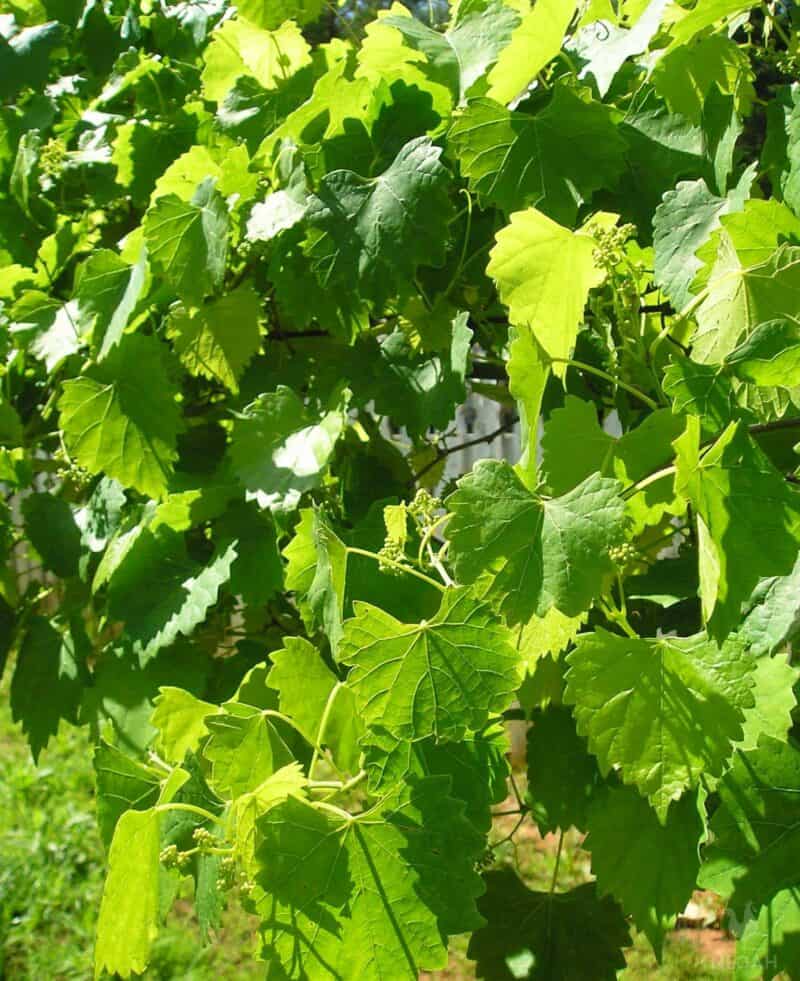
That being said, let’s see which plants can be planted along your grapevine. And by the number in the article title, you already know you have a ton of options to choose from!
They Don’t Help With Grapes’ Pollination, Though
It’s worth mentioning this just in case you were wondering. Grapevine flowers self-pollinate, so whether or not you attract pollinators won’t make a different to them. You can still do it in order to help pollinate your other plants and veggies, of course!
The Best Companions for Grapes (Our Top Picks)
These are some of the most popular companions you will see growing alongside grape vines. If these grow in your climate, they are no-brainers!
Clover
You will see clover A LOT in places that are known for their good wine, such as California and France as cover crops.
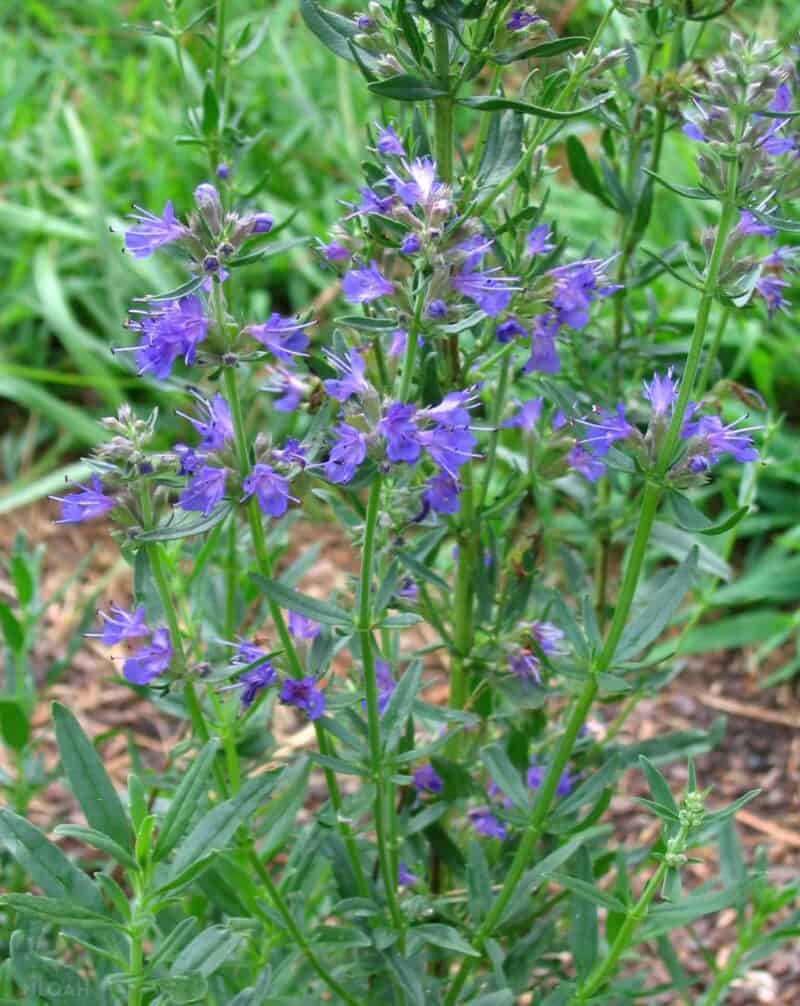
Hyssop
Hyssop is a GREAT companion plant for grapes. The bees love their flowers, the plant acts as a deterrent to pests, and it helps to stimulate the growth of your grapes.
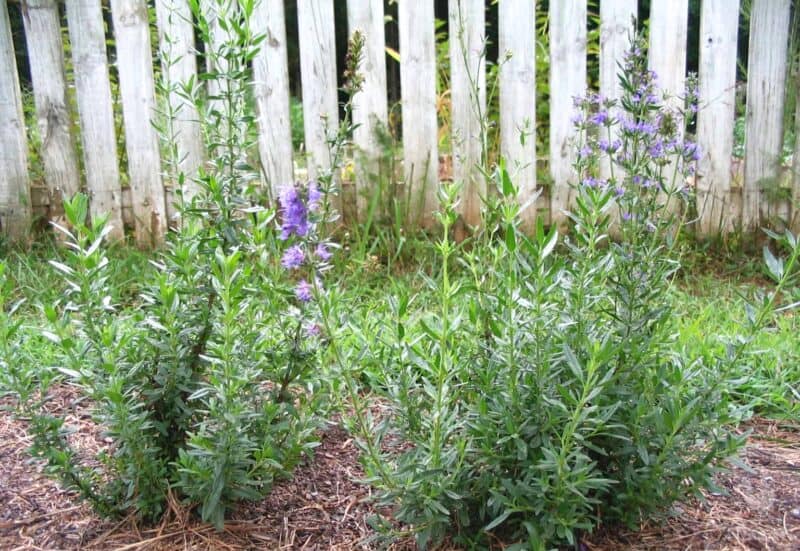
I happened to have some Hyssop seeds, so I got them started today. I really should have had them growing already (8 weeks before last frost), but I’m gonna give it a shot anyway. This is a perennial, so once I can get it going, I can look forward to the plant coming back every year.
I think I’ll also get some Geraniums to plant underneath the vines. That’ll be a nice way to pretty up the space, and attract good pollinators.
Comfrey
This is a great plant to have if you’re not a fan of using herbicide in your vineyard. What comfrey does is it suppresses the growth of regular grass, which will compete for water and nutrients with your vines.
Comfrey is very good at providing shade, and what this does in turn is hinder the growth of grass and other weeds. Now this doesn’t spare you the effort of scything it, but it takes less time than if you had to scythe the grass!
Rosemary
Rosemary is a hardy plant that can tolerate poor soil and dry conditions. It also has a strong scent that some say it helps repel grapevine borers (so this is anecdotal). In addition, rosemary produces nectar that attracts beneficial insects such as bees and ladybirds. These insects help to pollinate grapes and control grapevine pests.
Thyme
If you’re thinking of growing grapes, you might want to consider planting some thyme as well. Thyme is a good companion plant for grapes because, as it’s always the case with companions, it helps to deter various pests (cabbage moths, tomato hornworms to name a couple). Given that both grape vines and thyme like well -draining soil, it makes perfect sense to plant the two together.
Other Good Companions (The Main List)
Geraniums
Geraniums are good against Japanese beetles. they don’t repel them; rather, the beetles eat the petals, then become paralyzed by one of the substances they inadvertently eat called L-quisqualic acid. If the Japanese beetles are giving you headches, it’s worth adding these flowers just in case…
Wild Blackberries
Wild Blackberries growing within a few miles from the vines create the perfect habitat for a beneficial, parasitic wasp which destroys the eggs of leafhoppers.
Chives
Chives help to repel aphids.
Mint
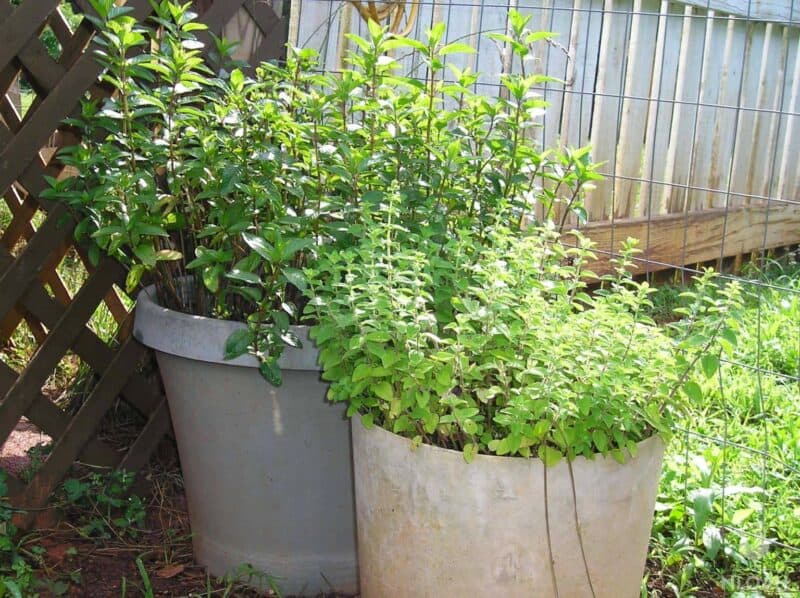
If you’re thinking of planting a grapevine, you might want to consider adding some mint to your garden plot as well. Mint is a good companion plant for grapes for a few reasons. First, it helps to keep away pests that might damage the grapes. Second, it may help to prevent disease.
Catnip
Catnip is a member of the mint family, and like other mints, it is a vigorous grower. This can be beneficial when planted next to grapes, as it will help to crowd out weeds and competing plants. Plus, the strong scent of catnip can help repel some pests such as aphids.
Field Maple
Trees, in general, are not good companions for grape vines, but there are a few that are pretty good – and field maple is one of them.
If you’ve never heard of vite maritata before, this is a centuries’ old Italian technique whereby grape vines are allowed to climb on trees. The tree acts as a trellis for the vine, giving it more space to spread and grow lots of grapes.
But the choice of tree matters, and field maple is a top choice because it can be easily pruned (even heavily if need be), it’s small in size (smaller trees are better as companions), and it doesn’t have any toxicity red flags (other trees may release tannins).
Chamomile
In the garden, chamomile is best known as a companion plant for grapes. The strong scent of chamomile deters many pests, including aphids, spider mites, and scale insects. It also attracts beneficial bugs such as bees and ladybugs, which help to pollinate your other plants (remember, grapes are self-pollinating).
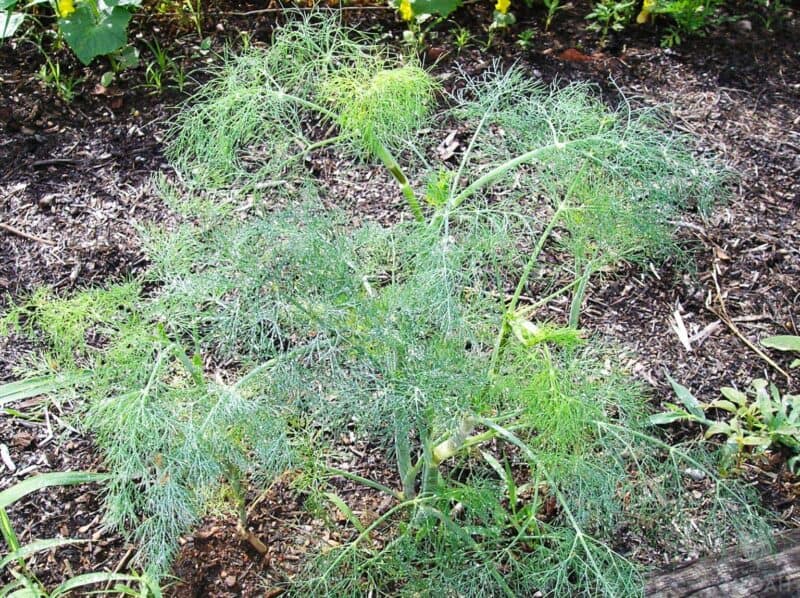
Dill
One plant that is often used as a companion for grapes is dill. Dill has a number of advantages as a companion plant.
First, its tall, spiky growth habit helps to provide support for grapevines. Second, dill is known to attract beneficial insects, such as ladybugs and lacewings, which help to keep destructive pests in check.
Marigolds
Marigolds are well known for their ability to deter pests through their strong scent such as aphids, whiteflies, – to name a few. In addition, the brightly colored flowers can attract beneficial insects like ladybugs and lacewings, which help to keep the grape vines healthy.
Tarragon
Tarragon has unique, narrow, dark green leaves and produces small, yellow-green flowers. The leaves have a pungent, anise-like flavor that is used to season vinegars, mustards, and stews.
Tarragon is also a good companion plant for grapes. Tarragon repels Japanese beetles and other pests that attack grape vines.
Beans
There are many reasons why beans make a good companion plant for grapes. For one, they help to improve the drainage of the soil, which is important for grapevines. Additionally, beans add nitrogen to the soil, which is an essential nutrient for grapes.
Not to mention beans deter pests and predators from the grapevines, providing natural protection against damage.
Peas
Peas are a popular choice for companion planting, and they make a great addition to any grapevine. Peas are nitrogen-fixing plants, meaning they help to improve the quality of the soil. In addition, their nitrogen-rich foliage provides a natural mulch for grapevines, helping to conserve moisture and suppress weeds.
Their trailing habit also means they can act as a living trellis pole for vines, providing support and helping to keep grapes off the ground where they are more likely to rot.
Oregano
If you’re a fan of both oregano and grapes, you might be wondering if they can be grown together. The good news is that oregano makes an excellent companion plant for grapes! Here are a few reasons why.
Oregano helps to repel pests such as aphids, which can damage grape vines. The aromatic oils in oregano can help to mask the scent of grapes, making them less attractive to predators. Oregano also helps to promote healthy growth in grapevines by increasing the level of nitrogen in the soil.
Tansy
Tansy is a well-known companion plant in general for because repels a wide variety of pests, including ants, and moths. It’s also easy to grow and care for, making it a low-maintenance option for grape growers.
Lavender
Lavender is a fragrant, drought-tolerant herb that is known for its calming effects. It is also a good companion plant for grapes (Vitis vinifera), as it can help to protect the vines from fungal diseases.
Lavender helps to repel insects such as aphids and mites. In addition, the dense network of roots helps to prevent soil erosion and provides nutrients for the grapevines.
Basil
Basil grows well alongside grapes for a number of reasons. First, it helps to repel pests that can damage the vines, such as aphids and whiteflies. Plus, basil emits a strong fragrance that can mask the scent of the grapes, making it more difficult for predators to find them. This one is anecdotal, though, so it may or may not be true.
Lastly, basil provides shade and protection from the sun for the grapes, helping to keep them cool and prevent sunburn.
Other Good Choices
A few other good companion plants for grapes (for all the reasons listed above) include:
- Strawberries (they make good groundcover when planted at the base of fruit trees, too)
- Onions and leek plants
- Coriander
- Other legumes (in addition to beans and peas)
- Cucumbers
- Nasturtiums
- Sage
- Broccoli, kale, kohlrabi, cauliflower, Brussels sprouts (and other cruciferous vegetables that are considered cole crops)
- Beets
- Swiss chard
- Spinach
- Garlic
- Parsley
- Turnip
- Eggplant
- Carrots
- Potatoes
- Celery
- Pumpkin
- Okra
- Lemon balm
- Horseradish
- Corn
- Squash
- Raspberries
- Apple trees and other fruit trees
- Borage
- Peppers
- Tomato plants
- Raspberries
- Lettuce
- Cosmos
What NOT to Plant With Grapes
If you’re thinking about planting grapes, there are a few plants that are either not worth thinking about, or they can be downright counterproductive.
Black Walnuts
Black walnut trees release a substance known as juglone, which can be toxic to other plants, including grapes. Sure, wild grapes seem to be fine with it, but we can’t say that about all grapes.
Therefore, it’s best not to plant grapes near black walnut trees. The roots of the black walnut tree can also compete with other plants for water and nutrients.
Collard Greens
Collard greens and grapes are two very different plants. Collard greens are a leafy vegetable that grows best in cool weather, while grapes are a fruit that thrives in warm climates. As a result, planting collard greens and grapes together can be difficult.
The different temperature requirements can result in the plants competing for resources, and the grape vines can easily overpower the collard greens. In addition, the grapes will produce a lot of shade, which the collard greens may not be able to tolerate.
Cabbage
While you may be tempted to plant all of your favorite crops together in one garden, there are some plants that simply don’t get along. Cabbage and grapes are a prime example.
Cabbage is a heavy feeder, meaning it requires rich soil with plenty of nutrients to grow well. Grapes, on the other hand, are relatively tolerant of poorer soil conditions.
As the cabbage grows and takes up more nutrients, it can leave the grapes struggling to find enough food. Additionally, cabbage is a cool-season crop while grapes are best planted in the late spring or early summer. This means that they will be competing for space in the garden as well as for nutrients.
Lemongrass
This is a nitrogen feeding plant, this means can and will compete with grape vines for the nutrient. What it also means is that it’s not a nitrogen fixing plant, which would really help your grapes. Even so, you might not even be able to plant the two together given they grow in different climates. Lemongrass is a subtropical, found in zones 8 to 10, while grape vines typically grow in zones 5 through 8.
Sunflowers
Sunflowers are tall and slender, so they won’t compete with the grapes for space or sunlight… but they will compete for nutrients such as nitrogen and potassium. They are good at it too, because the roots can go really deep, anywhere between 2 and 6 feet!
The other issue is that sunflowers are allelopathic crops, which means they leach phenolic acids directly into the soil and suppress the growth of your grapes.
There is one good reason to use them as companions, though; someone proved that birds will prefer sunflower seeds over grapes… so you could try planting them far enough from the vines as to not compete for nutrients but close enough to lure away hungry birds.
Oak Trees
To their credit, oak trees do have some benefits to grape vines, but overall, the case is agains them. On the one hand, they can offer indirect pest control if they happen to house bats that will, in turn, eat some of the pests.
The other issue is that they may take water away from your grapes, even though the shade they provide helps retain water into the soil overall. But overall, they are probably not worth the effort with so many other companions on this list.
the other thing, that may or may not be an issue, is that oak trees release allelopathic tannins, which are known to inhibit the growth of some plants. Whether or not this affects grape vines in particular is not known at this time, though…
Mulberry Trees
Mulberry trees should be avoided for the same reason you’d avoid oak, and many other trees: while they do help with soil retention by creating a lot of shade, their vast roots can and will inhibit the growth of grape vines.
The case is even stronger for mulberry because its roots are shallower and tend to spread faster. In fact, you don’t want to plant this one near any structures such as barns or outhouses, or even near irrigation lines.
Elm Trees
Yet another tree that competes for water and nutrients when planted with grape vines. Skip it as a companion for the same reasons you should skip the other trees mentioned just above. The shade that they provide is too much to maximize the yield of your vines!


Hope this is helpful to somebody! If you know of any other good companion plants for grapevines, or any other tips in general, please do share. Oh, and feel free to get this PDF with the two lists of what you can and cannot plant around your grapes, too!

Get your gift and learn things like:
- how to make this really quick pest spray
- how to prevent egg waste
- two cheap automation devices that will make your life easier

A city girl learning to homestead on an acre of land in the country. Wife and homeschooling mother of four. Enjoying life, and everything that has to do with self sufficient living.
Thank you for your posting. Do you suggest Hyssopus or Hyssop Agastachi?
Thanks! Just planted some basil next to my grapes. Also, already next to a baby mulberry, and some brassica so it’ll be an experiment!
Oh legend! I have 3 grape vines going in shortly and was also thinking it would be bare under them. They’ll be growing along one of the fences by our garden so anything that attracts the bees has to be a good thing – hullo hyssop 😉 and wild blackberries grow all over the place round here! Thanks for this 🙂
Take care when mulching with fresh wood chips because the process of decomposition will actually leach nitrogen from the soil.
Only when mixed in the soil ; on top they are slowly releasing nutrients and building healthy soul
Thank you for posting this! We planted grapes last year and I had wondered what would work well with them. 🙂
Great tips! Growing grapes is a skill I am planning in the near future so I am looking forward to hearing your experiences with it.
Thank you for posting this. I was thinking of doing grapevines someday and will keep this information. Thank you again!
This is extremely helpful to me! 🙂 I just planted 4 concord grape vines this past weekend. Thank you!!
Great, Meg! Glad it came in good timing for ya 🙂
Rose Bushes,
“Both roses and grape vines are susceptible to the same diseases. Indeed, roses act as early warning of mildew which is a fungal disease. There are two main kinds of mildews: Powdery mildew (Oidium).. [&] ..Downy mildew.”