
When talk of foraging for wild edibles comes up in the context of survival situations, what do you imagine? If you were like me, and most people, you probably think of moving through a wooded environment looking for berries, nutritious greens, and maybe even a few choice mushrooms. A good answer. You certainly didn’t think it was doing the same thing in a city…

City survival foraging conjures images of desperate dashes to grocery stores and gas stations to raid bags of processed snacks.
But believe it or not, many wild plants, and really good ones to boot, can still be found in abundance around most urban and suburban areas. Learning to make use of them might make all the difference in a prolonged survival scenario!
To help you pad your survival pantry I’m bringing you a list of the most common and most nutritious edibles you can find in the average American city.
Safety First!
Before we jump into the list, an obligatory safety brief. Make no mistake, just because you are foraging for wild edibles in a city doesn’t mean you won’t run into toxic or even flagrantly poisonous plants. You can, and you will.
For that reason, you’ve got to put the time in so you can identify edibles on sight and with no mistakes.
Picking the wrong plant and eating it could leave you gravely sick or even dead, so take this seriously.
Likewise, pay attention to where you’re picking any plant from…
Even a completely safe and nutritious plant could be made dangerous if it has been exposed to toxic runoff near an industrial area or is growing up through a crack in the pavement, having been subjected to countless baths of oil and gasoline.
Use your head, and play it safe. Now, let’s get to that list.
Queen Anne’s Lace
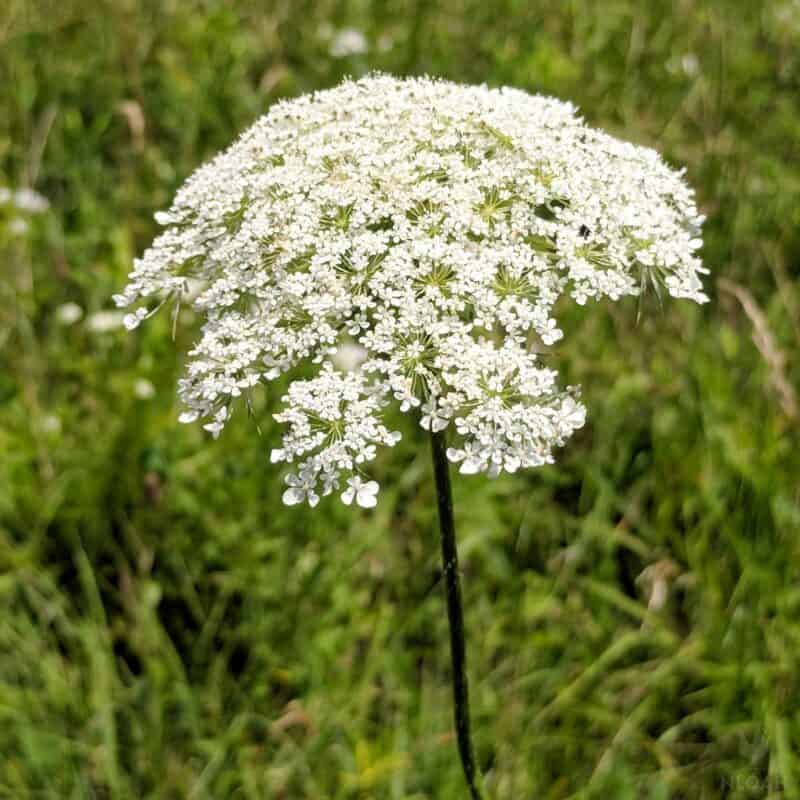
One of my favorite wild edibles is one that can be found in the wilderness and in the city. Queen Anne’s lace is nothing more than a wild carrot. Yes, just a wild version of the carrots you buy in the grocery store. They aren’t as orange or as big as those are, but they’re still quite tasty, versatile, and nutritious.
Queen Anne’s lace is often thought of as a weed and eradicated as such, but it’s easy to spot thanks to its large crown-like cluster of tiny white flowers.
Also, start brushing up on look-alikes now: it is a dead ringer for the infamously lethal poison hemlock. That latter plant has a distinctive, musty funereal odor, though, whereas Queen Anne’s lace just smells like a carrot.
Pineapple weed
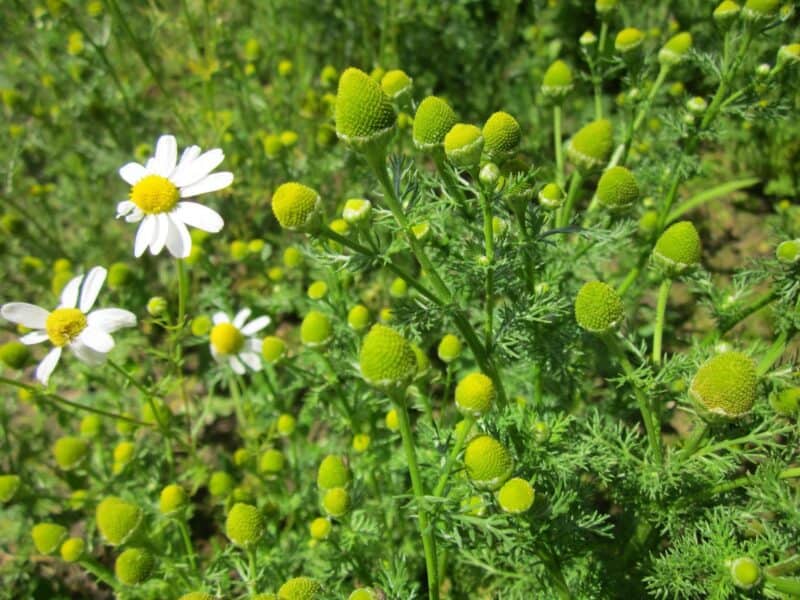
Like garlic mustard mentioned elsewhere on this list, pineapple weed is an annoying plant that lives up to its name. It’s fairly invasive, and when the flowers and its leaves are crushed, they have a sweet and highly aromatic fragrance that is very close to that of genuine pineapple.
This plant has a long history as a wild plant and one with significant health-boosting properties. Flowers can be steeped and made into tea or eaten.
Dandelion
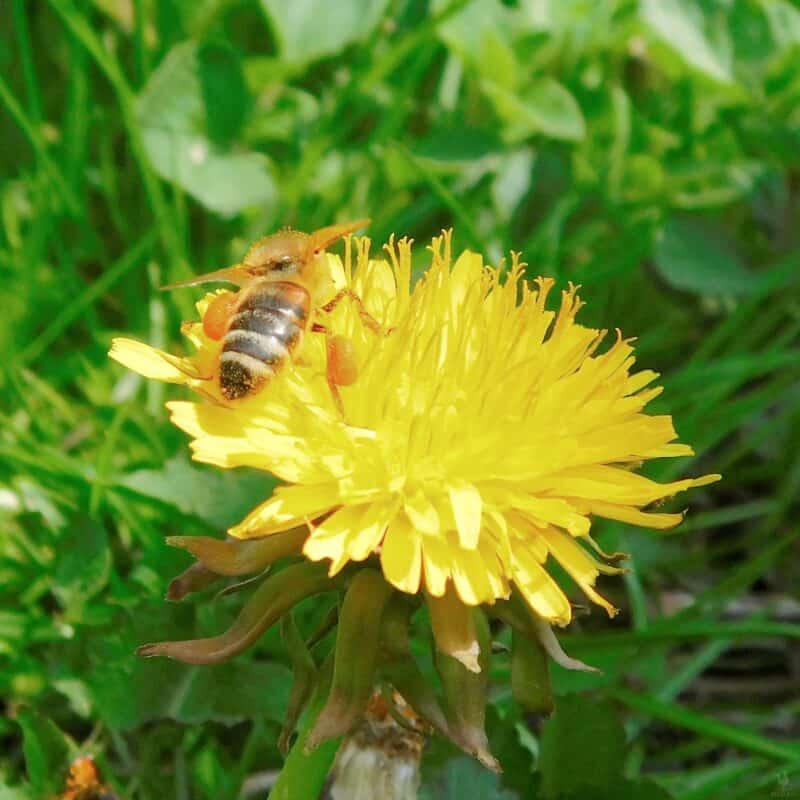
The most infamous lawn pest there actually deserves our respect and appreciation because it’s both delicious and extremely healthy. Every part of the plant, from the roots to the stems, leaves, and flowers, is edible and very good for you.
Dandelions are an amazing source of vitamins A, C, and K and a very good source of iron, calcium, and potassium.
These have a long and distinguished history of being harvested for salads, and soups, and and being used in various recipes and infusions.
But, do take care: they are quite hated by landscapers and gardeners, and disproportionately targeted by herbicides, so think twice about where you harvest them from.
Chicory
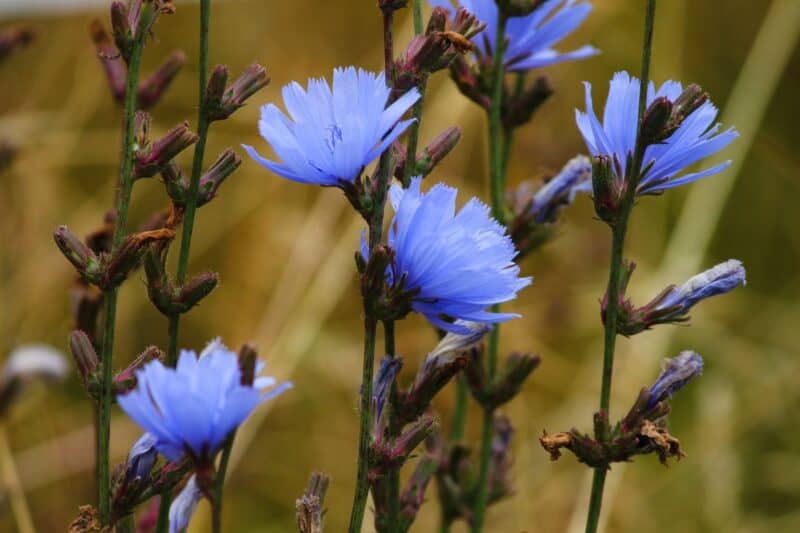
Chicory can be found virtually anywhere, and it is a common fixture in neglected lots and yards, and is also found growing wild in vacant land and along roadsides.
This is another pest plant that has a forgotten, but distinguished, culinary history. Chicory has long been used as a healthy substitute for coffee, and the entire plant is edible. The roots are particularly good.
Leaves have been eaten as salad greens for centuries, but they are notably bitter as they have a vaguely arugula-like taste. Cooking makes them far more palatable…
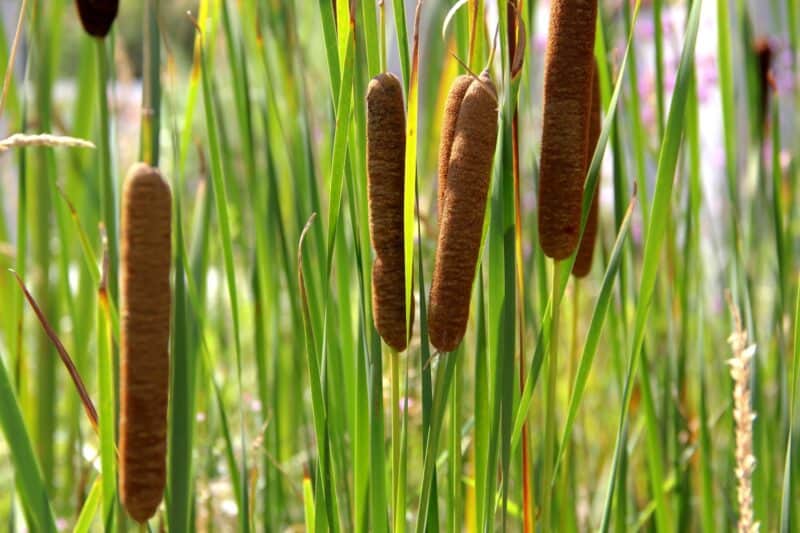
Cattails
Sometimes humorously called “nature’s corn dog,” I can assure you cattails do not taste like corn dogs and you shouldn’t try to eat them as such.
Stereotypically associated with swamps, marshes, lakes, and wetlands, cattails can actually grow anywhere that sees the regular accumulation of groundwater. They are especially common alongside ditches and highways for this reason.
My advice? Don’t mess with the fluffy, starchy part at the top that grows on the reed. Instead, dig up the root-like rhizomes and prepare those instead. They have a taste and texture very much like potatoes, and the other green parts of the plant are edible too.
It’s possible to process the “corn dog” part (actually the pollen) into flour, but this is highly laborious and I don’t think the stuff is very good.
Hackberry
Another chronically undervalued urban edible, and berry generally, is the hackberry. A hackberry tree can be a gold mine in the fall when they start to ripen.
Firm, dry, and not particularly appealing thanks to their color which is usually a bruise-like brown, they are nonetheless pretty tasty.
A particular note is the seeds. The seeds are edible and crunchy, can be chewed and swallowed safely, and provide much-needed protein and fat. The flesh of the berries has a somewhat floral taste which compares favorably to gooseberries or figs.

Roses
Yep, you heard right. Roses are indeed edible. You’ll have to steer clear of the thorns, though!
Rose blooms and leaves are both edible and nutritious, and rose hips, that is the fruit of the blooms themselves, are extremely nutritious and absolutely bursting with vitamin C. Rose hips make a great meal in themselves, or you can steep them to make a tea.
However, roses can be problematic in an urban foraging scenario because they are so often protected with pesticides because they are highly valued ornamentals.
Your best bet is to look for wild varieties or ones that are growing feral away from homes, businesses, and planters.
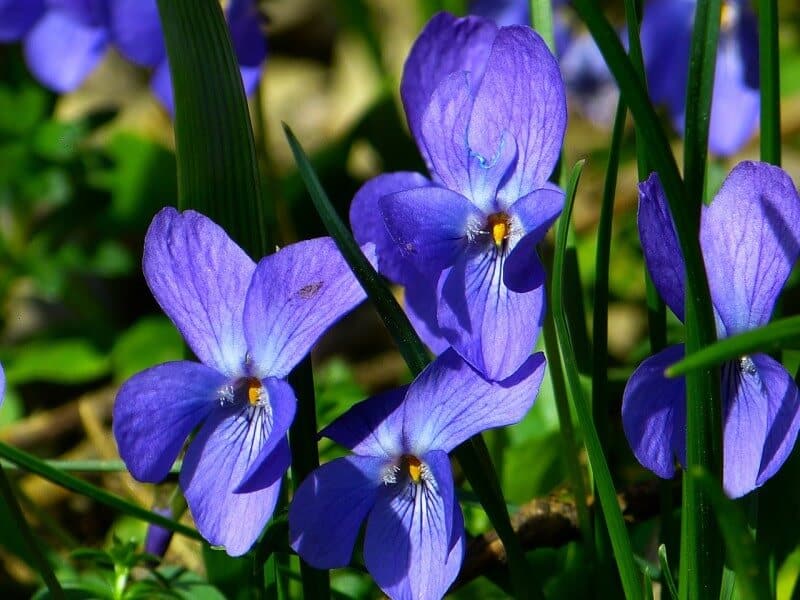
Violets (Viola Odorata)
True violets are a beloved decorative flower, and also an edible one that is basically a living, breathing multivitamin. Despite their delicate appearance, this is one tough plant and you’ll often find it growing in the most inhospitable places right alongside dandelions.
But because of that propensity, this is another food option that is very likely to have been hit with herbicides or, when planted deliberately, pesticides to protect it. Choose carefully, and if in doubt walk away: you don’t want to ingest any of those nasty chemicals!
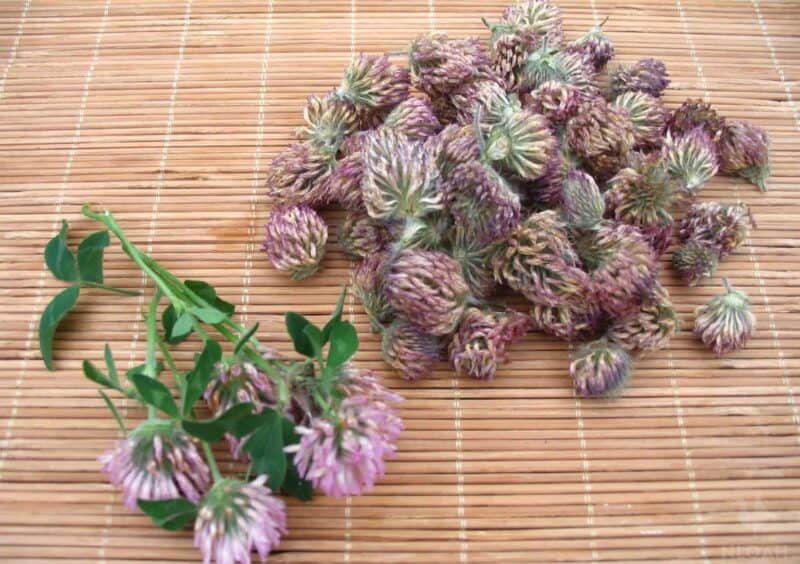
Clover
Clover is yet another plant that is despised by homeowners, groundskeepers, gardeners, and landscapers. It is seemingly everywhere and is notorious for outcompeting grass.
What you might not know is that clover is edible and very good for you, and clover blossoms particularly have a nice sweet flavor, and the leaves, stems, and blooms can be steeped to make a nutritious tea.
The entire plant can also be ground into flour or eaten as part of a salad.
Oak Trees
Seasoned survivors already know that oak trees are a great survival resource thanks to their acorns.
But acorns are highly problematic if eaten as is thanks to the toxic tannins they contain. A few will upset your stomach, more will make you sick, and a big bunch of them can finish you!
Not to worry, though, as you can harvest acorns by the bucketload and then leach the tannins out of them before roasting and eating them as is, grinding them into flour, or using them in various other ways. They are an awesome and easy source of protein, so don’t neglect them!
Maple Trees
Maple trees are one of my favorite edibles. You already know that we get delicious maple syrup from maple trees, but it doesn’t start out that way. It starts out as a clear, runny sap.
You can tap a maple tree easily with a drill or spike and harvest this sap ready for drinking. It’s hydrating and has just a little bit of sugar content making it taste better and giving you some needed electrolytes.
If you’re crazy for a sweet treat, you can collect a ton of sap, at least 40 gallons, and then boil it down to syrup. It will only yield about a gallon, and this is a horrendous waste of fuel but it is possible!
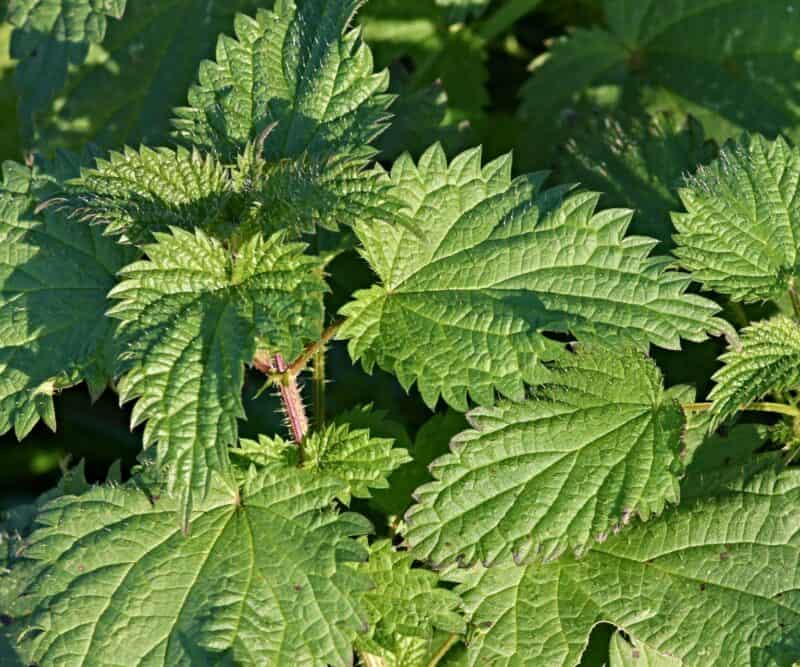
Stinging Nettle
If you ever go hiking, camping, or do anything else out in the field, you’re probably already familiar with this intensely aggravating plant.
Stinging nettle is infamous for its dense coating of translucent, hair-like stingers, each of them acting like a minute ampoule of burning acid. But surprising as it may be, this is a marvelously nutritious plant! It is packed with iron and potassium, vitamin K, and vitamin A with more besides.
So, how do you eat it without getting lit up? Simply harvest the plant as carefully as you can using gloves or tools, then sauté it or boil it; totally deactivate the stinging chemicals.
Garlic Mustard
Garlic mustard is a ferociously persistent weed that is the bane of many gardeners and landscapers. Missing even a little bit of the root, the whole plant will typically regrow.
But this weed lives up to its tasty name, having a fragrant, spicy flavor that is wonderful as a salad green, on sandwiches, or cooked as greens.
Make sure you harvest the stems from younger plants and shoots; if you have to work to snap them off, they’re going to be old and tough. The leaves tend to be good, if bitter, from all plants though.
It can grow virtually anywhere, so keep your eyes peeled.
Apples
It’s easy to forget about them, but you might be shocked to find how many apple trees are growing in and around cities. And it makes perfect sense!
People and animals eat apples and then discard the seeds, one way or another. Some of those seeds will take root, sprout, and grow into apple trees and some cities grow apple trees as a cultural ornamental.
Consider also that wild apples, and smaller varieties like crab apples, could be found growing naturally or invasively, but these can be more easily confused for dangerous plants.
Make sure you study up on the differences, and don’t expect to find huge, ruby-red grocery store apples!
Beech Nuts
Beech nuts are a delicious and easily identified urban edible. For starters, just look to identify beech trees, and if you don’t know what they look like learn to ID the spiny, alien-looking husks that cover the distinctive triangular nuts.
Beechnuts contain tons of protein and fat, along with many minerals, making them an excellent and filling food that can make the difference if you’re low on animal protein in your survival stash.
Pine Trees
Pine trees all produce needles which can be steeped into a highly nutritious, and in my opinion quite tasty, tea. It is a uniformly excellent source of vitamin C, and has been used historically to ward off scurvy when fresh fruit and other sources aren’t available.
Obviously, you’ll only be getting trace amounts of calories from such a drink, but pine trees can also provide more calories in the form of pine nuts, and even their inner bark is edible. You can even process the bark and even pine cones into flour!
Just be sure you are dealing with an actual pine tree and not something like a yew; yew trees are dangerously toxic!
Juneberry
If you are lucky enough to come across juneberries in your city, rejoice! They are delicious, sweet, and tart…
They’re packed with vitamins and very easy to identify once you know what to look for. They’re also a popular landscaping plant in many places, meaning they might be surprisingly plentiful!
Look for their small, brilliant white five-petaled flowers and satin green leaves to spot them. The berries grow in clusters very similar to cherries.
As you might have guessed already, take extra care when picking them because if you mix them up with other dangerous plants you’re going to be in for a very bad time.
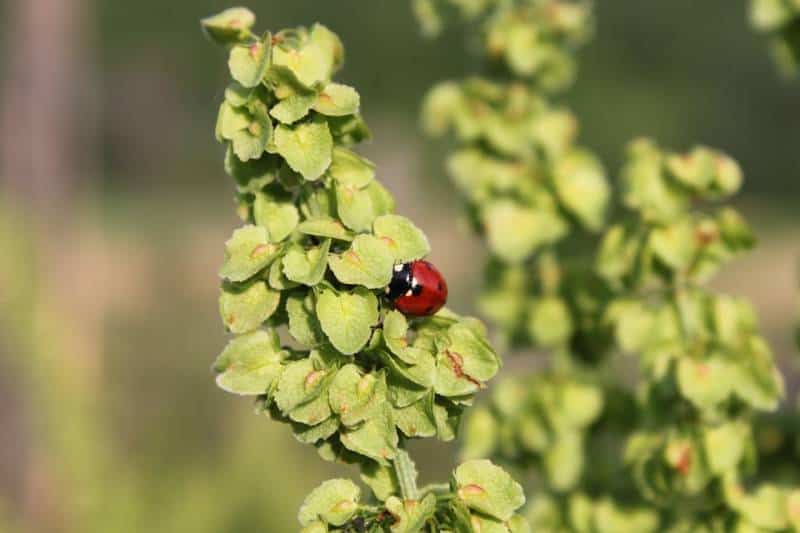
Curly Dock
Curly dock is a humorously named but incredibly prolific plant. Growing tall with long strands of rust-red seeds, this nutritious edible is a relative of more common grains like buckwheat. Both the leaves and stalks are edible, but younger stalks have a better flavor and are tastier.
The chaff can be separated from the seeds and turned into flour, or if you are in a hurry you can grind the chaff and seeds together. If you are really lucky, you can harvest the plant while it is young and green and eat it that way.
Lambsquarters
Lambsquarters is a mainstay of preppers, and with very good reason. It is edible, versatile, and surprisingly tasty, having been eaten for centuries as a salad herb or sautéed green.
It’s packed with iron, magnesium, calcium, and many vitamins, particularly the ever-important vitamin C. It even has a surprising amount of protein!
It is commonly found growing as a weed, and it’s a good bet you’ll find some in parks, around sports fields, and anywhere else cultivated grass or other plants are common.
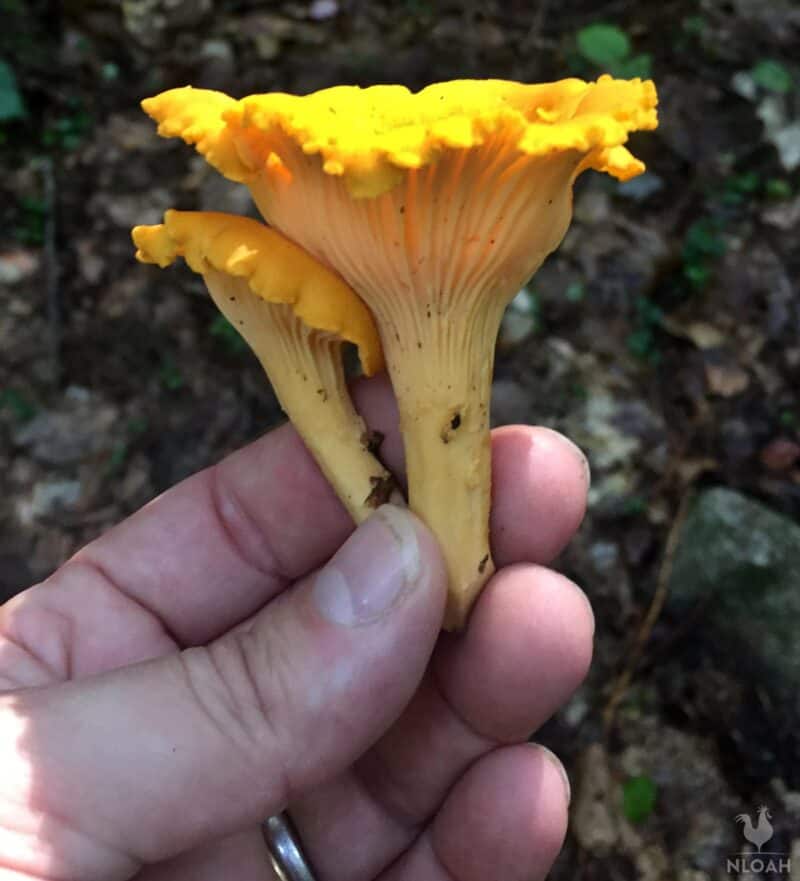
Mushrooms
Of course, we can’t forget about mushrooms! Mushrooms can grow virtually anywhere that conditions are favorable, and they are a common sight around gardens and landscaping or where mulch has been used.
Remember that many kinds of fungus tend to grow on decomposing wood! Use that to guide your search. Edible and delicious urban varieties include oyster, chicken of the woods, and shaggy mane, among others.
But you already know where this talk is going, don’t you? It is absolutely imperative, and I do mean critical, that you have expert knowledge of any mushroom you plan on picking to eat. Dangerous or even deadly look-alikes are common, and eating even a single poisonous mushroom might be the last thing you do.
If you aren’t sure or don’t have expert guidance to call upon, just don’t risk it. There’s plenty of other food out there to find in the city.


Get your gift and learn things like:
- how to make this really quick pest spray
- how to prevent egg waste
- two cheap automation devices that will make your life easier
Tom has lived and worked on farms and homesteads from the Carolinas to Kentucky and beyond. He is passionate about helping people prepare for tough times by embracing lifestyles of self-sufficiency.