
Pigs are, pound for pound, one of the most difficult livestock species to keep contained. They aren’t quite as nimble as goats, but what they lack in agility they make up for with brute force and relentless determination. Pigs are notorious for putting weak fences to the test, and the ones that they can’t push over they will simply dig under.
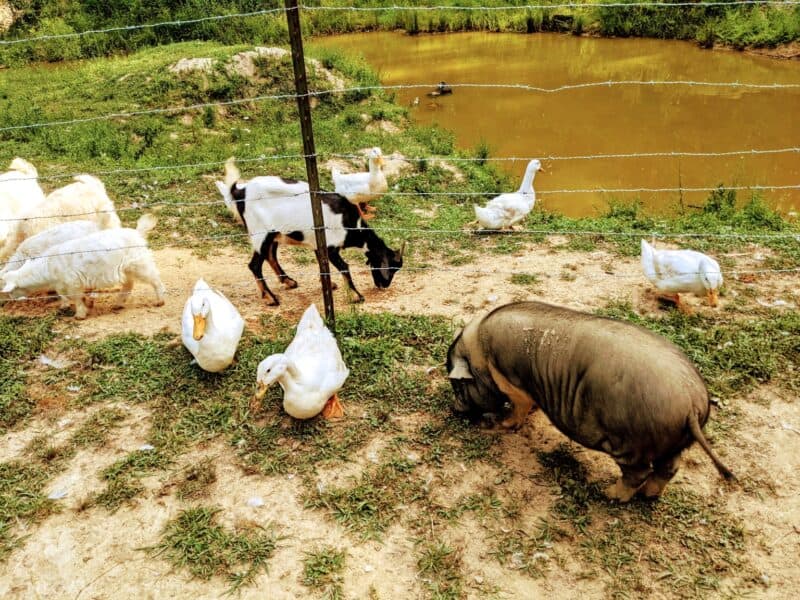
Don’t believe me? Go on any homesteading group, forum or just ask your friends, family and neighbors that have made a go at keeping pigs. Escapes via digging are all too common! You don’t have much hope of stifling this behavior but you can prevent your hogs from digging out with the right approach.
Keep reading and I’ll tell you about some really smart ways to keep your pigs from digging under their fence and getting out of their pen – so you don’t have to spend hours trying to catch them!
Sink Fence Deeper Into Ground
The first thing you should do when putting a pen together, and to veteran pig keepers the most obvious, is sadly overlooked much of the time by beginners. Any fence you set up and depend on to keep your pigs in place needs to be below the ground to some extent. It must!
Not low to the ground. Not at ground level. Beneath the ground. That’s because pigs, duh, dig and a small pig can easily dig out a ditch or depression that will let them wriggle under a fence that is even a couple of inches off the ground. Piglets and weaners are notorious for this.
Metal fencing is the best candidate for this for durability and longevity. Rot resistant wood works okay, but tends not to last as long. You should also note that buried fencing alone typically isn’t enough to guarantee your pigs stay in place; you’ll want to combine this with several other options on this list to secure these porkers.
Use Sturdy Fencing Materials
Something else that should be common sense. Or at least I hope it is! Pigs are a whole lot bigger and a whole lot stronger than chickens, but despite this I’ve met more than a few people who try, vainly, to keep pigs, even large hogs, contained behind flimsy chicken wire fencing, cheap livestock panels or poorly built or improvised fences.
Please believe me when I tell you that this simply will not do. Pigs are notorious for pushing, leaning and otherwise battering fencing. Weak fasteners will pop right off, or posts can simply be pushed right over dropping an entire section of the fence. Once that happens, your herd is often running through the countryside or eating up your neighbor’s garden.
I understand that everyone is on a budget and most people aren’t made of money, and for us homesteaders the temptation is always there too to do more with less or reuse materials. But again, this is one area where trying to skimp is false economy.
Use good materials such as hardware cloth, strong fasteners and plenty of posts or suffer the consequences.
Build Fence With L-Shaped Footer
In my opinion the single best return on investment when it comes to hog containment is to set up an L-shaped footer when you install or replace your fencing. This is something that’s a lot easier to do when the fence is going in from scratch rather than trying to retrofit it to an existing one.
An L-shaped footer is exactly what it sounds like: if you’re looking at your fence in profile, it means that the fence, or a separate attachment, extends down into the soil and then curves into the pen space, underground, forming an L shape. This is usually done with heavy duty hardware cloth or similar flexible and versatile material.
Essentially, this forms an underground barrier that’s just too tough for hogs to dig through. Hogs can go through dirt and gravel like nobody’s business, but tougher materials that will tear up their snouts and hooves they leave alone.
In practice, you want to install this footer around the entire inner perimeter of the pen fencing with no gaps. It’s an added expense and a fair bit of work, but I promise it pays off. If you don’t have hardware cloth, wood isn’t a terrible choice but it’s not going to last nearly as long.
If that’s still not an option for you and you’ve got more muscle than money to throw at the problem, check out the next entry on this list.
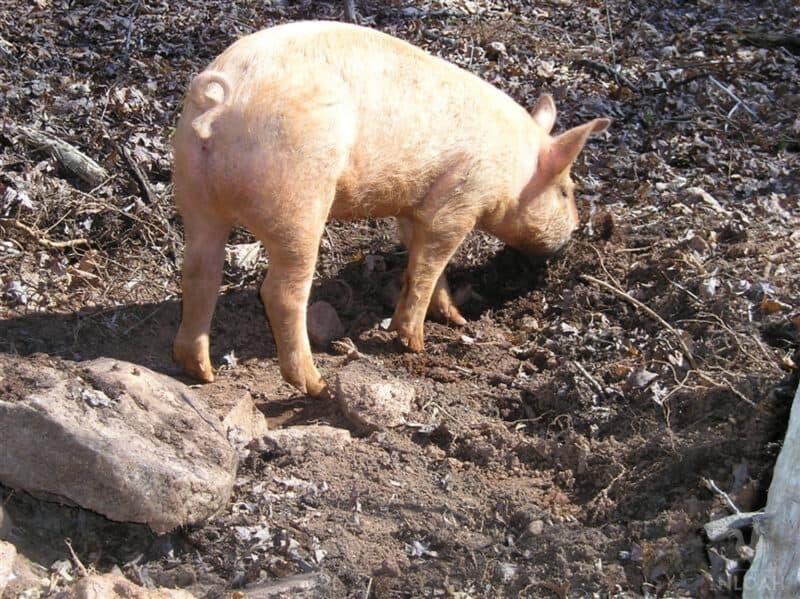
Bury Large Rocks and Stones Around Fence Perimeter
If you’ve got a large quantity of larger rocks and stones on your property, you can use those in place of the footer we just talked about. Again, pigs will give up trying to dig stuff that can’t be broken down or shifted.
If you already have the stone on your property, this can be a really cheap option. Sadly, it’s also going to be a backbreaking one. There’s nothing for it! But a few days of hard labor can save you a bundle of money and let you sleep a little easier knowing that your pigs are unlikely to pop out of the pen anytime soon.
But don’t get complacent: remember what I said about pigs being surprisingly strong? This is doubly applicable to large breeds and male pigs particularly. Stones that are sufficient for keeping young pigs and smaller breeds in place might not be enough to secure a large and tenacious specimen.
Also, don’t think you can get away with gravel or pebbles like you would for trying to keep digging predators out of a chicken coop; it’s been my experience that pigs will readily shift these smaller stones out of the way with no slowdown.
Install Electric Fence or Incorporate Wire into Existing Fence
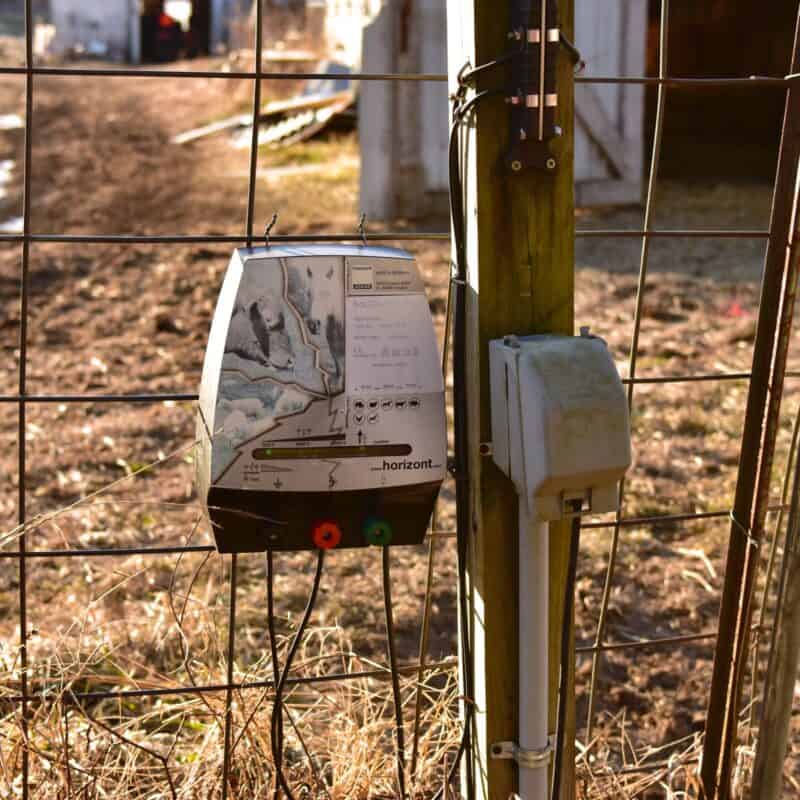
The most tried, true and dependable option. Electric fencing is an act of deterrent that gives pigs an instant and enduring disincentive against digging. There are lots of ways to install electric fencing as a standalone option, and I’m not going to get into all the nuts, bolts and options for energization here, just suffice it to say that it works and works well.
As always, half-assing it is going to cost you and this is already a spendy option. My rule of thumb is that you’ll need two strands of electric wire no matter how big your pigs are. I like to place these at 10 and 18 in above the ground to cover my bases. Adult pigs can’t easily slip under the lower one, or hop over the taller one.
But, this is insufficient for stopping the little ones which can easily dig out a little depression and then belly crawl under. If you got piglets or microbreeds, install a third wire about 6 in above the ground.
It’s been my experience that most pigs won’t repeatedly test an electric fence. About a week of exposure will stop most escape attempts entirely, and most pigs learn after getting popped twice, maybe three times. This psychological effect can give you insurance against an escape even if the fence loses power, but you should still make it a point to check the fence and test it weekly.

Keep Your Pigs Fed, Happy and Healthy
Pigs are natural boundary pushers as I said, but some owners don’t understand that pigs are far more likely to try and escape if they are stressed out, hungry or insufficiently stimulated.
This is another no brainer: make sure your pigs have plenty of food and a nutritious diet, adequate shelter and the company of other pigs or enough interactions with you to keep them mentally and emotionally stimulated. Do that and they will be less inclined to seek a greener pasture over yonder somewhere.
Make Sure They Have Enough Space
OK, so this is another factor I see beginning owners, and more than a few veterans, get wrong.
Part of this is a misunderstanding: a figure commonly quoted for the corralling of pigs is 8 square feet per adult. This is true, but only on a confinement farming basis where pigs will be securely contained and given the bare minimum space needed for health and wellness until they are ready for market. Chances are that’s not you.
If you’re keeping pigs long-term in a traditional pen, the figure per adult pig is closer to 80 square feet. That’s a big difference! Even then, more is better and larger breeds need even more than that, anywhere from 10 to 15% extra.
Feeling pressured from a lack of personal space will stimulate any pig to try and escape so it can have some breathing room.

Get your gift and learn things like:
- how to make this really quick pest spray
- how to prevent egg waste
- two cheap automation devices that will make your life easier
Tom has lived and worked on farms and homesteads from the Carolinas to Kentucky and beyond. He is passionate about helping people prepare for tough times by embracing lifestyles of self-sufficiency.