
If you are like me, you were mesmerized by the notion of farm-fresh eggs every morning, and that’s what set you on the path to getting a flock of your very own chickens.

Imagine my surprise, then, when, after coming back from the local tractor supply with a double armload of chickens, the ladies in the flock didn’t cooperate and immediately start furnishing me with my greatly desired eggs.
Turns out your hens will want nesting boxes to lay in, and making nesting boxes appealing for them while still being accessible and easy to work with for you is quite a trick. But don’t worry: I’ve got a collection of tips and tricks below.
1. Bigger Breeds Need Bigger Boxes
This is common sense, but oh so easy to forget. Depending on who you ask, you’ll usually find that most folks advise you to build nesting boxes that are roughly 12 inches tall and wide, and nearly that deep.
But if you’ve got great big breeds like Jersey Giants, Orpingtons, or other large birds, 14×14 is a better bet.
These larger breeds need a little more room to feel truly comfortable before they lay, and more space also reduces the likelihood that they will accidentally trample and crack their eggs.
Likewise, tiny breeds and bantams can get by with a little less, such as a box that is roughly 10×10.
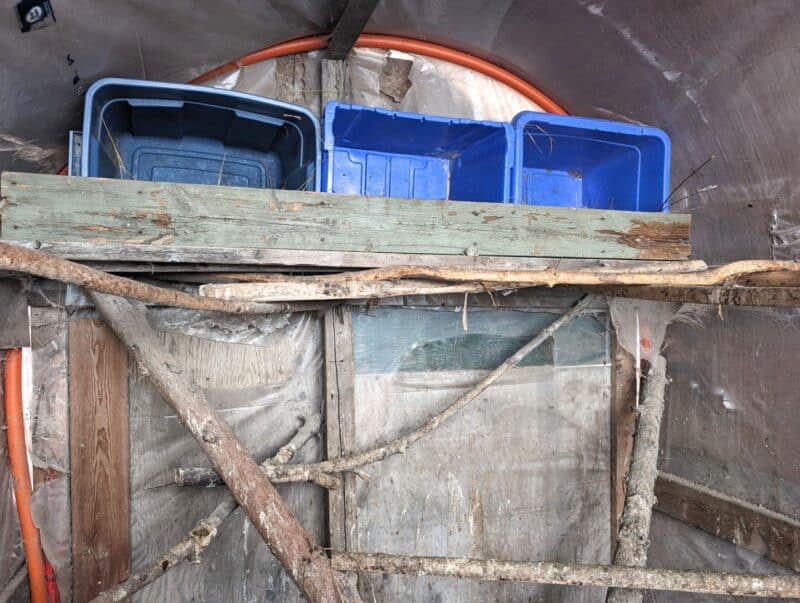
2. Repurpose Milk Crates as Modular Nesting Boxes
Do a search for nesting boxes online, and you’ll see countless designs that you can buy. Plastic, metal, wood—it’s all there. In my experience, though, these fancy and expensive commercial nesting boxes don’t work any better than a cleverly repurposed milk crate.
Milk crates and other plastic boxes are freely available, quite cheap, durable, easy to clean, and, most importantly, stackable.
Grab a saw and cut one side off, leaving a little lip at the bottom, and you can easily stack up as many boxes as you need where you need them and disassemble them just as quickly. My girls love them and use them all the time!
3. Privacy Encourages Nesting Habits
A commonly overlooked element that hens want in a nesting site, and that means in a nesting box, is privacy. They want privacy from other hens, typically, and especially from the rest of the flock.
A nesting box that’s too exposed or in a high-traffic area is unlikely to appeal to them, and even if they do use it, they are unlikely to lay at the maximum rate.
If possible, place your nesting boxes in a different part of the coop, and place them so that traffic coming in and out won’t go near the boxes. This simple trick makes a big difference in the overall health and willingness of your girls.
If you can’t quite pull it off in your coop, the next tip will help…
4. Hang Curtains to Darken Nest Boxes
Your birds will want privacy, as mentioned, but they will also want darkness: illuminated nests are nests that are visible to predators, so chickens instinctively avoid brightly lit areas.
Hanging a simple curtain above the entrance to the individual boxes will give your birds a strong incentive to move in and start laying.
And to be clear, you don’t have to bust out the sewing machine or embroidery kit to make a functional curtain: you can use old t-shirts or towels, scraps of burlap, or anything else for the purpose as long as it’s safe.
You can hang a split curtain that’s open down the middle or a single-piece curtain that doesn’t come all the way down over the lip at the front; both will work fine.
5. Hens Greatly Prefer Elevated Boxes
You’ll see some keepers place their nesting boxes on the ground in their coops, and their birds might even use them, but that hasn’t been my experience or that of my keeper friends and neighbors.
Chickens instinctively want to get off of the ground so they can stay safe from predators while they are vulnerable. Likewise, they don’t want their eggs on the ground.
A good rule of thumb is to raise a nesting box at least a foot and a half off the ground and make sure it is secure and stable. Whether you want to have a row of individual boxes at this height or make a nesting box “condo” that looks like a grid is up to you and the constraints of your coop.
6. Make Sure Your Girls Can Reach the Boxes
Speaking of raising nesting boxes, whichever way you go when it comes to height and arrangement, make sure your birds can safely and securely reach them.
Small, light, flighty breeds can easily leap into a box that’s just a foot or so off the ground and get back down just as easily. Larger breeds probably can’t.
When figuring out where to place them, make sure you account for any needed ramps, ladders, and walkways so they can reach them. This might significantly increase the overall footprint of your boxes…
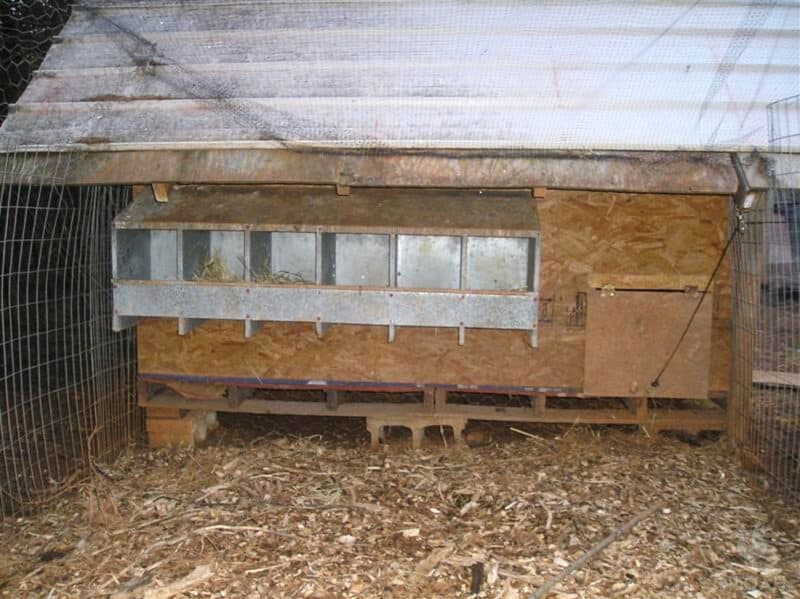
7. Install a Hinged Hatch or Door for Easy Egg Collection
If you do nothing else to make your life easier when it comes to egg collection, implement this tip.
Setting up your boxes so that you can swing open a hatch or door on the outside of your coop and then reach directly into the nesting boxes from behind or above saves a ton of time and aggravation.
Even better, if predators aren’t a concern, you could attach the nesting area to the coop (see photo above).
Entering the coop directly can disturb your birds and sometimes upset them, plus it’s just a pain in the butt most times. You’ll stay cleaner and get the job done quicker and easier if you have outside access.
Many coops have this provision built in as part of the design, but if yours doesn’t, you should look into retrofitting.
8. Maintain the Right Ratio of Boxes
A subject of considerable debate among chicken keepers is how many nesting boxes you need for a given number of hens.
Common ratios are one for every two, one for every four, one for every five, and one for every seven. Keepers can make a great case for any of them based on their personal experience.
The trick is that this ratio seems almost random based on what I’ve gathered; some flocks will need nesting boxes for nearly every hen, while others will need only a few.
My advice? If you have the room, plan on having a box for every other hen, or one box for at least every four. Don’t be surprised if your girls squabble over particular boxes, either!
9. Line Your Boxes With the Right Stuff
Chickens are like all birds in that they want a safe, clean, soft, and warm place to lay eggs. A nesting box by itself only ticks a couple of those boxes.
You can make it soft, warm, and appealing to them by lining it with pine or aspen shavings, straw, sawdust (non-pressure treated only!), or fabric nest pads.
Basically, anything that is cheap, disposable, and chicken-safe will do the job. Also, don’t be afraid to experiment; your ladies might show a distinct preference for certain materials when they are in the mood to nest and lay!
10. Always Use Chicken-Safe Finishes if Painting Your Boxes
You might prefer a rustic, natural finish for your coop and nesting boxes, but if they are made of wood, you can make your life easier and help them last longer by painting or finishing them.
Finished wood will withstand poop, moisture, and damage better, and it will also be easier for you to clean and stay more hygienic overall.
But you need to be careful to use finishes that are safe for chickens. Milk paint, livestock-rated latex paints, beeswax, and linseed oil are all good choices.
Keep in mind that some finishes might only be safe for your birds to be around once they are fully cured, so read the instructions.
11. Golf Balls Can Encourage Reluctant Layers
Sometimes your birds just won’t get the hint. They might investigate or even hang out in a nesting box but not lay in it. Trigger those instincts by using a decoy, in this case, a golf ball or purpose-made fake egg.
Once your girls find the fake in their favorite spot, they will probably start laying there. Where one girl goes, the others will follow. Remove the fake once they get the picture.
12. “Button-Up” Birds That Refuse to Use Your Boxes
If all else fails when it comes to enticing your hens, simply confine them in the coop or compartment where the nesting boxes are located.
Once they are ready to lay, they will lay somewhere one way or another, so if you confine them to a space where they have fewer choices, they are much more likely to take the best choice. That best choice, of course, is the nesting boxes.
Just be careful to make sure they have enough room to move around, access to food and water, and that they don’t get stressed and start pecking at each other.
13. Clean Tubs and Buckets Make Good Nesting Boxes, Too
Cleaning out old kitty litter tubs and 5-gallon paint buckets can be a great way to make durable, versatile, and easy-to-clean nesting boxes on the cheap.
All you need to do is pop off the lid and lay them down on their side. They can easily be installed in racks or, in some cases, bolted straight to the wall if needed.
14. Never Place Nesting Boxes Under the Roost Bars!
Another common-sense tip that is all too easy to forget at the time. Wherever you have the roosting bars located in your coop, do whatever you need to keep the nesting boxes away from underneath them.
The reason why should be obvious: nesting boxes get dirty enough when occupied, but it will be a whole lot worse when chickens sleep above them and poop on them all night long!
If need be, reorient your bars to make room for the nesting boxes. Otherwise, you might consider an extended roof or soffit over the boxes to protect them from poop.
15. Junked Furniture Can Be Turned into Nesting Boxes or a Box Frame
Discarded, unwanted, or unloved furniture makes a great basis for a custom, cute row of nesting boxes. Cabinets, hutches, dressers, and more can be hollowed out with basic tools to serve as ready-made and frugal spots for your girls to lay.
16. Old Tires Make Great, Free Nest Boxes
Another surprising alternative for cheap or free nesting boxes are old tires. You can cut a tire into quarters, then cut away the inner, upper quarter of the resulting sections to make nooks for your girls to lay in.
Sounds strange, but a friend turned me on to this trick, and I can tell you that chickens really do seem to love the shape for some reason.
17. Consider “Rollaway” Boxes
Seasoned chicken keepers know that anything you can do to keep eggs intact and make collection easier is worth doing. A rollaway box is one of the most clever ideas! It’s simply a nesting box with a ramped floor that lets eggs roll out and away from the front of the box.
When a hen lays an egg in the box, it rolls away into a chute or trough for easy collection. Great for lazy keepers like me, and it also keeps mama from accidentally crushing her egg.
18. Herbs Reduce Odor and Help Hens Lay
Nesting herbs might sound like pseudoscience, but they really do help your girls lay their best.
Herbs like lavender, rosemary, marigold, mint, and dill will freshen the air and also help keep your girls calm. Calm chickens are more productive chickens! Plus, none of these herbs will hurt your girls.
Add fresh sprigs on an as-needed basis.
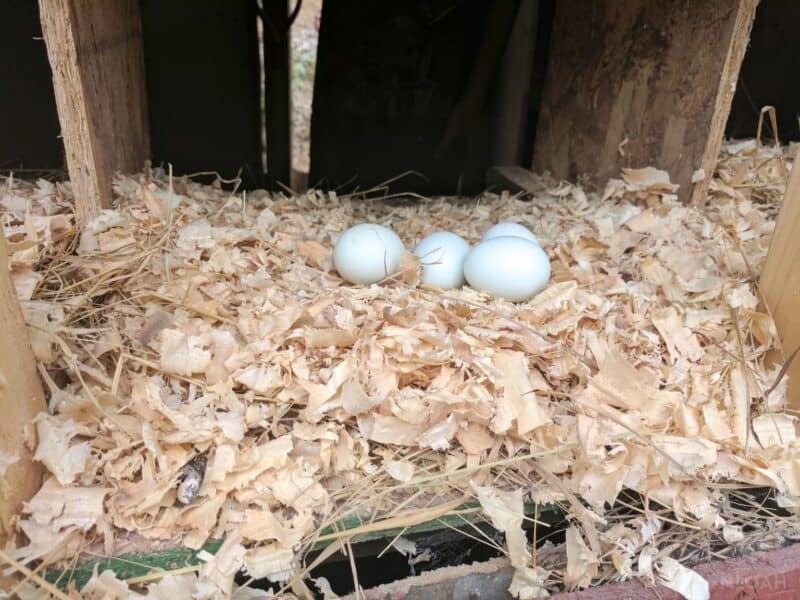
19. Keep Those Boxes Clean!
Chickens might be messy little creatures, but these hard-working moms still want a clean spot to deposit their eggs and nest comfortably.
They will make their bedding filthy in short order, but that means you’ve got to stay on top of cleaning it out, sanitizing it, and putting down fresh material.
Aim to do this no less than once a week. You’ll notice a difference in productivity and also the cleanliness of the eggs themselves when you clean regularly.
20. Hang a Treat Near the Boxes to Reduce Infighting
Remember how I mentioned above that sometimes your chickens will just fight with each other over a particular nesting box?
It doesn’t matter that there are plenty of other boxes. It doesn’t matter that there are empty boxes at the same level. Sometimes they just won’t get along, and no chicken will voluntarily share their box.
A clever distraction that can cut down on this infighting and promote harmonious laying is to hang a little treat off the ground somewhere near the nesting boxes.
Keeping a couple of the unruly birds distracted will allow others to settle in, and then the troublemakers are more likely to follow suit.


Get your gift and learn things like:
- how to make this really quick pest spray
- how to prevent egg waste
- two cheap automation devices that will make your life easier
Tom has lived and worked on farms and homesteads from the Carolinas to Kentucky and beyond. He is passionate about helping people prepare for tough times by embracing lifestyles of self-sufficiency.