
Ducks are once again becoming popular as livestock, especially on the small scale for homesteaders, but we’re also starting to see a lot of interest in them as pets. It might seem strange, but they have a lot to offer: ducks are intelligent, friendly, playful, and tend to be quite healthy.
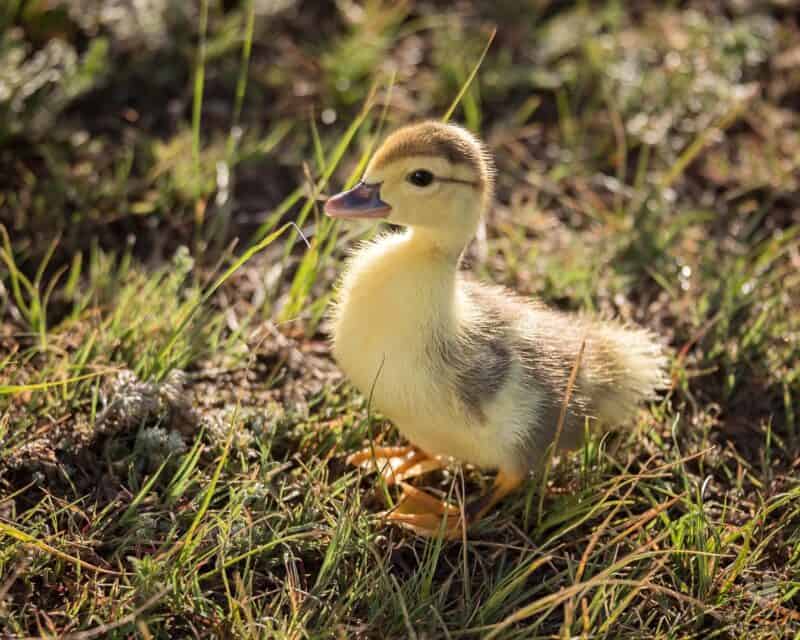
You’ll see plenty of videos out on the internet of people showing off their close bond with their pet ducks, and it’s enough to make anybody want one! But if you’re ready to get a pet duck of your own, there’s a whole lot you’ll need to know before you commit.
Turns out, they can be a lot more work than keeping a dog or cat in some ways. To help you out, I’ve got a detailed guide below that will tell you everything a good owner should know about keeping a duck as a pet.
Do Ducks Even Make Good Pets?
Yes, they really do! Or rather I say that they can make good pets as long as they’ve got a good, educated owner, and their owner knows what to expect from them.
Ducks are very much like all other birds in that they tend to be noisy and surprisingly messy for their size.
Being much larger than typical pet songbirds, parakeets, and the like, they also need a lot more room. The necessity of water to swim in, bathe in, and a duck’s life is another logistical challenge that you must be prepared for.
But in return, you’ll have a feathered friend who’s intelligent, capable of forming strong bonds with you, and often an absolute hoot to watch.
You’ll get plenty of entertainment from them, that I can promise you, and your duck will look forward to seeing you as much as any common pet like a dog or cat.
First Things First: Is it Legal to Own a Duck?
Before you go sprinting off to the hatchery, you’ve got to do a little homework. Your duck might not be legal to keep as a pet! In many areas, ducks, even domestic ducks, are considered livestock, and depending on your county and municipal regulations you might not be able to keep them in residential areas.
Compared to other animals like goats, sheep, cows, horses, and the like, this is less common for ducks owing to their small size, but they often fall under the same restrictions as chickens in these cases.
It would not do for you to get your duck and be well on your way to a happy and prosperous relationship only to have the authorities crack down on you and separate the two of you. That really would be tragic!
Your Duck Might Be Able to Fly!
It might seem obvious, but it’s worth mentioning: your ducks might be able to fly! Now, most domestic breeds cannot fly, or they cannot achieve true flight like wild ducks. They tend to be too heavy and have been selectively bred for reduced flight performance so they can’t get away as easily.
That said, Mallards, smaller Muscovies, and individual ducks in other breeds might be able to fly well enough to get out of your yard and head for the hills. You’ll need to consider clipping wings, using wing weights, or other methods to contain them. Just something to be aware of!
If you have a large and heavy breed like a Pekin, you won’t have to worry about it though: they are just too hefty to get off the ground.
Picking the Right Breed is Important for Your Happiness
Like any other pet, breed can make a big difference when it comes to your experience. All pets, including ducks, are as different as their owners and it’s important that your duck fits into your lifestyle and also your expectations.
If you were limited on space, you probably wouldn’t want one of the largest duck breeds. If you want a calm, quiet, and stoic bird you definitely don’t want to get one with a reputation for hyperactivity, high exercise requirements, and loud vocalization.
Again, this will require a little homework on your part but we’re here to help since we’ve written a bunch of articles about the different duck breeds that are out there. The following is a short list of breeds that can make good pets, along with a couple you should think twice about.
Swedish, Welsh Harlequin, Pekin, Cayuga, and Indian Runners are all popular pet ducks owing to a combination of temperament, good health, and only being moderately noisy.
They also tend to be easy to keep, though Indian Runners really do run around as the name suggests and will need more room for exercise. Welsh Harlequins are arguably the ideal pet duck but are hampered only by their relative rarity and expense.
Mallards are probably the most iconic duck out there, and there are domesticated varieties. However, they tend to be standoffish, can sometimes fly, and often get broody which can be problematic for hens or couples.
Khaki Campbells are renowned for good health and extreme egg production but are flighty, nervous, and don’t appreciate much human interaction.
Calls are tiny, sweet-natured, and absolutely adorable, but they are notoriously, unbelievably noisy at all hours of the day. Not a great choice if you have a family or unless you know you can put up with it!
Whatever Breed You Choose, Get a Duckling
There’s a lot to consider when picking a breed, but no matter which breed you settle on make sure you get ducklings, not adult ducks.
Ducks are just like other birds in the way that they imprint on, or bond with, whoever is taking care of them while they are young. In a way, they will basically see you as their mom! This is critical for ensuring a good, close relationship with your bird that will last a lifetime.
It’s possible to get well-socialized adults, or adopt if someone is forced to get rid of them or they’re at a shelter, but getting close to your new pet will be a slower and more laborious process in that case, and potentially even impossible if they’ve been abused or neglected before.
Note that you don’t have to go through all the trouble of incubating and hatching your own eggs if you don’t want to; that’s an entirely separate conversation and set of skills!
Just talk to a trustworthy and verified hatchery or breeder for guidance on when you can take possession of your duckling. You’ll also need to know how to care for them as they grow, and this will require a brooder.
Don’t Get Just One Duck
We come to the first element where most prospective pet duck owners go wrong: they only get one duck.
I know it’s commonly seen on the internet, but this is a bad idea. Even though a single duck will still love you and bond with you, and you all might have a great relationship, you’re doing a major disservice to the poor animal. Ducks are inherently social, and they need a true flock environment in order to be mentally healthy and thrive…
At the bare minimum, you’ll want to get two ducks even if it’s just two females, and a small flock of three is best. Please think twice and reconsider if you plan on getting only one, for the duck’s sake.
Don’t Forget that Hens Will Lay Eggs Whether or Not They’ve Mated
Sometimes humorous, sometimes a major problem, you must remember that female ducks, hens, can and will lay eggs.
Obvious, right? Yes, but what some beginners forget is that they will lay those eggs once they are sexually mature; they don’t have to mate in order to do it!
Now, this can be cute when your precious pet duck squats for a moment and deposits an egg on your carpet. But it can also be hideous when she hides an egg in an out-of-the-way place that you don’t know about, and you discover it weeks later only after it has started rotting…
You and I both know how nasty that can be. You can make a great case for keeping hens as pets because they tend to be easier to manage, but you have to stay on top of collecting or patrolling for eggs.
Can Ducks Stay inside the House?
Yes, to a degree, but this is generally a bad idea unless they’re coming in for a brief visit.
For starters, as mentioned, ducks have to have access to water on demand. They enter the water to swim around, to moisten their food, and to bathe, which is mandatory for taking care of their feathers.
Ducks that can’t get into the water for bathing will start to develop serious problems like wet feather. As you might imagine, when they do go into the water, they get it everywhere, and this can make a huge mess. Not something you want in your house.
But there’s another major problem with keeping ducks in your home…
Ducks Poop. A Lot…
Ducks are like all birds in that they poop and they poop very often. They also have next to no control over when they poop because they don’t have a sphincter like mammals do, enabling them to hold it.
And because ducks typically eat at random times, there is always something moving through their digestive system.
This means that they’ll just go number two whenever and wherever they feel like it. On your rug, in the entryway, on your furniture, in the kitchen, etc. It’s disgusting and unsanitary.
Unless you’re letting your duck come in and hang out for just a few minutes before sending them back outside, you’ll need to keep them in diapers to prevent this, and that adds another layer of difficulty and chores to keeping them.
Sheltering / Housing
Your best bet, therefore, is to keep your ducks outside where they can roam around, and you don’t have to worry about messes quite so much.
But even though ducks are virtually waterproof and their feathers give them excellent insulation, they still need shelter to keep them safe from the weather and the sun.
The good news is that a duck shelter is super simple, and they don’t need much room. Alternately called a duck hut, house, or coop, these are basically small structures that look like oversized dog houses.
They should keep wind and rain off of the ducks, and have a thick layer of clean, insulating bedding on the inside for them to rest in.
There are all kinds of designs out there, and you can easily make your own if you’re a little crafty, but a good rule of thumb to shoot for is that you should have four square feet of floor space for each adult duck.
Also make sure it’s properly ventilated so fumes from their droppings don’t build up inside.
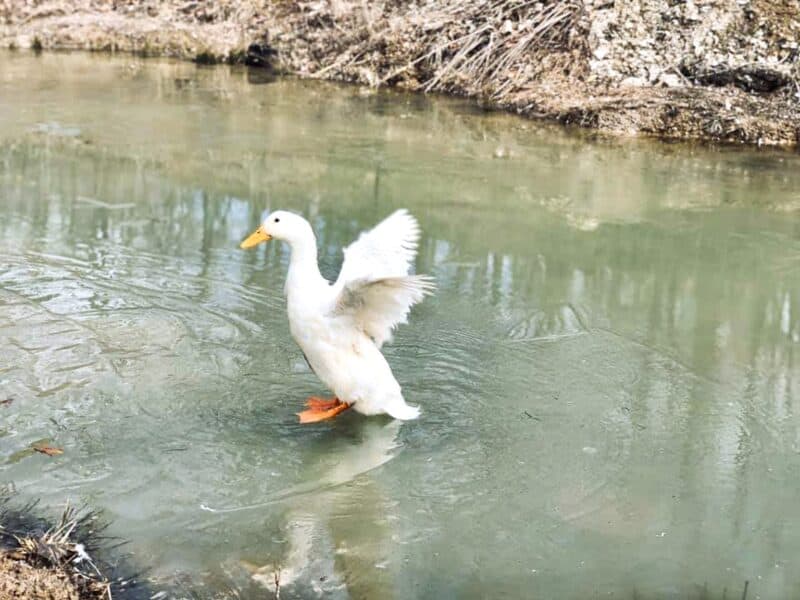
Pet Ducks Still Need Water to Swim In
I mentioned several times already that ducks must have water to swim and bathe in. But just how much water do they need?
This is difficult to say with certainty, but we do have reliable guidelines. Follow them, and you can easily install a suitable water feature for your feathered friends somewhere on your property.
Basically, ducks should have a little room to paddle around in, float on the surface of the water, and then dip and dabble their beaks, head, and neck in. This is natural behavior that they do in the wild when foraging for food, bathing themselves, and taking care of their feathers.
The smallest breeds might be able to get by with a low, wide plastic tub, or a kiddie pool, but one good standby that pet owners can use is a simple baby pool that is kept filled.
If you’re willing to put in a little more effort, a koi pond or in-ground fountain basin makes a great and relatively spacious feature for just a few ducks.
If you already have a pond on your property, you’re in luck, because if it’s nearby, your ducks will happily use it. Note that you shouldn’t let your ducks habitually use a pond, hot tub, or anything like that for reasons we’ll discuss in the next section.
Duck Water Must Be Kept Clean!
No matter what sort of water feature you have for your ducks to use, you’ve got to stay on top of keeping it clean. This is absolutely critical for the health and well-being of your buddies!
Ducks make a mess wherever they go, they’ll poop in their water, get tons of dust and dirt and mud in it, dip their food in it and leave it, and all kinds of other stuff. It really does get gross! And if you leave them to swim in that, it will start to ferment disease and make your birds sick.
Consider keeping their water source clean like changing a cat’s litter box: it must be done, and it must be done often.
Feeding Your Duck
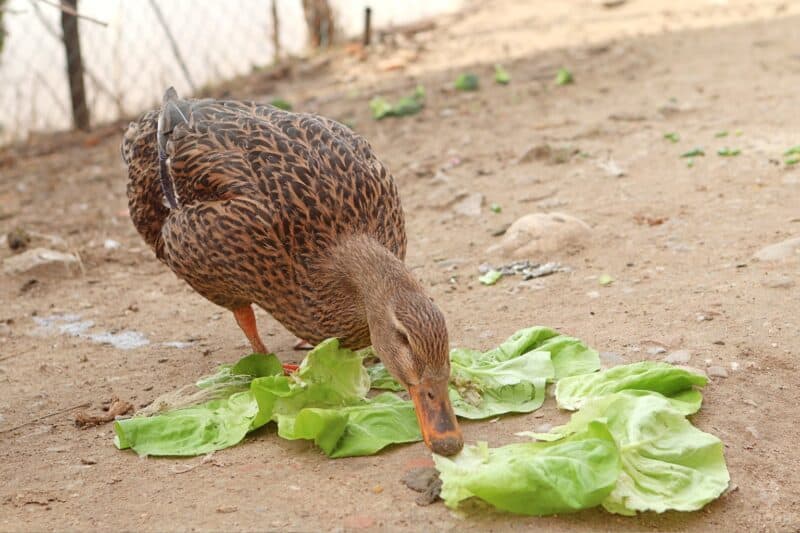
Feeding ducks is pretty straightforward, and they have a surprisingly varied diet. The best thing you can do for any pet duck is to make the basis of their diet commercial duck feed since it has nearly everything they need in order to thrive and will make feeding them a simple matter of measuring out their food a couple of times a day.
Beyond this, your ducks can eat all sorts of other things, including various leafy greens, some choice fruits and vegetables, all kinds of insects, mealworms, true worms, and various aquatic plants and critters that they can find out on your property. You can also supply these things if you’re willing to raise them yourself or buy them.
Your bird, once fully grown, will need anywhere from 4 to 6 oz of food daily depending on their size and a few other factors…
Hens that are laying eggs will need a little more food to keep production safe because if they lack calories or nutrients, it can lead to potentially fatal problems like egg binding or eggs that break internally.
Larger males need more of everything as you might imagine, but not too much more, usually just an extra ounce or so.
You’ll also need to provide your ducks with extra food when they start to molt, or lose their feathers to regrow and refresh them.
And, as always, make sure your ducks have a separate and scrupulously clean source of water for drinking. This needs to be a water source they can dip their bills in while eating food because they must moisten it in order to swallow it safely.
Be Alert: Ducks Have Lots of Predators
It’s scary to think about, but if you’re going to get ducks you need to know they have a lot of predators out there. Wild dogs, coyotes, wolves, domestic dogs that are off the leash, raccoons, large felines, larger birds of prey, and more would all love a nice duck dinner.
It’s important that you take steps to mitigate the presence of predators if you know they are in the area. Strong, tall fencing will keep some of them at bay. You can use brightly colored netting or mesh over your duck run in the yard to keep birds of prey off their backs.
You might also need a moat or perimeter of gravel or larger stones to stop critters that dig from getting under the fence.
Ultimately, some areas will be forced to deal with more predation than others depending on where you live, but it’s something you must stay on top of if your birds will be outside on their own.
Ducks are Healthy Overall, But Still Need Medical Care
Compared to chickens and most other birds, ducks are remarkably healthy. These hardy animals still have a lot of wild, ancestral DNA, and tend to have good vitality.
But, like every other living thing, they can still fall prey to disease and injuries. Regular vet check-ups are a good idea for your friend, but you should get familiar with some of the most common duck ailments below so you know what to look for and how to prevent illness:
Bumblefoot. A nasty infection of a duck’s foot, footpad, or toes that typically results from an injury. More common in filthy conditions and if untreated, it can spread and become deadly.
Food poisoning. If you let your ducks eat moldy, fermented, or otherwise contaminated pellets and other foods, various molds and microorganisms can poison them, sometimes fatally. Ducks that survive might have significant organ damage. Stick with clean, fresh food only!
Bird Flu. A notorious illness, only certain strains are a major cause for concern but they can easily kill your entire flock and potentially jump to you and your family. Vaccination for prevention and testing for diagnosis is critical. Strict quarantine must be implemented if it’s in the area or if your ducks are infected.
Fowl Cholera. Another really nasty infection, one that can affect many kinds of birds. Outbreaks are most common if ducks are forced to live in filthy conditions. Stay on top of maintaining bedding, surrounding areas, and water sources.
Duck Plague. A fatal viral infection. There is no known cure, but you can greatly reduce the chances of your ducks contracting it by keeping wild birds away from them and maintaining good biosecurity protocols.
Don’t let your ducks come into contact with anyone or anything that was in contact with other flocks until it has been disinfected. It sounds scary, but with just a little bit of care from you, your ducks will enjoy a happy and healthy life.

Get your gift and learn things like:
- how to make this really quick pest spray
- how to prevent egg waste
- two cheap automation devices that will make your life easier
Tom has lived and worked on farms and homesteads from the Carolinas to Kentucky and beyond. He is passionate about helping people prepare for tough times by embracing lifestyles of self-sufficiency.