
Pretty much every single living thing on earth needs water to survive. Water is considered one of the most foundational elements needed to support life, and accordingly simple dehydration is a pervasive and consistent killer of people and animals alike. Let’s look at the water needs of our rabbits. How long can a rabbit go without any water?
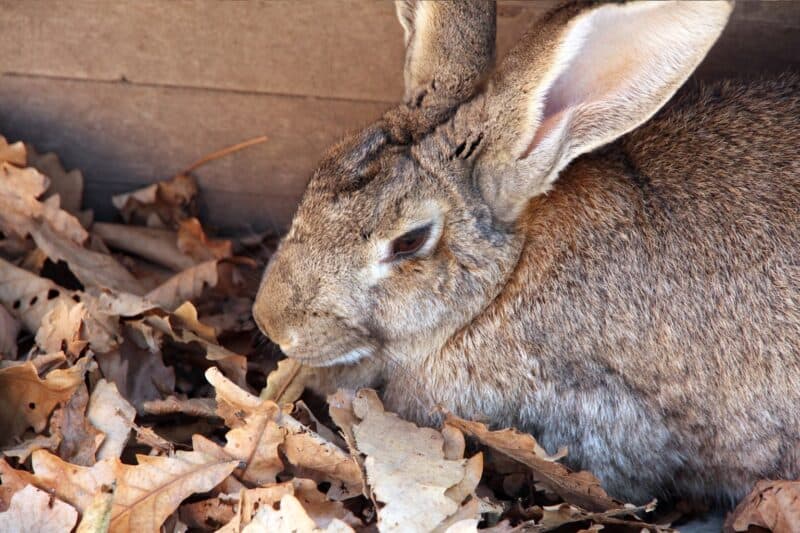
An average rabbit may only go for 12 hours without water before serious dehydration starts to happen, and after 24 hours it will see organi failures and could die.
Hot temperatures and other complications mean that a rabbit will need more water than usual. Also keep in mind that the 12 and 24 hours marks are NOT definitive safety thresholds, and there are no such thresholds.
Rabbits, like many small mammals, are disproportionately vulnerable to dehydration because of their higher metabolisms. Needless to say, they need constant access to water, and although they don’t need very much, they need it at all times.
There’s a lot more you need to know about a rabbit’s hydration needs, so keep reading and I’ll tell you all about it…
Continual Hydration is Essential for a Rabbit’s Health
It’s difficult to impress on most folks just how critical continual, uninterrupted access to water is for rabbits. Rabbits depend on it to help them digest and absorb nutrients from food, properly regulate their circulatory system, eliminate wastes through urine and a lot more.
Water is imperative for proper organ function in rabbits, and when things go bad at that level, they go bad very quickly.
One of the worst things that can happen to a rabbit that isn’t drinking enough water is gut stasis. Rabbits eat constantly, more or less, and a consistent intake of food and water is needed to keep food moving properly through their bowels.
If a bunny stops drinking, or doesn’t get enough water, the movement of food could slow and then stop. IN medical terms, the dehydration would contribute to “GI hypomotility/stasis”, but this is typically the result of other underlying problems.
Anyway, this results in a dangerous buildup of gas (causing bloating), dehydration of GI contents, altered microbial populations, and even more dehydration. All of this is painful for the rabbit, of course, and when they are in pain, they usually stop eating and drinking, further exacerbating gut statis- sometimes with lethal results!
This is why going even a relatively short time without water could turn into a “vicious cycle” ending with the hospitalization or death of your bunny.
How Much Water Does a Rabbit Need a Day?
A rabbit does not need a lot of water every day compared to you and me, but when you look at it, proportionally they still need quite a bit.
Generally speaking, a mature rabbit will need around at 120 mL/kg of water each and every day (that’s about 12% of their body weight), but this varies a lot, and it assumes it is in good health and in normal, temperate conditions. This is twice the amount that a similar-sized dog or cat would need.
So for instance, let’s say we’ve got a rabbit weighing five pounds. It would need .6 pounds, that’s 9.2 fluid ounces, of water each and every day.
But, you don’t need to spend a bunch of time figuring out precisely how much water to give to yours. The amount varies a lot depending on their diet and climate, among other things. All that matters is that they have as much as they can possibly drink and then some…. and they’ll just drink as much as they need, when they need to!
Do not get into the habit of metering out water for your rabbits according to their body weight: keep their waterers and water bowls full at all times, night and day.
Weather, Pregnancy, Illness and Overall Health Might Increase a Rabbit’s Water Needs
Something else to keep in mind is that the water requirement I just talked about assumes ideal conditions, more or less. Conditions won’t be ideal for your rabbits all the time…
Anytime your rabbits are subjected to hot weather or high humidity, they must have more water. Similarly, if they’re sick or injured they might need more water also to help them combat the disease or heal. And, naturally, a mother rabbit that’s carrying a litter of babies is going to need considerably more water then she would normally.
These are all good reasons too, once again, give your rabbits an unlimited water supply.
What are Some Signs that Your Rabbit Isn’t Drinking Enough?
Because rabbits need so much water and because they are so sensitive to dehydration, you must be ever alert to any signs and symptoms that they aren’t drinking enough.
One of the most readily apparent is that the rabbit stops eating.
A number of things could cause this, but rabbits depend on drinking adequate water to help them digest their food, and if they aren’t drinking enough, they will feel a strong urge to stop eating. Absent any other obvious injury or illness, this is something to be suspicious of…
Try this: gently pinch the skin on the back of their neck. Their skin should rebound to its normal shape pretty much instantly. This isn’t a foolproof dehydration test, but it can point you in the right direction. This is actually a legitimate thing to try:
Although rabbits do not to take on a ‘sunken eyed’ appearance when dehydrated, the thin skin becomes wrinkled and loses its turgidity.
The rabbit consultation and clinical techniques
If it doesn’t, if it seems sluggish or resistant to laying flat again, your rabbit could be dehydrated. Also pay attention to their overall attitude and bearing also. Does your rabbit seem sluggish, confused or weak? If your rabbit seems unwilling to stand up or is having trouble moving, you need to get the poor thing to the vet ASAP. If so, something is definitely wrong, and dehydration could be the cause of any or all of the above…
It’s really important to know that vets don’t rely on a single sign to say for sure that they’re dealing with dehydration. They look at multiple signs. Some of the ones you can check yourself on the homestead include:
| Practical sign | Usefulness to diagnose dehydration |
|---|---|
| Dry or tacky gums; Gums feel less moist/sticky rather than normally moist | High (one of the more useful simple physical signs= |
| Weight loss | High if you have a reliable baseline that’s also recent |
| Reduced skin elasticity; gently lifted skin returns more slowly than normal | Moderate (useful, but doesn’t tell you how severely dehydrated the bunny is) |
| Sunken/retracted eyes | Moderate, mainly for severe dehydration — absence does not rule out dehydration |
| Reduced urination | Moderate — concerning, but can have causes other than dehydration |
| Lethargy/weakness (quiet, weak, reluctant to move) | Low for dehydration specifically, but highly concerning overall |
| Loss of appetite | Low for dehydration specifically, but very important because illness/GI stasis may be involved |
| Fewer or smaller fecal pellets | Low for dehydration specifically, but a very important emergency sign |
What Should You Do if Your Rabbit Isn’t Getting Enough Water?
If you suspect your rabbit isn’t getting enough water, it’s time to take action immediately. But if you think they have just stopped drinking or that the dehydration is very minor, pull out their water and or water bowl as appropriate and give it a thorough cleaning before it refilling it with fresh, room-temperature water.
Rabbits will sometimes refuse to drink from any water that smells off or contaminated, and may avoid drinking water that is too hot or too cold.
If your rabbit seems seriously dehydrated, or if you notice that they are out of water, give them water ASAP. If it seems weak or disoriented, make sure that it isn’t laying its head in the water bowl as this may cause it to drown.
Position the nipple on their bottle near their mouth, or put the water bowl right in front of the bunny and see if they can drink from it. If they start drinking, that’s good. If it cannot or will not drink on its own, rush to the vet at once!

Get your gift and learn things like:
- how to make this really quick pest spray
- how to prevent egg waste
- two cheap automation devices that will make your life easier
Tom has lived and worked on farms and homesteads from the Carolinas to Kentucky and beyond. He is passionate about helping people prepare for tough times by embracing lifestyles of self-sufficiency.