
No matter what sort of animals you keep on your homestead, illness is always going to be a fact of life. Animals get sick just like people do, and also just like people, some of them are more prone to bad health than others. Luckily for us, if we own ducks, they have proven to be remarkably healthy, especially compared to chickens and turkeys.
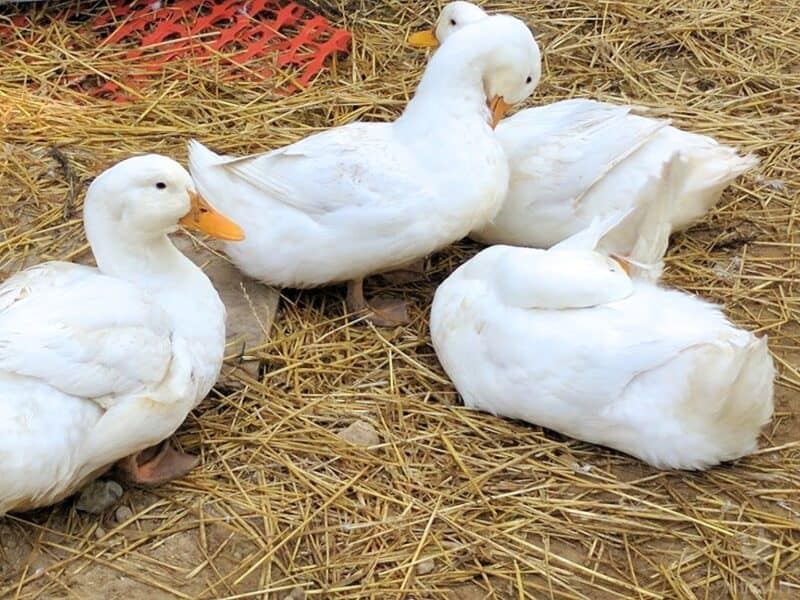
Still, there are still many diseases that can affect your birds, and you need to be familiar with them so that you can detect them early and take appropriate action. Keep reading, and I’ll tell you about 12 diseases you should watch out for in your ducks…
Sick Duck Symptoms
Ducks tend to be surprisingly stoic, meaning they don’t often give signs that they are in pain, feeling bad, or that anything in particular is wrong.
That said, it is still possible to tell when they are under the weather by various symptoms, especially when symptoms present in clusters.
Be on the lookout for any of the following in your flock, and especially if you notice more than one bird showing the same symptoms, you should investigate closely and take action:
Sluggishness
This one can be tricky because ducks tend to rest whenever they want instead of at a prescribed time. But if you notice one or more of your birds barely moving around or engage in normal activities compared to the rest of the flock, that’s a warning sign.
Inability to Stand
An obvious and urgent indicator of poor health is if any one of your ducks shows an inability to stand. This is invariably a symptom of serious injury or major illness and must be attended to at once.
Drooping Wings
Similarly, anytime a duck is letting its wings droop, meaning that they aren’t holding them in the usual position alongside their body, something is wrong…
Abnormal Droppings
One of the first and usually most apparent symptoms of sickness, of any kind, is abnormal droppings. Peculiar changes in color, odor, or texture, or outright diarrhea, are all bad signs.
Any Signs of Discharge Around Eyes, Vent, or Bill
If you’ve ever had a nasty, goopy runny nose or coughed-up mucus, you already know that that is a certain sign of sickness. It’s the same thing for ducks. Look for mucus, slime, or other discharge around their eyes, vent, or bill and investigate if you see it.
Avoidance of Water
If there’s one thing that all ducks love, it is water, and their day-to-day life is closely linked with it. Anytime a duck shows reluctance to enter the water for any reason, that’s a sure sign of illness, usually wet feather, but possibly something else.
Reduced Appetite
Ducks, like most birds, tend to be very big eaters for their weight. Any marked reduction in how much they eat is a readily noticeable symptom of sickness if you’re paying attention to your flock. Ducks that stop eating altogether might be close to death or have an impacted crop.

Reduced Egg Production
For hens that are otherwise consistently good layers, if they haven’t gone broody and suddenly slow down when it comes to egg production, there’s a good chance they are sick with some sort of virus, or bacterial infection. Give them a checkup.
Shivering/Huddling
When ducks get cold, they will shiver and often huddle together. They will do the same thing if they get a fever.
Dull Appearance
Ducks spend a ton of time preening and primping, and not just because they care about looking good. Keeping those feathers tip-top is important for their natural waterproofing. Anytime their feathers look disheveled, dull, or poorly maintained, there is a problem.
With these symptoms in mind, we’ll get right into the 12 common duck diseases you need to know about in the next section, and I’ll mention again the most obvious or important symptoms where appropriate.
Most Common Duck Diseases
Arthritis
As sad as it is to hear, our ducks will get old and start to slow down just like we will, and often they will eventually suffer from arthritis. As with humans and other animals, this degenerative joint disease will make it difficult for ducks to stand, walk, flap their wings, and do what they need to do to survive.
But, be wary: aside from old age, viral and bacterial infections can also cause arthritis. Treatment options are available, including various medications and, occasionally, surgery. Severely afflicted ducks are often euthanized and discarded, though. Note that arthritis is far more likely to strike ducks that are overweight and malnourished.
Bumblefoot
Bumblefoot is a well-known bane among keepers of poultry and birds in general. Broadly, it is an infection of the foot pad that typically results from bacteria, and often accompanies some sort of injury or damage to the epidermis of the foot.
Although usually not too serious, it can cause substantial pain and prevent ducks from walking normally or perching.
Severe instances can have far worse effects, though, as the infection can spread to other tissues and potentially even joints or bones, causing lameness and necessitating amputation.
Supportive care and antibiotics are needed to treat a bumblefoot, and you can reduce the chances of ducks suffering from it by keeping their living area clean and checking them regularly for scratches, nicks, and puncture wounds on the feet.
Avian Influenza (Bird Flu)
This infamous, devastating, and highly contagious disease has the potential to wipe out your flock of ducks, and any other birds that it comes into contact with. Most strains are harmless or only mildly dangerous; a few are truly lethal.
You probably heard about the most infamous, H5N1, at some point yourself because it can also jump the gap to infect people.
Coughing, gasping, panting, lethargy, and sudden death are all symptoms. Good biosecurity protocols are essential for protecting your flock, but vaccines are also available that can prevent your birds from getting infected or greatly moderate the severity of the symptoms.
Be warned, though: ducks can be carriers of the disease even when they are showing no symptoms, so stay on top of outbreak notifications.
Foamy Eye
Sticky or foamy eye is pretty gross, and exactly what it sounds like. Irritation, debris, and subsequent inflammation of the eye can result in high amounts of discharge and inflamed tissues around the eye itself.
Though usually minor, it’s typically caused by dusty and dirty conditions, and also airborne contaminants like pollen. It is mostly annoying, but if not treated or if ducks keep pestering at it to try and get relief, it can result in permanent blindness.
Rinsing and cleansing with medicated eye washes, drops, and ointments is usually sufficient to treat sticky eye, but sometimes if it results in secondary infection, medications might be required.
Choose a low-dust bedding and consider gently misting dry dirt to cut down on airborne dust in their living area.
Botulism
Botulism is another disease you’re probably familiar with because it is infamous for hurting and killing humans too. The syndrome is actually a kind of poisoning, caused by the toxins generated by a type of bacterium called Clostridium botulinum.
Although we most commonly associate it with bad food for people, this bacteria is also found in contaminated soil and water, and that means it is a high-likelihood threat for ducks.
Depression, respiratory collapse, and paralysis are the most obvious signs, but when they are already severe, it is likely too late for the poor duck.
Keep a close eye out, though, because outbreaks are increasing in North America throughout recent years, and many thousands of domestic ducks have died or been culled because of the disease.
Wet Feather
Wet feather is an entirely common and usually preventable condition in ducks that arises when their preen gland stops working.
Without those needed oils, feathers lose their shape and subsequently their waterproof characteristics. When ducks take to the water, their feathers, and bodies, get waterlogged.
Hypothermia is a major consequence, and it can also result in severe skin irritation and other problems. Wet feather is typically corrected by a thorough bath followed by keeping the duck warm and dry, then slowly reintroducing it to the water. If the preen gland is unable to produce the needed oils, ducks are typically put down.
Pasteurella Anatipestifer
A nasty pathogen that’s typically contracted via the ingestion of contaminated food and water, Pasteurella anatipestifer can cause septic shock, respiratory distress, or both.
It starts out relatively mild but can escalate quickly and even prove fatal to infected ducks. Watch for diarrhea and sneezing as the first and most obvious signs. If properly diagnosed in time, this disease is treatable with antibiotics with an excellent success rate.
Hardware Disease
Hardware disease is what happens when ducks eat something inedible and indigestible. Truly indigestible, like metal, plastic, and so forth. It is so named because these birds have an alarming tendency to try and eat shiny materials like screws, washers, wire, and so forth.
Technically a type of poisoning, it’s common enough that you need to be aware of it. Watch out for reluctance to stand, difficulty walking, drooping wings, and a decreased appetite, along with dehydration and sometimes vomiting.
If you know or suspect that any of your birds have eaten something they shouldn’t have, you must get them to a vet straight away.
Duck Virus Enteritis (DVE)
DVE is a truly heinous and infamous disease that afflicts ducks particularly. It’s especially nasty because it is typically spread through contact with contaminated water sources, like the water sources that your entire flock will typically swim in, bathe in, and eat from.
I’ll tell you upfront, it’s often fatal, and that’s because it causes severe neurological issues quickly, with death following hot on its heels. Sadly, there is no cure, and treatment has a low likelihood of success. Keep an eye out for extreme lethargy, dehydration, and bloody diarrhea.
Duck Virus Hepatitis
Like in mammals and humans, hepatitis is a viral disease that attacks the liver, and it typically manifests as labored breathing, seizures, and eventually death, typically due to internal hemorrhaging.
The most common vectors for domestic ducks are dirty food and water or huts and coops. Ducks that survive typically have to live with serious liver damage.
Indicators are depression, lack of energy, inability to stand, and pronounced swelling in the neck, face, and head. There is no cure for this one as well, but there is a vaccine, so if you care about your flock, ask your vet whether it’s a good idea to give it to them.
Fowl Cholera
A bacterial disease that ducks are especially susceptible to, namely because the bacteria are usually found in wetlands, marshes, swamps, and other places where they like to hang out. Like bird flu up above, it’s extremely contagious, and domestic flocks are especially prone to get it if their food and water source is contaminated.
It spreads very quickly and causes pneumonia, which can become fatal if left untreated, with a high probability of death. Watch for a loss of appetite along with dull, ruffled, or unkempt feathers.
Ducks may or may not start to get depressed before the appearance of other symptoms, but they will lose energy precipitously as the disease progresses. If you suspect fowl cholera, call your vet right away.
Wry Neck
Wry neck most notoriously affects ducklings and adolescent ducks, but it can strike adults as well. The condition is so named because it affects the head and neck of the poor bird so afflicted, twisting it around and backwards so that they are unable to eat, drink, and sometimes stand.
Causes vary, but can be bacterial, viral, or toxic in nature. Although physical injury and trauma sometimes result in wry neck, this is actually distinct from the condition resulting from some kind of contamination.
Vet diagnosis is required, and treatment might entail various medicines like antibiotics, antivirals, and anti-inflammatory drugs.
Tips to Help Keep Your Ducks Healthy
No matter what kind of ducks you have, why you are keeping them, and where you live, make the following practices a part of your care regimen, and your ducks should stay healthy throughout the year.
Keep Food and Bedding Dry
Easier said than done, considering that ducks often go in the water and make the entire surrounding area wet and muddy, but you must try. Wet food and bedding will quickly get moldy, play host to bacteria, and irritate ducks, setting the stage for all kinds of illnesses.
It’s okay if your ducks take dry food, dip it, swish it, and then swallow it, but you don’t want to leave food lying around wet to ferment and decompose.
Provide a Nutritionally Complete, Balanced Diet
Ducks are like every other animal, and they must have a well-rounded diet if they’re going to stay healthy and thrive. A lack of enough calories, protein, vitamins, and minerals will quickly lead to vulnerability to specific illnesses or even cause diseases due to a lack of nutrients.
Clean Water is a Must
Depending on your setup, this can be one of the most challenging chores that you’ll have to deal with. Any water that your ducks have access to, be it just for drinking or for swimming and bathing, must be kept as clean as you can manage.
Filthy, dirty water that is full of feces, food, insects, insect larvae, and more will quickly become an ecosystem all its own containing all kinds of harmful germs.
Avoid Direct and Secondary Contact with Wild Birds and Other Flocks
I already mentioned how important biosecurity protocols are for keeping your flock healthy, but what does that actually mean?
For starters, you should keep your ducks away from all wild birds, and keep birds away from them, and don’t let them come into contact with other domestic flocks, or with anybody or anything that has been in contact with other domestic flocks that has not been sanitized.
This is how devastating outbreaks ravage domestic birds around the world. Likewise, if you suspect one of your birds is sick or if you’re getting a new addition to your flock, you should quarantine them for at least a couple of weeks to make sure and stop the spread of any preventable diseases.
These procedures are even more important if there’s a known outbreak in the country, in your state, or, most worryingly, in your local area.
Give Your Ducks Regular Checkups
The last thing you can do is an easy one, and something most of us are already doing. Get close to your ducks and look them over. Pay attention to them so you know when they aren’t acting right. Understand their schedule and their usual behavior so you can detect even subtle changes.
Any changes like that are often indicators of illness or poor health, and acting sooner rather than later will usually dramatically improve their outcomes.

Get your gift and learn things like:
- how to make this really quick pest spray
- how to prevent egg waste
- two cheap automation devices that will make your life easier
Tom has lived and worked on farms and homesteads from the Carolinas to Kentucky and beyond. He is passionate about helping people prepare for tough times by embracing lifestyles of self-sufficiency.