
Picking the right companions to grow alongside each other in your garden can make all the difference in your experience and your harvest. No, it’s not just about aesthetics or looking good on Instagram: companion plantings are those where one or both plants benefit from being near the other. It could be nutrients, shade, protection from pests, or something else entirely.
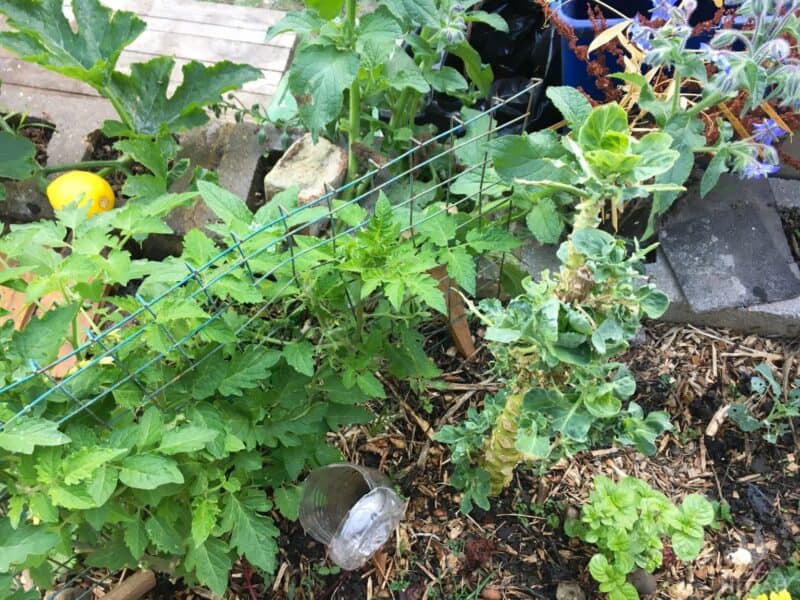
The trick is just knowing which plants make good neighbors in your garden or raised beds. Today we’ll be looking at squash…
There are all kinds of different squashes out there, but they all have a few things in common. Namely, they are very resource-intensive and need lots of nutrients to grow quickly and get big.
That, and the way they vine across the ground means they can easily strangle some other plants. You’ve got to choose carefully!
I’m here to help with a list of good companions for squash, no matter what variety you’ve chosen. We’ll get straight into them below.
Peas
These are a truly excellent pairing for your squash plants because of their complementary growth habits. Most pea varieties grow vertically on trellises, stakes, or other structures, and this can carry them up and out of the way of your spreading squash vines down below.
It’s great for saving space, yes, but that’s not all they do: their vines and leaves can act as natural shade for the squash and soil below, helping to protect them from the worst brunt of the sun.
Even better, peas are nitrogen-fixing plants like most legumes, meaning they actively return nitrogen to the soil, which can help rapidly growing, hungry squashes put out plenty of vines and foliage.
To make this pairing work, start the peas 8 to 10 inches away from your squashes, and train them to climb the trellis as soon as you are able. Tending to the squashes, be sure to keep them from climbing the trellises and going along the ground instead – you don’t want these two climbing alongside each other!

Green Beans
When serving as a companion to squash, you can treat green beans exactly as you would peas. They are legumes and have all of the same benefits and should be planted and managed in the same way.
However, if you are planting a bushy variety, simply allow extra room between the plantings: anywhere from 12 to 16 inches is adequate for most. Then just take care to keep the squash from tangling up with the young bushes and you’ll be all set.
Remember that when you harvest green beans, you should leave the roots in the ground: once they decompose, they’ll add a big burst of nitrogen back to the soil so you’ll be ready for your next crop!
Garlic
Garlic is one of the very best companions you could possibly plant for squash.
Aside from being a constant ingredient in all kinds of dishes, including ones that you’ll make with summer and winter squash varieties, the intense, pungent aroma of garlic is absolutely intolerable to many garden pests.
Aphids, particularly, are enemy number one if you are growing squash because their leaves are highly attractive to them. Garlic will keep aphids at bay, and that will go a long way towards saving your squash plants.
The trick is that garlic takes a long time to grow and develop, so you need to plant it in the previous fall or winter so it has plenty of time to mature underground and is ready for harvesting alongside your summer squashes.
My favorite approach is to plant a row of garlic between a couple of rows of squash, then plant some on the outside perimeter. By the time the bugs come out, this will form a barrier that they have a hard time crossing.
Onions
Onions are in the allium genus, just like garlic, and just like garlic, they have powerful pest-repelling properties. Unlike garlic, onions will grow above ground quicker, though their root systems are minimal and unlikely to disturb squash.
Focus on proper spacing, keeping a row of onions in between two rows of squash, with at least 8 inches and preferably a foot between rows. Be alert that the squash does not overtake the onions, or you will have issues.
But in return, the onions will keep many plant-predatory beetles and aphids at bay.
Corn
Corn is a truly famous companion for squash, along with beans for both of them. Known as the three sisters by Native Americans, this is one of the most complementary duos you can put in your garden.
Corn grows tall and strong enough to provide a living trellis for vining squash plants and also gives it plenty of shade. In turn, squash helps to control weeds and hold moisture in the soil. Plus, the whole arrangement is incredibly space-efficient.
Sunflower
Sunflowers are a fanciful but smart choice for planting alongside squash if you like how they look or just want to harvest some of those delicious sunflower seeds. These monster flowers grow tall and broad, and a stand of them can help shade delicate squash varieties.
They are strong enough to serve as a living trellis in the same way as corn and are also irresistible attractants to beneficial garden pollinators including butterflies, moths, bees, and more.
Squash won’t really do much to help these sturdy, tough flowers, but as usual, they will keep weeds at bay, which is always a good thing. Try to get your sunflowers established before planting your squash, and keep the two at least 8 inches apart.
The one thing you’ll have to account for is nutrition. Both plants are big feeders, so you’ll have to fertilize regularly and keep an eye on soil levels to make sure they can both keep growing.
Radishes
Radishes are some of my very favorite companion plants to use in a variety of situations. It’s because they grow so fast! Several varieties, including red globe and French breakfast, can grow to maturity and be ready for harvest in just 3 weeks.
Interplanting radishes between your squashes will make use of the soil that would otherwise sit empty beneath their vines.
This is a borderline sneaky way to make maximum use of your available space, and you can be certain that your radishes will be ready to take up before your squashes get so big that they’ll become problematic.
Even if you don’t like radishes, you’d be smart to plant some in the middle and around the edges of your squash grow: radishes are commonly used as a trap crop for beetles and squash vine borers.
If you really want a nice harvest of squash, it’s better that the pests go after the quick-growing radishes!
Oregano
Arguably the most important kitchen herb of them all, oregano provides a delicious spicy flavor to all kinds of cuisine, and it also drives away harmful insects with incredible efficiency.
Even more interesting, planting oregano near squashes specifically has been linked with better overall health and faster growth of the latter.
You can plant oregano between your squash plants, and just spend a little time keeping it safe from vines, keep it in pots nearby, or plant it in rows between the rows of squash.
Dill
Dill is a delightfully inspired pairing for your squash. It is quick-growing, easy to care for, and pleasantly aromatic. It also goes great in a wide variety of squash dishes, so consider that too!
More practically, dill attracts lots of insects that you want to hang out in your garden, namely ladybugs, which are the most important aphid killers around, and lacewings.
Lacewing larvae are parasitic and eat harmful garden pests, multiplying as they go. Getting a lacewing population established around your property will make your garden pest problems a thing of the past, and dill is the best way to do that!
However, dill is delicate, especially when it’s young, and will need protection from spreading, all-consuming squash vines.
Give it a little more than a foot of space between it and the squash, plant it in a row of its own, or just stick it in a pot and set a few of them around.
Lemon Balm
Lemon balm smells incredible, and that’s reason enough to grow it as far as I’m concerned, but it’s also a dynamite attractant and repellent. It will draw in bees, butterflies, and other beneficial critters by the hundreds while driving off certain harmful pests, both insect and mammal.
Mice, particularly, seem to give lemon balm a wide berth. Also, various aphids, beetles, weevils, and cropworms are repelled by the stuff.
Also, fun fact, mosquitoes avoid it, so if you grow enough lemon balm in your garden, maybe you won’t get drained of blood quite so badly while you’re out there working!
Lemon balm can grow interspersed throughout your squash patch, leaving about 10 inches / 25 cm between the plants, or you can grow it at the corners of a raised bed or your garden proper in dense clusters: the aroma will carry.
Marjoram
Marjoram is often said to be just oregano by another name, but it is not the same plant and has a different flavor profile. I’ll spare you the science lecture, but you can look into it…
But marjoram, if you care enough to cultivate it, can be one of the most important companion plants for your squashes.
That’s because it contains a compound and releases it into the air that is absolutely repellent to squash bugs.
Squash bugs, in case you couldn’t tell from the name, are the most prolific and devastating of squash pests, and groups of them can quickly drain the vital juices from your squashes and other plants.
That’s reason enough to keep this stuff around. Planted here and there around your garden, it can cover the entire thing with its protective essence. Alternatively, as with other herbs we’ve talked about, you can pot it and set them nearby.
Mint
Mint, as long as it can be controlled, can be your best friend and an ideal companion plant for lots of things you’ll grow in your garden.
Mint is incredibly offensive to many insects and even some animals. All sorts of bugs, from aphids to caterpillars and various beetles, are repulsed by the menthol compounds present in true mint plants. Spearmint, peppermint, whichever you prefer. At the same time, when it flowers, it will attract certain pollinators, especially bees.
The trick is to keep mint from overtaking everything. This stuff grows tall and spreads fast, and it’s not out of the question that it could cause problems for your squash.
If you don’t plan on pruning it aggressively, your best bet is to put it in pots or other planters and set it near your squash.
Chamomile
Chamomile is a highly versatile neighbor for squash because it is a bug-repelling wonder and also another nitrogen-fixing plant that can help sustain squash directly. Plus, chamomile tea is delicious, so you aren’t planting this stuff just for its benefits to your squash.
Concerning the pests, we are once again looking at the usual suspects like flea beetles, cucumber beetles, and even the aforementioned squash bugs. Although it is not as repulsive to squash bugs as marjoram is, it still has a positive effect.
Once again, potting is an option, or you can plant it 8 to 10 inches away from trellised squashes. Take care if you are leaving your squashes to grow over the ground because they can tangle and smother chamomile.


Get your gift and learn things like:
- how to make this really quick pest spray
- how to prevent egg waste
- two cheap automation devices that will make your life easier
Tom has lived and worked on farms and homesteads from the Carolinas to Kentucky and beyond. He is passionate about helping people prepare for tough times by embracing lifestyles of self-sufficiency.