
When the time comes to expand your flock of chickens, you’ve only got a couple of choices, assuming you don’t want to buy live babies. You can incubate eggs yourself using an incubator and then raise the chicks in a brooder, or you can let Mother Nature take care of it the way she always has—by allowing a broody hen to sit and hatch.

Talk to a dozen different chicken owners, and you’ll get a dozen different answers about which way is best. If you ask me, I’ll tell you the answer is “it depends.” There’s no one-size-fits-all solution.
The method that’s right for you will depend on various factors, including how much time you have, how much you’re willing to spend, and even what sort of chickens you already have.
In all cases, hatching fertilized eggs is as much an art as it is a science, and I’m here to help you figure out whether a broody hen or an incubator is right for you. Sounds good? Let’s get started.
Quick Overview of Broody Hens and Incubators
Most chicken keepers tend to be quite opinionated concerning the best way to hatch eggs. This, as always, boils down to the pros and cons, which I’ve listed below.
If you’re looking to make a quick upfront decision about which way to go or just wrap your mind around the topic broadly, the following will help you.
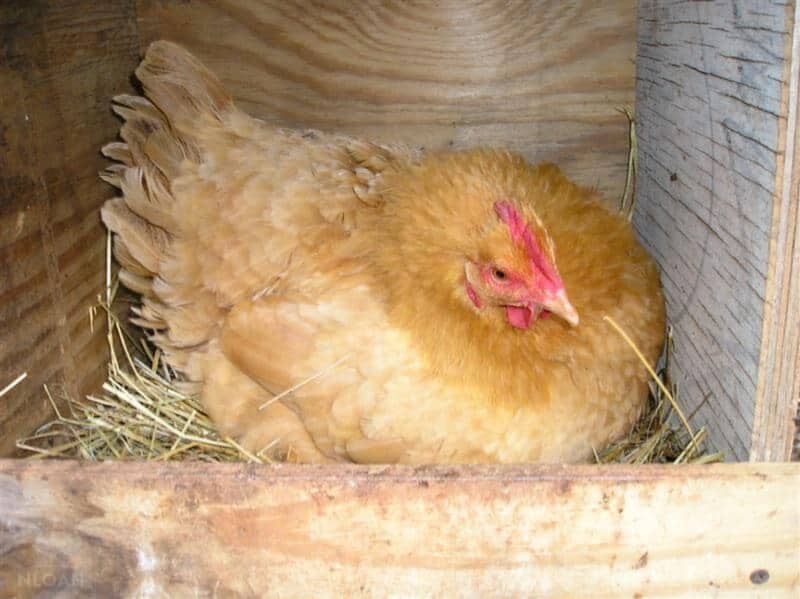
Hens
Pros:
- Typically higher hatching success rate with viable eggs.
- A lot less work for you overall, since mom knows what to do instinctively.
- Chicks hatched under a hen will bond more readily with the flock.
- You might have a broody hen already.
Cons:
- Clutch size is limited by the size of the hen.
- Hens are typically only broody at certain times of the year.
- Most breeds are not very broody at all.
- Hens might abandon the nest for no reason or accidentally break eggs.
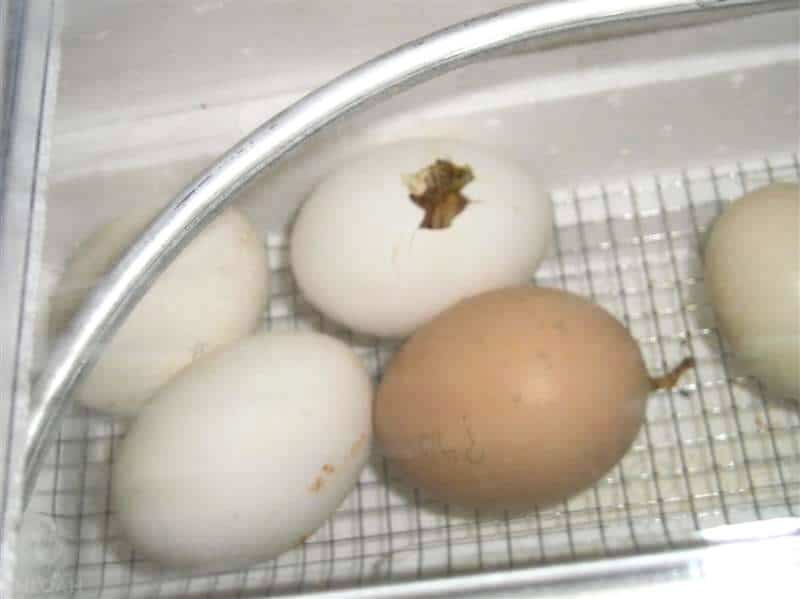
Incubators
Pros:
- Near-total control over hatching conditions like temperature and humidity.
- Ability to hatch year-round, regardless of weather.
- Capacity to hatch very large clutch sizes.
- Hand-raised chicks bond readily with people.
Cons:
- A lot more work for you (especially with a manual incubator).
- Incubators are much more costly than a hen.
- Overall hatch rate is typically lower than that of a broody hen.
- Extremely vulnerable to power outages and malfunctions.
Reading over the above, you might see one or two things that recommend either a hen or an incubator as a sure thing. Conversely, you might see a few things that are deal-breakers.
That’s okay, but I urge you to keep reading to get the rest of the story. It might not be as clear-cut as you think!
Consistency
The word “consistency” can be a little treacherous in this context. You’ll often hear fans of incubators rave about their ability to hatch chicks because they are so consistent. Supposedly…
It is true that using an incubator, and knowing how to use it, gives you total control over the ambient conditions that the eggs will be in.
You’ll be able to manage temperature, humidity, airflow, turning intervals, safety, and more—all inside your own home or another structure that should afford the eggs perfect protection from the elements and predators.
How can any living creature, including our mother hen, measure up against the reliability of a machine? It’s true that you’ll have to trust the hen to do what’s right for the eggs and do it at the right time. It’s easy to feel stressed out if Mom isn’t on the ball.
But luckily, most hens that do go broody are remarkably good at their jobs; their body temperature is perfect for supporting development in the eggs, and they know when to turn them throughout the day.
We’ll talk more about hatching success rates in the following section, but unless you live in a place with truly harsh weather (hot or cold) or you are unable to provide a safe, quiet place for mom away from the rest of the flock, incubators and hens are basically tied when it comes to consistency for the eggs.
That said, some hens just aren’t great moms; they tend to accidentally break eggs or even abandon them “mid-sit.”
Hatching Success Rate
Right up front, would you guess that a mother hen or an incubator would provide a higher hatching success rate? If you said “incubator,” you aren’t alone. Most chicken keepers instinctively think the same way.
But would you be surprised to learn that a live, broody hen actually provides a higher overall hatching success rate for any given egg, assuming all other factors are equal?
It’s true! Your typical mother hen will have anywhere from an 85% to 95% success rate, compared to an average success rate of just 70% to 85% for a typical “consumer-grade” incubator. Top-of-the-line and scrupulously maintained incubators might provide a hatching rate of 90%.
You should always be prepared for some eggs, whichever route you go, to simply fail. It’s sad, but it’s just the way things are.
That said, you’d be wise to account for significantly more failures if you’re going with an incubator. You might have to allot losses of up to 30% to land on your target number for increasing the size of your flock!
Readiness
With an incubator, you are ready to hatch as long as you’ve got fertilized eggs and the machine is in good repair, clean, and powered. That’s all there is to it!
However, if you want to raise a clutch au naturel, you simply can’t flip a switch and rush the process! For starters, only a few domestic breeds are known to be consistently broody in the first place; it’s simply been bred out of most chicken breeds today.
You should only expect your bird to go broody consistently if you have an Orpington, Brahma, Sussex, Old English Game, Cochin, Silkie, or a similar broody breed.
Then you’ve got to consider that they usually only reliably brood a clutch of eggs in the spring or early summer. After that, there’s just no guarantee, and it’s highly unlikely that they will successfully sit and hatch in the wintertime, even if you provide fertilized eggs.
If sticking to a timetable is important to you, come hell or high water, an incubator is the way to go.
Max Clutch Size
With an incubator, clutch size is limited only by the size of the unit and how many eggs you yourself can manage.
This is decidedly not the case with a broody hen. Your average broody hen can only reliably sit on 7 to 8 eggs, with larger breeds maxing out at around 10. Any more than that, and they can’t be reliably covered and warmed by her body.
Cleanliness
Cleanliness is always critical for a successful hatching, and very dirty eggs are more likely to fail. Incubators happen to be the picture-perfect environment for outbreaks of harmful bacteria, so keeping them clean and sterilizing them prior to the incubation process is critical. Missing an element during sterilization can result in the loss of an entire clutch.
You might think that a mother hen will be even worse in that regard, but surprisingly, it’s not true.
As long as she starts with a clean nesting area and has access to clean materials, she’ll build a shockingly clean nest and generally keep it that way. However, it’s hardly unheard of for mom to have a little accident in the nest and deposit feces all over her eggs.
This will necessitate that you help out, quickly cleaning up her and the eggs to ensure a successful hatching. That can be a lot easier said than done considering broody hens tend to be aggressive and highly defensive!
If you are diligent and disciplined enough to keep an incubator clean, you shouldn’t expect many problems. If you aren’t, you are probably better off letting a hen handle things, as long as you check on her periodically.
Labor
This is an easy one: incubating eggs yourself is a ton of work. You’ll have to rotate the eggs no less than three times a day for the first few weeks, and missing even a single instance or letting them go a little too long can have disastrous consequences.
Similarly, you should diligently monitor humidity, temperature, and airflow to keep it in the nominal zone: depending on your type of incubator, this will be between 99.5 ºF and 102 °F (between 37.5 ºC and 38.9 ºC).
Allowing even a single degree of difference for a few hours can cause an egg to fail or lead to complications for the chick developing inside!
This necessity of babysitting the eggs becomes geometrically more complicated if you’re using an old-fashioned manual incubator; sophisticated, expensive incubators have automatic controls and adjustments and can even turn the eggs for you.
In stark contrast, a mother hen will take care of absolutely all of this herself and, as mentioned, do so successfully the vast majority of the time! For lazy or very busy keepers, a broody hen can be a wonderful partner in expanding your flock.
Costs
Last but not least, you’ve got to consider costs. If you’ve already got a broody hen or two, then they are essentially free outside of upkeep costs.
If you wanted to buy a hen for the purpose, you’ll spend anywhere from a few dollars to $30, depending on the breed and age. That’s an average, of course.
Incubators, though, cost money—and they can cost a lot more than you think. A basic, entry-level manual model might set you back as little as $50 brand new.
Prices go up quickly from there depending on size and feature set, with semi-automatic models like the Harris Farms 360 costing around $180.
Top-of-the-line models suitable for hatching dozens of eggs at a time and resplendent with auto egg-turning, alarms, full climate control, and more might cost anywhere from $650 to $2,000.
Check out the Cimuka 350 for an example of the latter; it combines high-tech incubation capability with a built-in hatchery facility.
In short, the less you spend on an incubator, the more effort you’ll have to put into the process. A hen might cost only pennies and relieve you of tons of labor!


Get your gift and learn things like:
- how to make this really quick pest spray
- how to prevent egg waste
- two cheap automation devices that will make your life easier
Tom has lived and worked on farms and homesteads from the Carolinas to Kentucky and beyond. He is passionate about helping people prepare for tough times by embracing lifestyles of self-sufficiency.