
Gardening, no matter how you tackle it, is always hard work. But every seasoned gardener knows that it can get a lot harder when you’ve got to combat the seemingly countless pests and diseases that want to rob you of your harvest. Slugs, bugs, bacteria, viruses, fungi, nematodes, mammals, and more: all are waiting to take a bite out of your fruits, veggies, and ornamentals.
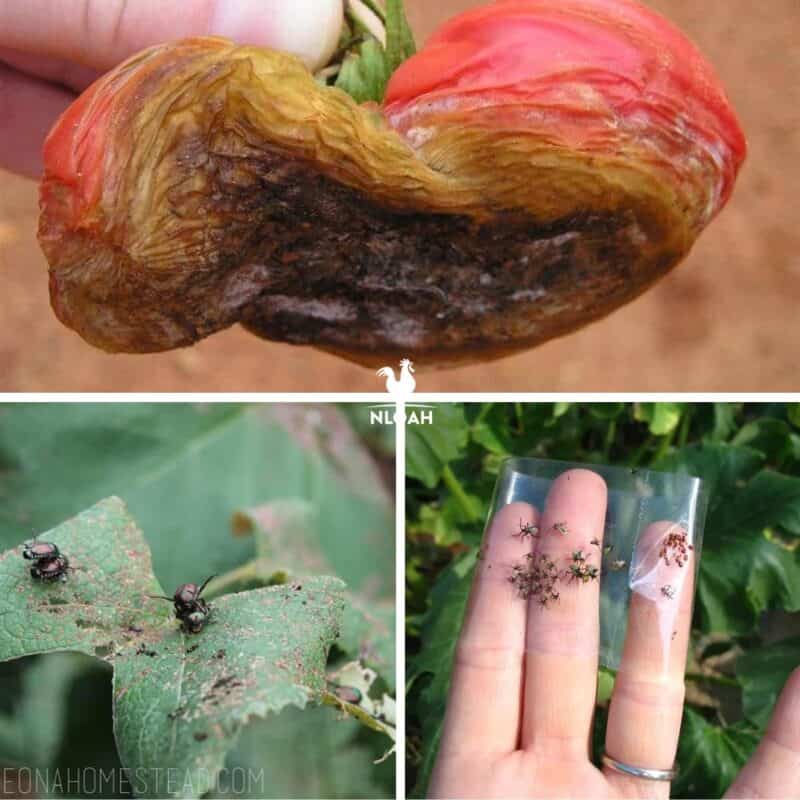
The thought of it is enough to make you throw down your tools and despair, but you need not give up. I’m here to help with a mega list of garden remedies and countermeasures for the most common pests and diseases. Brace up and keep reading; we are diving right in below.
Insects and Other Creepers
Snails
Surprisingly difficult to track down, and also surprisingly voracious, snails come out at night to crunch away on the leaves of your plants, eventually wrecking them. Get rid of them by plucking them off and drowning them whenever you see them, or set up traps like barriers of copper foil, diatomaceous earth, specialty bait, or beer traps.
Slugs
Treat slugs just as you would snails when it comes to countermeasures, but you’ll have to look harder to track them down since they don’t have a shell; they can squeeze through any opening that their tiny, beak-like teeth can fit through!
Aphids
One of the most common, and dreaded, insect pests. Aphids are tiny, proliferate quickly, and can devastate your plants by sucking all of the sap and juice out of them. Worse, they are found all around the globe, so you’ll never be free of them.
Get rid of aphids by spraying them off of sturdy plants with a blast from your water hose, or consider using neem oil and other gentle insecticides. If you are able, setting up a population of ladybugs in your garden will wipe them out.
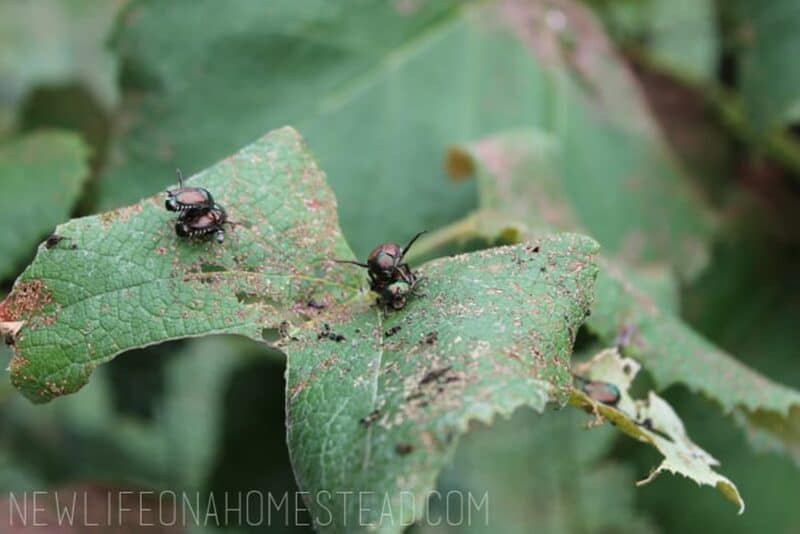
Japanese Beetles
Japanese beetles are another most-wanted scourge for most gardeners. These iridescent little bugs, left to their own devices, will hollow out leaves and even chew away blooms.
Small infestations can be dealt with by hand-picking and crushing or drowning them, but you can get persistent protection from neem oil, specialized beetle traps, milky spore, or bug-blocking soaps.
Try to keep up with seasonal and yearly forecasts on these pests; if they are out of control in your region, consider row covers to stop them.
Grasshoppers
Among the most dreaded garden pests, especially in large numbers, grasshoppers can absolutely demolish plant foliage and stems. They are also evasive and often hard to catch by hand, so use a net if you’re only dealing with a few.
If you’re dealing with a lot, use row covers or try to attract bug-eating songbirds that will pick them off. Specialized baits for grasshoppers contain a natural, human-safe pathogen that can eradicate them.
Earwigs
They look scary with their stinger-like tail forceps, but earwigs are harmless to people. They aren’t harmless to your plants though! Entice these critters to relocate by placing damp sandwiches of cardboard around your garden, or rolled-up wads of paper.
Collect and destroy them to depopulate, or sprinkle diatomaceous earth on and around live plants to slowly kill them. If you have a garden pond where frogs hang out, you’ll be happy to know they eat them up regularly.
Spider Mites
Usually invisible without perfect lighting conditions and, often, magnification, these miniscule mites aren’t really spiders, but they leave behind a trail of silky webbing all the same. Very common in hot, dry regions.
Best bets for control are bug-blocking sprays or all-natural oils like neem oil. If able, keeping plants moist and raising humidity levels will make the environment unsuitable for them.
Whiteflies
Ever see a cloud of tiny bugs dancing mote-like in the sun? Chances are it’s these little suckers. Whiteflies target many veggies and ornamental plants, sucking sap, spreading disease, and leaving behind honeydew that will attract other critters.
Your best bets for stopping them are plant-safe insecticidal sprays and soaps, or glue traps that are optimized for catching them. Look underneath foliage to catch them at rest.
Thrips
Pesky, quick, and hard to catch, thrips are another tiny pest that can do big damage. They feed on the sap and other liquids in all kinds of plants, particularly ornamentals. If you don’t see them, be on the lookout for shallow, silvery, or iridescent scarring that they leave behind on tissues.
Once again, sticky glue traps and various bug-killing or bug-blocking sprays and soaps are your go-to defense. Reducing ground cover can help to keep populations low.
Squash Bugs
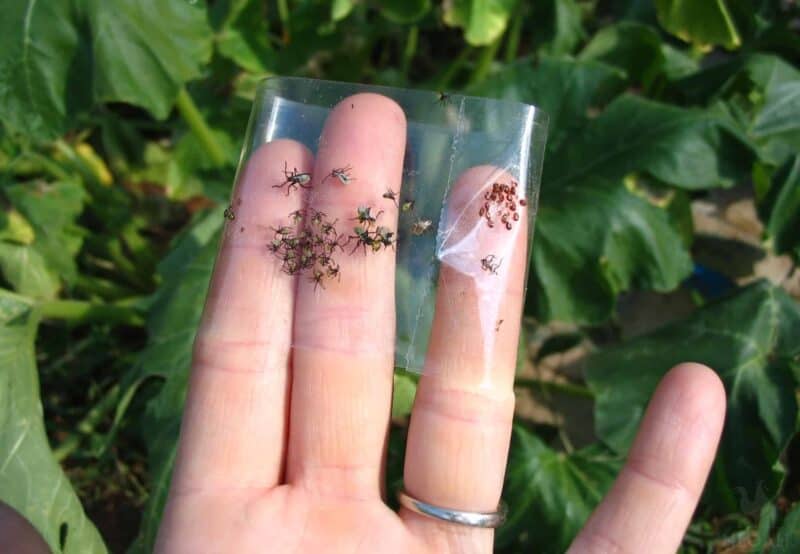
These beefy, persistent bugs, as their name suggests, are doomsday for squash plants, particularly cucumbers and pumpkins. They suck out sap using their specialized, straw-like mouth parts, wilting foliage rapidly.
Pick off and kill the bugs wherever you see them, and look beneath leaves for clusters of their eggs. Sturdy row covers and repellent companion plantings like nasturtiums work best.
Potato Beetles
Plump and distinctively striped, potato beetles are easy to spot but hard to get rid of before they do massive damage. This is because it’s difficult to break the life cycle of the species.
Rotate potatoes, tomatoes, eggplants, and other nightshades religiously, and if you see more than a few, install row covers to contain adults and stop others from arriving. Don’t wait!
Cucumber Beetles
No surprises here, cucumber beetles target and attack cucumbers and other cucurbit plants. They can be especially hard on young or already stressed ones. Give them the boot by picking off adults and larvae, and repel them with soap, kaolin clay, or neem oil. Sticky traps and row covers provide a solid defense against ongoing infestations.
Blister Beetles
Don’t pick these critters off with an ungloved hand! If you see a slender beetle with bright, firecracker-red stripes, use a tool or gloves because they can cause serious skin irritation.
They love to chew on nightshade family vegetables, so keep an especially close eye on them and encourage frogs and birds to hang out in the garden; they will eat up blister beetles with no reservations.
Leaf Miners
If you ever see tracks of strange, pale scarring on the leaves of your plants with no obvious culprits hanging around, you might be dealing with leaf miners. They burrow through the leaves themselves!
The smart approach is to snip off the infested leaves and destroy them so they don’t spread, and the best defense here is a good defense: use row covers to stop adults from getting to your plants in the first place.
Root Maggots
Alliums, brassicas, and root veggies fall quickly to root maggots. These fly larvae will stunt growth at best but often kill off plants entirely.
Row covers really are your best defense, as is regular crop rotation since eggs mature in the soil. Once again, beneficial nematodes can help to control or even eliminate root maggot populations.
Rust Flies
One of the most hated carrot-specific pests, rust flies also routinely target relatives like parsnips and celery. Adult flies lay eggs near the base of developing plants, which hatch and burrow into the roots for protection and sustenance.
Routine treatment and improvement of soil, along with regular rotation, reduces impact. Inspect your aforementioned plants constantly for signs of infection!
Codling Moths
These large and impressive moths are pretty, but are the bane of apple, pear, and walnut trees. Their eggs produce larvae which burrow directly into fruit. Control is extremely difficult outside of mechanical intervention with bags and nets to keep them away. Pheromone traps can work, but are only partially effective.
Sawflies (Pear Slugs)
Not really slugs at all, the taxonomic differences don’t matter one bit. These fly larvae are just as destructive as their namesakes, stripping leaves from fruit trees and bushes quickly.
Luckily, the countermeasures are indeed similar. Blast them off with the water hose, handpick them, or coat plants with insect-repelling soap or oil. DE is also effective.
Vine Weevils
Vine weevils aren’t picky about what parts of your plants they eat; they feed on leaves and stems and also on roots, assaulting your plants at all levels. They are most active at night, so patrol after the sun goes down, and you can easily spot and pick off the adults.
Getting colonies of predatory nematodes going in the soil will kill the young so they don’t grow up and reproduce. For major infestations, install glue traps on the soil and at the base of stems.
Mealy Bugs
These tricky suckers are another global pest, and will routinely attack ornamentals by sucking sap and then excreting honeydew which will attract other pests in kind. Even if you spot them, they will prove difficult to pluck off because they anchor themselves in place with an adhesive.
Cotton pads or rags dipped in alcohol will dislodge them, or you can easily protect plants with neem oil or other bug-blocking soap. Like aphids, ladybug populations will demolish these things.
Cutworms
These distinctive caterpillars are incredibly destructive, chewing right through plant stems near the ground level. You might think someone has cut down your plants in the night, and you’d be right! They live in the soil and travel to your plants at night to feed, so protect plants with metal or cardboard collars in a pinch.
Pluck and squish any you find. They are slow-growing, so regular inspection can depopulate them quickly.
Cabbage Worms
Gardeners who grow broccoli, cauliflower, or other brassica plants are probably already familiar with these hated foes. Found around the globe, cabbage worms blend in with your plants and are difficult to spot as they chew straight through them.
Hand-picking is effective if you are sharp-eyed, as are row covers that stop adults from laying eggs in the first place. Inspect your plants early and often, and consider BT spray to kill them.
Tent Caterpillars
So named for the tent-like silk structures they build, like most caterpillars, these are hungry indeed, stripping leaves with frightening rapidity.
Predatory birds are your very best defense, so do what you need to to keep them around. Other than that, routine inspection and, if overwhelmed, treatment with BT spray is the prescription.
Box Tree Caterpillar
The march of the caterpillars is endless! Native to Europe and increasingly established as an invasive pest throughout the US, box tree caterpillars target, as you’d expect, boxwoods of all kinds. They are the bane of hedge makers.
Luckily, they are large and easy to spot, and leave behind distinctive webbing. Block them off and squash or drown them, and treat your boxwoods with BT spray to stop major assaults.
Hornworms
More false advertising, hornworms are caterpillars, not worms, and easily identified by their large, rhino-like horn and false eye spots. Huge eaters, they can wreck nightshade plants in no time flat.
Picking them off by hand or leaving them to the attention of certain predatory wasps will take care of them. Inspect your garden regularly, and you shouldn’t have too many problems.
Corn Earworms
Another caterpillar species, another set of problems. Corn earworms are notorious corn pests, obviously, but they are another menace for nightshade family veggies, tunneling straight into fruit for shelter and food.
BT spray works well on them, but also, strangely enough, common mineral oil. Inspect regularly and reapply the mineral oil to prevent infestation.
Mammals
Deer
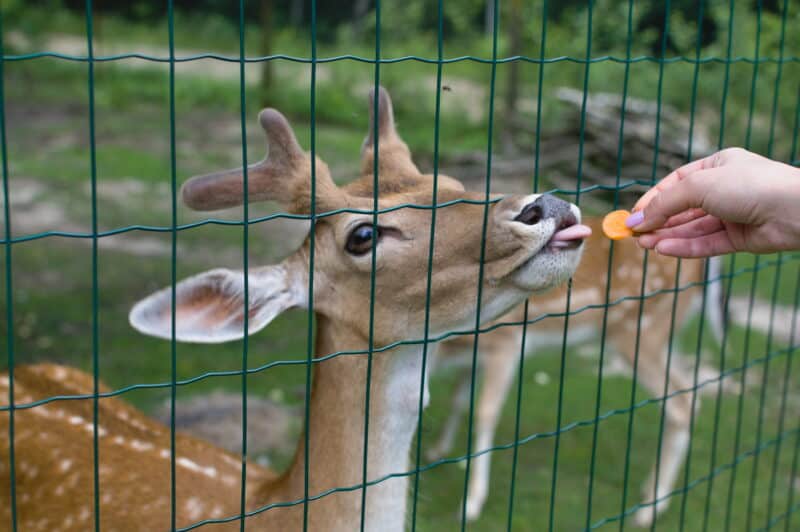
It’s only fun seeing deer in your yard if you aren’t growing plants. They are basically the apocalypse for your garden, eating ornamentals, shrubs, fruits, and veggies. Keep them out with fencing, deer-repellent spray, or, my favorite method, a little bit of shredded Irish Spring soap hung up in a sock or two!
Rabbits
Nothing is cuter than a bunny, but just like deer, they can spell disaster for even the most orderly garden. Young plants that are still shoots and sprouts, some vegetables, and many ornamental flowers are favorite foods of rabbits. Use mesh cages, repellent sprays, and predator decoys to keep them at bay.
Groundhogs
North America’s second-largest rodents might as well be the very largest considering their appetites! Every kind of vegetable there is, and many herbs and other plants besides, are on the menu. They also dig surprisingly large burrows which can disrupt the soil around your garden.
Use rodent-repellent sprays, cage traps, and wire mesh fencing buried at least 12 inches deep in the soil to stop them from getting to your plants.
Raccoons
These charismatic but sneaky and destructive mammals love nothing more than getting some fresh fruits, veggies, and corn from your garden. They will also dig up root veggies, bulbs, and more and often trample the plants that they don’t eat.
Motion-activated sprinklers or mild electric fencing is your best bet for repelling raccoons. Repellent sprays only have about a 50% success rate in my experience.
Squirrels
You know them, and whether you love them or hate them, you already know that squirrels will raid fruits, nuts, seeds, and bulbs, especially when it’s time for them to stash food for winter or pack on the pounds after winter hibernation.
Stopping squirrels is shockingly difficult owing to their agility and intelligence: consider spraying plants with cayenne pepper solution to drive them off, or use wire cages and sturdy row covers.
Common Diseases
Root Rot
The dreaded root rot! If soil conditions stay too wet for too long, most plants will fall victim to this eventually. Control groundwater, ensure adequate drainage, and improve soil consistency to prevent it. Affected plants don’t often recover, but it can be done if some roots are still white and showing vitality.
Blight
Blight comes in many varieties, including early, late, and species-specific types. Depending on the type, you will see initially small but spreading dark brown, black, or greenish-black spots on the leaves of plants.
This is another fungal infection that can sometimes be treated with copper-based fungicide, and improving airflow while drying out both plants and soil is a good remedy.
Gall
More of a symptom than an actual disease, that matters not. When you start noticing little pimples or pustules forming on your plant’s tissues, you’ve got to investigate. It could be caused by bacteria, fungi, viruses, insects, or other organisms.
When you see these, search for possible causes based on the type of plant and investigate further. You usually can’t reverse the damage, but you’ll have to take other actions depending.
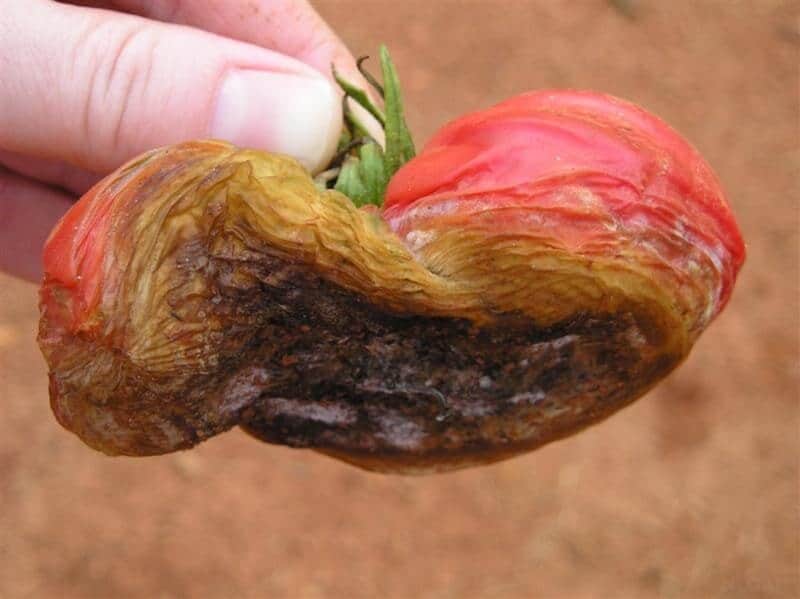
Blossom End Rot
A disease that devastates nightshades like no other, including peppers, tomatoes, and eggplants. Tomato growers especially have to struggle with this one. Appearing as blackened and rotten bottoms on fruit, it is typically caused by calcium deficiency stemming from a lack of hydration most times.
If your soil testing shows sufficient calcium, simply water more consistently and add mulch around the base of your plants to keep the soil moist longer. That should do the trick.
Corn Smut
No, not that. Behave yourself, now! Corn smut is an unsettling fungal infection that causes corn kernels to warp, turn gray, and grow exponentially into a knobby mass.
There are no effective treatments known, but the good news is that corn is still edible and in some countries a delicacy. If you spot it early, sometimes removing infected ears or kernels can stop it, but otherwise, you have to rely on crop rotation and smut-resistant varieties.
Rust
Yet another fungal infection, and one that is easily identified by the fuzzy, sporadic, rust-colored patches it leaves, hence the name, this stuff is really problematic for beans, garlic, roses, and other ornamentals.
It’s hard to stop once it gets started, so you should remove infested foliage immediately and then treat the plant with fungicidal spray as usual. It rarely causes significant damage, but it’s definitely unsightly.
Leaf Spot
If you notice the leaves of any of your plants taking on a cheetah-like appearance, they aren’t channeling their inner feline! They are probably infected with this fungal killer.
Once again, immediate removal and disposal of infested foliage is paramount, as is treating plants with fungus-killing sprays. It’s easy to prevent leaf spot by watering plants close to the ground instead of overhead.
Powdery Mildew
A common fungal infection that can affect all kinds of plants, powdery mildew looks just like it sounds: creeping, gray patches of fuzzy mold. Typically strikes plants that are too moist and without sufficient airflow.
Improve air circulation and consider treating plants with a wash made from baking soda and water to help kill it. Neem oil may be effective in some circumstances.
Downy Mildew
Another type of fungal infection, but one that is distinct from powdery mildew, this one looks like regularly spaced yellow blotches on your plant’s leaves, with a grayish-purple smudge surrounding most of them.
Humid conditions and a lack of circulation, along with cooler nighttime temperatures, will trigger an outbreak. Remove and destroy infested leaves immediately, and treat plants with copper-based fungicide.
Fire Blight
A few shriveled, dead leaves on a plant might not be cause for concern at first, but if you notice them spreading, then it might be infected with fire blight. It can overtake even mature and hardy plants fast, which then must be destroyed.
This is reason number one why you keep your pruning tools clean and sanitized because the disease often spreads from tools to plants. You’ll need specialized sulfate sprays to treat this stuff, so prevention is the best medicine.
Fusarium Wilt
A hated fungus that dwells in the soil and proves very difficult to get rid of, it will yellow, wilt, and then kill many different plants, and tomatoes are especially vulnerable along with peppers and potatoes.
Unlike some other soil-borne bugs, crop rotation isn’t enough to stop this one because it spreads through the soil so quickly. Ensuring good drainage and planting fusarium-resistant types is your best bet here.
Plum Wilt
A specific type of wilt disease that is especially common in Europe and the US, this one most commonly affects peaches, nectarines, plums, and related plants. If your plants stay wet and temperatures drop, this infection can appear.
It’s notorious for popping up in early spring. Look for leaves to take on a spongy and severely curled appearance. Not much you can do about it except to treat affected plants with a copper-based fungicide.
Verticillium Wilt
This type of wilt targets many different ornamental plants and vegetables directly through their roots, and the entire life cycle of the organism is based in the soil. It starts off as rapid yellowing and wilting but causes sudden death of the plant.
There is no cure. Slash and burn is a preventive: cull and destroy infected plants immediately and avoid planting in that spot going forward.
Black Knot
Black knot is predominantly seen on plum and cherry trees, but can affect other plants in the Prunus genus. It looks like knobby, tubular growths jutting out from branches and stems. Get rid of it by pruning them off while plants are dormant in the cold season. Young plants should be treated with fungicide in addition.
Gray Mold
You’ve seen this infection before even if you don’t garden. Gray mold is that fuzzy, nasty mold that always appears on your fruits that sit around for too long and spoil. One of the hallmarks of decay, many kinds of berries and ornamentals are especially susceptible.
Prevent it from taking hold by keeping plants dry and giving them adequate air circulation. You can save mature plants from falling to it by treating them with fungicide as usual.
Scab
An infection that will affect peach, apple, and pear trees, you can spot scab easily by looking for the scabs on leaves and fruits. Look for necrotic patches with fluffy edges that darken, eventually turning black.
This fungal infection is tough to break because it can overwinter and keep right on going when temperatures warm up. Prune off infected foliage immediately and destroy it, and try to keep plants dry with excellent airflow.
Remove all ground covering such as leaves or mulch because it can harbor spores which will foment a follow-up outbreak.
Phytoplasma
This infection is spread by some of the insect pests we talked about above, specifically leafhoppers. It typically results in stunted growth and deformed fruit or blooms. There is no treatment, so control and prevention is the way to go.
Work hard to curb insect pest infestations and always remove and destroy infected plants as soon as possible to prevent spreading.
Mosaic
This is a category of viral infections, not a specific type of infection. There are cucumber mosaic viruses, tomato mosaic viruses, and more. Look for speckled light and dark green appearance on leaves where there should be none. That’s the obvious symptom.
Mosaic viruses are readily spread by aphids and other pests, and once again there is no cure or treatment unfortunately. Remove and destroy infected plants as quickly as possible and do everything you can to control aphids especially.
Black Spot
Probably the most dreaded fungal disease for rose gardeners, black spot causes, what else, black spots on the leaves. Leaves die back and this reduces growth, and accordingly reduces the amount of blooms that you’ll get. Don’t water your plants from overhead and use copper-based antifungal sprays if outbreaks have been common in the past in your area.

Get your gift and learn things like:
- how to make this really quick pest spray
- how to prevent egg waste
- two cheap automation devices that will make your life easier
Tom has lived and worked on farms and homesteads from the Carolinas to Kentucky and beyond. He is passionate about helping people prepare for tough times by embracing lifestyles of self-sufficiency.
Excellent written descriptions and how to deal with these issues, BUT a photo of each would truly be a plus/help in identifying them.