
Ancona ducks are both rare and beautiful poultry birds. These ducks, in their black and white variety, have unique and broken-colored feathering patterns that make them both easy to identify and engaging to watch. Ducks of this breed are classified as multi-purpose or dual-purpose because they are raised for eggs as well as meat.

The beauty and friendly nature of Ancona ducks have also endeared them to backyard keepers and homesteaders alike as farm pets.
This is a medium-weight breed that tends to be calm and intelligent. I believe they are second to only Pekin ducks in barnyard common sense and ease for free-range training. The average lifespan of Ancona ducks is around 10 years in captivity, though this is an estimation, not an official figure on The Livestock Conservancy website…
Table of Contents:
History of Ancona Ducks
Despite their attractive plumage and enigmatic personalities, Anconas have a fairly low population count. According to the Livestock Conservancy, members of this breed were deemed critically endangered in 2015. In fact, back in the year 2000, there were just roughly 125 known Ancona duck mature breeder ducks in America. Some increases of about 1,500 breeding birds have been noted in recent years. The uptick in population numbers prompted the move from critically endangered to “watch” list status.
There has been some heated debate over the exact origins of the Ancona duck breed. Until about 1913 these ducks were thought to have hailed from Great Britain, though there is evidence it could have originated in the U.S. It was then the Water Fowl Club of America’s yearbook stated a Knowlesville, New York farmer created the Ancona breed.
W.J. Wirt, the owner and operator of Ridge View Farms, maintained he had crossbred multiple different varieties of standard breeds of ducks to create the Ancona. Soon after Wirt’s announcement about the new duck breed, in 1915, Anconas won not one but two first places in the Wildum Duckery of Rowley show in Boston.
It remains unclear which breeds of ducks were used to create the Ancona. Some duck keepers think there is some body style similarity to the Pekin – which is not a native breed to the United States.
Others look at the Ancona and think that Indian Runner ducks as well as the Belgian Huttegems also were somehow in the cross-breeding mix. Magpie ducks may be a close relative of the Ancona as they share multiple similar physical characteristics.
Ancona Duck Physical Traits
| Size | Medium (6-8 lbs for males, 6-7 lbs for females) |
| Eggs Laid | 210-280 large eggs per year |
| Egg Color | White, blue-green, tinted |
| Coloring | Broken, mottled plumage like Holstein cattle (no set design); solid white neck with yellow bills with dark or dark-green spots |
| Temperament | Active but do not fly |
| Purpose | Dual purpose (eggs and meat) |
| Origin | North America |
- The Ancona is known to be a hardy breed, and boasts above-average disease and parasite resistance.
- Duck mating is often rough on the hens as drakes are not prone to be gently amorous. Ancona ducks may be the most mild in the world of domesticated ducks.
- Ancona ducks are classified as medium-class birds based upon their weight. Unlike many heritage breeds of various livestock, members of this duck breed have a fairly fast growth rate.
- Mature ducks of this breed range in size from six to six and a half pounds.
- Ancona ducks have a bill that is concave at the top line and of medium length.
- Ancona ducks are fairly stocky for a medium-class breed. Their body style and bulk is similar to a Magpie but is a little less robust than a Pekin.
- The head on Ancona duck is a mix of white and colored feathers with broken color areas on not just the head but the back, sides, and underbelly of Anconas, as well.
- The most common plumage coloring on Ancona duck breed members include silver and white, black and white, chocolate and white, blue and white, and lavender and white.
- The head is oval in shape and is connected to a neck that slightly arches forward. The neck of Ancona ducks is always solid white.
- The bill on Ancona ducks is yellow. A tiny amount of black or dark green speckling can also be present on the bill – which is similar to the greenish-black speckling on the bill of a Pekin duck.
- Ancona legs and feet are orange with black or brown markings that appear and become more distinct with age.
- Any chocolate plumage present on an Ancona duck is the result of a sex-linked and recessive trait. When a chocolate drake mates with a black hen all of the females will be chocolate, and all of the males will be black. When black drake mates with a chocolate hen all of the ducklings will turn out black regardless of sex, but the sons will inherit the allele gene.
- As is the same situation with most domesticated duck breeds, the Ancona cannot fly very well at all. These birds are capable of getting a couple of inches off the ground when flapping their little wings really hard and then moving forward 12 inches or so before their fanciful flight comes to an abrupt end.
- Due to their size and agile nature once mature, Ancona ducks are a little less likely to be killed by predators such as eagles. There are, however, tragic exceptions to the rule. I have twice found dead mature Jumbo Pekin ducks that a hawk tried to make its dinner dropped on our hilly farm acres away from the barnyard.
Demeanor And Eating Habits
Members of this duck breed are as hardy as they are sweet. Ancona ducks seem to enjoy human interaction, even though they do not require it in order to survive in the wild. They are not easily startled whether in or outside of the coop and run.
Ancona ducks love to free range and are capable foragers. Even when still in the duckling stage a young Ancona will still likely be a voracious forager. But, unlike Pekins, these beauties rarely venture too far from their living quarters. So if you live on a small homestead of only five to 10 acres or are a backyard keeper, the Ancona will still have the room to roam when they want to feed themselves.
Some of an Ancona duck’s favorite foraging meals include slugs, insect larvae, snails, tadpoles and small frogs, small fish, tiny lizards, and wild greens.
To provide a continuous supply of free and naturally healthy food for an Ancona flock, consider using a chicken tractor to safely relocate them to other areas of the homestead or farm to forage for more food once their favorite stomping grounds near the duck house have been depleted.
Ducks typically cause far less damage to a garden area than chickens due to the difference in the rounding of the bill as opposed to a pointy beak.
Still, allowing Ancona or any other duck breed free access to your garden results in trampled ground crops and the loss of possibly your entire patch of lettuce.
Because Anconas like to spend as much time on the water as they can, investing in some aquatic plants, such as duckweed.
Anconas often make a sound that is similar to the squeaking of a metal hinge while happily foraging for a meal. Members of this duck breed are docile, quiet unless substantially startled, and get along well when living with other duck breeds, chickens, or guineas.
Members of this duck breed are climate hardy in both hot and cold environments. Neither summer humidity nor the chilly winter nights in February seem to deter an Ancona duck’s desire to free range, lounge outside, go swimming, or mate.
When you need to supplement the feed of the Ancona, chicken or poultry bird feed can be used… but keep in mind chicken feed is typically lower in niacin, something ducks need more of. So do make sure your ducks will get it from somewhere else. Also, only use non-medicated chick starter when feeding ducklings, medicated variants can be very detrimental to the health of the young ducks.
Waterfowl feed may be best, but it is not usually stocked at agriculture supply stores, especially in rural regions. You can also try game bird feed during the winter months to give the duck a needed protein boost, but again, you need to be mindful of the nutrient composition of that particular feed to balance it with other foods.
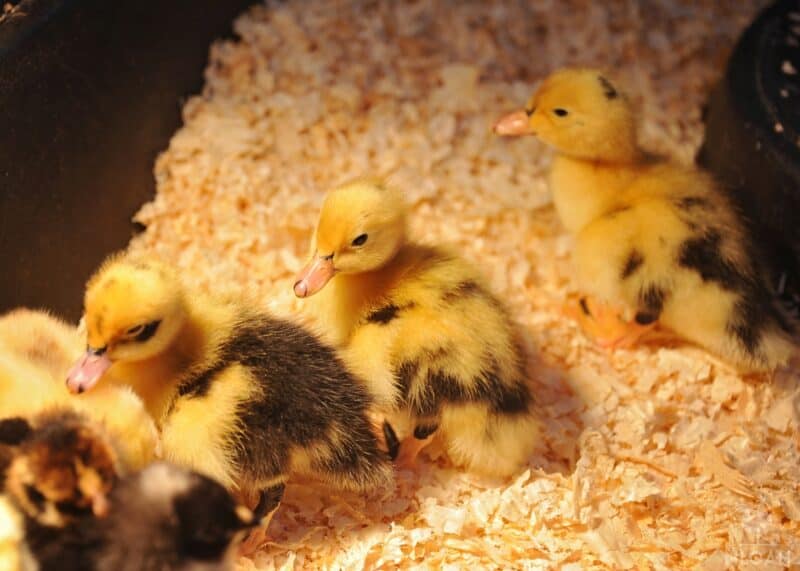
Do Ancona Ducks Fly?
Ancona ducks can fly a few feet off the ground but not higher than trees or rooftops. Most of the time, Ancona ducks will use their wings to help them swim faster or to jump out of the water.
Overall, Ancona ducks are more efficient at moving around by swimming than by flying.
Egg Production
Ancona hens are excellent layers of quality eggs with hard shells, but they donÄt go broody as much as other ducks. This is highly unusual in a heritage poultry bird breed and perhaps part of the reason why their population numbers have dipped so low. If you want to sustain or increase flock numbers, investing in an incubator would be incredibly wise.
- Hens of this breed usually lay between 210 and 280 large-grade eggs annually.
- Ancona hen eggs can range in color from white to cream and also include light shades of blue.
- These hens rarely ever go broody.
- Ancona duck hens usually lay eggs heavily for 3 to eight years before the quantity but not quality of the eggs dwindles as they age. They starting laying at around 5 months of age.
- An egg laid by a duck hen of this breed weighs approximately 70 grams.
Raising Ancona Ducks for Meat
Ancona duck meat is tender and flavorful, but it has a relatively higher fat content than chicken meat. The meat is juicy, but it’s not as lean as chicken meat. If you prefer lean meat, you might find duck meat unappealing. However, if you’re looking for unique and flavorful meat, Ancona duck should be worth the try.
What is the Ancona Duck Lifespan?
On average, Ancona ducks can live for around 10 years, with some reaching the wise old age of 15. The life expectancy, like other ducks, is affected by a variety of factors, including genetics, environment, and basic care.
Giving your birds clean and spacious living areas, a balanced diet, and daily opportunities for exercise can help them maximize their lifespan and stay as healthy as possible.
Are Ancona Ducks Good Pets?
Ancona ducks are very social and form strong bonds with their human caretakers. They are known for being friendly and calm, and will often follow their owners around the yard. Many Ancona duck owners describe them as “dog-like” in their behavior, making them a unique and charming pet to have.
One thing to keep in mind when considering an Ancona duck as a pet is that they can sometimes be noisy. They have a tendency to quack loudly when they are startled, which may not be ideal if you live in close proximity to neighbors. This is something to consider before bringing Anconas home…
Ancona Husbandry Tips
There are no breed-specific husbandry tips for Ancona that are not present for all other domesticated duck breeds.
They need a clean and safe living area, such as a duck house or a duck coop and run. The living quarters need to protect the Ancona duck flock from both the elements and predators.
Clean and dry bedding needs to be inside the living area. Damp and moldy bedding can breed bacteria and cause the growth of mold which can cause a lot of respiratory issues if the ducks inhale the spores made by the Aspergillosis fungi.
If the Ancona ducks spend the bulk of their day inside of the run, straw will occasionally need to be spread around the run to dry up the mud created by the ducks hopping in and out of the baby pool and splashing.
Ducks need constant access to clean drinking water, as well. A duck should never be without access to clean water to drink, and at least dip their head into.
Growing vegetables, greens, and fruit inside the run (enclosing them in a hardware cloth cage until mature) will simulate foraging and provide a reduced-cost and healthy complement to grains and to their daily feed.
Nesting boxes. Given that ducks prefer ground-level nests to lay their eggs, that doesn’t mean they might not like a nesting box or two. After all, if you want to maximize egg production, you should give them as many options as possible of places to lay delicious farm fresh large duck eggs.
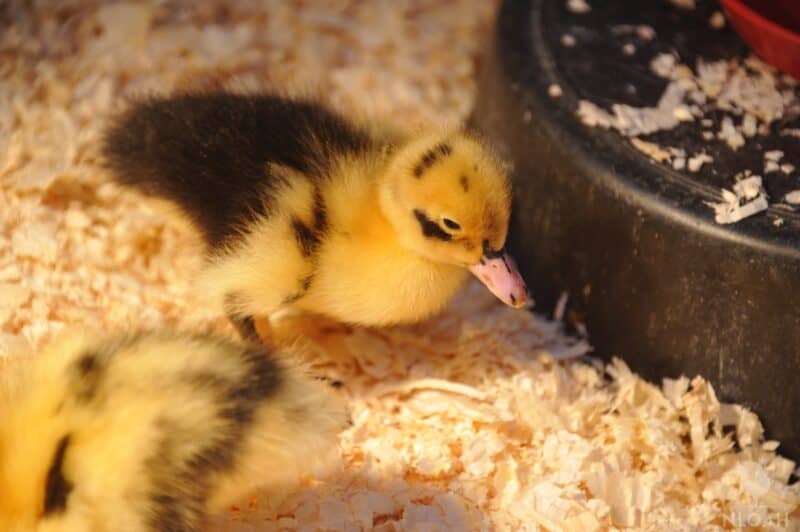
Where to Find Ancona Ducks for Sale
Although Ancona ducks are regarded as being somewhat rare, they are still relatively easy to find. Start your search with an online hatchery.
Some reputable hatcheries include Ideal Poultry Breeding Farms, McMurray Hatchery, and Metzer Farms. If you can’t find Anconas with a hatchery – or perhaps would rather buy locally – do some research on the various Facebook groups, where you might find owners who are selling them.
When selecting your ducks, look for those that are active, alert, have bright eyes, and do not have any visible signs of disease. Keep in mind that one drake (male) can be kept with up to six females – but do monitor the females for mating injuries because you might need to adjust the ration (i.e. get more hens).

Final Thoughts
Being a heritage breed, the Ancona was bred selectively to generate specific traits that solidified over generations that ultimately led to the desired attributes. Like other heritage breeds of livestock, they tend to be exceptionally hardy and require little human intervention in order to survive. Don’t get any ideas, though: you still need to look after them!
Due to the docile and social nature of members of this breed, they may also help to calm any more anxious and vocal duck breeds you are already keeping. Will you give them a try?

Get your gift and learn things like:
- how to make this really quick pest spray
- how to prevent egg waste
- two cheap automation devices that will make your life easier

Tara lives on a 56 acres farm in the Appalachian Mountains, where she faces homesteading and farming challenges every single day, raising chickens, goats, horses, and tons of vegetables. She’s an expert in all sorts of homesteading skills such as hide tanning, doll making, tree tapping, and many more.
Is there any kind of correlation between colors and genders? Obviously nothing is 100% male or female, but are chocolates slightly more likely to be female, are blacks more likely to be male, anything like that?
There is an Ancona duck in the pond where I live. All the other ducks are mallards. Does he need another Ancona duck for companionship? Sometimes he swims with some of the mallards. Sometimes he hangs out by himself. Is this behavior typical?