
When most folks think of raising livestock, they imagine big acreages, rolling pastures, and wide-open spaces. The simple necessity of adequate land for raising cows, horses, and other animals is a huge expense and what keeps most homesteaders from doing so.

Happily, that isn’t a problem with chickens: it doesn’t get any more space-efficient than they are! Chickens need comparatively very little room, but you can’t keep them crammed in a tiny coop or a small run without courting major problems.
A lack of space for chickens is associated with reduced production, illness, injury, and even death. Accordingly, you’ve got to make sure they have enough in the coop and out. I’m here to help with this in-depth guide for chicken spacing requirements. We will get straight into it below.
Space Requirements by Zone and Breed
In the following sections, I’ll be breaking down the spacing requirements for your flock based on an intersection of factors. The most important factors you need to concern yourself with are the type of chicken and the actual space they are in.
As you might imagine, your average, everyday chicken breeds weighing six to eight pounds will have their own spacing requirements, but smaller bantams and extra-large or jumbo breeds will have different requirements.
Likewise, your birds need a certain amount of space inside the coop and a certain amount of space in the run, and they aren’t the same.
There are other factors to consider, also, like unique breed proclivities, roosters, free-ranging, and more. I’ll break everything down in a logical progression, step by step, below.
In the Coop
- Standard: two to four square feet per adult bird.
- Giant: four to six square feet per adult bird.
- Bantam: around two square feet per adult bird.
Space inside the coop is critical for chicken welfare, even though they nominally don’t spend a ton of time in there.
When the weather is good and the sun is shining, your birds will likely be out and about roaming in the yard or in the run. Most of the time, they will only be inside the coop to sleep at night.
Nonetheless, overcrowding here is associated with the rapid proliferation of diseases and infestation by internal and external parasites, including worms, flukes, fleas, ticks, mites, and lice.
The above guidelines are reliable ones to follow for total floor square footage inside the coop. Smaller birds naturally need a little less room, while bigger ones need a fair bit more—enough to turn themselves around and rearrange themselves on roosting bars comfortably.
Keep in mind that if you live in an area with extremely harsh winters, wet weather, or severe storms, your flock might have to spend more time cooped up.
Similarly, if you have to leave your property regularly and plan on keeping your birds inside out of an abundance of caution, you would be wise to allow significantly more room in the coop.
Beginning chicken keepers who are smart will also plan accordingly for future additions to the flock; small flocks rarely stay that way!
Roosting Bar Spacing
- Standard: 8 to 10 linear inches per adult bird.
- Giant: 12 to 16 linear inches per adult bird.
- Bantam: six to eight linear inches per adult bird.
Here’s one spacing requirement that I see overlooked time and time again. You might have provisioned enough space on the coop floor, but do you have enough room on the roosting bars and enough bars in total?
Each adult chicken will need a certain amount of linear space to rest comfortably and position themselves when they are settling down to sleep. No surprises here: bigger birds need more room to get comfy. Surprisingly, bantams do not need significantly less space compared to standard-sized chickens.
If you ever observe your birds sleeping, you might think you can get away with a lot less space than the recommendations above; they tend to cluster together pretty tightly, both for security and for warmth. Don’t give in to this idea!
All flocks have a pecking order, and as part of that pecking order, “assigned seating,” if you will, on the roosting bars will be enforced. Allowing this extra margin of space helps to maintain order.
As with the size of the coop above, you are smart to allow more room on the bars than you need at the present time, or at the very least have enough space to install more bars when needed.
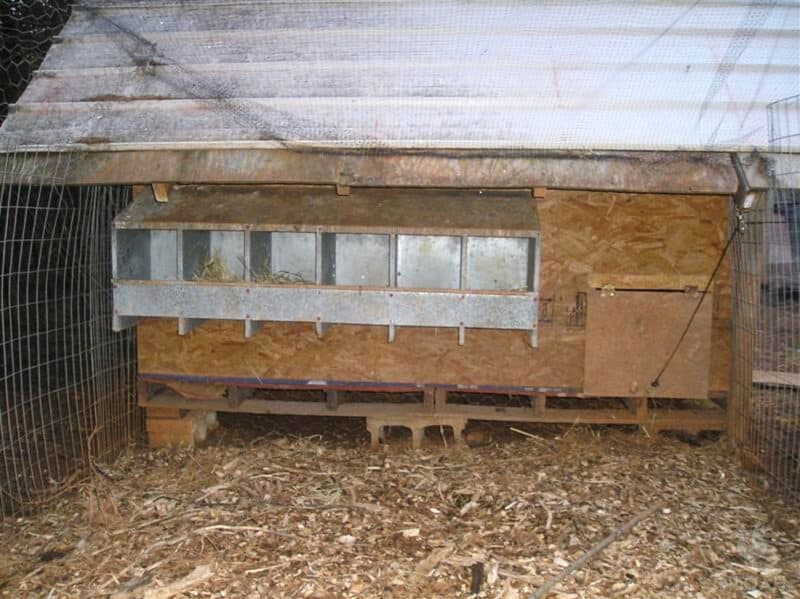
Nesting Boxes
- Standard: 12”W x 12”D x 14”H
- Giant: 14”W x 12”D x 14”H
- Bantam: 10”W x 10”D x 12”H
Laying hens need an appropriately sized nesting box to both encourage them to lay and to keep them laying consistently.
The measurements above won’t let you down for any given size category of chickens. Pay attention to your individual girls, though: some birds like a slightly oversized nest box, while others prefer one that is cozier, bordering on cramped.
If any one of your chickens has a tendency to lay outside of the boxes or in other out-of-the-way places, consider trying out a different size box just for her.
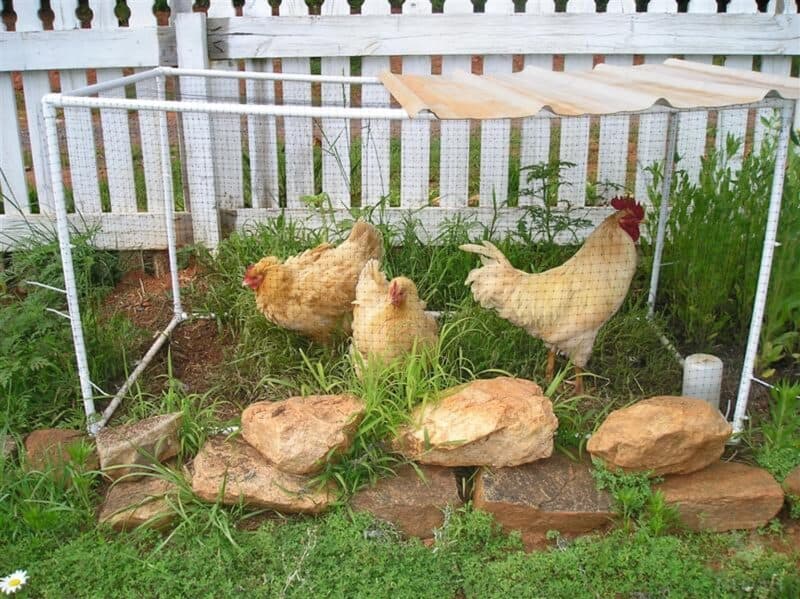
In the Run
- Standard: 8 to 10 square feet per adult bird.
- Giant: 12 to 16 square feet per adult bird.
- Bantam: five to eight square feet per adult bird.
Most chickens spend most of their time out in the run—pecking around, scratching, stretching their legs, and interacting with one another. If your birds are anything like mine, they get up to plenty of trouble, too, despite your best efforts!
Although it looks like most of our feathered friends sort of wander aimlessly, flock dynamics are still at play here. Chickens have their preferred friends and sometimes rivals within the flock, and it’s helpful if they can have enough room to avoid the latter.
They also need adequate space for dust bathing, resting, and keeping to themselves. Looking at the square footage recommendations above, it’s really not that much, and especially if you’ve got standard-sized breeds, you can keep a modest flock comfortably in a small area.
Also, take note about bigger and smaller birds: it’s self-evident that larger chickens need even more room to live comfortably.
But bantams don’t need dramatically less space in most cases compared to your average chicken. It’s a little odd, but I’ve found that most bantams “feel” like they are bigger birds and need more space when roaming around.
Think twice before slashing your run size too much if all you’ve got are bantams.

Free-Ranging
- Standard: 250 to 400 square feet per adult bird.
- Giant: 400 to 600 square feet per adult bird.
- Bantam: 150 to 250 square feet per adult bird.
Wait a second: isn’t free-ranging supposed to free you, and your birds, from space constraints?
Yes, and unless you have an immense flock or a backyard typical of New York City, letting your chickens roam free on your property will provide more than enough room for them to be comfortable and find some choice and tasty bits.
The space recommendations above are for sustainable, long-term free-ranging, with or without a rotational grazing strategy. Chickens are often underestimated because they are nowhere near as large or immediately destructive as goats, pigs, and larger livestock species.
But leave them on a patch of ground long enough, and pretty soon they’ll have all the grass eaten right down to the roots.
Then you’ll also have to deal with manure buildup and other issues. Don’t hesitate to let your birds out to free range regularly, but if you want to minimize the impact to your land over time, strive to accommodate them with the spacing above.
Other Factors
Roosters
In any given breed, roosters tend to be significantly bigger than hens. This means they need more space, and their greater aggression and territorial nature means that they, and the flock by extension, will benefit from a little more space.
If you’re keeping a rooster with your flock, use the guidelines above and then add anywhere from 15% to 25% more space.
Breed-Specific Requirements
Some breeds are uniquely suited to living happily and healthily with less space. Conversely, some breeds need a lot more space than normal.
If you are keeping highly active and energetic breeds like Leghorns, they will benefit from significantly more space in the run, or else you should try to free-range them.
Some docile breeds, like Silkies, or ones bred to accept confinement, like Australorps, can get by with lower-than-average space for their size inside the coop.
Understanding the nuances of your chosen breed’s behavior will help you make more informed choices.
When In Doubt, Allow Extra Room
At last, the golden rule: when in doubt, or when possible, always give your birds some extra room. Certainly, no harm will come of this, and you’ll make things easier and nicer for your flock.
This is also cheap insurance for planned or unexpected additions to your flock—whether they are riding home with your spouse from Tractor Supply or you wake up to some surprise chicks in the coop!


Get your gift and learn things like:
- how to make this really quick pest spray
- how to prevent egg waste
- two cheap automation devices that will make your life easier
Tom has lived and worked on farms and homesteads from the Carolinas to Kentucky and beyond. He is passionate about helping people prepare for tough times by embracing lifestyles of self-sufficiency.