
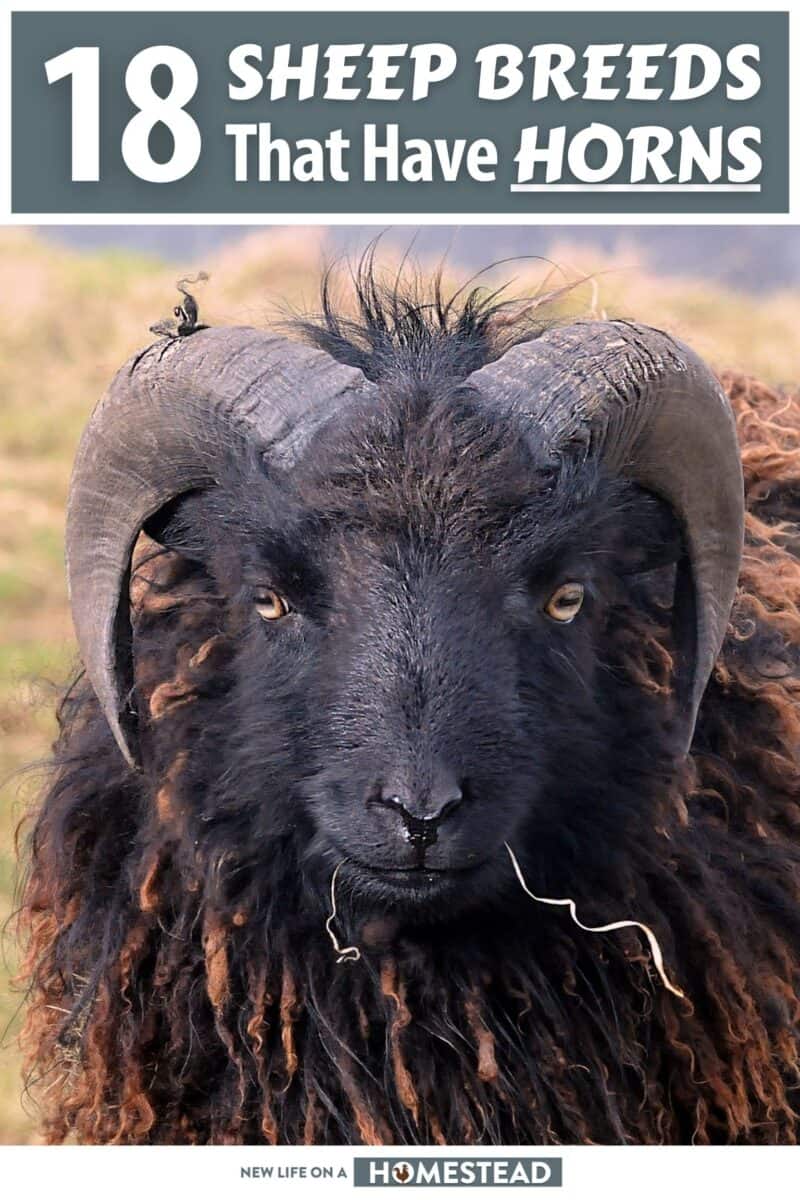
Not all sheep breeds are cute, woolly and cuddly. Some have horns just like their wild ancestors, and domestic sheep can use them for all of the same purposes! As a shepherd, you’ll want to be aware of which breeds will always have horns, and which might possibly grow horns- even in a polled breed.
But on the other hand, you might want a fancy, horned heritage breed for decorative or competition purposes. Some of these animals are truly magnificent! In any case, below I’ll be talking about 18 domestic sheep breeds that typically have horns. Keep reading and you’ll learn all about them.
Table of Contents:
1. Afrikaner
If the name wasn’t tipoff enough, this is a horn-bearing breed hailing from South Africa. We see that the males are horned and the females are polled, which is the case for many if not most of the breeds in this article.
Thanks to their thick, dense hair (this is a hair sheep breed) they’re a good choice for certain textiles, and they’re sometimes kept for meat as well. The meat is said to be truly delectable thanks to its particular fattiness. This isn’t a genetic defect, either, as the tendency to store fat helps them survive lean times and arid conditions in their homeland.
Oh by the way, one of the defining traits of Afrikaners is their… tail. They have big fluffy tails that are not only full of fat, but also covered with wool, not hair.
2. Ouessant
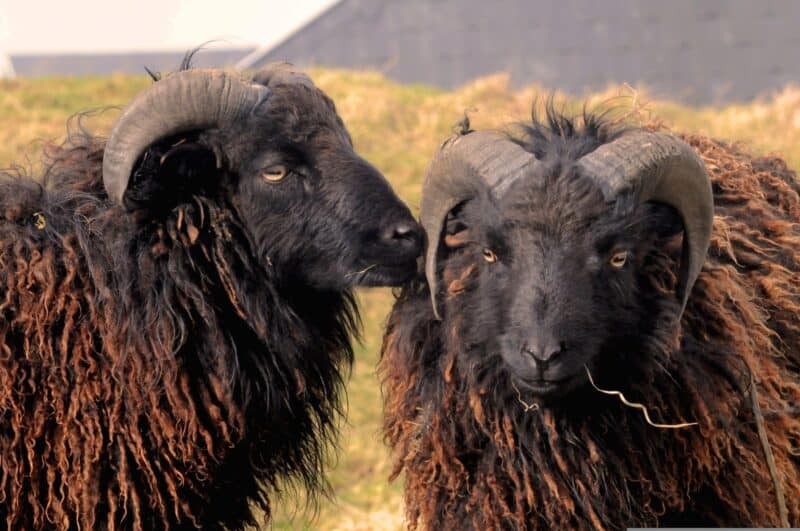
This French breed is most notable for being the smallest sheep in the world- a genuine dwarf sheep!
Despite being hardly larger than a medium-sized dog, the little Ouessants nonetheless grow impressive, recurving horns that look just like those found on wild bighorn rams. The ewes are hornless, on the other hand.
Invariably kept as pets or for show purposes, they do produce dense, black wool which can be harvested but the tiny size of these guys means that for wool production they are just more trouble than they are worth.
Still, if you’ve ever wanted a miniature bighorn sheep as a pet, this is the breed for you!
3. Gute
An old and proud Swedish heritage breed with notably dense and high-quality straight crimped wool, the Gute is famous for its overall hardiness and suitability to living outdoors, full time, no matter the conditions.
It’s also rightly famous for the immense, thick, ridged battering rams that grow in tight curves from the heads of rams and ewes alike. Because of their overall good health, they’re popular in their native range for meat production, also.
4. North Ronaldsay
The North Ronaldsay sheep hails from the Orkney Archipelago in Scotland, though its true lineage is somewhat uncertain. Believed to have descended from Scandinavian stock, these were among the very first sheep to make their way to the British Isles.
Most of the population is feral, even truly wild, but they have been domesticated on and off over the centuries. Most notably for these sheep are their impressive, downward-curving horns and the fact they must subsist on a diet that’s mostly seaweed.
Not a sheep you are likely to keep yourself due to their extremely specific diet, but if you live in the area they can produce meat and wool of moderate quality.
5. Skudde
Typified as a German breed, though genetic evidence suggests they actually originate from somewhere around the Baltic states, the Skudde breed is famous for its adaptability, and multicolored wool that grows in lighter tones of white, gray, brown and tan.
This is a domestic breed that’s quite close to its wild ancestors, and these sheep always prove to be excellent foragers and quite self-sufficient.
And because it’s on this list, you know the Skudde also has horns: males grow majestic snail-shaped horns from the tops of their heads. The ewes, on the other hand, are either hornless or have stumps.
6. Mouflon
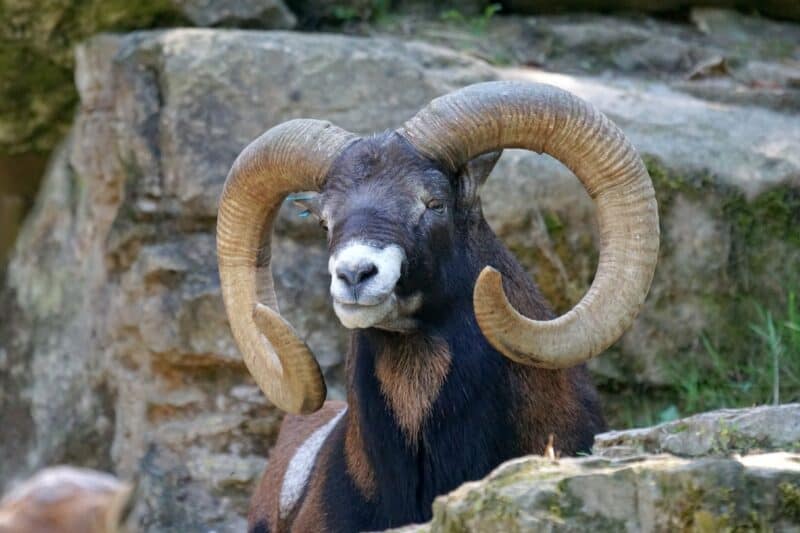
This is a wild sheep breed that has nonetheless been intermittently domesticated to the degree that it’s thought to be the true ancestor of most of the modern breeds of sheep we keep today.
The Mouflon sheep have beautiful, short and tightly crimped copper-colored wool with black accent markings, and males and females alike sprout huge, lengthy and elegantly circular horns.
Kept as domestic animals sporadically throughout much of Europe and some of Asia, they’re also quite popular as game for hunters considering their agility and athleticism in the wild.
7. Arapawa
Arapawa males sheep have huge, spiraling horns (the females are polled) but they also have a truly interesting history: a semi-feral New Zealand breed that’s originally thought to have been brought by European settlers or traders way back in the day.
Today, there are completely wild populations all over the country but also many flocks kept privately for the usual reasons, including meat and wool, but also as research specimens to better understand the genetics and diversity of the ones in the wild.
Neat stuff, and a great breed if you like sheep with huge, wide horns.
8. Manx Loagthan
An important and, at one time, gravely endangered heritage breed native to the Isle of Man, this is another multi-horned sheep.
Manx Loagthan rams and ewes both feature multiple horns: two immense ones that stick straight up from the crown of their heads, and two smaller ones that curl down from the sides, usually touching or nearly touching the lower jaw. This isn’t a rule of thumb, though, as many only have two horns.
This, as you can imagine, periodically causes problems for these sheep because they easily get tangled up, or sometimes suffer from horn impaction.
It is thought that, at one time, they were kept for wool and meat like most other domestic breeds, but today considering their conservation status, they’re being carefully husbanded to get the populations back from the brink.
9. Racka
This is the breed with a name that is just plain fun to say: Racka! What is also fun, or not so fun depending on the sheep’s attitude at the time, are the amazing straight and tightly spiraling horns that males and females have.
They look for all the world just like the mythical unicorn horns of old. The horns on rams in particular are incredibly impressive, and on larger specimens can grow to be more than 2 feet long!
Native to Hungary, this one is typically kept for ornamental purposes today but they are good at producers of coarse, white wool but they are sometimes kept for meat. Also of note, this breed is notably resistant to harsh winter weather.
10. Jacob
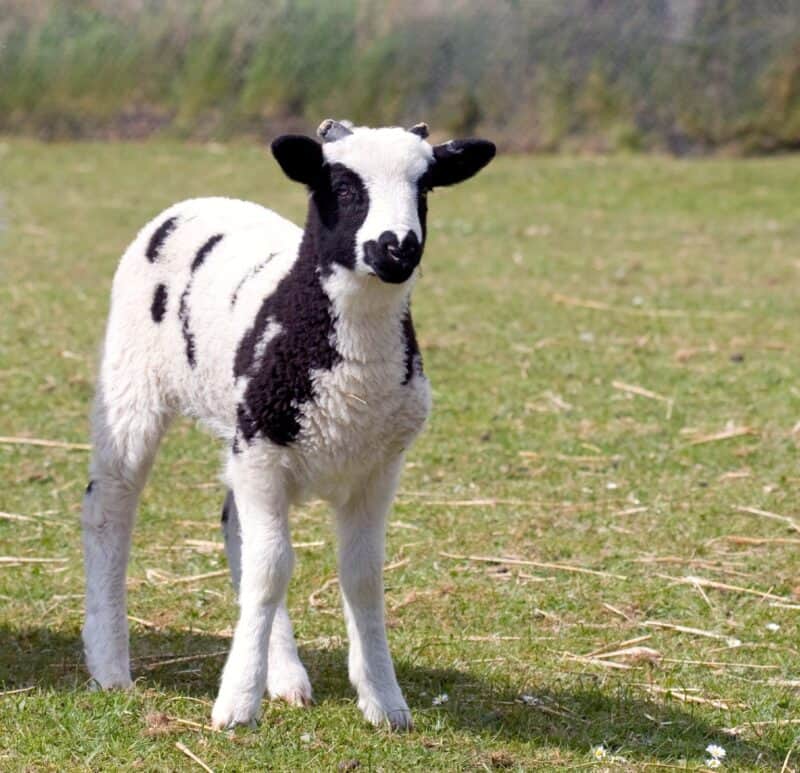
Well known among sheep fanciers, the Jacob sheep is another breed hailing from the UK and one that’s famous for its multiple massive horns.
Adults usually have four horns that can grow in various directions, giving them a ferocious appearance that is offset only by their black and white coloring that looks just like a stereotypical dairy cow. Even more impressively, some individual sheep might sprout a whole six horns from their head – though this is pretty rare!
There are hardly any sheep alive with a more impressive rack, and for this reason, they’re incredibly popular among certain owners on show circuits.
They’re also surprisingly competent when it comes to the production of wool and meat, making them a true multipurpose breed.
11. Alai
Hailing from the Alai mountains in Kyrgyzstan, and sometimes referred to as the Alai Merino, the Alai is a big domestic breed of sheep, with rams tipping the scales at more than 175 pounds (80 kilograms), and packing big corkscrew horns to match. Ewes are hornless, though..
Alais also possess beautiful white, cinnamon or tan wool which is dense, of medium crimp and typically of excellent quality. The athletic build of these sheep also make them great producers of high-quality lamb and mutton.
An inspired all-around choice, but one you’ll have to handle carefully thanks to those huge horns!
12. Algarve Churro
A stocky and robust Portuguese breed that’s truly at home in the mountainous and rocky regions from whence it came. They’re also totally at home dishing out some damage with their big, curving horns that can grow to be more than two feet in length each!
Despite the horns, these sheep tend to be good-natured and easy to handle, and they produce wool that comes in all kinds of colors, including every shade of brown, white and black. They’re also historically kept as dairy sheep thanks to their rich, smooth milk, and are also kept for mutton and lamb production. Another good all-purpose breed for sure.
13. Icelandic
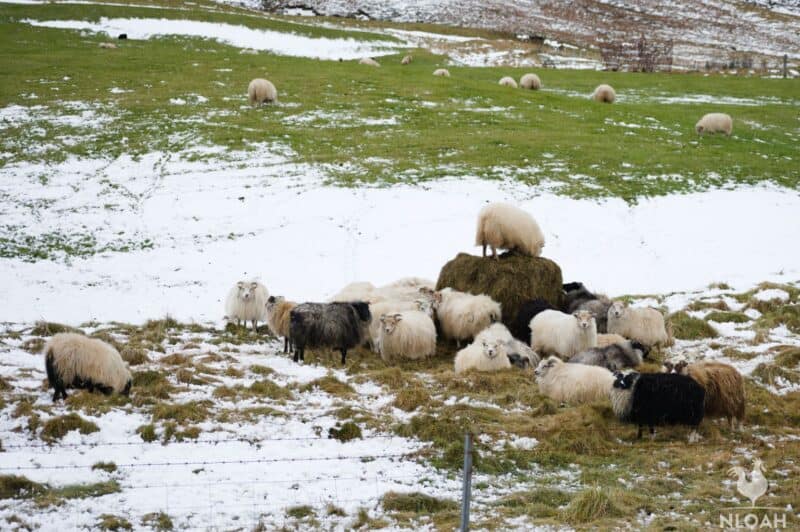
Among the most popular and most important wool-producing breeds in the world, and possessing a unique double-layered fleece, the Icelandic breed is a hardy and extremely cold-resistant specimen.
Icelandics don’t always grow horns, though, as various lineages are polled, but most examples of the breed will.
Although short and not very impressive compared to many of the other breeds on this list, the Icelandic horns are noteworthy for being slender, gently curving and surprisingly sharp and pointy.
Wool is the obvious selling factor for these sheep, but they are a true multipurpose breed, and likewise kept for meat and also as dairy sheep. Truly an excellent breed all around, horns or not.
14. Roslag
A truly docile Swedish breed, the medium-sized Roslag features horns in males, while the females are polled. Raised mostly for meat but also for wool, this is an easy-going breed that is safe to handle in virtually all situations.
15. Exmoor Horn
Another ancient English breed, these sheep also pack horns- in case the name didn’t tip you off. And what horns they have! Rams and ewes both have them, but the horns of the rams are genuinely impressive, usually topping two feet in length.
With dense, long wool, they make great producers of textiles and are also highly comfortable in cold weather. Their wool is really good quality, and the size of these sheep makes them a fine choice for meat production.
16. Hebridean
A heritage breed also hailing from the Scottish Isles, the Hebridean is characterized by medium-sized horns in both males and females along with pitch-black or very dark brown wool that is broken up intermittently by white or off-white patches.
Possessing a double-layer fleece, this makes the breed ideal for yarn production and other coarse textiles, and also proves them to be extremely comfortable and capable in cold, harsh environments.
This breed is also special for its conservation status: many flocks are kept for research and repopulation purposes.
17. Scottish Blackface
This Scottish breed is one of the most iconic in the entire world, known for their cream or off-white wool punctuated by their coal-black faces. A really important commercial breed, too, they are kept for meat and wool alike, as both are of superlative quality…
Males and females both have horns, which are typically gently curving and small or medium in diameter.

Get your gift and learn things like:
- how to make this really quick pest spray
- how to prevent egg waste
- two cheap automation devices that will make your life easier
Tom has lived and worked on farms and homesteads from the Carolinas to Kentucky and beyond. He is passionate about helping people prepare for tough times by embracing lifestyles of self-sufficiency.