
One of the most fascinating displays of organization and industry found in nature is the humble beehive. Bees work together, in unison, both to construct their home and to provide food and resources for all of the bees living in it. But, at the head of every beehive is a queen bee.
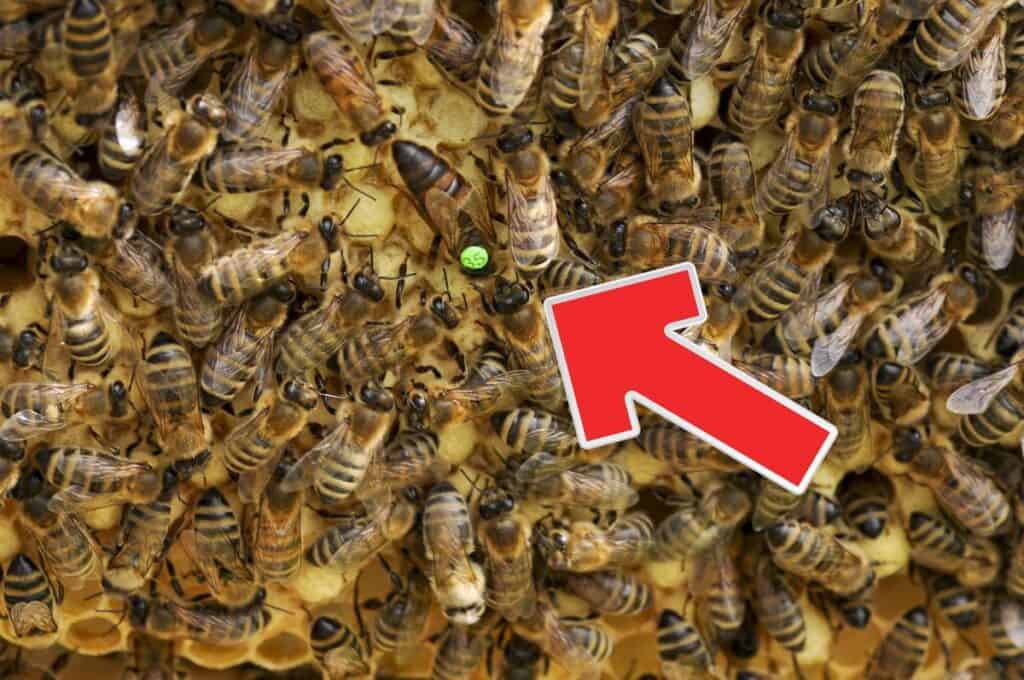
Most people think of the queen bee as the ruler, the genuine matriarch of the hive, but is that really the case? Is she a dictator or more of a figurehead? What exactly does a queen bee do in the hive?
A queen bee is solely responsible for laying the eggs that will produce the successive generations. She also emits pheromones that help inform all of the workers about the health and status of the hive.
It’s funny, that the queen bee, despite being the biggest and arguably the most important in the entire hive does not truly rule it.
The queen is responsible for laying the eggs that will produce all of the bees that will ever inhabit the colony, and she has bees that attend to her every need, but her authority is not ironclad.
Sometimes the workers decide that the queen must be replaced or even that she has to go! It’s really fascinating stuff, and if you want to be a beekeeper, these are things you’ll need to know so keep reading.
A Young, Virgin Queen Takes a Mating Flight
Before a queen can properly ascend to the top of the hierarchy in a hive, she must be fertilized so that she can lay viable eggs that will produce all the new generations of bees for the colony.
To do this, she takes a mating flight shortly after being born and allowed to live. Yes, allowed to live: Young queens will try to kill their rival “sisters” that are born alongside them.
Anyway, assuming the queen survives birth and matures she will soon leave the hive on a mating flight, followed by males called drones.
Assuming they successfully mate, the queen will be fertilized and will store the semen of the male and use it at her discretion to individually fertilize eggs as needed.
Then the queen returns to the hive to take over duties from the old queen, either because she’s too old or sick and has been deposed, or if she’s being sent away to start a new hive somewhere else.
Fertilized Queens Lay the Eggs
So, once a queen has been fertilized and is ready to start laying eggs in the hive, she will settle down to her primary job…
Queens lay a lot of eggs, typically anywhere from 1,000 to 2,000 per day when she is in the prime of her life and in the most productive time of a season. Some queen bees can lay upwards of 3,000 eggs each and every day! That’s incredible.
And egg production is not like a raging river that she has no control over: a queen can moderate the amount of eggs that she lays depending on the overall health and resources available to the hive, the time of year, and even the weather.
And, of course, the age and overall health of the queen makes a big difference too, with older, injured or sick queens not laying quite so many eggs or even halting altogether.
Queens Inspect Individual Cells Before Laying an Egg
One of the most fascinating aspects of a queen’s behavior is the fact that she will independently inspect and verify every single wax cell in the hive prior to laying an egg in it. Since the workers are responsible for preparing these cells, they had better be right!
A queen does this by comparing the size of the cell against the diameter of her front legs. The inside of the cell must be of a specific size, completely clean and totally smooth and polished on the inside.
Assuming it passes the “royal inspection” the queen will insert her abdomen into the cell and deposit one, single egg.
She will then move on to the next cell and repeat the process, over and over and over again for her entire life- assuming that she can still lay eggs! Some circumstances might change the queen’s ceaseless daily regimen, as we will learn.
Queens Decide Whether to Lay a Worker or a Drone Egg
And another truly remarkable fact about the queen is that she can decide, at the instance, whether or not she will lay an egg for a worker or for a drone. The size of the cell, constructed by the workers, informs her which one is needed: smaller cells indicate an egg for a worker whereas a larger cell indicates an egg for a larger drone.
The trick is that the queen’s eggs all come out unfertilized unless she decides to deliberately fertilize them with the stored semen garnered from that initial mating flight described above.
If the cell is for a worker, the egg will be fertilized. Conversely unfertilized eggs will always produce male drones. Naturally, this tells us that the supply of semen a queen has to fertilize our eggs and produce workers is likewise finite!
A Queen’s Pheromones Hold the Hive Together
I know it sounds like these queens probably do enough because they are, you know, solely responsible for producing the next generations in the hive but they also play another crucially important role.
Queen bees make special pheromones that are basically chemical signals telling the hive as a whole about the status and health of the hive.
Worker bees are intently attuned to the presence and strength of these pheromones and how strong and plentiful, or weak and sparse, they are will lead the workers to make decisions for the good of the hive.
For instance, if all of the workers can smell the queen very strongly and at all times they know she is in good shape and that the hive is not too big or overcrowded.
On the other hand, if they can barely smell her, or if her pheromones are weak, they might start to suspect that her health is failing. This will lead to an investigation of sorts and, if she’s unable to fulfill her royal duties, she might get killed and replaced with a new queen.
On the other hand, if the workers determine the queen is healthy, but enough bees cannot smell her pheromones enough of the time, the investigation might lead them to swarm, meaning that some of the bees will depart with the reigning queen to start a new colony while a new queen is raised up.
But more than this, the presence of the queen’s pheromones have a direct physical impact on the workers, which are all females, by preventing them from sexually developing into queens themselves.
Queens are Attended by a Royal Entourage
When I said that queens spend every waking moment laying eggs, I meant every waking moment. The queen literally does not do anything else! She doesn’t even feed herself. She doesn’t even leave the hive to go to the bathroom!
Instead, she has attendants to take care of all that for her. The queen will invariably be surrounded by a group of worker bees that feed her, that clean up after her, and generally look after her while she goes about the business of laying eggs.
A Queen Actually “Rules” with the Consent of the Workers!
If it hasn’t been made clear already, queen bees are critically important but they are not truly dictators. The queen lays eggs, but she can only lay eggs in the cells that have been prepared by the workers.
The queen’s pheromones are essential for harmony and efficiency in the hive from day to day, but workers can literally raise up a new queen to depose the old one.
At some point, an old queen who is either barren or sickly will be killed off by the workers! And it’s also the workers that decide, more or less by consensus, that the colony has grown too large and needs to split.
So obviously a queen is not truly directing the actions of the hive the way that most people think, despite her importance.
What Happens if a Queen Cannot Lay Eggs or Dies?
As detailed above, any queen that cannot lay any more eggs, or isn’t laying enough eggs, for whatever reason, will be superseded by a new, young queen assuming the workers can raise one.
Likewise, if a queen dies the workers must try to raise a new queen from existing eggs or else the entire colony is surely doomed. This assumes, of course, that an attentive beekeeper cannot transplant a new queen into the colony.


Get your gift and learn things like:
- how to make this really quick pest spray
- how to prevent egg waste
- two cheap automation devices that will make your life easier
Tom has lived and worked on farms and homesteads from the Carolinas to Kentucky and beyond. He is passionate about helping people prepare for tough times by embracing lifestyles of self-sufficiency.