
Sugar is one of those indispensable kitchen staples. You’ve got to have it for pretty much every kind of dessert and our morning coffee and tea just isn’t the same without it.
Probably the best thing about sugar is that it doesn’t really spoil like so many other foods, but that doesn’t mean it doesn’t go bad in a way…
Everybody has opened up a bowl or bag of sugar at some point – only to find a yellowed, musty, chunky mess that is just unusable. It’s annoying and reason enough to throw it out and just replace it.
But I’ve got good news for you, because it doesn’t have to be this way. Properly storing sugar will prevent it from discoloring, absorbing disgusting odors, and turning hard as a rock.
Your life with sugar is going to get a whole lot easier thanks to the techniques I’ll share with you below…
Does Sugar Actually Go Bad?
No, not really. The good news is that sugar doesn’t really spoil like other foods do. Sugar’s normally low moisture content makes it an adverse environment for harmful bacteria and fungi to colonize.
So, assuming it is stored correctly, even very old sugar will be safe and useable. Don’t worry about that.
However, this doesn’t mean that it won’t degrade. If kept improperly or if storage containers are compromised, sugar will start to change texture, color, and sometimes flavor depending on what is stored nearby.
What Can Happen to Sugar that is Stored Improperly?
If you fail to keep your sugar the right way, or if something happens that compromises the storage conditions (container, temperature, humidity, etc.) several negative effects can happen.
First, sugar will start to absorb moisture from the air. This will lead to clumping, a color change, and eventually serious hardening, which makes it much more difficult to use. You wouldn’t drop a small boulder of sugar in your coffee or tea, would you? Well, maybe you would but most folks don’t!
Additionally, sugar will absorb odors from anything stored nearby. This can lend it a decidedly unpleasant taste that will come through in whatever food you add it to.
Did you keep the sugar in a warm pantry with some potatoes, onions, garlic, and such? Pretty gross, let me tell you!
Finally, in the case of an inadequate container or compromised seal, all sorts of pests from ants to rodents will home in on the sweet stuff.
Your sugar stockpile could become a feast for and be dangerously contaminated by droppings and germs from unwanted guests. This is the worst possible outcome!
I will tell you how to avoid all of this in just a bit.
Can You Store White Sugar for the Long Term?
Yes, you can certainly store white sugar for the long term. When kept under ideal conditions, white sugar can really last indefinitely and stay ready to use for many, many years. This makes it a great staple and the best type of sugar for long-term storage in your homestead pantry.
Can You Store Brown Sugar for the Long Term?
Yes. Just like white sugar, brown sugar can be safely and successfully stored for a long while.
However, brown sugar has a significantly higher moisture content due to the molasses it still contains. This makes it much more prone to clumping and hardening over time. But as detailed above this doesn’t mean your brown sugar is spoiled.
You will have to work harder to keep brown sugar from clumping, and no matter what you do it will get hard on you: it will usually turn into a boulder by the 2-year mark or so. Nonetheless, it remains useable and stores pretty well for shorter periods.

Storing Sugar Properly, Step-by-Step
So, enough preamble. How should you store your sugar to keep it fresh, tasty, and not rock-like?
To maximize the quality of your sugar when storing it, follow these simple steps.
Step #1: Use a Good Container
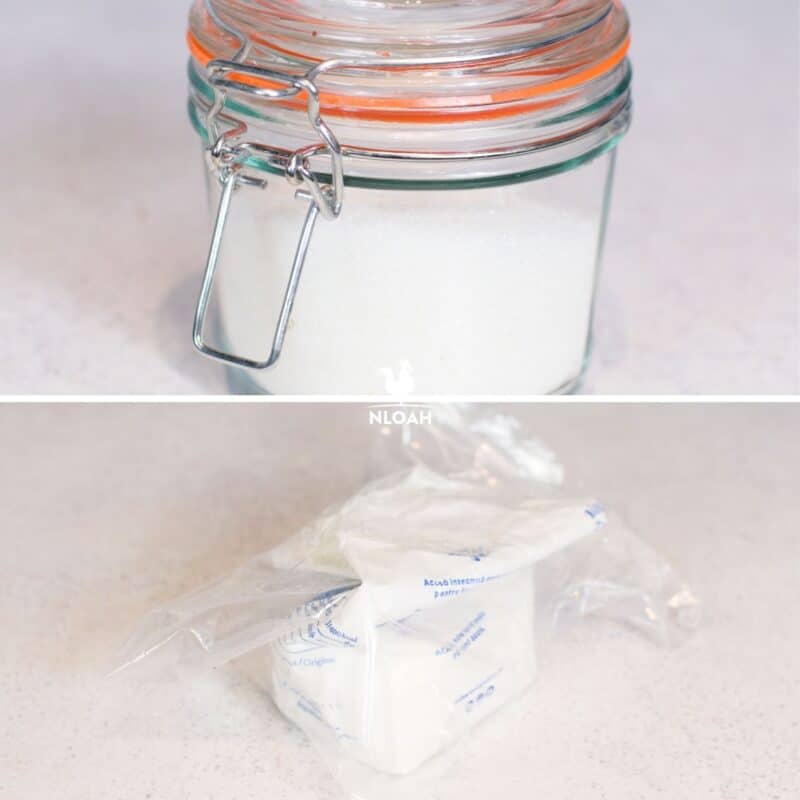
Picking the right container is half the battle when storing sugar. The key is to pick an airtight, food-grade storage container. Plastic is adequate, but I prefer glass.
An airtight container is vital for protecting the sugar from moisture, but also from absorbing odor which it tends to do regularly.
Yes, it will absorb the odor of anything in the area, be it food or something else, and though odors won’t make your sugar unsafe, they will taint it and make it a whole lot less appetizing.
For most of us, mason jars of various sizes will certainly fit the bill, but don’t hesitate to use a clean plastic container that’s in good shape as long as you are sure it’s indeed airtight.
For storing very large amounts, get a food grade storage bucket with a gasket or “gamma” lid.
Step #2: Pick the Right Storage Environment
Sugar in storage, even in an airtight container, must be protected from extreme hot or cold, and especially temperature swings that can produce condensation which will introduce moisture to the storage environment.
I know that most folks will just chuck the sugar into the pantry or a cabinet and forget about it, but in a kitchen, especially one that is on the outer wall of a home or has lots of windows, this can be a bad play.
The ideal storage temperature for sugar is between 60 and 68° F comfortably cool. If you can keep it in this temperature range, it will do wonderfully but you can also store it in a colder or warmer location if you know the temperature will remain stable. Remember, we want to avoid big changes in temperature!
Step #3: Protect from Humidity
Humidity is a major enemy because that is what will accelerate clumping, hardening, and discoloration.
Picking a good container will go a long way towards protecting your sugar, but you need to keep it in the driest environment possible. If you have to choose between ideal temperature and lower humidity, always go with lower humidity.

Step #4: Protect from Pests
All sorts of critters would love to make a meal of sugar, most particularly rodents and various insects.
Once again, if you’ve chosen the right container that should go a long way towards keeping your sugar safe from these intruders, but keep in mind that rodents can chew through nearly anything, and some of the tinier insects can slip through gaps that you might think impossible.
And pest control isn’t just a matter of last-ditch defense, either. If you know you have pest issues in your pantry or other storage location, or around your home generally, you need to take action to eradicate them so you can keep your sugar, and other foods, safe.
Contamination from pests, whatever they are, is one of the things that will make your sugar truly bad because they can introduce germs from their bodies and droppings into your sugar. Gross!
You shouldn’t need me to tell you, but if you suspect that your sugar has been contaminated by pests, you definitely have to throw it out and get new.
Do You Need to Use Oxygen Absorbers or Vacuum Seal Bags?
You might wonder if oxygen absorbers or vacuum seal bags are necessary for storing sugar. While these can be quite useful for many things, O2 absorbers are a bad choice, period, and vacuum seal bags are only situationally useful.
Concerning the O2 absorbers, they are just a waste: you don’t need them in conjunction with any container, including an airtight container, to store sugar properly, and in some cases, they can actually facilitate clumping and hardening.
And while sugar needs to be kept in an airtight environment for maximum quality, a simple airtight food storage container as described above can usually accomplish this satisfactorily.
That said, if you live in a particularly humid climate or have concerns about seriously persistent pests, you might choose to use vacuum seal bags as an added layer of protection from both.
Vacuum seal bags are also one proven way to extend the “up time” of brown sugar; vacuum storage containers (but not O2 absorbers) will keep it granular and soft for considerably longer than 2 years in ideal conditions.
Is the Sugar Ruined if it Gets Clumpy or Hard?
Plenty of people throw out hardened sugar from frustration or because they think it is “bad,” but you don’t have to do that. The clumping, as mentioned is simply a result of moisture absorption. and doesn’t mean that the sugar is unsafe.
You can salvage the sugar by breaking up the clumps using a utensil, by placing the sugar in a totally dry food processor or by putting a chunk in a ziploc bag and crushing it with a rolling pin or can.
Keep in mind that the clumping will affect the sugar’s texture and how it mixes with other ingredients. Consider using hard sugar for recipes where its texture won’t matter as much, like in syrups and sauces. Can’t be clumpy if it is melted!
Store Molasses and White Sugar to Make Brown Sugar When Needed
As mentioned above, brown sugar is something of a pain in the butt to store for the long haul compared to white because of its tendency to clump up and hard and rapidly and quite profoundly.
If you want to keep it on hand, just in case, but don’t use very much of it in your own recipes on a day-to-day or weekly basis here’s a storage hack that will save your sanity.
Simply store white sugar for long-term use and also molasses in factory-sealed bottles. All you need to do to make brown sugar is to stir a little bit of molasses back into white sugar. Presto!
You’ll have brown sugar when you need it with none of the headaches that come from trying to store it.
Why Not Just Put Sugar in the Freezer or Fridge?
Storing sugar in the refrigerator or freezer might seem like an easy solution. However, these artificial environments are horrible for good sugar storage!
Refrigerators and freezers tend to be very humid, and as we learned above just now, humidity leads to clumping or hardening of the sugar. Additionally, sugar will readily absorb nasty food odors from fridges and freezers alike, ruining it for real.
A cool storage location is good for sugar (and most other foods) but your fridge or freezer is not the right way to go at all!

Get your gift and learn things like:
- how to make this really quick pest spray
- how to prevent egg waste
- two cheap automation devices that will make your life easier
Tom has lived and worked on farms and homesteads from the Carolinas to Kentucky and beyond. He is passionate about helping people prepare for tough times by embracing lifestyles of self-sufficiency.