
No matter what sorts of animals you take care of on your homestead, expanding your herd or flock the all-natural way is always going to be an exciting, and somewhat nerve-wracking time.
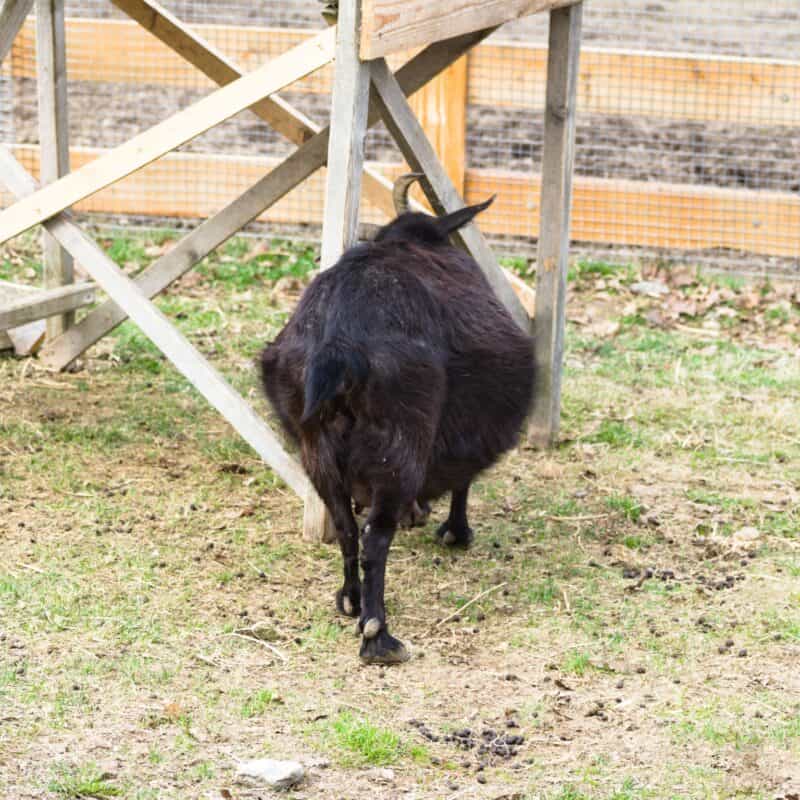
Pregnant animals need lots of additional care, and the closer that the delivery date comes the more there is to do to make way for the new arrivals.
Goats, like all other livestock, demand good reproductive practices and part of that is timing the gestation period so kids can be delivered when you want them to. So, how long is a goat pregnant?
Goats are pregnant anywhere from 145 to 179 days, with 151 days being the rough average. Different breeds have different average gestation periods, and environment, nutrition, and other factors will all influence how long a goat is pregnant.
Surprisingly enough, goats are pretty reliable when it comes to the length of gestation, though as always there are variables that you have to account for.
Once you are familiar with your breed and get them on a good schedule, the expansion of your herd should move along like a well-oiled machine. Naturally, though, there is plenty more that you must know, and I’ll tell you about it and the rest of this article.
Do All Goat Breeds Have the Same Length of Pregnancy?
No. Different breeds of goat have different average lengths of pregnancy. The average duration is always about 151 days, but some goats can remain pregnant a lot longer than others.
For instance, Toggenburg goats have a much longer average gestation, usually around 170 days, but they might keep those kids aboard for as long as 179 days.
Conversely, Granadina goats usually birth their kids well before the 145-day mark.
Although many breeds of goats have overlapping average pregnancy durations, it pays to become familiarized with the statistics for your breeds, so you have a better understanding of what to expect.
When Can Goats First Get Pregnant?
Goats can actually become pregnant very early in life, around just 4 months of age. This is when a female, a doe, will first start to ovulate. This is basically goat puberty and it means she has reached sexual maturity.
Does the Age of the Doe Affect the Gestation Period?
Yes, it does! Although goats can’t get pregnant quite young as mentioned above, with about 4 months of age being the average for reaching sexual maturity, she is far from fully mature physically and this can cause major problems for her and her kids.
Simply stated, her frame cannot handle the weight and mass of her just dating kids, and since many goats will commonly give birth to 2 or 3 babies at a time, with 4 not being out of the question, this can cause irreparable damage to her legs and skeletal structure.
It might also result in abnormalities to the delivery timetables set down above, meaning kids might arrive prematurely or a little late.
Because of this, standard practice is to keep young does protected and separate from bucks until they’re physically mature at around 12 months of age.
Does the Number of Kids a Goat’s Having Affect Gestation Period?
Surprisingly, not usually. As it stated goats will typically give birth to 2 or 3 kids, but regardless of this you can count on the delivery guidelines above. Just make sure that you yourself are preparing for multiple new arrivals, especially if you have several females pregnant!
Environmental Factors
Yes, definitely. Goats that are bred in late spring and early summer have a longer gestation period on average compared to ones that are bred in the fall or winter.
This longer gestation results in a heavier birth weight of the kids, and a corresponding increase in the average survival rate during and immediately after birth. This net increase to viability is an important consideration, and something you should implement for your own best practices if possible.
However, most breeding tends to occur in the fall because this is when, hormonally, most goats are feeling sexually active, males and females.
This allows kids to be born when the weather is warmer, which is instinctively easier for the parents but not necessarily the best for the health of the kid as detailed in the linked study above.
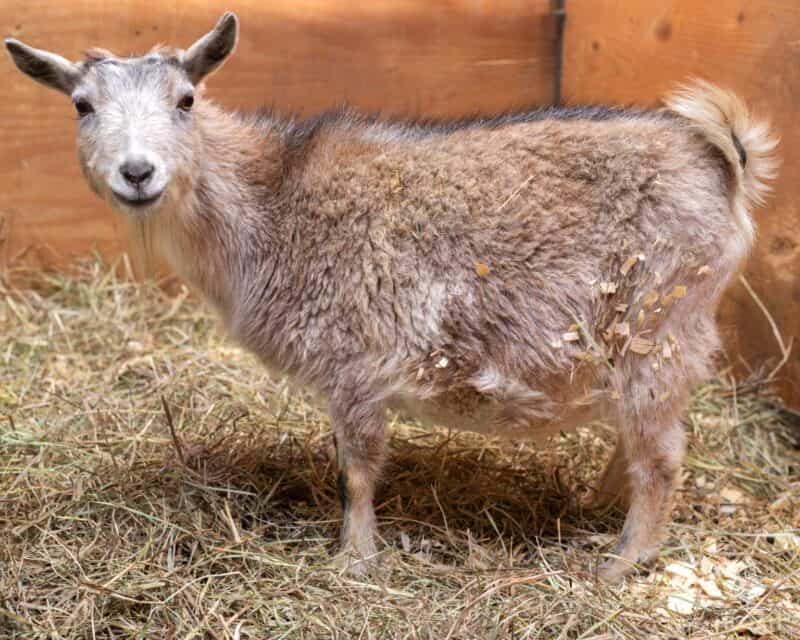
How Can You Tell Your Goat is Pregnant?
Telling that your goat is pregnant is not nearly as easy as you might think. Whether or not you know she has actually been mated by a buck, she’s not going to give you many signs until she is very far along in her pregnancy.
This isn’t merely of academic interest either, since confirming a pregnancy is important for timing the delivery schedule.
The best, surest, and smartest thing you can do is to take your goat to the vet or have one come out to you and perform an ultrasound to confirm or run some other analysis that can confirm the presence of pregnancy hormones in her system. This way you will know for sure and also have more data on the delivery timetable.
Other than that, you might have to guess by looking at various factors. Goats won’t show a significant increase in size around the abdomen until they are well along in pregnancy, so if you aren’t highly acquainted with the individual goat it might be hard to tell.
Another indicator, though an occasionally unreliable one, is to inspect her vulva. Once a doe is pregnant, her vulva tends to drop or droop, and this appearance increases markedly the closer she gets to delivery. Also, look out for an increase in the size of her udder.
False Pregnancy Can Occur!
To make matters even more confusing, false pregnancy, sometimes called pseudopregnancy, can occur in goats. Even today, why this happens is not exactly known, but it’s thought to result from fluid accumulation in conjunction with hormones going a bit haywire.
This can definitely be problematic if you notice signs of pregnancy and start making preparations only to find out that it was a false alarm!
This is another good reason why you should have a goat tested for pregnancy so you know for sure if you have any reason to suspect that she might be.
Is it Normal for a Doe to Be Overdue?
Potentially. Sometimes a doe won’t go into labor when expected, and in these cases, it can be induced through an injection of oxytocin, the application of warm water to her vulva, and other methods. This is a fairly common practice.
However, once a goat is significantly overdue by about a week or so, you might have some phone calls to make. As a rule, contact your vet and inform them of the situation, and then follow their instructions.
Complications arising from a difficult delivery or particularly challenging position of the kid or kids can imperil the life of the young and their mother. This is not a situation you want to wait for nature to take care of!


Get your gift and learn things like:
- how to make this really quick pest spray
- how to prevent egg waste
- two cheap automation devices that will make your life easier
Tom has lived and worked on farms and homesteads from the Carolinas to Kentucky and beyond. He is passionate about helping people prepare for tough times by embracing lifestyles of self-sufficiency.