
If there’s one kind of protein that is actually indispensable in the world, I would have to say that it is eggs. Aside from being a crucially important food source all by themselves, eggs are also an indispensable ingredient in countless dishes and recipes.
It’s no exaggeration to say that many of the things we enjoy would disappear without them, and accordingly pretty much everyone keeps them on hand whether it is for breakfast or baking.
But when we say eggs we, of course, are invariably talking about chicken eggs. That’s what we take for granted, but in reality, all sorts of bird eggs can be eaten and used for cooking, and among common poultry species, duck eggs are making a comeback in kitchens.
Duck and chicken eggs are both entirely viable when eaten directly after a little cooking, or for using in recipes, but there are surprisingly many differences that home chefs and homesteaders alike need to know about. If you’re thinking about which ones to buy, or which of the two birds to raise on your homestead, I’ll tell you all about these differences below.
Here’s a quick breakdown of the differences first:
| Feature | Duck Eggs | Chicken Eggs |
| Color | More diverse color spectrum: dark brown, green, blue-green, yellow, tan. | Commonly white or brown. |
| Size | Generally larger; noticeable weight and size difference. | Smaller, but exceptions based on breed size. |
| Shape | More pronounced tapering, elongated, bullet-like appearance. | Softer, gentle, rounded oval shape. |
| Texture | More speckling on the shell, creating a mottled appearance. | Usually smoother with less speckling. |
| Macronutrients | Higher protein, significantly more fat and calories, slightly fewer carbs. | Lower protein, less fat and calories, slightly more carbs. |
| Cholesterol | Over 300% more cholesterol compared to chicken eggs. | Lower cholesterol content. |
| Micronutrients | Slightly higher in vitamin A, vitamin B1, and vitamin B12. | Higher in vitamin D and choline. |
| Taste | May have a “gamey” taste, but noted for richness. | More familiar taste, reliable flavor profile. |
| Cooking Differences | Require lower heat due to larger size; overcooking can lead to hardness. | Cook well in usual heat, less risk of overcooking. |
Do Duck and Chicken Eggs Look Different?
It is possible to confuse a duck and chicken eggs in some cases, but there are distinct differences that will usually allow you to tell them apart. I will detail these differences below so that you can make an accurate determination in case your eggs get mixed up!
Color
Looking at two baskets of eggs, duck and chicken, you might not immediately notice the differences. But take a closer look, and you’ll find that the color spectrum of duck eggs is considerably more diverse, and often more vibrant…
Just like chicken eggs, the most common color for duck eggs is white or off-white. But that’s where the similarities diverge pretty significantly.
Duck eggs can be downright stunning with their variety: While chicken eggs are typically white or brown, duck eggs break the monotony with a wider array of colors. You’ll find them in many shades of dark brown, green, blue-green, yellows, and even tans.
For bird lovers like us, these colors are a visual delight and can be quite a conversation starter!
Size
When it comes to the size of eggs, you’ll generally find that duck eggs are larger than chicken eggs. It’s a rule of thumb, yes, but one that holds true in most cases.
When you hold a duck egg in your hand, you’ll likely feel notice the weight difference and also notice the visibly larger size compared to a typical chicken egg.
However, there are many exceptions, as usual. You will see plenty of duck eggs and chicken eggs that appear to be the same size.
As expected, this can happen if you’re dealing with a smaller breed of duck and a larger breed of chicken. In such instances, the nominal size difference isn’t apparent, and the eggs can match in size.
The size difference isn’t just outer dimensions, either. The larger size of duck eggs means they contain more of everything inside, meaning more yolk and more egg white. This can make them a great choice if you’re looking for a richer, heartier egg. More on that in a moment…
Shape
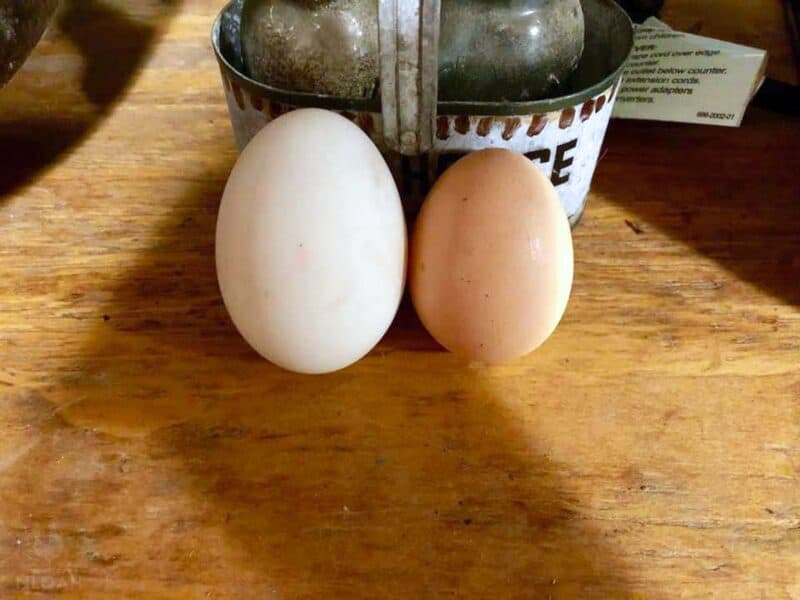
This is a really subtle one for most folks, but look closely at a duck and chicken egg side by side and you’ll notice that they each have a distinct shape and proportions. While it’s certainly possible to mistake one for the other at a casual glance, and many people do, they are different.
A duck egg generally has a more pronounced tapering shape compared to a chicken egg. Once you’ve spotted it, you’ll be able to identify a duck egg with ease.
The larger end of a duck egg is rounder and flatter, while its smaller end tapers off more noticeably to a narrower point. This gives the duck egg an elongated, almost bullet-like appearance.
On the other hand, a chicken egg has a “softer” shape. It’s a gentle, rounded oval shape, with a less pronounced tapering compared to a duck egg.
Texture
Finally, we see that texture is often a distinguishing factor between duck and chicken eggs. While both types of eggs have their own unique traits as discussed above, the speckling on a duck egg’s shell sets it apart.
While you might not immediately feel the difference, you’ll definitely see it if you look at them in good light. Duck eggs typically have more speckling compared to chicken eggs. These speckles, tiny spots, create a pattern that gives duck eggs a more mottled appearance.
Chicken eggs, on the other hand, usually have a more uniform color, with less speckling though many breeds and some individual hens still crank out eggs with speckles aplenty. Nonetheless, they look cleaner and smoother overall.
Nor that these textural differences don’t affect the taste or nutritional value of the eggs in any way.
Protein, Fat, and Carb Differences
Examining the nutritional profile of the two types of eggs, there are some notable macronutrient differences that it pays to be aware of.
In general, duck eggs tend to be lower in carbohydrates compared to chicken eggs, but they pack several more grams of protein and significantly more fat and calories.
If you’re trying to up your protein intake, you might want to consider duck eggs as a mainstay: They contain a significantly higher protein ratio per serving compared to chicken eggs, making them an egg-scellent (sorry) option for those looking to boost their gains in the gym.
In terms of fat content, duck eggs again have more. This higher fat content compared to chicken eggs contributes to their richer taste we’ll discuss in just a bit.
But this also means that they have significantly more calories per serving, around 50% more compared to a similar chicken egg! If you’re watching your calorie intake, this is definitely something to keep in mind.
As for carbs, duck eggs have ever-so-slightly fewer than chicken eggs. They are basically identical.
Both types of eggs are highly nutritious, make no mistake, but duck eggs are denser in protein, fat, and calories. Depending on your dietary needs and preferences, this piece of info can guide you in choosing the egg that best fits your lifestyle.
Duck Eggs Have Significantly More Cholesterol
If have to keep an eye on your cholesterol intake, one of the most important differences between duck and chicken eggs that you should be aware of is the fact that duck eggs contain way more cholesterol than chicken eggs. Over 300% more, in fact.
Now, this doesn’t necessarily mean you should banish duck eggs from the menu! The topic of cholesterol, particularly the distinction between “good” and “bad” cholesterol, is a subject of ongoing discussion (read: vicious argument and propaganda) among doctors and dietitians.
Some argue that dietary cholesterol isn’t as harmful as once believed, while others maintain that it is a health-apocalypse waiting to happen.
I am not trying to give you any health advice, but it pays to be informed: If you or anyone else in your household is tracking cholesterol for any health-related reasons, be aware that duck eggs have much higher cholesterol. Knowing this can help you make better decisions with your doc about your meals.
Vitamin and Mineral Differences Between Duck and Chicken Eggs
In terms of vitamins and minerals, both duck and chicken eggs have a lot to offer… But there are some differences, some slight and others significant, that might influence your choice if you have one.
Duck eggs, for instance, contain a slightly higher amount of vitamin A compared to chicken eggs. On the other hand, chicken eggs contain more vitamin D. Vitamin A plays a vital role in maintaining healthy vision, supporting the immune system, and promoting cell growth.
Vitamin D is likewise crucial for maintaining healthy bones and teeth, and has been linked to fighting disease. If you’re seeking a natural source of this sunshine vitamin, chicken eggs can fit the bill.
But that’s not the only difference: Duck eggs beat chicken eggs in amounts of vitamin B1, which helps your body convert food into energy, and vitamin B12, again essential for nerve function and the production of DNA and red blood cells. However, chicken eggs win on choline content, a nutrient important for liver function.
Rest assured that both kinds of eggs are nutrient powerhouses. Your choice between the two may simply come down to which specific vitamins and minerals you’re looking to incorporate more into your diet, and even then, only as a secondary concern over cholesterol and taste. Both really are excellent!
Nutrients are Compared by Serving Size, not Individual Eggs!
Remember that these nutritional differences outlined above are based on equivalent serving sizes, not an equivalent number of eggs. This is an important point to make because duck eggs are typically larger than chicken eggs.
What does this mean for you practically? Well, if you’re comparing nutrients on an egg-for-egg basis, duck eggs may seem like they pack a way more significant punch than they do.
They have more of everything; more protein, more fat, more cholesterol, more calories. But that is simply because there’s more of the egg!
So, when you’re deciding between duck and chicken eggs, don’t just consider the size of the egg; think instead of the amount of egg you are actually eating.
The Taste Test: Subtle, but Still Different
Most folks who have tried both will report that duck and chicken eggs taste quite similar. However, there are some subtle differences that can influence your meal, good or ill.
Duck eggs, particularly those from ducks that are allowed to eat a diet containing slugs, insects, snails, fish, and other creatures, can sometimes have a distinct, unpleasant “gamey” taint that doesn’t sit well with everyone’s palate.
This taste is a reflection, of course, of what the ducks eat, which can vary widely depending on their habitat, their available forage, and what you give to them.
On the other hand, there’s a noted richness to duck eggs that many people find highly appealing. This is once again largely due to the larger yolk in comparison to a chicken egg of the same size.
The yolk is where a significant portion of the fat content is located, which contributes to a creamier taste and smoother texture.
So, while duck eggs may not be to everyone’s liking, they can bring a delightful depth of nuanced flavor and texture to your plate whereas chicken eggs offer a more familiar, and sometimes more reliable, flavor profile.
This makes them a safe choice for various recipes and picky eaters. In the end, the best way to find out is to give both types of eggs a try.
Are Duck and Chicken Eggs Interchangeable in Recipes?
The answer is yes, broadly, but with a few caveats to keep in mind.
First, remember that duck eggs are significantly larger than chicken eggs as a rule. This means that if a recipe calls for a certain number of eggs and you simply replace chicken eggs with an equal number of duck eggs, you could end up with way too much “egg” in your dish!
Generally, a good rule of thumb is to use two duck eggs in place of three chicken eggs. This will help maintain the correct ratio of ingredients in your recipes.
However, it isn’t quite so simple for some things: the larger yolk size in duck eggs can sometimes throw off the texture in more delicate dishes or precise preparations.
Duck eggs have more fat, as mentioned, which can make your dishes richer and denser. In some recipes, this can be a bonus, but in others, especially those requiring a lighter, fluffier texture, it can be a major drawback compared to chickens.
Don’t be afraid to experiment, but do consider the potential impact on your dish. With a little bit of trial and error, you’ll soon figure it out.
Differences Between Duck and Chicken Eggs When Cooking
Most times you can prepare duck and chicken eggs in exactly the same manner…
Whether you want your eggs sunny-side up, over easy, scrambled, poached, or hard-boiled, both can be used and turn out tasty. However, a few adjustments might need to be made for optimal results with duck eggs.
Since they are bigger, consider lowering your heat slightly when cooking them. This is because they require a little more time to cook thoroughly due to their sheer volume.
Rushing the process on high heat can lead to overcooked eggs. A gentler, slower approach tends to yield better results, ensuring that your duck egg is cooked evenly.
Cooking duck eggs on very high heat shows they have a tendency to become unpleasantly hard and chewy compared to chicken eggs. This makes them a tad trickier to fry perfectly.
Adapting your cooking techniques to account for these differences is not hard, and most seasoned home cooks can do it by “feel.” But if you are a novice in the kitchen, it pays to be careful if trying your luck with duck eggs.


Get your gift and learn things like:
- how to make this really quick pest spray
- how to prevent egg waste
- two cheap automation devices that will make your life easier
Tom has lived and worked on farms and homesteads from the Carolinas to Kentucky and beyond. He is passionate about helping people prepare for tough times by embracing lifestyles of self-sufficiency.