
Cucumbers are some of my very favorite garden veggies. I love them sliced up in salads and, of course, turning them into all kinds of delicious pickles. But, ounce for ounce, cucumbers are some of the trickiest veggies to deal with.
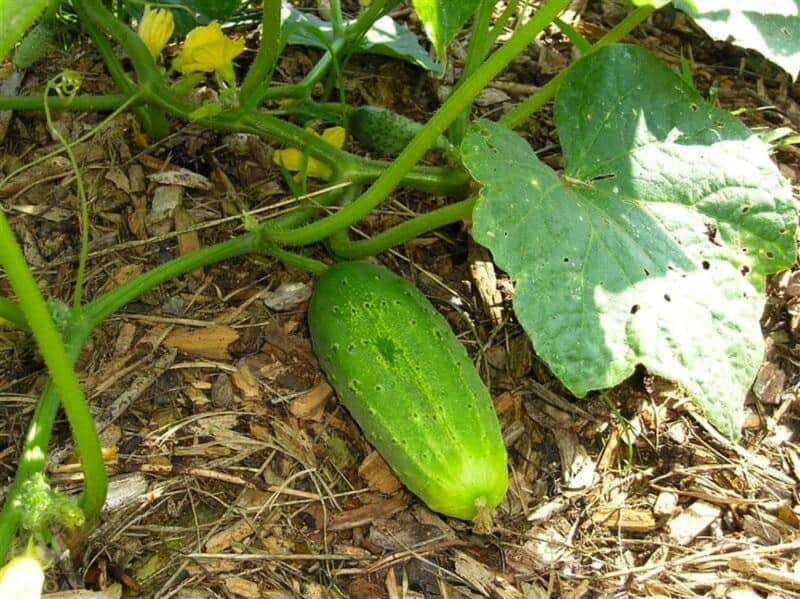
They have precise spacing requirements, a tendency to vine and climb, and are very thirsty, but they also have shallow root systems, meaning it’s harder for them to get the water they need.
And to top it all off, they are very heavy feeders that need nutrients all season long to produce a great harvest.
You can improve your chances of getting that great harvest, and help out your cucumbers, by choosing the right companion plants to grow next to them. I’ll tell you about 18 great choices in this article.
Chili Peppers
Chili peppers can add a lot of variety and spice to your meals and range anywhere from pleasantly piquant to enamel-melting agony depending on the variety.
All have one thing in common for our purposes: those spicy compounds will repel insects and can drive off veggie thieves like deer, rabbits, and groundhogs.
The trick to getting this benefit from hot peppers is to use them on the perimeter. If the animals can get to the cucumbers before they sample the peppers, it won’t do any good.
Sunflowers
These huge, showy flowers are lots of fun to grow as decorative plants, and you can also harvest sunflower seeds.
Sunflowers can work as living trellises for cucumbers just like corn, and if you grow them in tight ranks, the large heads can help provide adequate shade for them, too – really important in areas with intense summers.
Just make sure you start the sunflowers before your cucumbers, planting the latter anywhere from 2 to 3 weeks after the former.
Onions
Onions can grow just fine near cucumbers and are another great choice for maximizing the return on your usable gardening space.
But more than this, onions are highly repellent to many pests, including animals! Onions and other alliums will repel various beetles, aphids, rabbits, and even deer.
You don’t have to worry about the shallow roots of your onion plants interfering with cucumbers or them competing for resources, but you’ll still want to keep the cucumbers growing upward to prevent interference.
Put the onions in their own row about half a foot from your cucumber trellises and keep half a foot between each onion.
Garlic
Garlic has the same benefits that onion does when it comes to repelling pests, only it is even stronger. And better yet, because garlic spends much of its time developing underground, it won’t interfere with your cucumbers in the least.
Keep your garlic at least six to eight inches away from your cucumber trellises, and if you’re planting a cucumber variety that grows along the ground, make sure you manage it well enough so that it doesn’t completely overwhelm your garlic until it’s ready to harvest around midsummer.
Shallots
Yet another allium genus plant, the pungent compounds emitted by shallots will drive off insect and animal pests alike, and they seem to be particularly repulsive to rabbits.
It’s easy to squeeze small shallots in close to vertically growing cucumbers, around 6 inches / 15 centimeters away. Like onions, their shallow roots won’t get in the way of cucumber plants.
Shallots will thrive growing under cucumbers because of the added shade and lower soil temperature, helping shallots retain more moisture.
Peas
Many pea varieties are climbing just like cucumbers are, and surprisingly enough, they can grow on the same trellises or other structures as long as you pay attention to spacing and management early on.
Planting peas and cucumbers about 6 inches / 15 cm apart on alternate sides of a trellis that’s positioned north-south will give you plenty of room for both and ensure adequate exposure to light and shade.
Aside from being a space-saving and efficiency proposition, peas and other beans are known as nitrogen-fixing plants.
What this means is they put more nitrogen in the soil they’re growing in and, once harvested, their roots break down and release a big load of nitrogen that future plants can take advantage of.

Pole Beans
Pole beans are a bean variety that you can treat just like peas for the purposes of companion planting with cucumbers. Planting both together can save a ton of space, and pole beans will put nitrogen back into the soil.
Use a north-south trellis, keep them at least 6 inches apart when you plant them as seed, and manage them carefully when they first start growing up the trellis.
Lettuce
Lettuce is easy to grow and a great pairing with climbing cucumbers because it can benefit from the dappled shade that it will provide going into the latter half of spring and early summer.
Most varieties of lettuce are extremely prone to bolting when they get too hot, so cucumber will let you extend the growing season a little bit.
Lettuce doesn’t do anything for the cucumbers or the rest of your garden in return, though: it just lets you make better use of otherwise wasted space.
Plant your lettuce about 10 to 12 inches (25 to 30 centimeters) from the base of each cucumber plant in a single row, and keep at least half a foot between your heads.
Arugula
This lettuce variety isn’t quite as easy to grow as Iceberg or Bibb, but it’s hardy and can put up with a little bit of shade from cucumbers, making it an attractive choice if you’re getting it started a little late.
Of even greater benefit is the fact that arugula readily attracts those helpful garden insects we want to hang around, specifically ladybugs.
Ladybugs massacre aphids by the thousands, and a good ladybug population can make the difference between a bumper crop and a lackluster one. The same as other lettuce varieties, aim for 10 to 12 inches of spacing between arugula and your cukes.
Carrots
This most popular of root veggies is the perfect space-saving pairing to put with cucumbers because the cucumbers can grow up a trellis or other structure while the carrots stay down on the surface. This is purely an efficiency pairing, as neither plant helps or hurts its neighbor otherwise.
You should plant your carrot seeds south of your growing structures at the same time you do the cucumbers, making sure to give them at least a foot of space from the base of the structure.
Keep a close eye on your cucumbers as they start to grow and vine and train them accordingly so they don’t strangle nearby carrots.
Again, if you’re growing cucumbers on the ground, don’t waste your time with carrots because they won’t make it.
Radishes
Radishes are an efficient pairing for growing alongside cucumbers, especially in space-limited areas like raised beds.
Many radish varieties are fully grown and ready to harvest in just 30 days, or even less! Some are ready to dig up in just 3 weeks or a little longer. Sora, Rover, and Red Globe varieties are all great choices.
All you need to do is plant your radishes in their own row that is at least 6 inches away from young cucumber plants.
Whichever variety you pick, they should be ready for harvest before the cucumbers get out of control and start overtaking the radishes entirely. Then you can just let the cucumbers have the space and finish maturing.
Beets
Another clever pairing to maximize harvestable area, if you are vertically growing your cucumbers, this is a sure thing. You might be able to grow your beets, depending on the variety, as close as 6 inches away from the bases of your cucumber plants.
Beets, like radishes, grow quickly and should be ready to take out of the ground and enjoy before the cucumbers mature enough to fully shade them.
This is one of my favorite pairings for raised beds because of the pure efficiency. I hope it’s obvious, but if you’re growing cucumbers actually on the surface, don’t waste your time planting beets because they’ll get choked out.
Celery
Celery is a dual-use companion for cucumbers. Although not the strongest pest-repelling planting on our list, it is known to repulse certain veggie predators like the cabbage butterfly and certain species of aphids.
Other than that, if your cucumbers are headed up, celery will do just fine down on the surface, and can benefit from a little bit of shade as the cucumbers mature. Depending on the variety of celery you are planting, make sure you leave plenty of room for the leafy crown.
Consider 12-inch (30 cm) spacing between these plants to be the absolute minimum, and one and a half feet is better if you can manage.
Tomatoes
Tomatoes are best described as a sympathetic cucumber pairing.
The water and soil needs of both plants are basically identical, so if you can grow one, you can certainly grow the other, and you can get even more benefit by growing the cucumbers horizontally on the ground so the tomatoes can shade them.
Start the cucumbers at least 8 inches/ 20 cm away from your tomatoes, and keep the ground free of weeds until the cucumbers are well established. They’ll take care of it after that.
Corn
I know this is bound to shock some gardeners because corn has a reputation for absolutely dominating garden spaces. But believe it or not, corn and cucumbers are made for each other, and not just in relish.
Cucumbers can use established corn plants as a trellis to climb on, and the long leaves of the corn can give cucumbers a little bit of needed shade.
The two plants growing together will produce a dense canopy of leaves that will shade out weeds and other unwanted plants. You’ll just need to stay on top of fertilization since both plants are such heavy eaters.
A good rule of thumb is to plant cucumbers 2 to 3 weeks after you seed the corn, and between corn rows, about a foot from the plants. Once the cucumber starts sending out tendrils, start training it to climb up the stalks.
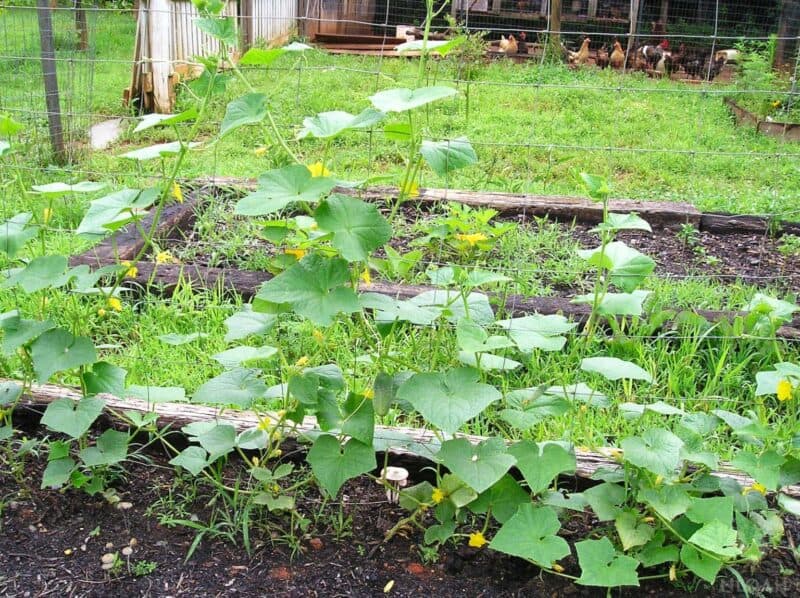
Broccoli
This is bound to be the most controversial inclusion on this list. Everybody knows that you aren’t supposed to plant brassicas alongside your cucumbers because they are too resource-hungry.
While this is true, that can be managed with good soil amendment prior to the planting season and periodic fertilization throughout.
And you’ll want to consider planting broccoli, specifically, because it produces natural insect repellents that can keep several persistent cucumber pests at bay, specifically many aphids and cabbage worms.
Just stay on top of giving these plants the nutrients they need as they grow, and you shouldn’t expect any other problems.
Give your broccoli plants at least 12 inches of space to themselves between your cucumbers, and in a row of their own. And double-check your variety: some can grow up to 2 feet wide and will need even more space!
Oregano
Ounce for ounce, one of the most useful and popular kitchen herbs used around the world, oregano is easy to grow, and particularly easy to grow near cucumbers.
Simply plant it around the perimeter of your cucumber crop or at the corners of your garden or raised bed. It can grow large, so keep spacing from other plants to at least a foot.
Oregano is a great one-two punch in your garden, secreting compounds that repel plant-killing pests like various beetles, bugs, and aphids, while at the same time attracting beneficial pollinators and predators once it bolts and blossoms.
Many such predators, like lacewing larvae, will massacre cabbage worms, aphids, and beetles that will prey on your cucumbers and other plants.
Dill
Let’s get real. If you’re growing cucumbers, chances are you’re already growing your own dill. How else are you going to make your grandma’s award-winning pickle recipe? And because you’re growing the two, you’ll be happy to learn that you should grow them near each other.
Dill is known to enhance the growth of other plants around it, including cucumbers. It’s also highly attractive to garden pollinators and predators of pests, including various wasp species, ladybugs, and more.
Remember that you want to let it bolt when the weather gets hot so the blooms will attract the beneficial insects.
This is a natural combo that will grow harmoniously as long as you give your dill about 16 inches of space from the cucumber plants.


Get your gift and learn things like:
- how to make this really quick pest spray
- how to prevent egg waste
- two cheap automation devices that will make your life easier
Tom has lived and worked on farms and homesteads from the Carolinas to Kentucky and beyond. He is passionate about helping people prepare for tough times by embracing lifestyles of self-sufficiency.