
One of the single best things you can do to improve the overall health of your garden, raised beds, container plants, and any other green-thumb projects you have going is to start your own compost pile.
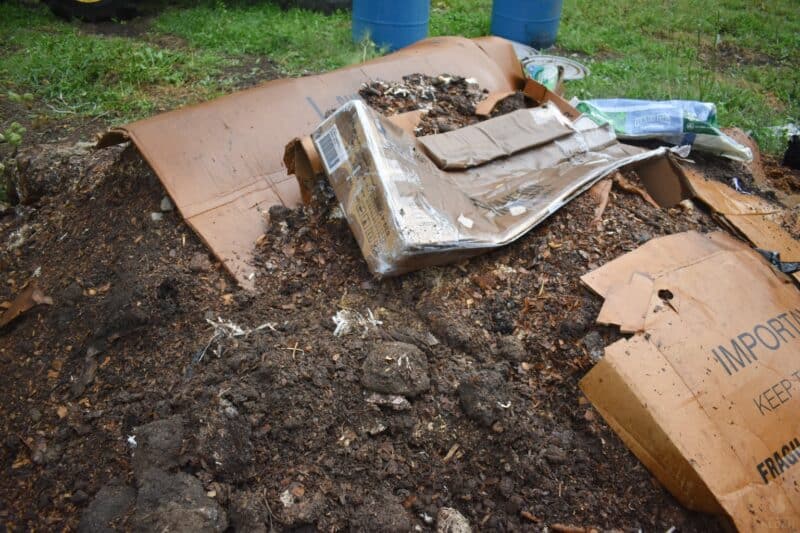
Compost is nothing more than properly decomposed organic matter, all of it rich in nitrogen, carbon, and other nutrients that plants need.
Adding this stuff to your potting mix, right into the ground, or even around the base of your plants will supercharge their growth and help them thrive.
Best of all, this stuff is so cheap to make because you add kitchen scraps and yard waste, for the most part. Give it a little time and a little care, and in a few months, you’ll have black gold!
This process is simple and straightforward, but hardly foolproof. In fact, it’s all too easy to make some truly disastrous mistakes that could flush weeks or months of work down the drain.
Keep reading, and I’ll tell you about 10 of the most common, and worst, ones that you should avoid.
Failing to Introduce Microorganisms
Have you ever wondered how your compost actually gets made? I mean to say, how does the stuff in the pile actually break down? It isn’t because it just falls apart all on its own!
No, the things you add to your compost pile get broken down because of the presence of beneficial microorganisms that fundamentally start the process of decomposition. The trick is that these little critters aren’t always around and often get taken for granted.
If you don’t have a sizable population of these microorganisms in your compost pile when you assemble it, decomposition will be very slow or potentially even halt.
For that reason, you should add them to every new pile and periodically add a few more during the process. A scoop of finished compost, rich garden soil, or commercially available compost starter will do the trick.
Failing to Balance Greens and Browns
This is one of the most fundamental things you’ll have to manage when starting your own compost pile, but it’s also one of the easiest things to get wrong.
Broadly speaking, compost components are broken up into two major categories, browns and greens…
Browns aren’t necessarily colored brown, but the term refers to any component that is carbon-rich. Things like wood chips, paper, leaves, etc.
Greens, likewise, aren’t necessarily green in color, but the term refers to nitrogen-rich ingredients like grass clippings and most kitchen scraps.
From beginning to end, you want to maintain a ratio of three parts browns to every one part green. This will optimize decomposition, stability, and nutritional content of the finished compost while minimizing nasty odors.
The tricky part is that you need to keep up with what you are adding throughout the process and not just add things willy-nilly. Randomly throwing in different amounts of each will soon result in a compost pile that’s badly out of whack and poorly performing.
If you add browns at the beginning of the week, try to add only a third as many greens at the end of the week to maintain the right ratio.
Constantly Adding New Material of Either Kind
Speaking of adding stuff, I see many composting newbies make this mistake routinely. A compost pile is not a garbage disposal. That means you don’t want constant inputs.
When you’re cleaning up in the yard or cleaning up after dinner, the garbage shouldn’t necessarily go into your compost pile every time.
This is because it takes time, often a lot of time, for this stuff to break down, and if you’re constantly adding new, fresh material, the composition of the compost is changing and not for the better: it will, quite literally, never be finished!
You’ll reach into your compost to get a scoop for your garden, and you’ll pull out intact eggshells, banana peels, sticks, and more if you go this route.
Once you’ve got a large enough mass, you need to stop adding to it and let the process finish. This might mean you need to start a new compost bin or pile if you want to maintain production.
Composting in a Single, Big Pile
The previous point brings up another good one, and another big mistake. I know the traditional idea of a compost bin or open compost pile is just that, a single quantity of compost.
It is certainly convenient, and almost charming in a way, to have a big mound of super-rich compost just sitting there ready to use when the process is done, but this isn’t ideal.
For starters, a single, huge pile can easily facilitate anaerobic, or oxygen-less, conditions in the center, which can lead to blooms of hostile microorganisms that can completely disrupt the balance of the pile. It’s also a lot harder to turn and aerate such a huge mass.
Also, don’t forget that things compost at different rates, and having multiple smaller piles can allow for tailored management of the process.
Taking this two or three-pronged approach actually increases efficiency because you’ll have a quantity of compost that is finished or nearly so, and a quantity that is just getting started or almost done, ensuring a steady supply throughout the year.
Trying to Compost the Wrong Stuff
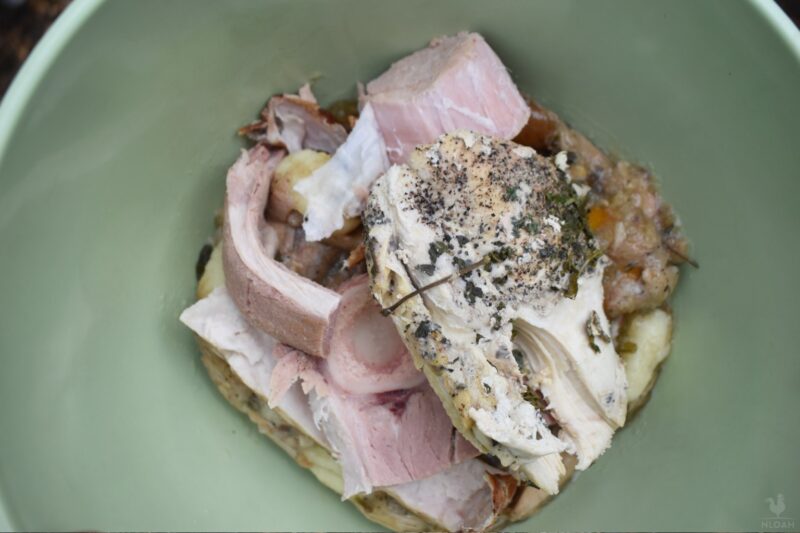
I’ve seen people try to compost some truly crazy stuff. Styrofoam egg cartons, scraps of meat, rancid cooking oil, soap scum they scraped off of a glass shower door, the works. I’ve really seen it all at this point!
This sounds basic, and it is, but you really have to familiarize yourself with what is good to compost and what isn’t. As mentioned above, basics like grass clippings, eggshells, twigs, vegetable peels and cuttings, paper, and so forth are all good inclusions.
Adding stuff that can’t be composted at all, or that will contaminate your pile, is only going to waste a ton of time and effort.
Also, just because it came out of your yard doesn’t mean it’s okay for your bin: never add diseased plants to the pile in an effort to recycle them, because pathogens may persist and survive the process to infect your plants in the future.
Likewise, think twice before tossing in any weeds, especially if they’ve gone to seed, as they might survive and spread in the future, and this time all over your property once you’ve spread your compost!
Improperly Watering
Proper, timely watering is critical for keeping the composting process underway. The two major mistakes people make here are not watering enough or watering way too much.
You want your compost pile to be moist throughout but only moist. I tell folks that the ideal level of moisture is a sponge or rag that has been wrung out: noticeably wet, but not dripping.
If you water too often, you’ll encourage outbreaks of mold, mildew, and anaerobic bacteria that can turn what was a promising bin full of rich compost into a festering mess that looks like it was dredged out of a sewer.
Don’t water often enough, and your compost will dry out, greatly slowing decomposition and potentially leading to the total collapse of those beneficial microorganisms.
Neither is acceptable or good. Water enough at the right time, and make sure you turn the pile so that the moisture level is consistent throughout.
Failing to Aerate the Pile
Since we’re talking about managing the pile directly, we need to talk about proper aeration. You’ve heard me mention a couple of times already the dangers posed by anaerobic conditions. Anaerobic, again meaning oxygen-less, conditions lead to anaerobic decomposition.
“What’s the big deal if decomposition is still occurring?” I hear you say. Anaerobic decomposition leads to substandard nutrient levels in your compost and, more prosaically, leads to ferociously disgusting odors since different kinds of microorganisms are doing the decomposing.
Typically, it is anaerobic conditions that lead people who have tried and failed to manage a compost pile to swear off the process entirely. It’s that bad!
Luckily, this mistake is easily corrected and averted if it doesn’t go on too long. Make it a point to thoroughly turn and toss the pile every week, or two weeks at the most, to introduce oxygen throughout.
More often than that, you should be poking holes in the pile using a pitchfork, specialty aerator, or even in a pinch something like a broom or rake handle.
Do that and you’ll keep those tiny microorganisms that we actually want working hard and happy.
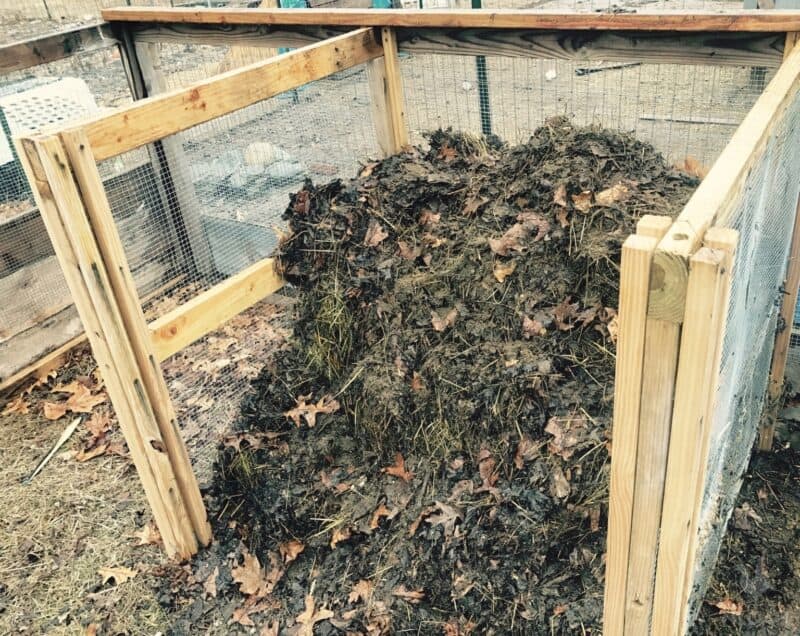
Leaving Your Compost Pile Open
I’ll say this as succinctly as possible: cover your compost pile!
Covering your pile has several important benefits. It helps to hold in heat while preventing overheating from direct exposure to sunlight, and it helps hold in moisture, and it helps keep pests and contaminants out of the compost.
How you cover it is up to you and dependent on your situation and the shape and size of your bin or pile.
For a rudimentary bin or mound, cover it with a tarp but use something as a standoff to allow air to circulate between the tarp and the compost itself. Purpose-built bins usually have a flip-down lid or hatch for the job.
If you’re really in a pinch, you can use natural materials like hay, straw, or pine straw for the same effect, though obviously, this is nowhere near as convenient.
Also, remember that you might need to uncover your pile for a time to promote drying if it has gotten too wet or to allow sunshine to heat it directly if temperatures are too cool.
Letting the Pile Get Too Hot
Since we’re on the subject of compost temperature, we need to talk about one of the trickiest issues and a mistake I see folks make over and over again throughout the American South and Southwest.
You want your compost pile to be warm. If you do nothing else but give it the elements it needs to succeed, it will be warm: the decomposition process creates quite a bit of heat on its own!
But we don’t want it to get too hot. When the compost pile gets too hot, those microorganisms start to die, and that means it’s possible to bring the whole process to a screeching halt, and then what you’ll have is just a pile of garbage.
The ideal temperature range for a compost pile, whatever the kind, is somewhere between 135°F and 160°F. That’s 57°C to 71°C for those of you who don’t use bald eagle units.
How does a compost pile get too hot? Usually, it’s a combination of too much direct sunshine, high air temperature, and too much insulation.
Routinely turning your pile helps to stabilize heat, but neglecting it means that it can potentially get hot enough that it catches fire! Rare, but possible, that’s not an urban legend.
Anyway, that doesn’t have to happen for your pile to basically be DOA. Once those temperatures climb above the recommended range and stay there for even a few hours, the decomposition process will be radically slowed from there on out.
Not Ensuring Adequate Drainage of Surrounding Soil
Lastly, this is another mistake that is all too easy to commit. You’ve got to make sure that your compost can drain and that the soil around it is adequately draining.
All compost piles naturally secrete a nasty liquid called leachate as yet another step in the decomposition process. It’s not harmful, and won’t cause problems for your compost, as long as it can drain away.
If you’ve parked your pile or bin on pavement, soils with lots of clay, or heavily compacted dirt, it won’t happen. This will once again lead to rot and a preponderance of microorganisms we don’t want.
Potentially worse, if the area around your bin doesn’t drain well, accumulating water can saturate the pile, causing it to be too wet and leading to anaerobic conditions as discussed previously, or even physically carrying away some of your compost. Definitely something you want to avoid!
Ensure adequate drainage all around the bin, and don’t place it anywhere where the accumulation of water or fast-moving groundwater is likely to occur.

Tom has lived and worked on farms and homesteads from the Carolinas to Kentucky and beyond. He is passionate about helping people prepare for tough times by embracing lifestyles of self-sufficiency.
Hi Kendra! I do a composter bin. Once there were zillions of minute small red microbes. Now i have a million white minute small crawling microbes. What is it? And is it good or bad for the composter? Why are they there?