
Goats can be one of the most challenging livestock species to keep, but they can also be one of the most rewarding: They are affordable, don’t need a ton of space, and can produce lots and lots of milk and meat to keep your fridge full and your freezer loaded.

This is reason enough to keep them, but like every other kind of animal picking the right breed counts for a lot. Some are superb milk producers whereas others show a heavy carcass yield of lean, flavorful, and well-marbled meat. Some can even do both!
Keep reading, and I’ll tell you about the best dual-purpose goat breeds for milk and meat that I could find for you to consider for your farm or homestead…
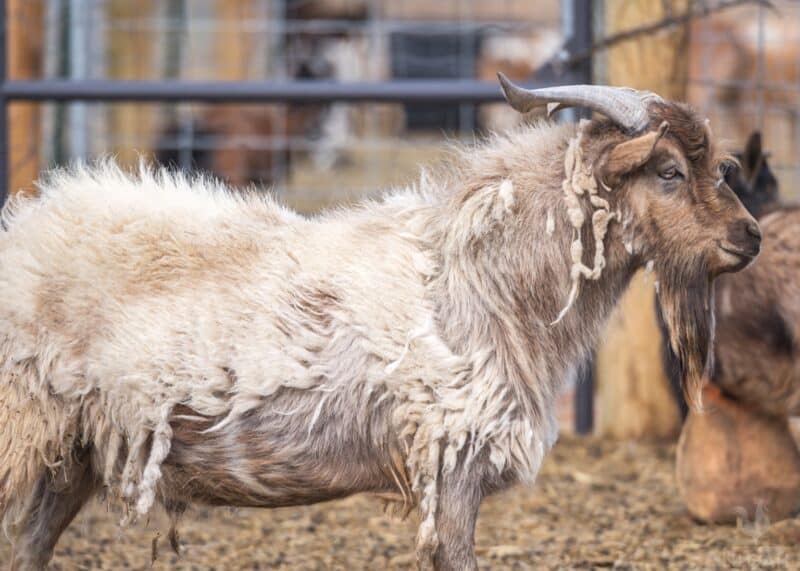
Fainting Goat
You probably know this breed by their name and behavior, though they are properly known as Myotonic goats. They don’t really faint, either, when they fall over; it’s actually just the muscles in their bodies locking them rigid when they get startled or scared thanks to a genetic quirk of nature.
And don’t worry over it, as assuming they don’t fall from a high place, it doesn’t hurt them.
Modestly sized but weighing anywhere from 175 to 225 pounds in the case of bucks, they have long been raised for meat and bread with other meat goats since they are exceptionally dense, stocky, and muscular for their stature.
Aside from their fainting spells, they tend to be healthy, very friendly, and easy to handle, making them a favorite breed of backyard keepers.

LaMancha
The LaMancha, sometimes called the American LaMancha, actually hails from Spain as the name suggests. Although they’ve been in the country since the first quarter of the 20th century, they were not officially recognized breed until 1958.
LaManchas are known to be friendly, curious, and easy to handle, and they produce a good amount of very high-fat milk, averaging around 4.1 to 4.2% fat by volume, and can crank out nearly ¾ of a gallon daily.
LaManchas are also instantly recognizable by their tiny, “cropped” ears, alternatively referred to as gopher or elf ears depending on the length and shape. It gives them a cute look, that’s for sure!
Kiko
One of the newest officially recognized domestic breeds in the world, the Kiko has only been around since the mid-1980s.
Developed explicitly as a breed for meat and milk, one that could survive and thrive in virtually any environment on earth, they are the product of crossbreeding experiments between several other domestic goats, including these Saanen, Toggenburg, and Nubian, all three also on our list.
They’re remarkably good breeders and mothers, put on weight quickly and their hooves hold up well in dry or damp environments alike, meaning they rarely get problems with them. An inspired choice if you want a dual-use herd!

Nubian
Another beloved goat breed and one that is truly dual-use, capable of producing plenty of milk and also yielding a carcass heavy with succulent, delicious lean meat.
First developed in England around the mid-1920s, Nubians are remarkable for their long floppy ears and also the exceptionally rich, fatty milk, hovering on average around 5% buttermilk by weight.
Though their daily production is quite variable, anywhere from half a gallon to 1 ½ gallons, they are also known as a year-round milker, meaning you won’t suffer from an interrupted supply.
Saanen
A huge, stout, and heavily muscled domestic breed, the Saanen has the distinction of being the largest of all the domestic dairy breeds, with mature bucks clearing 200 pounds / 90 kilograms.
Be warned, because if they have horns, they can give you quite a whack with a head butt! They tend to be good-natured, for goats anyway, and aside from their great size are capable dairy producers yielding around a gallon of milk daily.
Fat content is pretty variable, though, and can be anywhere from 2.3% on the low side to 3% or just a little over on the high side. They’re also sometimes kept for meat production. Interestingly, wild strains of these goats still exist today having never been in captivity.
Jamnapari
Contrary to what the name might suggest, the Jamnapari is a British goat known for its golden fawn coat and downright stupendous milk output…
A young doe in her prime can yield anywhere from 120 to a mind-boggling 240 gallons of incredibly rich, high-butterfat milk each and every pregnancy.
If you want goat milk and a whole lot of it, you can hardly do better than these pint-sized producers; despite their small size, they are remarkably efficient, and the darling of smaller dairy operations for that reason. Beautiful and effective, you can’t ask for more than this!
Black Bengal
The single most important goat breed on the Indian subcontinent, this is a dual-use goat that produces a modest amount of milk and meat.
Most importantly of all, Black Bengals are exceptionally good breeders, capable of reliably giving birth to 6 kids a year and sometimes more.
Notably, the fine hair of their coat is also sold as a resource, meaning they are one of the few goats that can truly be said to be triple-use.
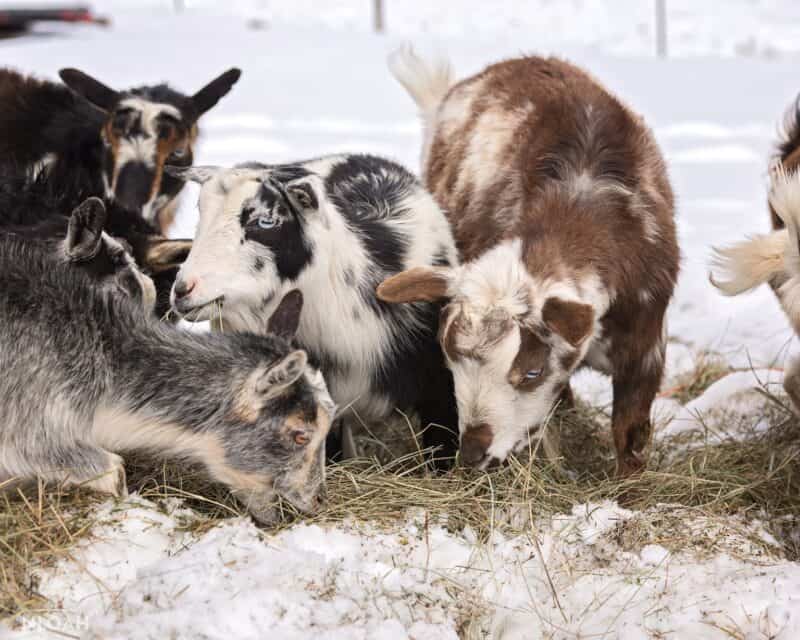
Nigerian Dwarf
As expected, the Nigerian Dwarf is a truly tiny breed, standing only 1 ½ feet tall at the shoulder or barely 2 feet to the top of the head when they are standing upright. Often kept as pets, they are nonetheless an inspired choice for milk production if you want seriously thick, velvety, creamy goat milk: their milk contains on average an astounding 6% butterfat!
Still, they don’t produce very much compared to other dairy breeds on our list, though they do breed well and quickly meaning a large herd is achievable even with limited space. That can make up for the production shortfalls!
While not thought of as a meat breed, Nigerian Dwarfs are known to produce really delicious cuts and they are suitably sized for roasting whole, meaning they can keep you and your family, and neighbors, in plenty of high-quality meat. Their small size also means their carcasses are easy to handle when butchering.
Sable
An elegant, athletic, and truly gorgeous breed, Sables are tall, almost imperious, and stand nearly 3 feet tall at the shoulder, taller to the top of the head. Adult males can weigh up to 180 pounds.
Originally developed from the Saanen elsewhere on our list, Sables produce relatively lean milk that has only 3% to 4% butterfat but they are capable and reliable milkers otherwise, producing anywhere from 3/4 of a gallon to 1 gallon daily.
Their short, thin tails make it easy to keep their nether regions clean and this also facilitates easy breeding.
Guernsey
On the smaller end of the medium category, the Guernsey is instantly recognizable by its bright, satiny fawn coloring, coloring that often leads to it being called the Golden Guernsey.
Though their milk is only modestly fatty, ranging anywhere from 3 ¾% to 4% butterfat, they produce an awful lot of it, with an average doe in her prime yielding over 10 pounds of milk a day, more than a gallon! That’s pretty exceptional.
Unfortunately, it is not legal to import Guernseys into the United States, allegedly for health reasons, and only a few individuals and tiny herds are rumored to exist here and there. That said, people online swear they have them, so if you want one you’ll probably be able to get one with enough time looking.
Spanish
Has the name suggests, a Spanish breed through and through and one that is an important source of meat in that country but also in places like Mexico and throughout the United States in much smaller numbers.
These medium-sized goats are known to be very easy breeders, and most importantly for producers of said meat is the fact that they can breed all year round, meaning it’s always easy to expand your flock when needed. This makes timing less important overall for your operation.
Rangeland
One of the most important meat breeds in the world and Australian original, these tall, broad goats or another healthy, self-sufficient breed that is especially suited for living in arid regions.
They produce lean, flavorful, and tender meat that makes them a reliable standby enjoyed around the world.
Rangeland goats are said to produce upwards of 85% of the goat meat produced for the consumer market, with most of the remainder coming from Boer goats next on our list. There’s a reason they’re so popular, and you won’t go wrong with them if meat is what you’re after.
Boer
A famous meat breed, and one that is known for ruggedness, good health, and also, mercifully, for being quieter than the average goat, this beefy breed can top 300 pounds- the biggest domestic breed in the world! Now that is a lot of goats!
First developed in South Africa way back at the beginning of the 20th century, they have since spread around the globe but are particularly popular and important producers of meat in Australia.
Toggenburg
A truly ancient breed, the earliest records of the bearded, full-bodied, and furry Toggenburg go all the way back to the 17th century. They’re one of the most picturesque domestic breeds thanks to their brown fur that is set off by contrasting white legs and faces.
This is another large breed that can approach or clear 200 pounds in some cases, and though they are typically kept for dairy purposes and produce anywhere from half a gallon to 3/4 of a gallon of medium-fat milk daily, they’re also commonly used as breeding stock to fortify meat goat lineages.
Kalahari
One of the most unique goats on our list in any category, the Kalahari is a South African goat renowned for the tenderness and rich flavor of the lean meat that it yields.
Totally at home and hot, dry regions and shockingly resistant to many of the common illnesses that plague other domestic breeds, they are also fast and prolific breeders, meaning you’ll never struggle to keep your herd sizable and in good health.
This breed is also immediately recognizable by its rust-red coloration, upward curling, bushy tail, and layers of loose skin folds that make it look kind of like a Sharpei. They look like brutes, I’ll tell you that!
Verata
Instantly recognizable by its long, spiraling, Impala-like horns, this Spanish breed is endangered but through no fault of its own. Tall, lanky, impressively fast, strong, and healthy, they are nonetheless easy-going and generally easy to manage.
However, they can be especially difficult to keep contained owing to their athleticism. Verata goats make a great dual-use breed, as they are high-volume producers after kidding, routinely yielding at least 40 gallons of rich, sweet milk every time they get pregnant. The kids also grow quickly and are fit for slaughter at just a month and a half old.
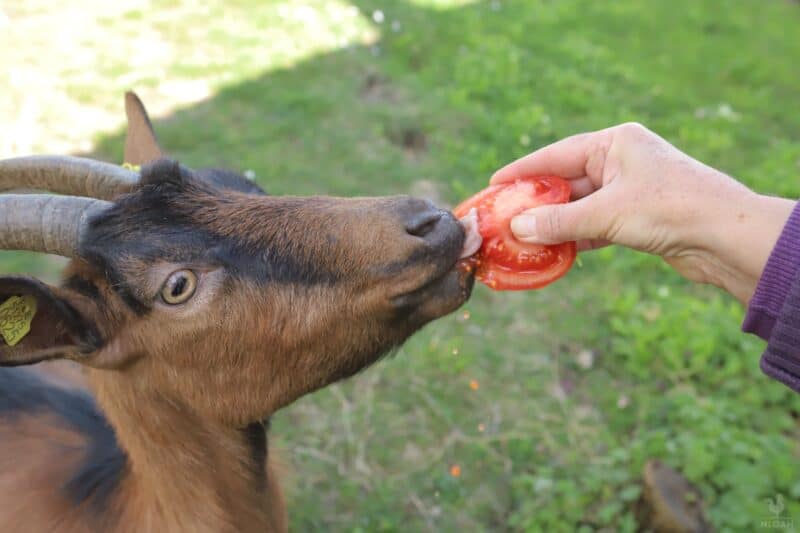
Alpine
A famous, hardy, and highly productive milking breed that hails from the rough and inhospitable French Alps, Alpine goats produce lots and lots of high-fat content milk, and can yield as much as 2 gallons a day in the case of exceptional does.
This makes them especially well suited to the production of many kinds of dairy products, particularly butter but also many kinds of cheese for which they’re rightly famous.
This breed is also pretty calm, quiet, and friendly, if a little. They’ve been in the US since 1922, and are one of the most popular dairy breeds.
Oberhasli
A small Swiss breed that is probably one of the most photogenic on our list, the gorgeous cinnamon-and-black coloring of the Oberhasli can’t be missed.
They’re one of the very best milk or breeds for those with small properties or just very limited space, and though they are known for sweet personalities when raised right, they also have a mean streak and are notorious for causing destruction, especially when they get to keep their horns.
But it’s worth putting up with them for the yield of incredibly sweet, rich milk that they can give you. Expect a young doe to give up anywhere from half a gallon to 1 ½ gallons a day during peak lactation. They are not well-known for meat production, but are entirely viable for the purpose: they are known to produce tender and nicely-marbled meat.


Get your gift and learn things like:
- how to make this really quick pest spray
- how to prevent egg waste
- two cheap automation devices that will make your life easier
Tom has lived and worked on farms and homesteads from the Carolinas to Kentucky and beyond. He is passionate about helping people prepare for tough times by embracing lifestyles of self-sufficiency.