
When it comes to milk production, there are few dairy goat breeds that can rival the legendary Alpine. These large, graceful, and beautiful goats are known for producing gallons of milk a day and also for extraordinarily long lactation periods.
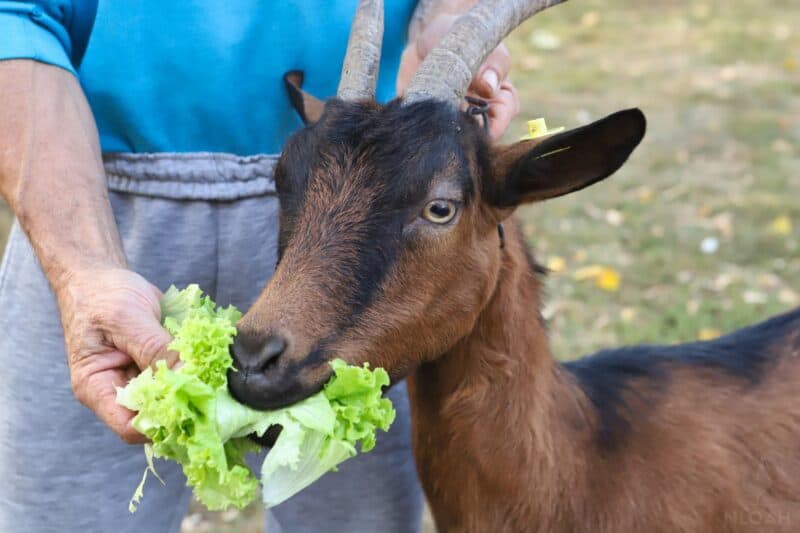
Even a couple of healthy does can keep a large family, and all of your neighbors, drinking fresh milk in perpetuity, and a modest herd can form quite a profitable dairy operation.
If you’ve been considering getting dairy goats or are just looking to add some Alpines to your herd, I’m here to help with some advice that will tell you everything you need to know to take proper care of them all year round.
We will get right into it below…
Where Did Alpine Goats Come From?
A major clue is in the name: Alpine goats come from the European Alps, which has been their natural range for millennia.
Although the terrain is steep and rocky, there are many pasture lands dotted throughout the Alps that these goats learned to thrive on, and they remained inaccessible to other kinds of livestock animals.
Folks who lived in and near these regions naturally learned to domesticate the goats that lived there, and so the Alpine has been with us ever since.
Notably, the original Alpine breed gave rise to various other well-known Swiss breeds like the Toggenburg and Saanen; these goats were intensively bred in relative isolation throughout the Alps and eventually became codified as distinct breeds, though they have plenty of recognizable Alpine DNA.
Color, Size, Appearance
A remarkably beautiful goat, Alpines are recognizable and famous for their shapely, slender physique, long legs and bodies, and overall gracefulness.
Their heads and faces are long and straight or ever so slightly concave, and males and females typically have short, thin beards.
Their necks are likewise long and lean, and most adults will show wattles. Bucks will weigh at least 175 lb and typically considerably more, standing just shy of 3 ft tall at the withers.
Does are significantly lighter, around 140 lb or more, and are only slightly shorter than males, averaging 30 to 32 inches tall at the withers.
Their horns, when present, are thin, tapering, and sweep up and back off the head.
Alpines can be any color, and their fur is short or medium in length. Some of their most famous combinations of color and pattern have their origins in the French language, including cou noir, cou clair, cou blanc, sundgau, and chamoisée.
Respectively, they are black front quarters, brown or tan front quarters, white front quarters with a dark rear, mingled black and white, and brown or bay with black markings. There are countless other combinations of color and pattern besides.
What are Alpines Kept For?
Dairy goats, and pretty much exclusively! This is because of their phenomenal milk production, made possible by countless decades of intensive, careful selective breeding.
But, throughout Europe, Alpines are also popular as pack animals due to their strength, endurance, and intelligence. A train of adult Alpines can carry quite a lot of cargo, though you probably won’t have use for that ability yourself!

Milk Production
Tons. A mature doe in good health will produce one to two gallons of milk a day, and it’s hardly unheard of for an exceptional doe to produce an astonishing three gallons. That is frankly incredible!
This averages out to anywhere from 90 to 670 gallons of milk in a 300-day period. Even better than that, their lactation period is famously long, a couple of years at least.
Alpine milk is of good quality but relatively low in fat, averaging anywhere from 2.8 to 3.3%.
Temperament
Alpines, as a rule, are friendly and curious when calm, but they tend to be cautious, standoffish, and stubborn if not raised with plenty of interaction and good treatment.
Most owners say they have a stoic or distant demeanor most of the time, but they will respond favorably to affection and, as always, treats!
Do Alpines Have Horns?
Yes, the vast majority do, assuming they are not disbudded or one of the rare polled strains. As mentioned, horns are of modest width but sharply tapering and tend to sweep upwards and backward from the head.
Are They Noisy or Quiet?
Somewhere in the middle, though they tend to be quieter than most other breeds. They will make plenty of noise if they are distressed, unhappy, or just feeling needy, though!

How High Can Alpines Jump?
Pretty high, around four and a half feet. Worse than that, Alpines are among the strongest and most agile goats there are.
Remember, they lived in the Alps for countless generations! Given even the slightest toe-hold or advantage, they will easily jump or clamber up and then over fencing to see what is on the other side and what’s over there.
And don’t underestimate their strength: they are more than capable of exploiting any weaknesses in gates, fencing, or anything else to their advantage. All of your fences and other enclosures must be sturdily built and able to withstand considerable attention if you want to keep them in place!
Hardiness and Space Requirements
Alpine goats are wonderfully resistant to cold and will readily grow a cashmere undercoat when allowed to acclimate to cold weather.
Temperatures all the way down to 0°F (-17° C) aren’t a problem for them as long as they have shelter when they need it and they don’t get wet. They tend to struggle in hot, dry conditions though, so when the temperature climbs above 80°F (27°C), they need access to shade.
When it comes to space, as a larger breed, they will need more room per head. Plan on at least 25 square feet (2.3 square meters) indoors and around 225 square feet (21 square meters), at a minimum, per adult outdoors.
Seasonal Care Requirements
Alpine goats tend to be remarkably healthy all year round, but you must be prepared for different sets of challenges in the spring and summer compared to the fall and winter.
Feed
A rule of thumb for feeding goats is that they need between 2% and 4% of their body weight in dry matter every day. If you have a goat that weighs 170 lb, that means they will need between three and a half and 7 lb of food. That’s the baseline.
In cold weather, food requirements go up because goats must have extra calories needed to stay warm and maintain weight.
Even though Alpines do wonderfully in cold weather, they still need extra food. You can give them half again as much hay, or even twice as much, when they don’t have access to outside forage as usual.
If any of your animals seem sluggish, sickly, or unusually tired because of the cold, it is a good idea to give them liquid nutrients or high-calorie supplemental food like beet pulp. We’ll talk more about cold weather stress in just a couple of sections.
Water
All goats, including Alpines, need continual and free access to water at all times. This isn’t difficult in the spring and summer because it will stay liquid.
Keeping it clean and fresh is the only difficulty, but this can be accomplished with waterers or covers over troughs or tanks and routine cleaning.
Winter water is a much bigger challenge, especially if the temps stay at or below freezing.
If you have a barn or other nicely constructed pen with electricity, you can hook up heated troughs or buckets. Otherwise, you’ll be forced to bust up ice so that your Alpines can drink, or carry warm water out to them that will stay liquid longer.
This is something you need to take care of no matter what, and Alpines, being large goats, need more water than smaller breeds like Pygmies or Nigerian Dwarfs. If they dehydrate in the summer or winter, they will quickly fall ill.
Shelter
As stated above, Alpines are one of the very best cold-weather breeds, having millennia of adaptation for dealing with it. They also have proven to be remarkably adaptable to other climates, too.
That said, you’re making a terrible mistake if you don’t provide them with shelter. Goats need it in the summer in the form of shade, and an enclosure where they can huddle together and keep warm or get out of the rain and snow in the winter.
This pen doesn’t need to be anything fancy. A simple three-sided goat hut that’s facing away from the prevailing winds and watertight is more than enough if they have dry, clean bedding to lie on. Their fur is more than up to the task of keeping them warm as long as they don’t get wet.
Note that for shelter used on an intermittent basis for protection from only the worst weather, you can get by with as little as 10 square feet per adult Alpine.
Note: do not fit your Alpines with coats or sweaters. They don’t need them, even when it is frigid outside, and this is actually counterproductive. If they don’t experience a little bit of cold stress, they will not grow their undercoat which they depend on for genuine protection!
Breeding Season
Alpines are seasonal breeders like pretty much every other dairy goat. The typical mating season lasts from mid-July through January. Does go into heat every 3 weeks on average during the mating season and will be receptive for a few hours to a few days.
Note that Alpines respond to colder climates by beginning the mating season earlier, and also ending it earlier. The reverse is true if you live in a place with a warm or temperate climate.
Managing Cold Weather Stress
Assuming your Alpines have time to adjust to oncoming winter weather, you probably won’t have too many problems with cold stress unless they are already sick or injured, underweight, or have some other underlying health problem.
Nonetheless, you must keep an eye out for signs of cold-related stress as this can herald illness which can quickly turn devastating. Watch out for prolonged shivering that doesn’t stop, a sudden or notable lack of appetite, sluggishness or tiredness, and a refusal or inability to stand or walk.
If you see one or more of these symptoms, move the goat to a warm environment as quickly as you can and help them warm up. Giving them a coat or sweater temporarily, or a blanket, is a good idea. Offer extra food and minerals, and consider a dose of nutrient drench to give their body what it needs and also help them warm up. Offer warm water, too.
Hot Weather Stress
You’re far more likely to have heat stress problems with your Alpines if you live in a temperate or warm region compared to cold weather problems.
If any of your goats are continually seeking shade, vocalizing without any reason that you can see, acting distressed, panting, or seem to be stumbling and losing coordination, they are probably overheating.
Don’t delay, and move them to a shady spot and provide cool water to drink. Set up a fan or manually fan the animal and consider gently sprinkling their body with room temperature water. In conjunction with a breeze or fanning, this will provide rapid but gentle evaporative cooling.
Do not immerse the animal in water or dump cold water on them! This will cause temperature shock which can be fatal!
Do Alpines Have Significant Health Issues?
No, though they are prone to a few particular issues you’ll need to account for and be aware of.
Alpines are fairly vulnerable to internal and external parasites compared to other large breeds like Boers.
Mastitis can be a major concern for lactating does, considering their volume of production, and any irregularities of the teats or udders must be investigated and treated immediately.
Johne’s Disease (AKA paratuberculosis, a chronic bacterial infection of the intestines) is a fairly common affliction for Alpines, and hoof trimming must be done regularly and carefully.
The hooves of these goats tend to grow quickly and be quite hard, considering they lived in some of the steepest mountains on Earth for ages. It’s highly unlikely that your property will be rocky and rough enough to keep their hooves under control, so stay on top of trimming.

Lifespan
Alpine goats have a modest lifespan of 10 to 12 years, though owing to their good overall health, it is not uncommon to see them live to 15 years or even beyond with excellent care and nutrition.
How Much Do Alpines Typically Cost?
Alpines are some of the most common and beloved dairy goats around, and accordingly, there are many breeders out there. You can get an Alpine for anywhere from $100 to $500, and you should expect to spend more on animals coming from prestigious lineages or expert breeders.
Where to Get Alpine Goats of Your Very Own
Echo Light Farms is a prestigious ADGA and AIC (Alpines International Club) accredited breeder of Alpine dairy goats. Check them out right here.


Get your gift and learn things like:
- how to make this really quick pest spray
- how to prevent egg waste
- two cheap automation devices that will make your life easier
Tom has lived and worked on farms and homesteads from the Carolinas to Kentucky and beyond. He is passionate about helping people prepare for tough times by embracing lifestyles of self-sufficiency.