
Ducks have been domesticated for ages, but only recently in the past year or two are they starting to come back into style compared to chickens. And to be honest, it’s mostly because of their productivity when laying eggs.
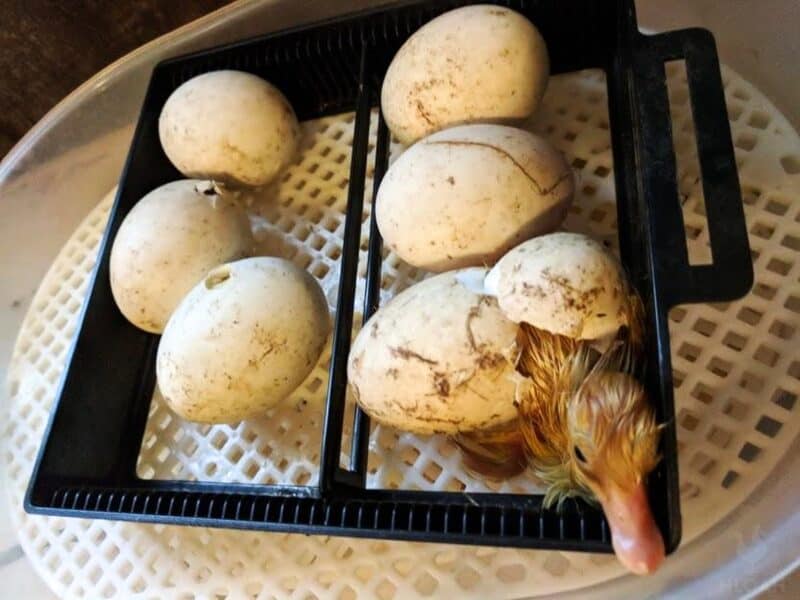
Ducks typically start laying between 4 and 8 months old, and can crank out an egg or two a day like clockwork when in season. Some highly productive breeds can lay more than 330 eggs in a single year!
If you have a taste for duck eggs or just want to enjoy tending to a backyard flock of laying hens, you’ve definitely come to the right place: below I will answer everything you need to know about the laying behavior of ducks. Now grab your basket and let’s get those eggs!
How Often Will Ducks Lay Eggs?
Most ducks will typically lay an egg a day while they are in the laying season. As we will learn, some breeds are more productive than others, and the laying season can be quite variable.
That said, you can’t depend on ducks to lay a sizable group of eggs, called a clutch. Depending on the breed and environmental factors they may lay for five days straight or for upwards of two and a half weeks before they stop.
Some ducks will lay in stops and starts, cranking out a couple before taking a day off and resuming in a few days.
How Old Are Ducks When They Start Laying?
It varies depending on the breed of duck, as some sexually mature much quicker than others. You can dependably count on your birds starting to lay between 4 and 8 months old.
Keep in mind that some breeds won’t lay even when they are sexually mature if they are out of season, waiting for the following spring until they plop down their first eggs.
Another good rule of thumb is that smaller birds like the Bantams and Indian Runners will start laying younger, while bigger and heavier breeds like Muscovies take longer.
What Time of Day Do Ducks Usually Lay?
Typically in the early morning hours, often before sunrise though some lazy birds might lay in the a.m. after the sun is up.
I depend on my birds laying in the morning, but I have several that lay whenever they want. Definitely don’t be surprised if your ducks don’t have a schedule for laying!
Make it a point to learn the laying proclivities of your girls, too: ducks are fairly known for hiding eggs when they are out and about or dropping them wherever they happen to be. You can’t count on them making it back to the nesting spot!
Do Some Lay More Eggs Than Others?
Definitely. Much like chickens and other birds, some duck breeds are more productive, others less so.
Some of the very best domestic layers include the Welsh Harlequin and Indian Runner, with productive hens belonging to both breeds capable of cranking out 300 eggs or more a year.
The undisputed champions of egg production are Khaki Campbells, though. They’re anxious, but can routinely lay more than 330 eggs each and every year.
Some breeds are considerably less productive, however. Looking at Mallards, for instance, which are the progenitors of most other domestic ducks, they typically only produce between 60 and 120 eggs yearly.
Are Wild or Domestic Ducks More Productive?
As a rule, domestic ducks. Like most other domestic animal species, selective breeding and selection for positive traits like productivity, reliability, and readiness to lay means that they will lay many more eggs compared to their wild cousins.
That said, wild ducks can still lay dozens, or even over a hundred eggs a year depending on conditions and their breeding success rate.
How Many Eggs Will a Duck Lay in a Day?
It depends on the duck, of course, but most will only lay one egg a day at most, though the most productive breeds mentioned above might lay two every day.

How Many Eggs Is That a Week?
Again depending on the breed, expect your ducks to produce anywhere from 2 to 14 eggs per week.
How Many Eggs Per Month?
Your domestic ducks can produce between 8 and 56 eggs monthly depending on conditions and breed.
What’s the Maximum Number of Eggs a Duck Can Lay in a Year?
The absolute most eggs that any duck could lay in a year is about 340, a phenomenal number achievable only by the incredibly prolific Khaki Campbell.
Do Ducks Lay Eggs Seasonally?
Yes, they do! Or at least, some of them do. The most productive breeds like the Harlequin, Indian Runner, Khaki Campbell, and Magpie will reliably produce eggs year-round, more or less, but many other ducks are still seasonal layers like their wild ancestors.
Mallards are fairly notorious for being seasonal layers, but other popular domestic birds like Muscovies might also show seasonal egg-laying tendencies.
Are Duck Eggs Always Fertilized?
No. Like other birds, duck eggs must be fertilized for mating. If you don’t have a drake in your flock, or a male duck, and no drake can get to your hens none of their eggs will be fertilized. That means no hatching and no baby ducks, of course!
Do Ducks Lay Fertilized or Unfertilized Eggs Faster?
It doesn’t make any difference. Ducks will produce and lay eggs as long as they have adequate nutrition and minimal stress levels. Whether or not the eggs have been fertilized makes no difference in the laying tempo.
As always, the breed determines how quickly you get eggs in the first place!
Why Would a Duck Stop Laying?
Ducks might stop laying eggs for any number of reasons, but some of the most common are a pronounced lack of nutrition, high-stress levels, illness, and molting.
Hens go through a lot of calories, protein, calcium, and other nutrients to produce and lay eggs. So if they aren’t getting enough to eat or getting enough of the right stuff expect the flow of eggs to slow down and stop.
High stress, be it from flock problems or outside pressures like predators, aggressive mating attempts, or even just loud noises and sudden movements might activate their fight or flight response and cause a cessation in egg laying.
Sickness is, as expected, a common stoppage as is the yearly molt. Because molting also demands lots of resources from a duck’s body, hens will typically stop laying entirely throughout the process.
How Can You Get Ducks to Lay More Eggs?
The best way to get any duck to lay more eggs is just to take good care of them and keep them safe. Give them plenty of food, supplements if needed, lots of clean, fresh water, a safe place to rest, friends in the form of flockmates, and good healthcare.
Do that, and your girls should lay for many years. Remember, extra calcium, protein, and calories are dietary necessities for laying hens!
Note that your ducks might or might not desire a nesting box or other designated but secluded area to lay in. Some do, some don’t, that’s just the way it is.
But if you notice her laying in the same place repeatedly, improving that spot with nesting material is a great way to encourage more production.
Do Male Ducks Also Lay Eggs?
No, they don’t! Although it’s easy to think that they might, considering the sexes of quite a few wild and domestic duck breeds look so similar at times.
However, I would be remiss if I didn’t point out the fact that female ducks can sometimes undergo a spontaneous sex change due to injury, genetic problems, or serious hormonal issues. This causes them to take on a male’s distinctive characteristics.
Sometimes these imposter ducks will lay eggs from time to time, being females in reality, and that has led to occasional confusion and legends over the years!
Will Drakes Ever Sit on Eggs to Hatch Them?
Only very rarely. As a rule, hens are solely responsible for incubating and hatching eggs, but every now and then drakes of certain breeds and species will help to sit and keep the eggs warm.
Pekins are one such breed where dad will, once in a blue moon, help out with incubation, but much of the time males only stand guard duty on the perimeter.
How Big is a Duck Egg?
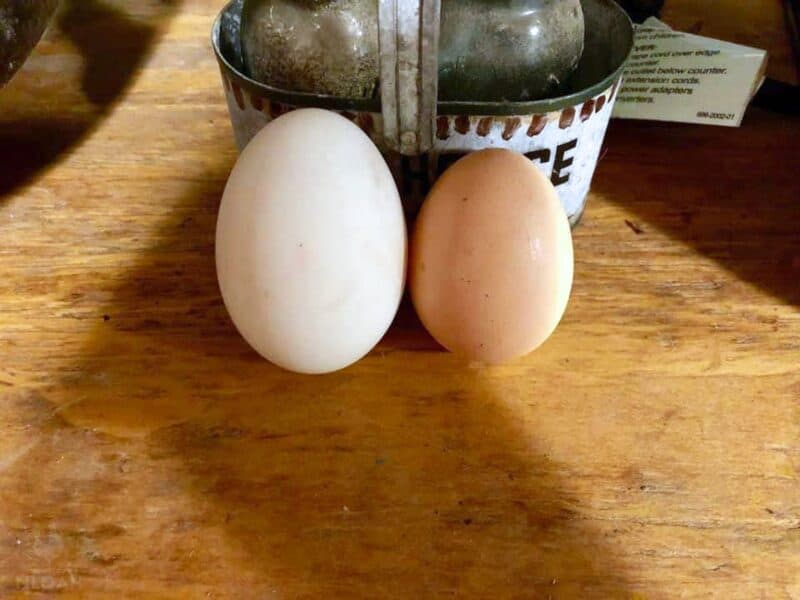
Duck eggs are pretty sizable, noticeably larger than chicken eggs, and they have an average weight of about 3 ounces. Larger breeds, as usual, lay larger eggs, with the biggest weighing up to three and a half ounces. That’s a whole ounce larger than even the largest chicken egg!
What Color is a Duck Egg?
Duck eggs come in a wide variety of colors… White, as expected, is quite common but ducks are also widely known for laying distinctly colored and tinted eggs, including cream or off-white, blue, green, gray, and even a deep, inky black.
If you like colored eggs in your baskets, you might want to consider the Australian Spotted, Dutch Hookbill, Mallard, Ancona, and Aylesbury breeds.
Another fun fact is that breeds that lay dark eggs tend to lighten up over time, both throughout the laying season and over the course of their lives.
Are Duck Eggs Edible?
Absolutely! Edible and delicious, with a very rich taste owing to their higher fat content.
Some folks think they are an acquired taste, but I personally believe they’re very comparable with chicken eggs, particularly from domestic ducks that usually have a better and more consistent diet compared to their wild brethren.
Will Ducks Lay Eggs on the Floor?
Yes, they will. Unfortunately, we aren’t quite sure why ducks do it.
There’s some evidence to suggest that certain breeds, like Pekins, seem more prone to do so, but plenty of anecdotal evidence from duck owners I’ve talked to over the years shows that it seems to be almost random.
My take? Stress, crowded conditions, and anything else that might be upsetting your duck or deterring them from laying in the nesting box will increase the chances of them laying eggs on the floor.
Also, I myself have noticed a marked tendency for the more active and skittish breeds like Khaki Campbells and Runners to simply crank out an egg wherever they happen to be.
Will Ducks Lay Eggs in Nesting Boxes?
Yes, they will, but they aren’t as amenable to nesting boxes as chickens are. Ducks have a reputation for nesting in hidden, out of the way, and unreachable places when nesting conditions in or around their shelter aren’t just right.
Nesting boxes should be about 10 inches high, 2 feet deep, and 2 feet tall, kept on the ground or very close to it for easy access, densely bedded, and you must have enough individual units that each hen can have privacy and space to herself. Most ducks won’t lay in a nesting box that already has an egg in it.
Do it right and your girls will lay inside. But if they aren’t comfortable, they will leave eggs on the floor or in hidden locations.

Get your gift and learn things like:
- how to make this really quick pest spray
- how to prevent egg waste
- two cheap automation devices that will make your life easier
Tom has lived and worked on farms and homesteads from the Carolinas to Kentucky and beyond. He is passionate about helping people prepare for tough times by embracing lifestyles of self-sufficiency.