
When homesteaders start thinking about livestock, they usually think of chickens, cows, or pigs, but increasingly we are seeing goats gain more ground in the United States. They’re much smaller and cheaper than larger livestock and are truly multi-purpose, capable of producing meat, milk, and in some cases valuable fiber.
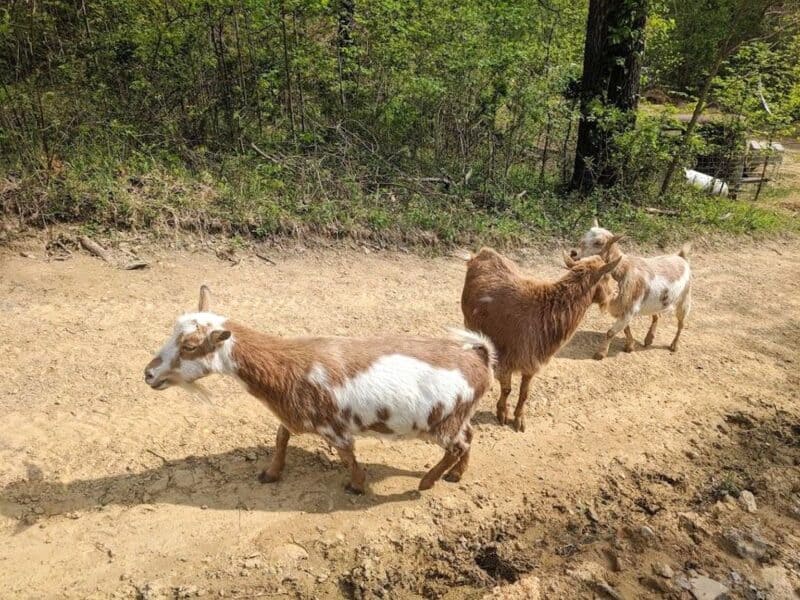
But as always, picking the right breed is going to be crucially important for your success. To help you do that, today I will be taking you through a detailed overview of the Nubian goat, sometimes called the Anglo-Nubian.
This ubiquitous dual-purpose goat is found around the world and is kept for both meat and milk, and they are remarkably easy to handle and care for compared to other breeds. There’s a lot to like, but just as much that you’ll need to know to keep them healthy. Let’s get going!
Where Did Nubian Goats Originate?
The origins of the Nubian goat are a little murky. We do know that they first originated somewhere in the British Isles at some point in the 19th century.
The first examples of these goats were crossbreeds between goats native to the British Isles and also larger but unknown floppy-eared goats imported from around Africa, the Middle East, and Southern Asia.
Undoubtedly, there were various species brought from far corners of the world at this time, but lacking a better term and exact taxonomical origin, the owner’s importers of these goats simply referred to them as Nubians, and the resulting crossbreeds were called Anglo Nubians.
Later on, the breed standard, such as it was, started to codify with the introduction of Indian goat stock, specifically Jamnaparis, near the turn of the 20th century. The breed was officially recognized in the domestic herd book in 1910, and after that, it became self-sustaining with no additional introduction of foreign goats.
Throughout the 20th century, the Nubian gained popularity and was exported widely, including to North and South America. Today, it remains popular and plentiful, though it’s considered endangered in the UK. Efforts are currently underway to replenish herd numbers in England and elsewhere.
Color, Size, Appearance
Nubians have a distinctive and instantly recognizable appearance. Owing to their somewhat muddy genetics, their size can vary greatly and is selected to be slightly smaller or larger depending on the breeder and the country.
The smaller strains will usually weigh anywhere from 130 to 175 lb (60 to 80 kilograms), whereas the larger variety will weigh between 250 and 310 pounds (13to 140 kilos). Notably, Nubian breed conservancies and societies in the UK specify that the larger variety is correct.
In all cases, though, males will be reliably larger and taller than females of the same strain, about 35 inches tall at the withers compared to the 31 inches in height of females.
These goats tend to look thick with a stocky frame. They all have large, floppy ears, blunt Roman noses, and are commonly described as having a convex profile in body and face; their bodies and heads have a rounded, barrel shape.
All Nubians grow quickly, and kids are typically ready for slaughter in just a few months if being raised for meat.
Interestingly, females tend to have a very short and smooth, almost velveteen coat, whereas males will have a somewhat longer and significantly coarser coat.
Colors and patterns, though, are all over the map: they can be solid, speckled, marbled, brindled, or patchy in appearance with the most common colors being red, fawn, chestnut, cream, white, and black, though others are possible.
Are There Miniature Nubian Goats?
Yes, there are, and they are referred to as Dwarf Nubians. They’re bred by pairing a Nigerian dwarf buck with a Nubian nanny.
The resulting goat will keep the appearance of the Nubian, including the rounded profile, long floppy ears, and Roman noses, but will have the dramatically smaller size of the Nigerian dwarf, weighing only 135 pounds (around 60 kilos) at most and being 29 inches (73 centimeters) tall, with many being considerably smaller and lighter.
What are These Goats Usually Kept For?
The Nubian is a classic and greatly loved dual-use goat, kept for both its meat and milk. It is a popular and prolific meat breed, and a very respectable milk producer, though not among the very best in the world like the Alpine.
If you want a true do-it-all goat for your homestead, you won’t go wrong with a Nubian!
How Much Milk Do Nubians Produce?
On average, a little more than half a gallon per day, typically about five pounds from a doe that is young and in her prime.
Notably, Nubian milk is quite rich with significantly more butterfat than most breeds, averaging anywhere from 4 to 5%. Some exceptional does will produce milk that contains even more butterfat than that!
Because of this typical richness, Nubian milk is greatly preferred for its flavor but also for making dairy products, particularly butter.
Temperament
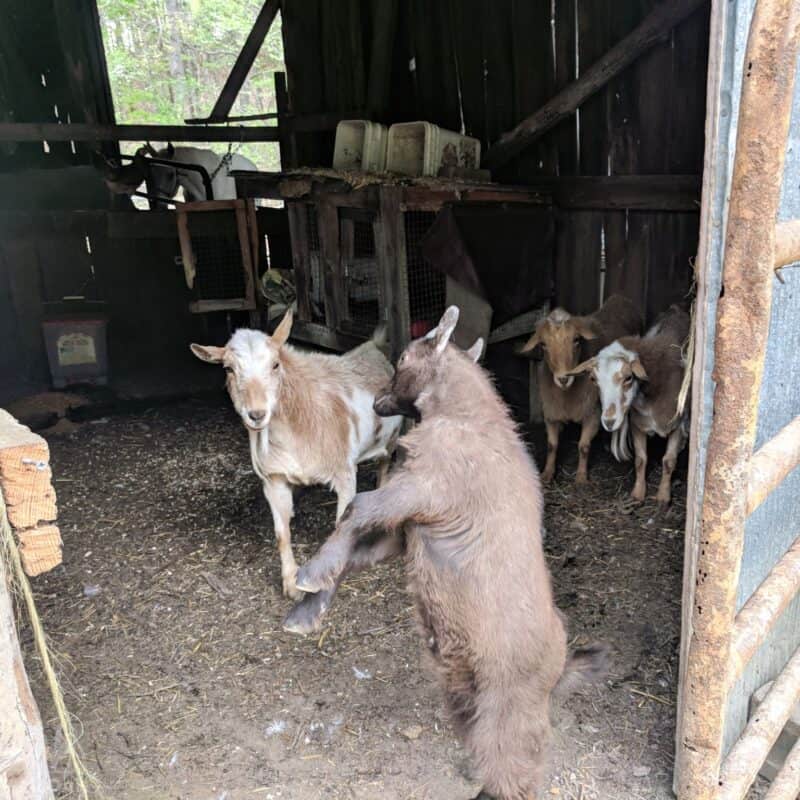
Nubians enjoy an excellent reputation for being easy to handle, friendly, and highly affectionate with people. This makes them a great choice for first-time goat owners or just people who are a little nervous about getting up close and personal with large and potentially dangerous animals.
In fact, there are plenty of goat aficionados out there who think Nubians are a little too affectionate with people! They are somewhat notorious for carrying on, crying, and getting stressed out if they aren’t getting enough attention or love from their human keepers.
In any case, rest assured that your Nubians will always be out in front and happy to see you whenever you’ve been away for any length of time.
If you don’t want your goats following you around the pasture or homestead when you’re trying to get chores done, these goats might not be the best choice!
Do Nubians Have Horns?
Sometimes, as there are horned and polled varieties available. It’s also possible to disbud Nubian kids.
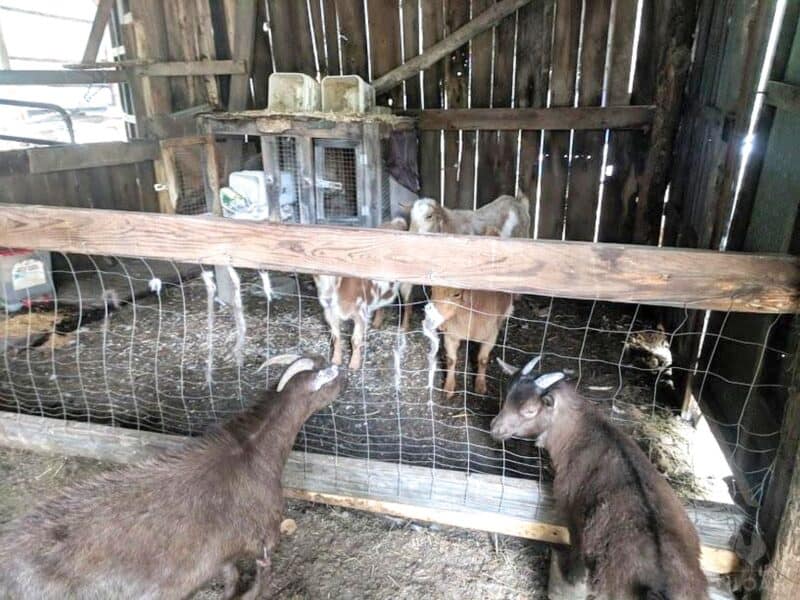
Nubians that have horns will have relatively short and gently sloping ones that point backwards off of their heads. They aren’t as stout, or as dangerous as those of other breeds, but they are notorious for getting tangled up in fencing when they invariably shove their heads through.
This will cause issues for you, and can also make them more vulnerable to predation, so think twice before getting a horned variety of Nubian.
Are They Noisy?
They can be. Part of this comes down to the lineage of the goat and also the individual, but Nubians tend to be quiet when they are happy and content, unlike some other breeds that make noise seemingly around the clock.
However, when Nubians are unhappy, ignored, or aren’t getting enough love from you or anything else they want, they will get loud and stay that way, bleating and crying constantly until they’re happy. This is definitely something to consider if you have neighbors nearby, or a family of your own!
Hearing your goats cry for you when you walk away is adorable for the first couple of days, but it will quickly start to grate on your nerves.
How High Do Nubians Jump?
At least 4 feet high in the case of adults. Nubians look plump, almost chubby, but make no mistake that they are as athletic and agile as any other goat.
Because of their height and long legs, they can jump higher than most other domestic breeds, and so the standard 4-foot fence is inadequate in their case.
I strongly recommend that you build all fences to be at least four and a half feet high and incapable of being bent down or buckled in the case of wire. You can make a great case for building your fences even taller if you plan on keeping Nubians.
Remember also that anything they can use to get a boost will allow them to get over even taller fencing, and I’ve seen Nubians stand on other goats and then jump over a fence before, so you’ve got your work cut out for you when it comes to containment.
Temperature and Space Requirements
Nubian goats are one of the better breeds for hot, dry conditions, though they will always need shade when they want to get out of the sun. Those long, floppy ears act like radiators and help them stay cool even when the mercury is soaring.
Nubians will do just fine indefinitely between 75° F and 80° F (23° C and 2° C) and can tolerate warmer temps as long as they have shade and plenty of water.
When it comes to space, plan on a minimum of 20 square feet for adult goats inside their pen or if kept indoors, and 200 feet per adult if kept outdoors in an enclosure.
If you are letting them free-range, you can keep anywhere from 5 to 8 adult Nubians on a single acre of land depending on how lush and plentiful food is.

When is Nubian Breeding Season?
Exceptions exist, but Nubian females typically go into heat when the days start to get shorter, meaning early fall or the end of summer. They will continue to ovulate and cycle through the middle of winter.
Any Special Health Issues Nubians Suffer From?
Compared to other goat breeds, Nubians are pretty healthy and hardy, but, they are prone to a couple of specific issues.
Nubians are especially sensitive to internal parasites, and barber pole worms, in particular. Regular inspections should be performed so you can identify signs of infestation and then treat accordingly.
If your goats seem lethargic, uninterested in food, or have a dull coat, they might have an infestation you’ll need to treat. Barber pole worms will eventually result in anemia, and that can cause death, so this is something you’ve got to stay on top of.
Do not preemptively administer vermifuges or other worm treatments since that will eventually result in worms that are resistant to said treatments. It’s kind of like taking a course of antibiotics; you’ve got to do it right.
Another major consideration is hoof rot. This is a common goat ailment, one caused by harmful microorganisms that live in damp, muddy, or other wet soils.
Nubians happen to be particularly vulnerable to it since their genetics, predominantly from various breeds and species that are acclimatized to hot, dry weather.
The good news is that hoof rot is easy to prevent and also pretty easy to treat, just watch out for any goats that are limping or favoring one of their hooves.
Lastly, you do make sure your animals always get the right blend of specific minerals in their diet, namely copper and selenium. All goats require these minerals, and copper particularly, but Nubians have shown to be particularly sensitive to deficiencies.
This is a cinch to prevent with the right diet or by leaving out loose minerals for them to lick and eat. Just make sure they are goat-specific because minerals for other livestock species won’t have the right ratios that these goats need to thrive and stay healthy.
Take care of these issues and keep an eye on your Nubians, and you should have an easy time with them.
How Long Do Nubian Goats Live?
Nubians are surprisingly long-lived. 15 years is common, and many owners report that their goats live 18 to 20 years or even longer. As long as you give them plenty of care, your Nubians will be with you for quite a while!
How Much Do Nubians Cost?
Nubians are extremely popular, and at least here in the United States, very plentiful. I’ve seen adult goats go for as little as $125, and others go for $300 or even a lot more if they come from a prestigious line or expert breeder.
I can’t say this, though: you tend to get what you pay for when it comes to Nubians. I wouldn’t hesitate to spend more to get a better quality animal from a reputable breeder. That will translate into better behavior and health down the line, and that means an easier life for you.
Where to Get Your Own
You should easily be able to locate Nubian breeders in your area by running a search on the net for exactly that, or check out the INBA – International Nubian Breeders Association – for a directory of breeders in your area.

Get your gift and learn things like:
- how to make this really quick pest spray
- how to prevent egg waste
- two cheap automation devices that will make your life easier
Tom has lived and worked on farms and homesteads from the Carolinas to Kentucky and beyond. He is passionate about helping people prepare for tough times by embracing lifestyles of self-sufficiency.