
Pheasants are one of those semi-exotic birds to raise on the homestead, that you may have heard are a good idea, but haven’t really met anyone who actually raises them. Diet is probably one of the reason, since they are known to be somewhat fussy eaters. They do need at least 90% of their foods to be plant-based, after all!
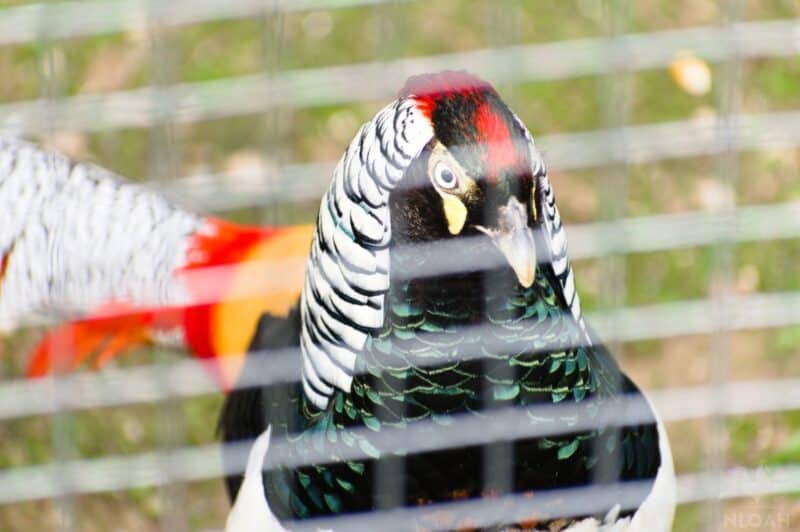
In fact, the worst assumption to make is that their diet is similar to that of the ubiquitous chicken, even though these two birds are closely related. Their diet is actually much closer to that of quail.
Pheasants have their own unique nutritional needs that mimic their natural diet, and compared to common yardbirds, they need a lot more plant matter. Also keep in mind that they need to be fed a high-protein diet!
Pheasants are popular game birds originally hailing from Asia. Males are known for their marvelous, beautiful, and varied coloration, with females being much duller overall. Although they’re rarely kept domestically in the US, at least compared to chickens, their personalities, delicious eggs, and succulent meat make them popular with some folks…
I’m here to help with a big food guide that you can feed your pheasants, and a few that they must never, ever have! We’ll get right into it…
Here’s the shortlist of what the can and can’t eat, then we’ll go into more details by talking about each food one at a time. You can also download this checklist here as a PDF if you want.
| Food Category | Food Item | Status |
|---|---|---|
| Processed Feed | ✅ Pheasant pellets | Nutritionally complete |
| ✅ Gamebird feed | May need supplements | |
| Plants & Veggies | ✅ Grass | Avoid treated grass |
| ✅ Seedlings | Great for foraging | |
| ⚠️ Lettuce | Can cause diarrhea | |
| ⚠️ Spinach | High in oxalates—sparingly | |
| ✅ Cabbage | Good fiber source | |
| ⚠️ Kale | Too much calcium—moderate | |
| ⚠️ Chard | Moderate—vitamin A/K | |
| ⚠️ Broccoli | Steam for easier digestion | |
| ✅ Cauliflower | Less likely to upset stomach | |
| ✅ Asparagus | Nutrient-rich | |
| ⚠️ Peas | Protein-rich—moderate | |
| ✅ Squash | Prepare for easy access | |
| ⚠️ Zucchini | Hydrating—moderate | |
| ⚠️ Carrots | Steam roots—high sugar | |
| Fruits | ✅ Apples (no seeds) | Remove seeds |
| ✅ Pears (no seeds) | Remove seeds | |
| ⚠️ Berries | High sugar—moderate | |
| ⚠️ Grapes | Very sugary—sparingly | |
| Grains/Nuts/Seeds | ⚠️ Corn | Warming—moderate in winter |
| ⚠️ Wheat | Mostly carbs—moderate | |
| ✅ Barley | Balanced carbs/fiber | |
| ⚠️ Oats | High carbs—moderate | |
| ✅ Millet | Good for variety | |
| ⚠️ Sunflower seeds | High fat—moderate | |
| ⚠️ Safflower seeds | High fat—moderate | |
| ⚠️ Peanuts (unsalted) | High protein/fat—moderate | |
| ⚠️ Almonds (crushed) | Choking risk—moderate | |
| Insects/Protein | ✅ Mealworms | Great protein source |
| ✅ Earthworms | Natural diet staple | |
| ✅ Snails | Shells are digestible | |
| ✅ Crickets | High protein | |
| ✅ Grasshoppers | Rich in protein/fat | |
| Never Feed These | ❌ Alcohol | Poisonous |
| ❌ Avocado | Persin toxin | |
| ❌ Chocolate | Theobromine—deadly | |
| ❌ Onions | Causes anemia | |
| ❌ Garlic | Anemia risk | |
| ❌ Green potato/tomato | Solanine poison | |
| ❌ Rhubarb leaves | Oxalates—kidney damage | |
| ❌ Stone fruit pits | Toxic compounds | |
| ❌ Dairy | Digestive issues | |
| ❌ Junk food | Salt/sugar/fat—dangerous | |
| ❌ Chicken feed | Avoid, not enough protein, also lacks the right minerals |
Whatever foods you choose, keep in mind these birds have their own unique needs in terms of micronutrients, vitamins such as A, D, and E, and minerals such as manganese, calcium, B2, B9, B12, etc. You also want to make sure you don’t overdo it with any of them.
Processed Feed
Pheasant Pellets
Despite their relative rarity as domestic poultry, purpose-formulated pheasant feeds, usually called pheasant pellets, exist.
Pheasants tend to love them, and more importantly for our purposes, they are nutritionally complete, giving birds, young and old, everything they need in order to thrive and stay healthy.
Still, it’s usually considerably more expensive compared to feed types for more common birds like chickens, ducks, and turkeys. Nonetheless, the convenience of it and the certainty of providing a complete diet makes it a value proposition for most pheasant keepers.
Gamebird Feed
If you can’t find dedicated pheasant feed in your area or find it for the right price online, you can give them gamebird feed.
A sort of catch-all category of feed that’s good for ducks, geese, turkeys, and other species, it might not have everything pheasants need, but it will cover most of their nutritional bases.
Depending on the content, you’ll need to supplement with additional whole foods, forage, vitamins, and minerals. We’ll talk more about that later on.
Plants and Veggies
Pheasants enjoy a huge variety of plant material in their diet, and compared to chickens they eat a lot more of it. Roughly 85 to 90% of a pheasant’s calorie nutritional intake should be plant-based during adulthood.
Grass
Most birds will nibble on grass, and pheasants are no exception. Providing trace amounts of vitamins and a good amount of fiber, this is a regular item that they’ll eat when allowed to forage but it’s not a mainstay of their diet.
In any case, you never have to worry about your pheasants nibbling on grass of any kind as long as it hasn’t been sprayed with fertilizer, herbicide, or pesticide. That stuff is devastating to their health, so keep them away from any grass that’s been treated!
Seedlings
Another constant item in the diet of wild pheasants, and one that’ll be a constant in the diet of your domestic birds if you don’t watch them, are seedlings. Pheasants eat all kinds of young tender sprouts, shoots, and germinating seeds.
They’re nutritious, easy to digest, and easy to find, so if by chance you let your birds get into your garden, near your planters or your pots, those ones you work so hard to start before spring are going to be history.
By the same token, letting your flock forage on early spring growth is a great way to give them some variety.
Lettuce
One of the most common menu items for pheasants is leafy greens. All kinds of leafy greens!
Naturally, lettuce is a big part of that category, and all types from bibb to romaine, iceberg to butterhead, are okay for them.
Lettuce provides lots of vitamins, a good amount of fiber, and a good amount of water to help keep pheasants hydrated. However, too much has a tendency to give them diarrhea and it’s not nutritionally complete, so don’t overdo it…
Spinach
Spinach, like lettuce, is tasty to pheasants and they love the stuff. It’s also far more nutritious, being rich in vitamins A, C, K, and iron.
However, never let them free-eat from the stuff or feed them too much as part of their usual diet: it has high amounts of oxalate which can bind with calcium in their body and cause all sorts of health problems. Give it to them sparingly, and there won’t be any trouble…
Cabbage
No surprise here, pheasants like cabbage. It’s a great source of fiber, folate, and vitamin K. It’s pretty easy for them to digest and nutritious, but still not a mainstay item.
Mix it up with other greens in their diet or switch out types on a weekly basis to ensure they are getting well-rounded nutrition and don’t overdo it.
Kale
Kale has been seen as something of a superfood among health food fanatics for over a decade now, and although it’s not quite as good for you as they’ve made it out to be, it’s still a highly nutritious option for your birds.
Like spinach, it’s packed with vitamin A and K and a good amount of calcium.
But also like spinach, it should be fed to pheasants in moderation. It’s possible that they can get too much calcium over time from kale!
Chard
Another wonderfully nutritious leafy green vegetable, all varieties of chard are safe and good in limited amounts for your flock. It’s another good source of vitamins A and K, which pheasants need plenty of, and also magnesium…
You know the drill by now: don’t overdo it, and feed them a variety of greens to minimize possible complications from overconsumption.
Broccoli
Broccoli might seem like a strange food for birds, but you won’t think so after you see them go after it.
Pheasants love to nibble on tender florets and also the leaves, though the hard, somewhat rubbery stalks are typically too tough for them to deal with. Broccoli supplies a great amount of fiber, folate, and vitamin K.
Once again, this is a veggie that should be fed in strict moderation because it has a tendency to cause digestive upset if they get too much.
If your birds seem reluctant to try it, consider lightly steaming or boiling it prior to serving, but do let it cool first.
Cauliflower
Cauliflower is a lot like broccoli for our pheasants. It has many of the same nutrients but is similarly limited in their diet: they will nibble on ripe, tender heads and also the leaves, but the hard stalks will probably be too much for them.
Compared to broccoli, though, it’s less likely to cause digestive upset making it a reliable option for a supplement or occasional treat to break them out of menu fatigue.
Asparagus
Asparagus is a super nutritious veggie, and one that pheasants tend to love though they do so particularly: the tender heads are a favorite, but they will ignore the woody stalks.
Rich in vitamins A, C, E, K, and folate, this is a wonderful dietary supplement for your flock.
Peas
Peas can be a great inclusion in a varied, natural diet for pheasants…
Protein-rich and a great source of vitamin K, vitamin A, and fiber, feed it to them on a limited basis a couple of times a week, but no more. Again, as healthy as it is, it isn’t something they should try to subsist on.
Squash
Winter and summer squashes can be a good seasonal treat or inclusion. The nutritional content varies depending on the type, naturally, but they’re dependably a good source of vitamins, certain minerals, and dietary fiber.
But some types have a hard outer skin and should be prepared for them: either slice or break them open so your pheasants can pick at the tender flesh, or consider chunking it, then lightly cooking it so it is softer. Just don’t overcook it: the longer squash is cooked, the more nutrients it will lose!
Zucchini
Zucchinis are a crisp, hydrating, and tasty snack for your birds, and the perfect thing to feed them during the summer when heat stress might be keeping them down.
Two things to keep in mind with zucchini: for starters, don’t let them overindulge because it’s so watery it can cause diarrhea and digestive issues.
Two, I recommend you only give them zucchinis you grow yourself or get from the grocery store. Wild ones, in rare circumstances, might be ferociously toxic and could make a pheasant deathly ill or even kill it.
Carrots
Pheasants can eat carrots, but they might need a little help from you first…
They’ll eat the greens happily, but if you want them to eat the root, you might need to steam it or gently boil it as mentioned previously to soften it up a bit. Again, don’t overdo it because you don’t want it to be mushy.
Despite being rich in vitamins, carrots are also high in sugar so your birds shouldn’t get them too often. A couple of small servings a week as part of a varied diet is fine.
Fruit
Pheasants are like most birds in that they love all kinds of fruit. But despite how nutritious and wholesome fruit is, all varieties are uniformly high in sugar and that can cause issues like sour crop, diarrhea, weight gain, and more.
Apples
Apples are wholesome and reasonably healthy, and all types are a good source of vitamin A and fiber.
Prior to serving to your flock, make sure you remove the seeds: one or two won’t hurt them, but apple seeds contain a precursor compound that will turn into hydrogen cyanide gas if digested, and too many might poison your birds.
Pears
Pears can be a good treat in the diet of your pheasants, something they can have once a week in small quantities. Tasty, and softer than apples, they are also typically higher in sugar so you’ve got to watch out for that.
As with apples, remove the seeds from pears for the same reason. No need to freak out if one of your birds eats one or two, but don’t make a habit of it.
Berries (strawberries, raspberries, blueberries, cherries, etc.)
Berries are a natural food for these ground-dwelling and secretive birds and they will eat strawberries, raspberries, blackberries, blueberries, and more.
Excellent sources of antioxidants, vitamin C, vitamin K, and other beneficial nutrients, they’re very easy for them to eat and digest…
Just remember, go easy on the quantity if you don’t want to make your flock sick! I like to give my pheasants berries as a treat once a week or a little longer, and I also use them as a training aid because they like them so much…
Grapes
Most pheasants won’t encounter grapes naturally, but they make another great snack or dietary supplement for them.
They can have black, red, and green varieties with no concerns, and the seeds are safe for them to eat. However, grapes have two things going against them: they are very, very sugary and also very moist.
Overconsumption will cause diarrhea and often crop problems. Consider slicing grapes into halves prior to serving to prevent possible choking issues.
Grains, Nuts, and Seeds
All of these make up common parts of a pheasant’s usual diet and supply much-needed calories. However, too much will cause nutritional imbalances or other health issues.
Corn
Seems like most animals love corn, and pheasants are no exception. Feed them cracked or milled corn that is smaller so it’s easier for them to digest.
This can be an important warming feed for them in the wintertime but it has a tendency to cause weight gain.
Wheat
Various kinds of wheat are good and wholesome for our flocks, and will also provide a little bit of protein. Feed sparingly, as it is pretty much all carbs.
Barley
Another cereal variety that pheasants will eat in the wild, and one that has a well-rounded profile of carbs, fiber, and protein. Use it to change up their menu periodically.
Oats
Oats are tender, tasty, and easily digestible, and pheasants really love them in my experience.
It’s a great source of energy, but as expected can easily throw them out of whack because it is predominantly carbs. Oats are another great candidate for feeding them as a treat or using as a training tool.
Millet
Lots of different birds love millet and if you ever care to read the ingredients list on commercially available bird seed mixtures, you’ll see millet on there regularly. Your pheasants can eat it with no problem, but they can’t subsist on it alone.
Sunflower Seeds
You know sunflower seeds as a tasty, salty snack but what you might not know is that they are phenomenally nutritious, packed with good vitamins, minerals, fats, and protein.
They are uniformly wonderful for your birds, but overindulgence will cause weight gain and other problems. Serve them occasionally in small quantities, or mix a few in with other foods.
Safflower Seeds
Safflower seeds are very much like sunflower seeds. Really healthy and a great source of energy, but it’s easy to overdo it. Serve small quantities occasionally and there won’t be any problems for them or for you.
Peanuts (unsalted and shelled only!)
A surprisingly good food for pheasants with a few restrictions: don’t ever give your pheasants salted or other seasoned peanuts, and make sure they are shelled.
This will prevent choking and other issues. Peanuts are a tremendous source of protein and healthy fats, but only an occasional treat for the flock, not a primary item.
Almonds (crushed into tidbits)
Almonds should be treated like peanuts in the diet of pheasants; fed occasionally as a treat or as a limited dietary supplement.
Also, almonds have a bad tendency to get stuck in their throats or crops, so take the time to serve them crushed. You can crush them yourself into small pieces.
Insects Protein
Like chickens, ducks, turkeys, and other birds, pheasants need animal protein, and it’s a routine part of their diet in the wild, though they eat way more plant matter compared to animal matter. But their protein sources mostly come from insects, as you are about to see…
Note that pheasant chicks and adolescents need a lot more protein in their diet compared to adults, upwards of 28% total intake. Provide accordingly and adjust their diet once they mature.
Mealworms
Mealworms are a mainstay for pheasants and many other birds besides, and they’re a hugely important source of easily digestible protein and fat. Watch the quantities so your birds don’t gain weight.
Earthworms
The early pheasant gets the worm? Doesn’t quite have the same ring to it. Pheasants aren’t expert worm hunters like some other species, but they’ll gladly eat them when they find them.
Snails
Snails are hopelessly slow and have no chance of evading these sharp-eyed birds. As long as they are small enough, expect your pheasants to eat them shell and all. And that’s okay! The shell will be broken down in their gizzard.
Slugs
Slugs are treated just like snails, but they are even easier for pheasants to eat because they lack the shell. If you’ve been collecting slugs out of your garden, you can serve them to your flock! Gross to us, but they won’t mind at all.
Crickets
Crickets are a high-protein, high-fat supplement. Your birds are surprisingly adept at catching them when they’re in the yard, or you can feed them freshly killed crickets as a meal. As with mealworms, watch the serving size to prevent weight gain and nutritional imbalance.
Grasshoppers
Grasshoppers are nutritionally just jumbo crickets as far as our flock is concerned. Rich in protein, rich in fat, and a great source of minerals. Pheasants will usually need to peck them apart a bit prior to eating.
Beetles
There are countless kinds of beetles out there in the world that make good eating for all kinds of birds, and your pheasants are certainly among their number.
As a rule of thumb, any beetle that is in your yard is fair game for your flock; they tend to be pretty good about avoiding dangerous varieties.
Ants
Ants aren’t something that you should waste time trying to procure for serving to your flock, but you don’t have to worry whatsoever about your pheasants eating them whenever they find them.
Caterpillars
Caterpillars are a favorite food for many bird species, and once again, they’re a juicy and tempting treat for pheasants.
But here’s a situation where you’ll need to wait for nature to take its course unless you know what you are doing: many caterpillars are toxic or dangerous, and pheasants tend to be very good about avoiding the bad ones.
If you aren’t ordering known safe varieties for feeding to your flock, just let your birds pick them off when they encounter them if you let them free range.
Small Reptiles and Amphibians
It doesn’t happen all the time, but pheasants can and will eat small reptiles and amphibians. Newts, skinks, lizards, frogs, and more are all possible prey items.
Mice (occasionally)
Likewise, though not common, pheasants will use their excellent senses and quick reflexes to catch, kill, and eat mice from time to time.
This isn’t something I advise you to feed directly to your birds, but if you catch them tearing a poor mouse apart out in the run or elsewhere in your yard, you don’t need to worry over it.
Supplements
Compared to chickens especially, it’s been my experience that pheasants require supplementation above and beyond what they will get in their diet, no matter how careful you are in making it complete.
You can administer the following individually on an as-needed basis or as a complete dietary supplement in solid or liquid form:
- Vitamins – B2, B12, A, D, E, K
- Calcium
- Manganese
- Zinc
- Copper
- Iodine
Things Your Pheasants Should Never Eat
So our pheasants can eat all kinds of things, but there are some foods that they should never have, including a few that might come as a surprise… Never serve them, or allow them to eat, any of the following:
Alcohol
I would hope this would be apparent to everyone with a brain. Alcohol is only ever purely poisonous to pheasants.
Don’t give them beer, wine, hard liquor, or anything else. That’s straight-up animal abuse, my friends, and it isn’t funny.
Avocado
Avocado is a contentious one… The pit, skin, and all other parts of the plant contain persin, a dangerous toxic.
The edible flesh is supposed to contain none or only trace amounts, but debate still rages about whether or not the flesh is safe for birds. I say it’s not worth the risk, avoid it…
Chocolate
As much as you might want to share your favorite sweets with your feathered friends, resist that temptation…
Chocolate contains theobromine, a compound that can cause respiratory or cardiac collapse in most animals. The darker the chocolate the more it contains and the deadlier it is for birds. Don’t do it, not even once!
Onions
Onions have compounds that can, if pheasants eat too many, result in a type of anemia which can have devastating health consequences.
Once again, argument rages even among animal health professionals as to how much is too much or safe. Considering there are so many other things that are safe for our birds, I don’t think this is worth the risk.
Garlic
Garlic belongs to the allium genus just like onions, and contains the same compounds that could potentially cause anemia.
Now, garlic has been used as an all-natural vermifuge, or parasitic worm remover, for generations and it still has some utility when used for that but you’ve got to know what you’re doing. Don’t make it a regular part of their diet.
Potatoes, Tomatoes, Eggplants, and Peppers (green parts)
Unripe potatoes, tomatoes, eggplants, and peppers are not a good idea for pheasants, as are any green patches of skin or any green part of the plant, including leaves and vines.
All of them contain solanine, a glycoalkaloid poison. Don’t trust your birds to avoid these instinctively!
Rhubarb leaves
Rhubarb leaves are dangerously high in oxalates which can bind to calcium in the bloodstream and cause all sorts of chaos, including kidney problems and difficulties with the excretion of waste.
The stems don’t contain as much, but I know plenty of owners that just forego feeding rhubarb entirely for safety.
Stone Fruit Pits
Stone fruits are fine for pheasants in limited quantities as a treat or occasional item in their diet, but you must always remove and discard the pits prior to feeding.
Not only are most of them rock hard and indigestible (meaning they can cause digestive tract impaction) but they also contain compounds which can turn dreadfully toxic when digested, just like apple and pear seeds.
Dairy
Pheasants aren’t mammals, and so they have no need for dairy products and find them really hard to digest. Milk, cheese, butter, and so forth are just right out.
Every now and then, a plain yogurt mixed in with their other food can help to restore balance in their gut, but this should not be a primary part of their diet and must be done with care to avoid making them sick.
Chicken Feed
As alluded to in the intro, pheasants won’t do well if they eat whatever it is you feed your chickens – and this includes your typical chicken feed. Avoid feeding them chicken feed and opt for a higher protein feed. In fact, dog food is probably closer to their needs, with quail feed being even better.
Junk and People Food
It never fails that people want to share their food with their animal friends, and this will even happen with pheasants. I’ve seen people feed pheasants Cheetos, french fries, cake, and a whole lot of other nonsense but they have absolutely no business eating.
These foods are dietary abominations for birds, and so crammed with oil, salt, sugar, and indigestible stuff that it is bound to make them dreadfully sick. Problems like high blood pressure, sodium poisoning, fatty liver, diarrhea, and more are all likely outcomes.
If you want to give your birds a treat, give them a few choice pieces of fruit or something else that they’ll enjoy and can digest easily.

Get your gift and learn things like:
- how to make this really quick pest spray
- how to prevent egg waste
- two cheap automation devices that will make your life easier
Tom has lived and worked on farms and homesteads from the Carolinas to Kentucky and beyond. He is passionate about helping people prepare for tough times by embracing lifestyles of self-sufficiency.