
You know us. We’re pretty much up for trying anything, at least once. So when a dear friend of ours unexpectedly handed us a box containing a breeding pair of pheasants, we were stoked. We’d been curious about raising other types of birds for meat, and pheasants were on our list of considerations.

Our friend warned us that pheasants are very flighty, and that they spook easily. When scared they’ll jump around in their cage pretty violently – particularly if they are crowded or if the enclosure is small.
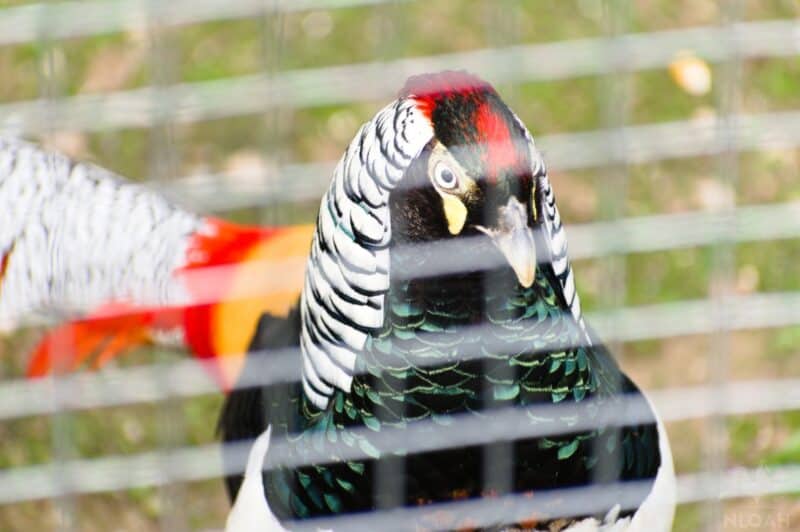
When we got them home and opened the box I was immediately struck by how beautiful they were. The male has especially beautiful plumage. Isn’t he gorgeous?
We made a large, unused rabbit hutch into an impromptu pheasant coop. One end is enclosed for protection from wind and weather, with a large open run area for plenty of roaming space. Eventually, if we decide to keep pheasants, it would be nice to build an aviary for them.
If you’ve never heard the sounds a pheasant makes, you should look it up. The male makes the most interesting calls. He makes this purring type noise when I fill their feeder or give them fruit, which I love to hear. I’m not sure if it’s a thank you or if he’s warning his lady of an intruder, but it’s lovely either way.
The hen did lay a little blue egg the first week we had them, but then winter set in and she hasn’t laid any more. She should pick up again soon, when the weather warms.
Challenges of Raising Pheasants
- Pheasants are flighty. If they get loose you may never catch them. (Maybe this depends on how you raise them?? You could clip their wings.)
- They don’t offer a lot of meat compared to chickens. (I’ve never eaten pheasant though… is it worth the trouble?)
- They don’t lay regularly like chickens do.
- They’re so beautiful! I’m finding it hard to justify eating them.
- They can be a bit wild! Pheasants aren’t as tame as chickens.
That being said, it’s not all negatives. There are some really good reasons as to why you should raise pheasants, too. Here are some of the benefits.
Benefits of Raising Pheasants
People raise pheasants for all kinds of reasons. On our homestead, we planned to raise them for meat – obviously, you can see how that turned out for me! But many people also raise pheasants with the plan of releasing them into the wild to increase local pheasant populations. While some don’t believe this is effective, state governments in many areas have encouraged and even offered grants to those to do it.
If you decide to raise pheasants for this purpose, they should typically be released at around 8 to 14 weeks of age, or you have to wait until they are fully grown. Otherwise, people commonly raise them for meat.
These birds add a ton of charm and character to your homestead, and interestingly enough, you might find that if you raise domestic pheasants you might see more wild ones hanging around your property out of sheer curiosity.
Pheasants produce meat that is lean and white, not unlike chicken but with a gamier flavor. These birds are easy to butcher, and most people just use the breast as the most important meat cut.
You can also raise pheasants for eggs. These birds normally start laying in March or April and do so until the end of the summer. During peak production times, they can even lay an egg a day, but keep in mind they only lay for about 3 to 4 months a year (typically from April to August).
You can incubate these eggs in an incubator (they take around 25 days to do so) or you can eat them, of course.
Regulations and History of Pheasant Rearing
People have raised ring-necked pheasants for centuries. Interestingly, pheasants are not native to North America- they were introduced here from Asia, apparently in 1881. They have quickly established themselves on the continent and are now often raised for hunting and backyard meat production.
That being said, there are some stringent regulations in place that you will want to keep track of and be aware of before you decide to take the leap into rearing these birds. Check with your state’s Department of Natural Resources and Department of Agriculture to make sure you are in compliance.
Should I Hatch or Buy Pheasants?
There are pros and cons associated with both hatching your own pheasant eggs and buying day-old chicks. If you’re already incubating chicken eggs or duck eggs (or something similar), you probably are familiar with how finicky incubation can be. You will need to turn the eggs several times a day and keep track of both humidity and temperature. Luckily, there are countless incubators you can buy that do this tedious work for you.
Care for them carefully, and store them at temperatures around 50 ºF (10 ºC) until you are ready to incubate – they usually stay viable for 8 days if you handle them correctly, though other sources say at least 18 days with reduced hatchability. Ideally you want to incubate them by day 5…
You incubate pheasant eggs in the same way you would chickens eggs. The only major difference is that the incubation period is different. Also note that you can’t really candle pheasant eggs because their shells are very dark.
If you want to buy pheasant chicks, this can be a bit easier. There are countless people who sell ring-necked pheasant chicks but again, look for a reputable source to make sure that the birds have not been exposed to disease.
Day-old chicks are very sensitive to fluctuations in temperature and will need special conditions once you get them home -make sure you are set up to accommodate your pheasant chicks as soon as they arrive.
Brooding Pheasants
You can put your pheasant chicks directly outside in the housing as soon as you get them but it’s recommended that, as with other types of poultry, you keep them in a brooder for the first few weeks of life. They will be very vulnerable to predators and the cold at this age. Therefore, it’s recommended that you always start with a brooder.
As soon as your chicks arrive, you need to make sure the heat source in your brooder is functioning (I’ll talk more about the heat source in a minute).
Make sure the brooder is filled with clean water and food (you should be using a game bird starter or a turkey starter which is similar) and dip each chick’s beak in the food and water.
You may want to put a few small stones or marbles in the drinking water dish to prevent the small birds from drowning.
In the brooder as well as in your adult pheasant housing, you should use some form of a coarse, dry litter – a good option is chopped straw. You can also use sawdust or wood shavings.
Some other good options include expanded vermiculite and chick starter paper. Chick starter paper is recommended over any kind of litter that you use, at least for the first five days, to prevent pheasant chicks from eating the litter.
Brooding is an important time of growth for pheasant chicks. In the wild, your birds would have the protection of their mother to keep them warm. This is not the case in the brooder.
Keep an eye on your pheasant chicks while they are in the brooder to make sure they are staying warm enough – if they are piling in the center, they are too cold, so you should lower the heat lamp closer to them. If they are scattered around the perimeter, they’re too hot.
If you use a brooder that was formerly used to brood chickens or other kinds of poultry – which is perfectly acceptable, by the way – just make sure you disinfect it. You can also purchase a separate self-contained brooder that will hold a large number of chicks.
Your brooder should be large enough to allow the chicks to get away from each other and to choose their own personal area of comfort under the heat. You can use a heat plate or a heat lamp, but a heat lamp should provide consistent warmth.
Most people who brood pheasants use a 250-watt infrared heat lamp. A commercial heat lamp Is best as it will have certain safety features and more reflection of the heat. The heat lamp should be hung at a safe distance from the floor and lowered every day.
Ideally, your brooder should provide no less than one square foot per chick until they are six weeks old. Section it off with a piece of metal flashing. This will get rid of corners in your brooder, as corners are good spots for your chicks to pile up – you don’t want this, because it can cause your birds to trample each other. You can remove the chick guard when the birds are about ten days old.
You can buy or build your own brooder. Here is a video with additional tips on how to build your own brooder:
Shelter for Adult Pheasants: The Flight Pen
When you first get your pheasants, you need to make sure they are provided with a building that is draft-free and offers at least 5 sqft to each bird inside the cage and 25 sqft of outdoor space in the run. It can have a dirt, concrete, or wooden floor – this won’t matter much, since you’ll be lining it with litter.
You should make sure that the housing is thoroughly cleaned before your pheasants arrive. This is particularly true if you had other poultry, like chickens or turkeys, living there before, since there are some diseases that can be spread among different poultry types.
A pheasant that’s up to two weeks old needs less than .25 square feet in order to grow. As your birds age, they will need more and more space – requiring up to 15 sqft by the time they’re twelve weeks old.
Young birds also need a heat source. You can use heat lamps but, unlike chickens, you do not need to use a red bulb. When your pheasants are old enough to be outside – usually around 6 to 8 weeks of age – you should let them stay out for at least a few hours each day.
How Much Room Do You Need to Raise Pheasants?
You should provide them with around 25 square feet of outdoor space PER BIRD. The increased activity and cooler outside air will encourage your birds to put on feathers and weight more properly.
During the day, your pheasants will love hanging out outside. They may peck around at greens and bugs or dust themselves. Make sure the run in which you are keeping your pheasants is protected from predators – cats and hawks are particular ones to watch out for. You should also make sure your run is covered because pheasants are much better at flying than other types of homestead poultry!
Each night, you should make sure your pheasants are put back inside the building. They are very vulnerable, as I mentioned, to cold, wet weather, and they also need protection against predators. Since your pheasants won’t have a full body of feathers until they are around eight weeks old, it’s imperative that you are vigilant about keeping them warm and enclosed at night until this point.
Many people raise their pheasants in flight pens. These are essential to help your pheasants learn how to fly and to prevent overcrowding.
Overcrowding can lead to cannibalism and other health problems. To provide your pheasants with enough space, the flight pen should have around of 25 square feet per bird (different extension sources differ here but 25 should suffice).
The flight pen should be built over natural grasses and vegetation. You can plant some cover crops here if it is bare – you will want at least four or five inches of growth before you put the birds out. Do not house pheasants where chickens once were, as they can spread diseases that lie dormant in the soil.
Your flight pen should be built in the shade and offer protection from predators. Make sure you fix holes in the netting as they occur!
Should I Build or Make My Pheasant Pen?
You can buy a flight pen for your pheasants, but these tend to be quite expensive and can be difficult to erect once you get them home. It’s also quite easy to build your own pheasant flight pen to save some money and make it more adaptable to your set up.
A flight pen should consist of about 150 feet of one-inch mesh and six-foot chicken wire with an additional 200 feet of two-inch mesh and six-foot chicken wire for the top (poultry netting can also be used). You will also need 250 feet of No.9 wire (if you don’t use netting). You’ll need ten wooden support posts as well as additional lumber and hinges to build the door.
When you build your pen, secure your wire with hog rings and make sure it is buried at least six inches below the surface of the soil – this should keep digging predators out. The door should have a latch that can be secured against opportunistic critters like raccoons, and the No.9 wire will be used to support the top of the mesh wire if netting is not used.
Even though rodents won’t go after adult pheasants, they can still go after eggs or inadvertently spread pathogens. Make sure that the pen is rodent proof. This will not only protect smaller birds but will also ensure that any eggs don’t get snatched by rats and other vermin.
You can always modify these plans but they should provide you enough space for a 44 foot by 22 foot shelter. Height should always be around 5’6” to allow for flight within the pen.
If you’re stuck, here are some videos to help you get started. The first will show you how to build the frame for your pheasant pen and the second will show you how to attach the netting.
Feeding Pheasants
Pheasants can be fed out of plastic gallon founts that you would use for chickens or other poultry. You should feed your chicks on a flat plate when they are within the first few days of life, and then you can use actual feeders and waterers. You will usually need about two or three one-gallon waterers and feeders for every 50 birds.
In the wild, young pheasant chicks eat insects during the first three weeks of life. They require their mother to lead them to food. When you’re brooding pheasants, you’ll take care of this for them.
You will need to provide chick feed that is high in protein – at least 28 percent for the first six weeks. You can often use a game bird starter or turkey starter which will also work if you can’t find one. Do not feed whole grain – corn is fine in moderation.
Like chickens and other types of poultry, pheasants will also nibble on foods that they forage for in their natural habitat. For example, they love snacking on things like weeds and even alfalfa hay.
It’s important to note that pheasant chicks will have a hard time finding their food, so make sure it is easily accessible. Young pheasants don’t eat a lot, but as they age, they will progress to eating about half a pound to 1 lb per week. Don’t use a chick starter for game birds – use a game bird starter or a commercial turkey starter when your pheasant chicks or young.
This must contain protein of no less than 28% protein – try to be precise with this one. It should be ground or granule form and it should be extremely fresh.
You do not need to medicate your young pheasants, and you don’t need to do much in the way of healthcare once they get older, either. You should provide a dry, clean environment and overcrowding to prevent most problems. If you’re worried about deficiencies, you can always add a vitamin and electrolyte mixture to the water.
Like other types of poultry, pheasants require grit. Make sure that this is provided free-choice, no worries there.
Managing Pheasant Behaviors
As with other types of poultry, pheasants have certain behavioral characteristics that you will want to watch out for. Most of these behaviors are harmless, but sometimes, your pheasants may act out in a way that warrants your attention.
For example, feather pulling is just as common in this species as it is in chickens. It is usually not a huge issue, but if it progresses, it can cause cannibalistic conditions. Feather pulling is usually encouraged by many factors: overcrowded conditions or poorly ventilated brooder areas, excessive light or heat, nutritional imbalances, etc.
If cannibalism occurs, either as the result of progressed feather pulling or any other reason, you need to stop it immediately. Pheasants are very vulnerable to missing feathers, and they are apt to die if they get wet by a cold rain.
If you find that cannibalism or feather pulling are problems with your pheasants, consider darkening the living space. This will reduce the likelihood that they will be able to find each other to bully one another.You can also try hanging heads of lettuce from the ceiling, which will provide a valuable source of entertainment. Giving your pheasants more room is always a good way to combat aggressive behaviors, too.
Pheasant Breeding Season Tips
If you’re a pheasant owner, you may be wondering how to successfully breed your birds. Here are a few tips to help you get started.
First, it’s important to understand the pheasant breeding season. If you want to be as natural as possible with breeding your birds, know that this typically starts in late March or April and lasts through the beginning of August.
During this time, pheasants will start to build their nests and lay their eggs. Once the eggs have been laid, incubation will begin and typically takes about 24 days.
Once the chicks have hatched, they will need protection from predators and the elements. To do this, it’s important to provide them with a safe enclosure that is well-ventilated and has plenty of food and water (as described above). Also have a large run or aviary with plenty of room for them to exercise and explore.
Health Problems with Adult Pheasants
In most cases, if you have taken appropriate steps to prevent disease from affecting your flock, you won’t have any problems. Make sure you purchase chicks or eggs from reputable breeders to reduce the risk of disease, and keep an eye on new birds for any signs of disease before you introduce them to the rest of the flock.
There are certain diseases that can kill game birds that are easily spread by wild birds. Protecting your pheasants within a flight pen can help reduce this likelihood.
Coccidiosis is one of the most common health issues faced by pheasants. The disease is caused by a protozoan called Eimeria, and it can lead to deadly consequences if left untreated.
Symptoms of coccidiosis include lethargy, diarrhea, and dehydration. Luckily, the disease can be effectively prevented with litter management and coccidiostats (which is a type of medication). You really need to stay up-to-date on the latest prevention methods, as well as other vaccinations and meds your birds might need.
So that’s basically everything you need to know in order to start raising pheasants for meat. As for us… honestly, we’re not sure what to do with ours. As a matter of fact, yesterday I had a moment of inspiration and decided that I’d free the pair to let them live their lives out in the wild.
Be free, little birds!
I opened the cage, warned them that they’d have to be street savvy to survive, and stepped back to watch them flee. Except they didn’t flee. They stayed put, looking quite content
I tried to shoo them out of the cage but they had no interest in leaving. I realized they probably wouldn’t make it through a night in the woods, so after several minutes of persuading I closed them back up and forgot my idea of letting them go. We have a friend who would be interested in giving them a home. We might let him take the pair.
What do you guys think? Do you have any experience raising pheasants? Are they worth keeping on a homestead?
Pheasants FAQ
In general, it takes about 16 to 18 weeks for pheasants to reach maturity, but depending on the breed, some pheasants may take up to five months to reach full size. With proper care, pheasants can live for anywhere between 11 and 18 years in captivity.
Pheasants are easy to raise if you are prepared and are willing to set the up with the right cages and runs, protect them from predators, give them the specialized feed they need, and ready to deal with their specific diseases.
Pheasants need a large amount of space to roam and forage, and they also need to be kept in clean, safe conditions. While there is some money to be made by selling pheasants or any of their byproducts, you’ll want to weigh the costs of doing so carefully against your potential profits.
A pheasant chick younger than 6 weeks needs 1 square foot of space, around 1o to 15 sqft at ages between 6 and 12 weeks, and 25 to 30 sqft if as adults.


Get your gift and learn things like:
- how to make this really quick pest spray
- how to prevent egg waste
- two cheap automation devices that will make your life easier

A city girl learning to homestead on an acre of land in the country. Wife and homeschooling mother of four. Enjoying life, and everything that has to do with self sufficient living.
You can tame pheasants if they are predisposed. Some tolerate humans better than others. I have hand fed a wild bird, but maybe he is an outlier. Trust was built over several months. They will always come back for food. He pecks on the glass when he is hungry.
I order 2 pheasants for June 1, It will be my first try, I also have 1 turkey and 20 chickens, that I know for them, but is it will be ok to live them in a pan outside… They will be all 1 day old…
Thanks to anyone who will respond to me… I’m very ignorant about pheasants… My pan will be 12X12 feet and it add a cover top grill. I live in Ontario / border Quebec in Canada
Pheasant are harder to raise than chickens. They need to be raised inside flight pens with mesh nets above the pens to prevent them from breaking their necks. If you release pheasants in the wild make sure they have plenty of cover so predators won’t take a toll on them. Good luck
Hi Kendra, As to whether it’s worth raising pheasants, it depends on your priorities. They are definitely not domestic poultry, but on the other hand I didn’t find them that much more difficult to raise than chickens or turkeys. You need plenty of space per bird, and the cock birds can become aggressive with each other when they are sexually mature (it might be best to separate them from the hens when you can identify them). You do need an incubator, but pheasant eggs aren’t any harder to hatch than chicken eggs. Pheasant chicks are small, so you need drown-proof waterers. And they start flying very early, so they need a brooder with a top. And just like turkeys, you don’t want to raise them on ground that has recently had chickens because of disease. I enjoyed them, but in my opinion the best all around bird to raise on a homestead is the duck.
The breast is the primary portion of meat you eat. You can eat the legs but there’s not much meat. I’ve fried pheasant and made gravy to go with the taters. Its also wonderful baked in cream of mushroom soup. There’s not much fat so it can become dry if over cooked.
All I know is that pheasant is very, VERY good. I think in would raise them if given the chance.
the best to eat and if you get them started with cover(dead limbs and trees piled up like quail like) they do well free range. they can run so clipped wings will not make catching one simple
Thanks for the info, prepper. It looked like they might run fast if I let them loose!
We’ve raised several batches pheasants over the years. Our experience is that they can be flighty and fighty. They will be cannibals if given a chance. We incubated eggs and got about a 50% hatch rate. That resulted in about 30-40 pheasants. We raised them to release and repopulate our area but after releasing them, within a few weeks, we didn’t see or hear them anymore. Red-tail hawks were seen picking both roosters and hens up and taking them away. I also have pheasant breasts and legs in the freezer but haven’t cooked them yet.