
It’s funny how the littlest things can turn into huge problems. Take flies, for instance: even a single fly buzzing around in your home can be a huge annoyance, but clouds of them will spread disease, hurt your animals, and make life intolerable.

If you are like me, you probably reach for the usual solutions: fly swatters, bug zappers, sticky paper, and of course, chemicals. But these things are all tacky, nasty, unsightly, or potentially dangerous in the form of pesticides. Wouldn’t it be great if you didn’t have to go for any of that stuff to get rid of your fly problem?
It turns out you don’t! There are many natural, attractive, and pleasantly aromatic plants that will repel multitudes of flies reliably. Keep reading, and I’ll tell you about 10 of the very best you can put around your home and property.
Bay Laurel (Laurus nobilis)
- Repels: flies of all kinds, some moths.
- Growth Habit: shrub or small tree, has thick, tough, emerald green leaves and small, pretty yellow flowers.
- Container Suitable?: only in large ones. Might quickly outgrow smaller containers and is disrupted by transplanting.
- Try This: use large potted bay laurels as centerpieces or showy ornamentals. Otherwise, plant shrubs around areas that need constant fly protection.
One of your best choices for permanent fly protection, the evergreen bay laurel is highly attractive, hardy, and provides excellent protection against many different kinds of flies. The only real downside is it tends to grow big and fairly tall and can clear 15 ft.
Fine if you’ve got the room and want to plant it permanently, but it is a little limited if you put it in a container; don’t waste your time trying to grow it in small ones.
Lemongrass (Cymbopogon citratus)
- Repels: all kinds of flies, and many common mosquitoes.
- Growth Habit: wispy, clumpy tall grass. Individual blades are thin, aged, and very fragrant. Averages 2 to 3 ft tall.
- Container Suitable?: yes, and an especially good choice for large pots.
- Try This: awesome option for wide-area protection around livestock or gardens. Crushing and roughing up leaves releases bursts of fly-fighting fragrance.
Some people love the smell of lemongrass; others hate it. I can promise you that all kinds of flies despise it.
Once you get it established, lemongrass can be one of the easiest plants to care for on this list because it spreads so readily. That’s an asset as long as you don’t mind the appearance!
Lemongrass is also pretty easy to care for once you know the tricks: it needs lots of sun and slightly acidic, well-drained soil. You want to water it often but never to excess, and let it dry out thoroughly between waterings.
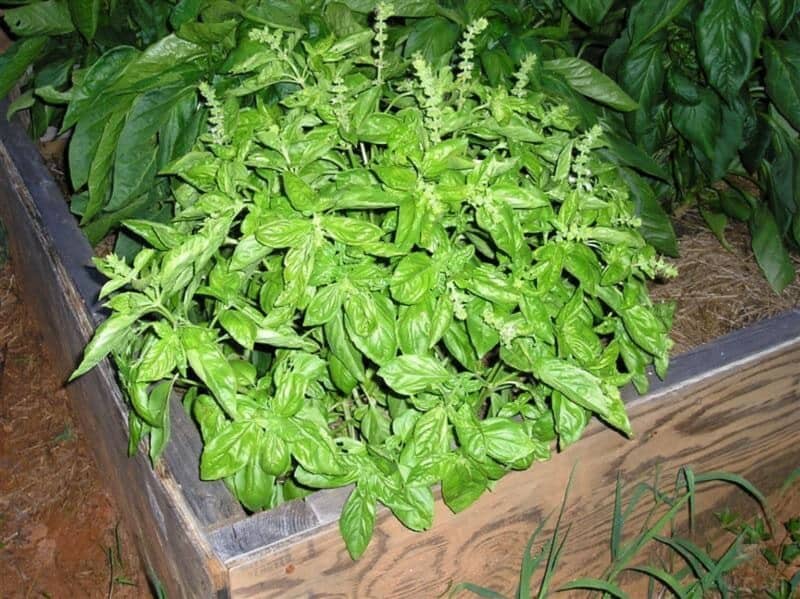
Basil (Ocimum basilicum)
- Repels: many flies, especially house flies and mosquitoes.
- Growth Habit: annual herb, grows quickly. Pruning makes it grow denser, and that means better repulsion.
- Container Suitable?: definitely! Basil thrives in containers.
- Try This: keep a container or two of basil in kitchen windows, or plant it around outdoor seating areas or at the perimeter of your garden for protection.
Basil might just be the most popular and most aromatic kitchen herb enjoyed around the world.
Bright, fresh, and grassy, the compounds that give basil that delectable smell and flavor seemingly terrify all kinds of flies. A mature stand of basil can easily keep the flies away from your patio and out of your kitchen.
Planted in the ground, it works fine, but I like to put mine in containers for the purpose since it’s more mobile and just as easy to care for.
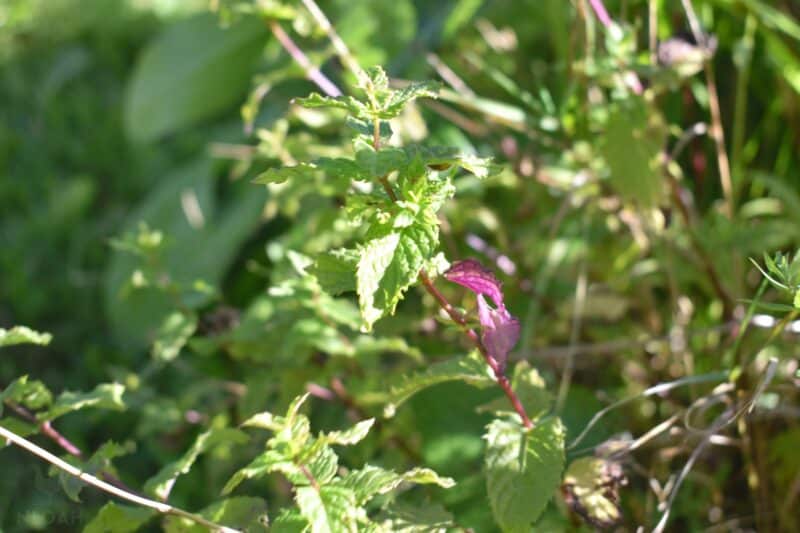
Mint (Mentha spp.)
- Repels: flies, mosquitoes, and many other insects besides!
- Growth Habit: low-growing, tangly, and spreads vigorously and persistently. Take care to manage it!
- Container Suitable?: yes; mint is a great container plant, very easy to grow, and it will help to keep it under control.
- Try This: place pots of mint anywhere that you need fly control, in and around your home, chicken coop, barn, and elsewhere. Safe and effective!
Mint is another herb with many culinary and aromatic applications, but most homesteaders don’t know it is one of the most potent insect fighters around. Menthol is an all-natural insecticide that disrupts insect nervous systems and other facets of their biology. No wonder they run from the stuff!
Mint is really easy to grow, and it can grow nearly anywhere, but I strongly recommend you pop it in a container.
This makes it easier to move around for fly protection when needed, but it also helps to contain this voracious plant; if you stick it in the ground, it will easily overwhelm and strangle or shade out nearby plants!
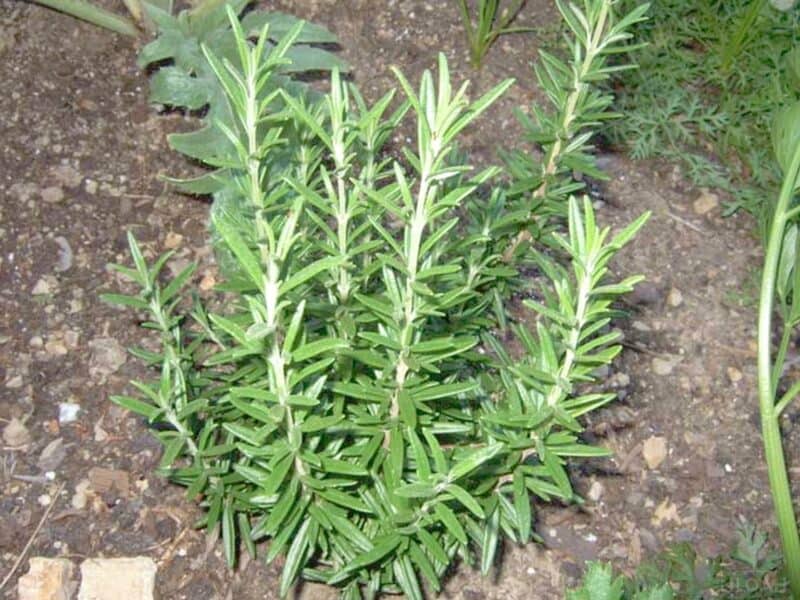
Rosemary (Salvia rosmarinus)
- Repels: all kinds of flies and mosquitoes. Also repels cabbage moth, a notorious garden pest.
- Growth Habit: woody bush or shrub covered with needle-like, resinous, and aromatic leaves. Different varieties sprout attractive purple or blue flowers.
- Container Suitable?: yes, as long as containers drain well.
- Try This: rosemary can be a gorgeous landscaping plant. Stick it in the ground or set decorative containers beside doorways, under windows, and along sidewalks or walkways. It has a wide area of effect!
Yet another kitchen herb, and yet another fly-fighting superstar. Rosemary is super versatile in lots of different dishes, and that pungent, powerful taste is a clue that it contains potent fly-repelling compounds.
This is one of my very favorite plants on this list for the job, too: it looks gorgeous in landscaping or ornamental gardens, can be grown as a patio herb for cooking, or planted anywhere you’ve got great drainage and dry conditions. It is awesome!
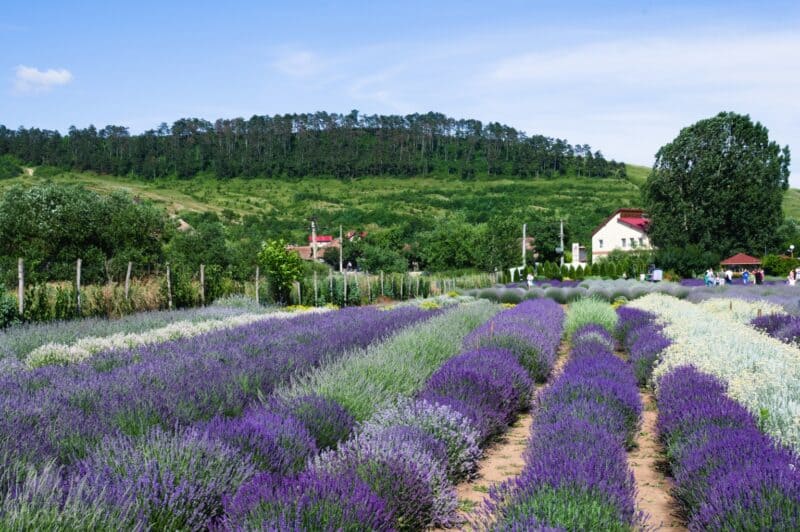
Lavender (Lavandula angustifolia)
- Repels: all kinds of flies and moths.
- Growth Habit: bush-like with woody stems. Fragrant blooms persist for a long time.
- Container Suitable?: smaller varieties are; container must have excellent drainage.
- Try This: for best results, plant your lavender around entryways and near windows, or use it as a perimeter plant around patios and gardens.
There’s nothing quite like the fragrance and appearance of lavender bushes. Floral, clean, and slightly musky, the real stuff is a far cry from the fake fragrances that often go into soaps.
Like every plant on our list, lavender has compounds that signal terrible danger to flies and other insects, sending them fleeing.
You can enjoy the aroma while resting easy that insects are going to leave you, and your garden or animals, alone.
Just take care when planting lavender: it needs tons of sun, extremely well-draining soil, and constant upkeep until it’s well-established. After that, it’s easy to care for.
Tansy (Tanacetum vulgare)
- Repels: flies and mosquitoes.
- Growth Habit: fern-like perennial, highly fragrant, with pretty button-shaped yellow flowers. Large plants may reach 4 ft tall or a little taller.
- Container Suitable?: yes. If kept in smaller containers, it will stay small. Plant in bigger containers to allow more growth.
- Try This: a great choice for general-purpose use around the property. Perfect near sheds, barns, pens, and compost piles.
The perfect choice if you need a pop of color around your home. Sometimes confused for dandelion due to its appearance and also its tendency to self-seed prolifically and spread out of control. This is one you’ll have to keep after, whether you put it in the ground or in pots.
That said, tansies are also highly effective…
A couple of things to note: unlike most of the plants on our list, it’s the blooms, not the foliage, of tansy that contain the fly-repelling compounds.
Also, be cautious as this plant can cause rashes and other skin irritation in people and animals, so handle it responsibly.
Wormwood (Artemisia absinthium)
- Repels: flies and many moths.
- Growth Habit: bushy, upright perennial with silvery, finely divided leaves.
- Container Suitable?: yes, if good drainage is assured.
- Try This: strong smell might be unpleasant and overpowering to some. Plant this one outside near doorways or at the corners of your garden. Helpful near livestock enclosures if you can keep animals from eating it.
Infamously known as an original ingredient in absinthe, wormwood is a tough plant, one that is capable of thriving in rough, neglected soil as long as drainage is good and it gets plenty of sun.
It’s also known for its drought tolerance, meaning that once you find a spot to establish it, you’ll have to give it very little care.
One more thing to note: though the fragrance is often said to resemble sage, it is stronger and has a vaguely unpleasant or unsettling note. If you like it, bring it inside; otherwise, keep it outside to avoid aggravating your family.
Clove (Syzygium aromaticum)
- Repels: flies, mosquitoes.
- Growth Habit: small, slow-growing tree. Known for highly fragrant purplish flowers and glossy leaves.
- Container Suitable?: only in the largest pots—it’s a small tree that can reach over 20 ft!
- Try This: if the climate is right, plant it outdoors around seating areas and patios. Repurpose the dried cloves for homemade repellent sprays.
Rightly famous as a spice, cloves come from small trees, and that means you’ll need to commit to this one and have patience if you want to work it into a fly-repellent strategy around your property.
If you want clove to survive and thrive, it needs warmth, partial shade, and very rich soil along with routine watering. Stay on top of care, or the plant will die back quickly!
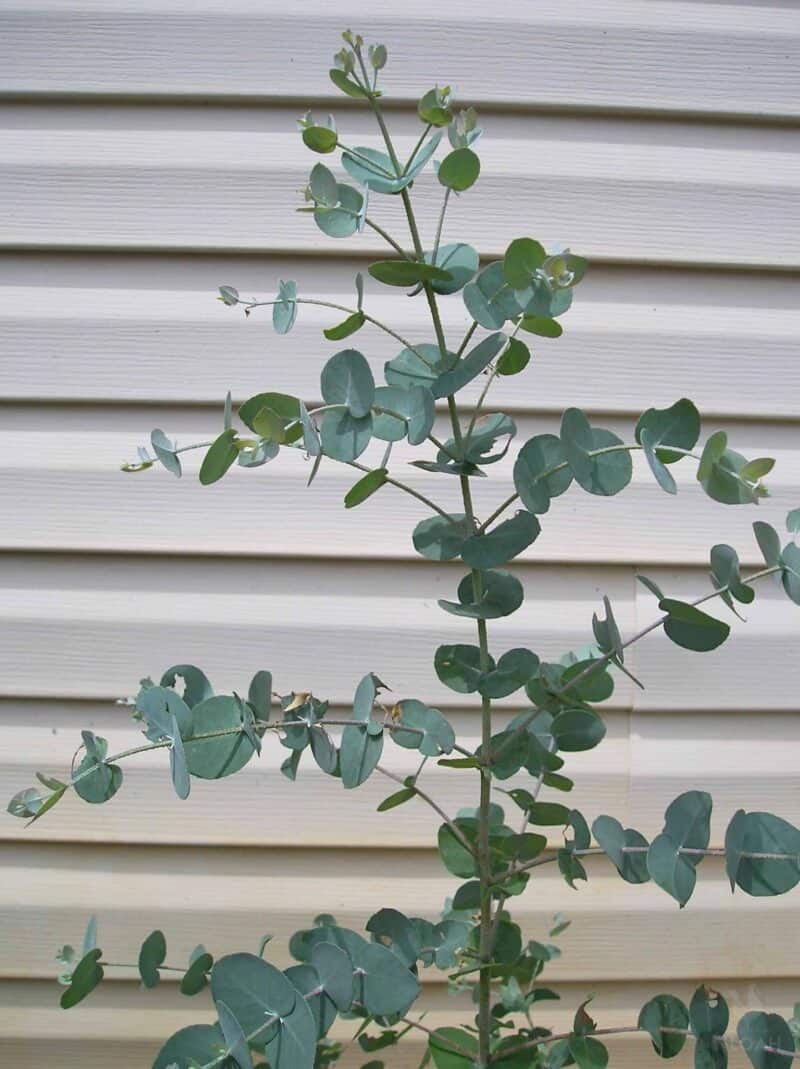
Eucalyptus (Eucalyptus globulus)
- Repels: many flies and mosquitoes. Also ticks!
- Growth Habit: fast-growing, tall tree with thick, fragrant, blue-green leaves.
- Container Suitable?: only when young; will require transplanting as it matures.
- Try This: leaves contain tons of fly-repelling compounds. Pick a bunch from mature trees and scatter them around areas that need fly protection.
A favorite food of koalas, if you plant a eucalyptus tree, you probably won’t be attracting any of those rare critters, but you definitely won’t be attracting flies either!
Eucalyptus can be a great long-term choice for fly protection because of its potent, natural fragrance and also the fact that the leaves themselves have strong repellent properties.
They will continue to repel flies as they dry out if picked, and eucalyptus oil can be extracted and used as a natural ingredient in fly spray.


Get your gift and learn things like:
- how to make this really quick pest spray
- how to prevent egg waste
- two cheap automation devices that will make your life easier
Tom has lived and worked on farms and homesteads from the Carolinas to Kentucky and beyond. He is passionate about helping people prepare for tough times by embracing lifestyles of self-sufficiency.