
No matter where you live, no matter what you are growing, if you are a gardener, you know the pain and aggravation that comes with having weeds getting in the way…
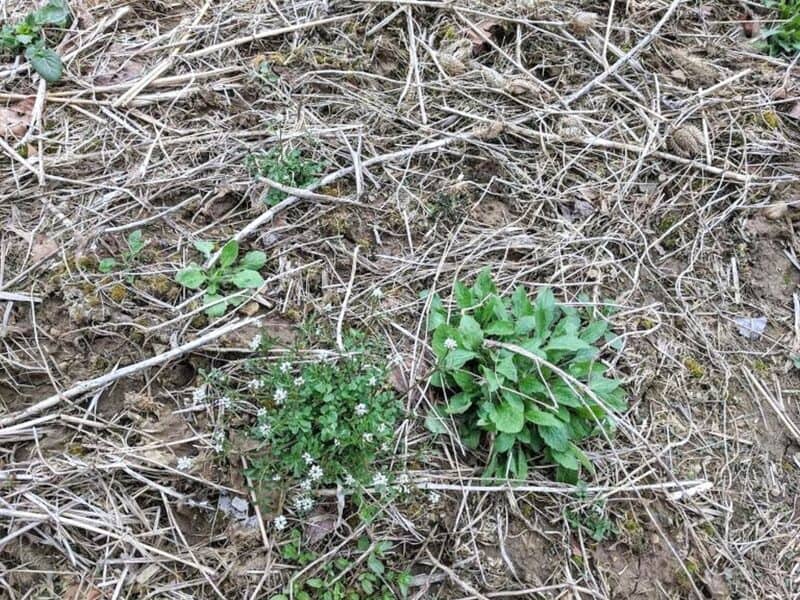
These parasitic and pesky plants come in all kinds of different species, but they all compete with your fruits, veggies, and ornamentals for nutrition, moisture, and light. They’ve just got to go.
But constantly weeding is a big-time sink. Lots of gardeners turn to mulch for weed control instead. But what’s the best mulch to prevent weeds from starting in the first place?
The best mulch for weed control is usually a shredded wood or a bark chips variety. Any mulch can help to control weeds as long as it’s laid in a layer that is 2 to 3 inches thick. Think twice about using hay or grass clippings which might contain seeds that can promote weeds.
Many different kinds of mulch can work well for weed suppression, and it is mostly a matter of attaining adequate thickness to prevent light from reaching the weeds to germinate them rather than the type of mulch itself.
That being said, all of your different types of mulch have pros and cons that you must account for in your specific setup. There’s a lot to know, so grab your gloves and your spade, and let’s get to it.
How Does Mulch Prevent Weeds?
Mulch prevents weeds from growing through a combination of factors, but predominantly by blocking sunlight from getting down to the weeds in order to germinate them in the first place.
There’s nothing truly special about weeds’ growth habits, mind you: They are plants just like any other and the only thing that distinguishes them from plants that you want to grow is the fact that you don’t want them; that’s what makes them “weeds” in the first place!
And since weeds typically reproduce from seeds just like all other plants, when you lay mulch over the top of the soil to prevent sunlight from reaching those seeds, they won’t be able to germinate.
Can You Use Organic Mulch to Prevent Weeds?
Yes, you absolutely can. Organic mulch is just fine to prevent them, and common types like wood chips, shredded wood, bark, hay, straw, pine straw, compost, and more can all do a good job and have the added benefit of adding needed nutrients and other resources back to the soil as they decompose.
This can save you labor compared to inorganic types because you won’t have to pull them back or take them up when it’s time to amend the soil, and also improves soil quality over time.
But, the major downside is that organic mulches might contain weed seeds themselves, setting the stage for a serious outbreak! This outcome is particularly likely in the case of grass clippings, hay, straw, things like that.
Can You Use Inorganic Mulch Against Weeds?
You sure can! Inorganic mulch is also effective at weed control, so long as you have an adequate layer on the surface.
In fact, inorganic mulches can have some advantages over organic ones because it does not support plant life and won’t contain any seeds which might get weeds growing in the first place.
For instance, using river rock, pebbles, gravel and other types of stone can completely suppress weeds and they don’t really wear out, meaning there’s no need to continually add to your layer of mulch. Man-made types like shredded rubber chips and mats are also an option.
However, most types of inorganic mulch don’t break down which can help you or hurt you depending. If you want your beds to stay looking good for a very long time, that’s great, but if you were counting on the nutrients that lead with decomposition going back into the soil, it’s a drawback.
And, if you want to get at the soil beneath you’ll have to pull in organic mulch back or take it up, which can be a huge pain.
How Much is Needed for Weed Control?
As a rule of thumb, you’ll need anywhere from 2 to 4 inches of mulch to reliably prevent weeds. If I were you, I would count on needing more rather than less: A deeper layer of mulch is required to completely block out sunlight from reaching the soil and the weed seeds resting there.
Keep in mind that some weeds, dandelions, in particular, are absolutely determined and almost invincibly hardy.
Getting even a little bit of sunlight might be enough to let them germinate, poke up through the mulch, and then start growing properly, in which case the mulch is more likely to help them rather than harm them!
Be Careful: Different Mulches Can Affect Soil Levels
One thing you should keep in mind is that different kinds of mulch will affect your soil nutrient levels in different ways. As mentioned, all organic mulches break down in time.
As they return to the soil, they will add differing amounts of nitrogen, phosphorus, potassium, and other elements. It’s going to be good for your plants if they are a little lacking, but if soil levels are already high, they can encroach into toxic territory.
Likewise, the pH level of the soil will be changed also. Some types of man-made mulch like shredded paper, particularly newspaper or magazine paper that some people like to use, have acidic inks that can be really bad for the roots of your plants, and interfere with other nutrients besides.
Think your mulch choice through when it comes to adding mulch at different times, or replacing it on a yearly or by yearly basis. Soil testing ahead of time is probably smart.
What Kinds Work Best Against Weeds?
My favorite kinds of mulch are wooded chips, shredded wood or bark chips. These organic mulches are affordable, great for holding in moisture without water logging soil and plants, adaptable, and highly attractive.
Plus, in time, they will break down entirely and give your soil a big boost of nutrients. But they don’t do it so quickly that you’ll be burning through your mulch and having to add to it constantly.
No matter what you’re growing, and no matter where you are growing it, wood-based mulch can work well for you.
Other worthwhile options include larger river rock or a very thick layer of gravel or pebbles. River rock works really nicely as a weed suppressant and can stay looking good for a very, very long time.
It’s also highly unlikely to wash away, a consideration if you live in an area with heavy rains, or if your garden is just in a flood-prone spot. Pebbles work okay too, but in my experience, that thicker layer is needed to ensure efficacy; 2 to 3 inches just isn’t going to do the job.
Lastly, hay, pine straw, and grass clippings work well and are cheap, and some people swear by them, but keep in mind that mulch of this type often contains seeds that will start growing in short order, or else they can deposit seeds that will start growing once you pull the mulch back or it thins out.


Get your gift and learn things like:
- how to make this really quick pest spray
- how to prevent egg waste
- two cheap automation devices that will make your life easier
Tom has lived and worked on farms and homesteads from the Carolinas to Kentucky and beyond. He is passionate about helping people prepare for tough times by embracing lifestyles of self-sufficiency.