
Salmonella is one of the most common bacterial infections associated with chickens, and it’s infamously a major cause of food poisoning in people, causing fever, back pain, major intestinal distress, and more.

In chickens, it causes weakness, lethargy, poor performance, and potentially death. Highly infectious and spreading like wildfire, it is increasingly a problem for backyard flocks and homesteaders according to the CDC.
That means you need to know about it, and in this article, I’ll be telling you everything about recognizing and preventing salmonella in chickens.
About Salmonella
When people say salmonella, they are usually referring to the disease that is caused by the bacteria itself, salmonellosis. Salmonella actually refers to an entire genus of rod-shaped bacteria, many common types of which are both highly infectious and dangerous.
More worryingly, several modern strains have shown to be resistant to disinfectant, vaccination, and medications, meaning that going forward salmonella is likely to become more and more common.
However, it’s possible for both people and chickens, among other animals, to be infected with salmonella, but the germ will remain dormant, giving no outward signs while the carrier is infectious the whole time.
Salmonella Affects Chickens and People
Salmonella is a big deal for chicken keepers not only because it causes poor health, death, and performance losses in flocks but because many strains are infectious and dangerous to people.
The resulting disease, salmonellosis as mentioned above, is really nasty and can entail lifelong complications or, rarely, death.
Anytime that people come into contact with infected birds, their meat or eggs, or any surface or item that those birds contacted directly or indirectly, infection is possible and even likely.
For this reason, salmonella can be a major threat to you, your family, and anyone else who eats your chickens. You’ve got to take it seriously and address it immediately if detected. More on that in a little bit…
Even Small Flocks are Vulnerable to Infection
Perhaps of most concern to us homesteaders, salmonella is increasingly a problem for small and backyard flocks.
As recently as 2023, the CDC has been warning consumers and keepers about salmonella risks specifically associated with these smaller flocks of birds.
It’s easy to think of salmonella as a problem for big factory farm operations, but that’s just not the case and is, in fact, a dangerous misconception.
At the conclusion of their 2023 investigation, the CDC found that there were over 1,000 reported cases of salmonellosis stemming directly from contact with chickens, or their products, from small backyard flocks.
Nearly a quarter of those infections resulted in hospitalizations, though mercifully there were no deaths, and the scope of the outbreak included the entire lower 48 states.
If you haven’t been worried about salmonella prior to reading that, consider yourself officially on notice.
Is Salmonella Fatal for Chickens?
Not usually, but it can be, and it is especially dangerous and more likely to be fatal for chicks, older birds, or any chickens that already have existing health issues.
Salmonella Symptoms to Watch For
As mentioned, your chickens or even your entire flock could potentially be infected with salmonella and give no obvious outward sign. And the whole time, they will be vectors for infection for other birds and people.
However, often infected birds will show symptoms, so be on the lookout for the following, and if detected, take action or test them immediately.
- Loss of Appetite: Salmonella causes serious digestive upset and a general depression of biological processes. Accordingly, infected birds will usually show a pronounced and sudden loss of appetite. Chickens are big eaters, so anytime you notice one or more of your birds voluntarily going without food, that is a warning sign.
- Weight Loss: Likewise, chickens that are infected with salmonella and stop eating will rapidly start losing weight. If you notice any of your birds thinning out, they might be sick.
- Reduced Egg Laying: Reduced or even halted egg production is a common symptom of salmonella and many other illnesses. If some of your girls slow down, that doesn’t mean they have salmonella, but it’s not out of the question, either.
- Weakness and Lethargy: This is one of the most common symptoms. Infected chickens that are showing symptoms tend to be weak and lethargic, and some might be unable to stand or stand for very long. A lack of movement and energy generally should be investigated.
- Severe Diarrhea: Salmonella wreaks havoc on a chicken’s gastrointestinal tract in a host of ways, but invariably this will manifest as severe, watery diarrhea. If your birds are leaving a mess in the run, coop, or nesting boxes, suspect salmonella and check or treat accordingly.
- Drooping Wings: This fits in with the general weakness above, but infected birds might be unable to hold their wings up and tight against their body. If your chickens are on their feet or sitting and they seem like they are sagging with their wings half unfolded, you’ll know there is a definite problem.
- Closed or Half-Closed Eyes: Birds suffering from significant infection will look almost sleepy, like they are on the nod. Fully closed or half-closed eyes are a warning sign when chickens won’t open them and snap into wakefulness upon being roused or when hearing a loud sound.
- Huddling Together: The fever caused by salmonella infection can lead to chickens feeling cold, and especially in the case of an entire flock or nearly an entire flock being infected, you’ll see many of your birds huddling together in a vain attempt to warm up.
Controlling Salmonella in Your Flock and On Your Property
With outbreaks becoming increasingly likely and more difficult to treat as time goes on, comprehensive procedures for preventing and controlling salmonella in your flock, and hopefully keeping it from getting on your property, is imperative for the health and well-being of your chickens and your family.
The following sections will tell you how salmonella spreads, and what you can do to prevent it.
How Chickens Catch Salmonella
- Fecal Contamination of Food, Water, and Other Surfaces: This is a major one. Salmonella bacteria counts are high in the feces of infected birds. This is extra problematic because chickens poop a lot and they poop all the time, meaning that anything, and I mean anything, that comes into contact with that feces can turn into a home or a vector for the germs.
Food and water sources, which are shared by the rest of the flock, are high-probability transmitters of the germ and can easily lead to an entire flock or multiple flocks being infected in just a couple of days. - Overcrowding: Close contact between infected and uninfected chickens is another reliable and highly likely cause of transmission. Although unavoidable to a degree, overcrowding in the coop or run will only exacerbate transmission even if you keep their surroundings scrupulously clean. Allowing extra space and giving birds room to get away from each other will slow or reduce transmission rates.
- Dirty, Wet Conditions: Bacteria like salmonella love filthy, moist environments as this helps them persist and also multiply. If your chickens are forced to stay in a filthy coop or a wet and muddy run, salmonella will almost certainly be present and infection will be more likely.
- Poor Health: The good news is that birds having a strong immune system made possible by excellent overall health and nutrition are less likely to be negatively impacted by salmonella or even be carriers of it. Conversely, chickens that are in poor health are more likely to be infected, transmit it more readily, and are far more prone to suffering severe health consequences.
- Contact with Other Animal Carriers: There are many other animals that can carry salmonella besides chickens, some of the worst being rodents. Mice and rats are the two biggest perpetrators, but it’s possible that squirrels, groundhogs, and other creatures can transmit it too.
How People Catch Salmonella
Humans typically catch salmonella germs from chickens by coming into contact with live, infected birds, their eggs or meat, feathers, or secondarily through contact with surfaces or any other items that have been contaminated by droppings or other secretions.
Because salmonella germs can persist in the environment for a surprisingly long time, one notorious source of infection is simply tracking the germs into your house on your shoes or from your unwashed hands after dealing with your chickens out in the yard.
Practicing Good Hygiene and Biosecurity Will Keep Chickens and People Safe
Salmonella is definitely scary, but you don’t have to be afraid if you know what to do and how to keep your flock and your family safe.
If you haven’t already, implement the following procedures:
Protect Flock Against Rodents
One of the sneakiest ways that salmonella shows up on properties where it isn’t already present is on the backs of rodents, figuratively speaking.
Mice and rats will track germs everywhere, including into coops where they look for warmth and an easy meal in the form of chicks and eggs. Install an appropriately sized mesh or other screens that will keep rodents out of the run and coop.
Consider getting a barn cat or two to control rodent populations generally and serve as a deterrent on larger properties.
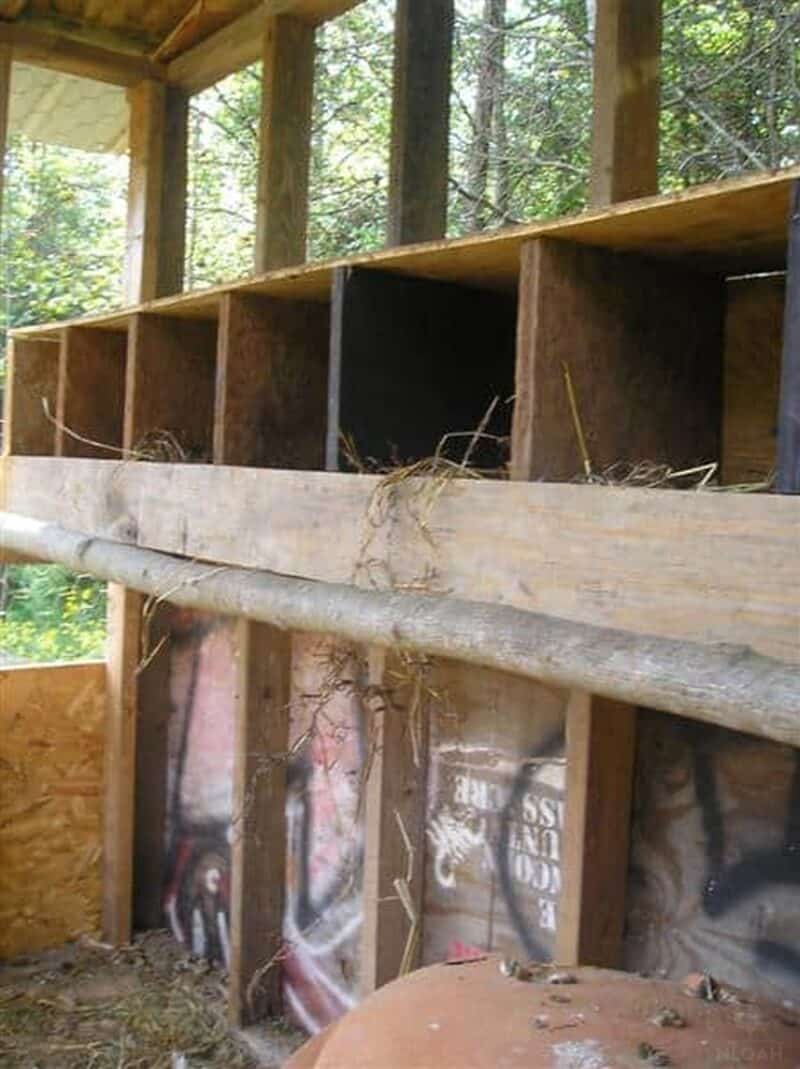
Clean Out and Scrub Coops and Nesting Boxes
You should be cleaning out the coop, run, and nesting boxes regularly as a matter of course, but it’s especially important to stay on top of this chore if you want to keep salmonella at bay.
At least a few times a year, scrub and disinfect all surfaces that your chickens might come into contact with.
The nastier you let things get, the more likely a salmonella outbreak is, and also increases the chances of it being a really rough strain.
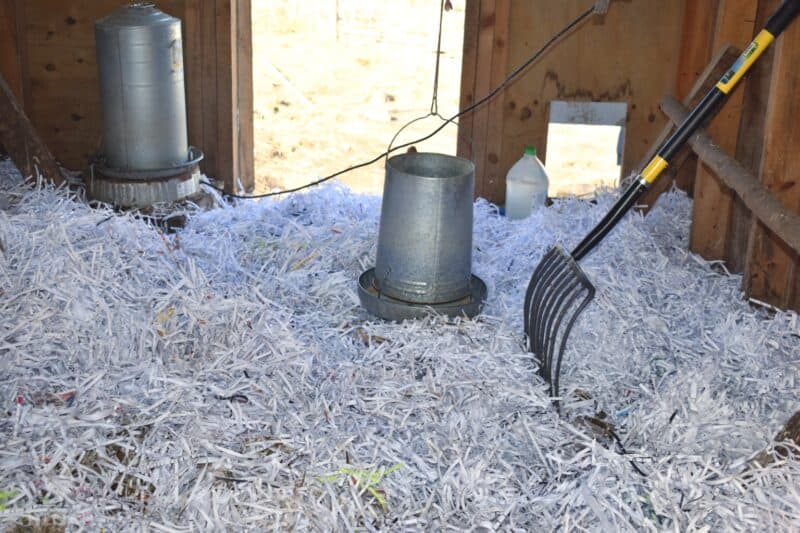
Keep Bedding Refreshed and Soil Turned
Whatever kind of bedding you have in your coop and nesting boxes, you’ve got to change it regularly when it gets wet and filthy with droppings. All kinds of bedding materials are hot spots for salmonella.
Wash Hands After Handling Birds or Eggs
Even if you aren’t worried about getting infected yourself, and you really should be, it’s still critical that you wash your hands religiously after handling your birds or their eggs.
If you don’t, everything that you touch after that can then host the germ, which will infect people or animals later. This is basic stuff, people, come on!
Change Wet or Contaminated Food and Dirty Water Immediately
Ask any chicken keeper and they will tell you that these birds are invariably pesky when it comes to getting their food and water dirty. They’re just messy critters!
Despite how annoying it might be and how hard you are working to avoid waste, when it happens, you’ve got to change it out for fresh. Remember what I said up above: contaminated food and water are both major infection vectors.
Keep All Tools, Feeders, and Waterers Clean
Changing out food and water is only one part of that particular battle. The other part is routinely cleaning, scrubbing, and disinfecting feeders and waterers, along with any tools that you might use for caring for your flock on a regular basis.
Remember that salmonella is a surprisingly persistent germ that can live on seemingly inhospitable surfaces for quite a while, just waiting for an opportunity to become active again.
Don’t Let Separate Flocks Share Food, Water, and Living Spaces
Assuming you have multiple, separate flocks of chickens on your property, you need to keep them that way.
If even one or two birds that are infected with salmonella in one flock come into contact with a chicken from the other, even passingly, cross-infection will probably occur.
Vaccinate Your Flock
Despite the challenges that salmonella is causing for medical professionals and drug manufacturers, vaccination is still an effective way to reduce the likelihood of infection, transmission, and also severity when symptoms manifest.
Considering there are bigger and scarier diseases that chicken keepers worry about, like bird flu, Marek’s disease, and more, salmonella vaccinations are sometimes skipped. Don’t give in to this way of thinking!
Quarantine New Birds
Adding a new chicken or two, or ten, to your flock is always a happy and exciting time, not the least of which because you want to see how the new additions get along with your existing residents.
But before you put everyone together, you’d be wise to quarantine all new birds: that’s the only way to give you enough time to ascertain whether the symptoms of any illness will manifest.
This quarantine area should be clean, unused for any other purpose, and well away from the rest of your flock. I recommend a minimum of 10 days in quarantine, but two full weeks is better.
Don’t Allow Other Keepers to Contact Flock, or Use Their Tools and Supplies
One of the biggest biosecurity principles for chicken keepers is keeping anyone and anything that may have come into contact with a different flock of chickens away from them and away from their living spaces.
This means you shouldn’t let your neighbors who have chickens come over and handle your own. You shouldn’t borrow their tools or their food. You shouldn’t let anyone who is delivering chicken or other livestock supplies do the same.
It sounds mean, even downright rude, but professionals understand the importance of this: people who have contact with other livestock and especially other poultry, even tangentially, are at an exponentially higher risk of transmitting salmonella.
Consider also that they might pick up the germ from your birds and you not even know it! I know you don’t want that on your conscience.
Regular Testing Will Catch Early Infection Before it Spreads
Last but not least, you should regularly test your birds for the presence of salmonella. I recommend doing this no less than twice a year, and I know some serious keepers that do it quarterly or even monthly during known outbreaks.
Testing can be run from feces or mutual secretions, the latter requiring a swab of the bird’s cloaca. This is something you can do yourself, and then package up the samples in itemized containers to be sent away for lab testing. Depending on the speed of shipping and other factors, results will usually be back in about a week.
Getting those results will let you make informed decisions on quarantining, the likely source of infection, and treatment, and if necessary will allow you to forward that information to relevant authorities who could be tracking the spread of a known outbreak.


Get your gift and learn things like:
- how to make this really quick pest spray
- how to prevent egg waste
- two cheap automation devices that will make your life easier
Tom has lived and worked on farms and homesteads from the Carolinas to Kentucky and beyond. He is passionate about helping people prepare for tough times by embracing lifestyles of self-sufficiency.