
For beginning gardeners, one of the trickiest things to manage when you want healthy plants and huge harvests is the pH level of your soil.
Soil is either acidic, neutral, or alkaline, and for the vast majority of plants we grow, including many fruits and veggies, acidic soil is not optimal. Many plants will fail to grow in it at all!
It’s not the end of the world, because you can change the pH level in your garden or elsewhere on your property. You do this by adding basic, or alkaline, soil amendments.
Used judiciously and with proper care, the pH level of the soil will rise and get closer to that sweet spot between 6.0 and 6.5… so keep reading, and I’ll tell you about 10 things you can use to easily increase the pH level in your soil.
Lime (calcium carbonate)
Lime, or calcium carbonate is often referred to as agricultural lime, and is a mainstay of raising pH levels in soils. As the name suggests, it is sourced from limestone, a common type of sedimentary rock.
This agricultural lime is available almost anywhere that gardening and farming supplies are sold, landscaping stores, hardware stores, chemical supply houses, and more.
It’s inexpensive, easy to work with for the most part, and safe if you take basic precautions, but the downside is that it is only going to raise pH levels slowly over time because it breaks down and is then absorbed more slowly compared to other materials on our list.
You also have to take special care because it can be quite dusty, and getting it in your nose, mouth, eyes, or worse, inhaling it can lead to a very bad day for you.
All in all, though, it is an indispensable tool in your toolbox for adjusting your soil pH levels and it’s always worth having some on hand.
Dolomite Lime (calcium carbonate + magnesium carbonate)
Dolomite lime is a variety of lime as described above, only instead of being just calcium carbonate it’s a combination of calcium carbonate and magnesium carbonate – though it is still naturally derived. This type of lime comes from dolomitic limestone.
Like the previous type of lime we just discussed, it also raises pH levels, but does so slowly. However, the presence of magnesium means that soil will be fortified with it. That’s a benefit for plants that require lots of magnesium like peppers, roses, and tomatoes.
If you know your soil is acidic and also low on magnesium or you’re planting magnesium-hungry plants, reach for dolomite lime.
However, don’t use it carelessly because excessive magnesium can be harmful to other plants in different ways.
Burnt Lime (calcium oxide)
Yet another lime variety on our list, one you might know as quicklime, burnt lime is chemically distinct, being calcium oxide. It is just limestone of another kind, created by heating it up in a kiln that expunges carbon dioxide, leaving calcium oxide behind.
You can think of burnt lime as a sort of supercharger for adjusting soil pH levels. It works very quickly, and if you use it carefully with a light touch it can actually rescue plants that are suffering terribly in soils that are too acidic.
That’s a great capability to have, but it’s got just as many shortcomings and associated hazards.
This stuff is extremely reactive and intense: it can torch your plant’s root and leaf, and also burn you severely if you don’t take proper protective measures and handle it carefully.
Using the stuff demands you pay close attention, stay focused, and apply it very precisely. Fail to do that and it could spell disaster for your plants and for you!
Hydrated Lime (calcium hydroxide)
The last type of lime on our list is hydrated lime, calcium hydroxide. This lime is created simply enough by adding water to burnt lime as mentioned above. After the reaction stops, one where the quick lime picks up a hydrogen atom or two, you’ll be left with a fine, extremely dry powder.
Like Quicklime, this is a fast-acting, highly reactive and effective, but risky option… It will break down in soil very quickly and neutralize acidity, but that same high reactivity will burn human skin and plant tissues quickly.
Making even a slight mistake in application ratios can also send your soil too far up the pH scale into alkaline territory, which is an imbalance of another kind that’s still bad for your plants.
Both this and quicklime are good options for preparing soils for planting, but genuinely risky to use around live plants so be careful.
Potassium Carbonate
Potassium carbonate is a compound that works well to raise soil pH levels while also infusing soil with potassium, one of the most essential elements that plants use as a nutrient.
This makes it a great one-two punch for providing plants with needed nutrition while also taming acidity that can stunt growth.
It doesn’t work as quickly as burnt lime or hydrated lime, but works quicker than traditional agricultural lime.
This means it is a good all-around choice for acidic soils that are already low in potassium or being prepared for plantings with intensive nutritional demands during flowering and fruiting, like fruit trees and vining vegetables.
The big drawback is that it can create nutrient imbalances if you continuously add it, because of the potassium, and it tends to be significantly more expensive than the lime varieties above.
Wood Ash
An oldie but a goodie! Wood ash is exactly what it sounds like: the ash that’s left over from burning wood!
Your great-grandparents and the people who came before them probably used this as a go-to soil amendment year in and year out because it is gentle, slow-acting, and a good choice for stabilizing pH levels.
Wood ash has potassium carbonate that we just talked about and many other trace minerals besides, but the exact nutritional and chemical composition varies depending on the species of wood that was burned.
For instance, you want to avoid using pine since pine ashes can actually have the opposite intended effect and increase soil acidity! Most other kinds are fine, but you want to stay away from chemically treated wood which can contaminate your soil.
Other than that, it tends to be free, easy to use, and broadly safe to handle, meaning you’ll always have a use for it when managing low-pH soil.
Bone Meal
If you’ve been gardening for any length of time you are already familiar with bone meal. It’s exactly what it says; ground animal bone!
Packed with calcium and phosphorus, it’s highly nutritious for all sorts of flowering and fruiting plants and is a wonderful multi-purpose amendment that you should always have on hand.
Compared to other options on our list, this is among the slowest and the least potent additives, which has advantages and drawbacks as you might expect.
For gently managing soils that tend to go acidic over time while nourishing plants, bone meal is tops. However, it is the wrong thing to reach for if you need to quickly bring soil levels back to normal because it is extremely slow to break down.
Continued overuse of bone meal can also excessively raise phosphorus levels in soil, so don’t add it needlessly just because it is natural!
Crushed Shells
Crushed shells are another ancient soil amendment that’s still used today, and consists of the hard shells taken from various shellfish like clams and oysters. Sometimes folks use “eggshell water” for a smaller pH increase.
Also, the exact composition of shells varies somewhat, but it’s always a good source of calcium…
Like bone meal, it’s very slow acting when it comes to raising pH level, but has the added benefit of infusing various nutrients and greatly improving soil texture. This can be another mainstay you should always have in your garden shed.
However, the exact nutritional content can be erratic owing to the nature of the source, and it has a marked tendency to slowly but steadily raise soil salinity which can create other headaches for you.
Baking Soda (sodium bicarbonate)
Baking soda, AKA sodium bicarbonate, is mildly alkaline, very cheap, and available absolutely everywhere. Chances are good you’ve got some stashed in your pantry right now.
However, it is not optimal for raising the pH level of your soil because it is extremely fast-acting. It has a bad tendency to burn plants and as another nasty side effect can cause sodium to start accumulating in your soil, causing additional problems down the road.
It works reasonably well as a sort of temporary measure…
If your soil has become very acidic recently, maybe because torrential rains have washed away certain minerals that help maintain a neutral pH, you might be able to bust out the baking soda and apply it to stabilize plants until you can implement a more permanent and longer-lasting solution.
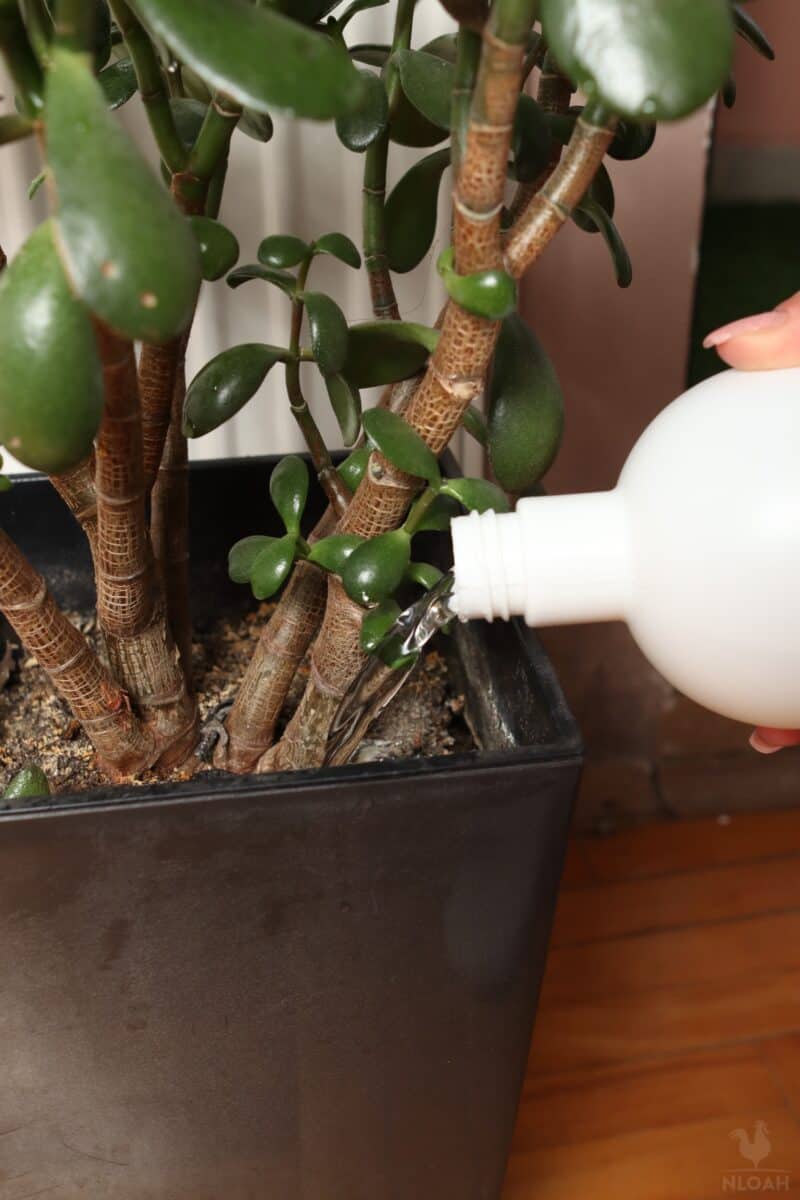
Other than that very specific use case, or controlled applications for potted plants or houseplants, I would reach for another option on this list. At least it is very safe for you to handle!
Gypsum (calcium sulfate dihydrate)
Gypsum is a special case soil amendment. This soft mineral already has a good reputation for loosening compacted soils, and heavy clay soil in particular, while simultaneously improving soil structure. But the mineral itself doesn’t directly impact the acidity one way or the other.
What it will do, though, is greatly improve the nutrient uptake and stability of essential minerals and other elements in the soil that can affect pH level, making it a great companion for use with other materials we’ve already talked about.
If you’ve been struggling to reach and maintain the right number with your soil, you might be fighting against poor soil structure. That’s when gypsum can help.
Don’t make the mistake of reaching for it when your pH levels just need a little bump, but instead apply it to help rejuvenate your soil generally and fight back against mineral loss.
How Much Amendment Should You Add to the Soil?
This is completely dependent on your soil structure, current pH level, what sort of amendment you are using, and other factors like what sort of plants you are growing.
The basic rules of thumb you can depend on are that you must, always, perform a soil pH test before you do anything. Getting this wrong means raising alkalinity too much, which can be just as bad as leaving your soil too acidic.
Another guideline is that heavier soils will require more additive in order to attain the same change in pH that lighter soils would.
For instance, you might only need 3 pounds of lime for every hundred square feet in loamy soil, but you could need eight or even 10 pounds for heavy clay soils.
But only by doing test test and then getting those test results laboratory analyzed will you be able to come up with a plan for giving the ground what it needs.
Generally, this recommendation will take the form of so many pounds of amendment for every 100 or 1,000 square feet you are treating
When to Raise Your Soil pH
The best time to raise your soil pH level is several weeks before the planting season. That’s because many additives, like agricultural lime or bone meal, take quite a while to work.
Likewise, if you amend the soil before you even have plants in the ground you won’t have to worry about damaging your plants directly with the sometimes caustic amendments.
How Should You Add Amendments?
Strictly according to your test results and the instructions, if any, that come with the amendment. One rule of thumb you can always count on is to err on the side of adding less, because you can always add more later.
It’s difficult to take it back out of the ground again as you might imagine, and it is the height of waste to make the soil too alkaline and then have to add acidic materials to bring it back down!
Add your amendments, rake them into the soil using a tiller, rake, shovel, or whatever is appropriate for the area you’re working in, and then gently water it in. Don’t soak it, because that can carry the materials too deep for them to do any good for your plants’ roots.
Let that settle down for at least 24 hours, and potentially as long as a week, and then retest it to check the new pH level. If it’s something that is quick acting and it’s still too low, add more.
If it is slow-acting, give it another few days and then check again to see how much farther it has progressed. Once you know it is done decomposing into the soil and the pH level has stabilized, add another application if you need to.
There are Some Risks When Raising the pH
Raising the soil pH level too high can cause direct damage to plants through burning or scorching, and also lead to nutrient imbalances in the case of amendments that contain things like manganese, calcium, phosphorus, and the like.
If the soil becomes too alkaline, plants that do best or require acidic soil like azaleas, rhododendrons, berry bushes, and cedar trees might stop growing or even die.
How to Keep Your Soil’s pH Levels
Regular testing of soil pH levels and periodic addition of slow-acting amendments like bone meal or lime is usually satisfactory for stabilizing pH levels.
If you’re constantly fighting against soil that is chronically acidic, you need to improve the structure with things like gypsum, compost, and other kinds of organic matter.
Adding surface coverings like mulch can also be beneficial and play a part in stabilizing the soil pH because it will help fight runoff and prevent weeds and other unwanted plants from poaching nutrients out of the soil which can tilt it towards the lower end of the scale.
Soil pH FAQ
How can you measure the pH in your soil at home?
You can quickly and easily measure the pH of your soil at home by using a pH tester. These simple devices rely on chemical reactions or, for sophisticated models, electronic probes to let you see exactly where your soil is in terms of acidity.
These tests are typically available at any well-stocked gardening store or the gardening section of your local big-box hardware store.
What is a good pH level for soil?
Typically between pH levels 6.0 and 6.5. This is because most plant nutrients are in their most available state in that range. However, it’s up to you to figure out exactly what range is ideal for your particular plants!
Do some plants need acidic soil?
Yes. As mentioned previously, things like blackberries, blueberries, azaleas, rhododendrons, and so forth love acidic soil and will do better at the low end of that range or even lower on the scale.
Some plants crave alkaline soil, much higher at between 7.0 and 8.5, such as cabbage, kale, Brussels sprouts, and asparagus.
How can I decrease the pH in your soil?
You can easily decrease soil pH by using soil amendments that are acidic in nature.
Often this can be common fertilizers like ammonium sulfate or urea. Some natural materials are acidic, like peat moss and pine needles, though that takes a very long time. Sulfur is a common faster-acting amendment for lowering pH.


Get your gift and learn things like:
- how to make this really quick pest spray
- how to prevent egg waste
- two cheap automation devices that will make your life easier
Tom has lived and worked on farms and homesteads from the Carolinas to Kentucky and beyond. He is passionate about helping people prepare for tough times by embracing lifestyles of self-sufficiency.