
Whether you love them or hate them, roosters are important members of any flock of chickens. If you want to grow your flock the old-fashioned way keep it safe from predators, roosters can serve as a partner to help you take care of your birds. Unfortunately, pretty much all roosters come with a major downside: they tend to be incredibly noisy.
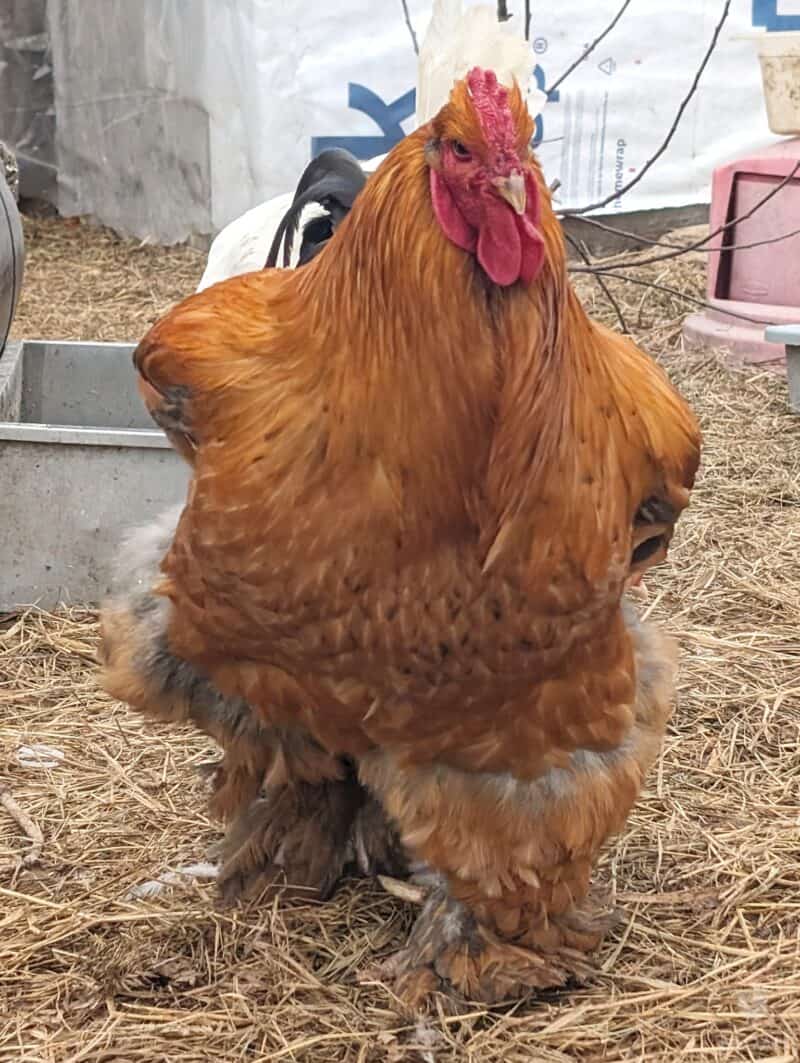
A rooster’s crowing, that iconic and some would say infamous cock-a-doodle-doo, will wake you up early, tick off your neighbors, agitate other animals, and generally drive you mad. But you can’t be angry at the rooster; they’re just doing what comes naturally to them…
Nonetheless, life must go on but if you want it to go on without you losing your mind, it’s worth trying to stifle the racket.
Today I’ll tell you about 11 ways to help you put a cork in it when your rooster just won’t stop crowing.
Assess Your Flock Size
Dealing with excessive crowing on the part of one or more roosters begins with an investigation. Start by assessing the size of your flock.
Every rooster has a certain number of hens that he would like access to, usually between 6 and 12 depending on the breed. If you have multiple roosters, making sure there are enough hens to go around will go a long way toward reducing crowing.
But on the other hand, lots of chicken keepers don’t know that a rooster that has too large of a flock to care for will actually crow more.
It’s due to a combination of overstimulation and also stress, I think: It’s a big responsibility guarding the perimeter and watching over so many other chickens!
By paying attention to your flock and particularly the behavior of your roosters, you might determine that it could be best to reduce the size of your flock to reduce stress on your rooster.
Reduce Competition
You’ve probably heard the term pecking order referenced countless times when talking about chickens. It’s not just a turn of phrase, it’s an actual thing!
Chickens establish dominance internally among members of the flock, and nowhere is this more apparent than the competition between roosters. Part of that competition is crowing loud and often to show one another who the top bird is.
If you have multiple roosters in your flock, fights are going to be a fact of life until they figure out who is in charge. Sometimes these fights can get pretty brutal, and rivalries can go on for a very long time.
If you’re dealing with particularly aggressive roosters such as Malays or Aseels they might not stop until a competitor is dead or removed. This is highly likely in small flocks or they’re already aren’t enough hens to go around.
This, at least, is a simple and often easy solution to implement. Remove excess roosters and either slaughter them or give them away. When the remaining male isn’t worried about competitors, he will calm down to a degree.
Make Sure He’s Fed and Hydrated
As mentioned above, stress will prompt crowing in roosters. But there are many different kinds of stress that will prompt these birds to turn the volume up. One that is sometimes overlooked is there need for food and water.
Yes, you might feed your flock on a schedule that runs like clockwork, but that doesn’t mean that your rooster is fully satisfied or completely accommodated.
Is there always a scuffle around a feeder or water source? Does he just need a little bit more room to himself when eating or even his own source of food and water? Is he getting enough of all the nutrients he needs and is he staying hydrated?
Giving your rooster a good checkup and watching his behavior and actions closely during and after feeding will tell the tale.
Make whatever changes are necessary in this regard, and see if the crowing does not subside, or at least become a lot less frequent.
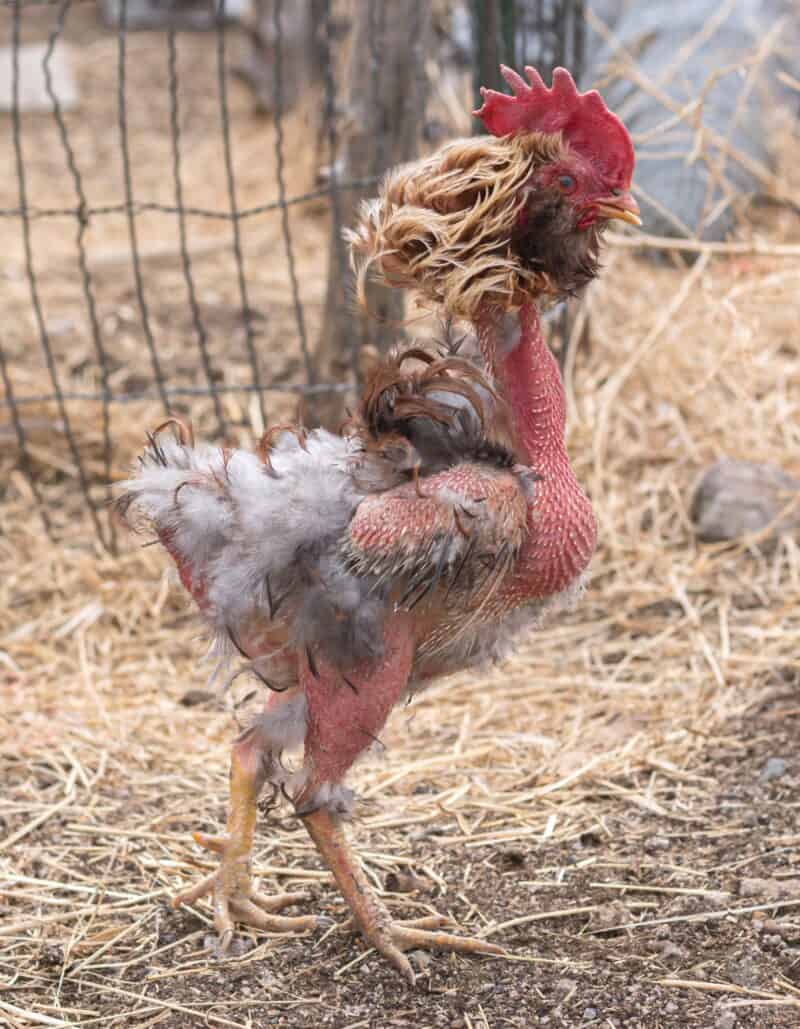
Clean Up
Chickens are happy to live almost anywhere and in any kind of weather, but that doesn’t mean they enjoy it. They can’t tell you when they are unhappy with their surroundings, generally, at least not with words! A rooster will let you know, though- by raising hell!
At first, you might think this is just whining on their part but really this fits in with their MO: they are supposed to alert the flock to problems and signal them when they need to take action.
If all of your birds are living in filthy conditions, a rooster might be trying to signal an exodus to the rest of the flock, an exodus which can’t take place if they are contained.
If it’s been a while since you’ve cleaned up the coop or run, or moved the chicken tractor to a new spot, give that a try.
Put Him in a Coop at Night
One mistake I sometimes see well-intentioned chicken owners make is letting their rooster either stay in the run at night or roost on the property, often in trees, on the roof, or somewhere else.
This is a bad idea for multiple reasons, not the least of which is that chickens are incredibly vulnerable to nighttime predators because of their poor night vision.
More germane to our discussion today is the fact that a rooster will have much more to notice and get upset about at night!
Every shadow, every sudden movement, every light, and every noise might cause him to start crowing, again in an effort to alert the flock that danger might be close.
The solution is simple: put him in the coop with the rest of the flock, or make him a separate, covered “coop” out of a dog crate if he for whatever reason refuses to join the rest of them.
If he’s kept inside and in total darkness, and shielded from things that might disturb him, he’s going to stop crowing at night, I promise.
Reduce Threatening Stimuli
Speaking of threats, don’t discount things that might be upsetting your rooster, things that you might overlook because you know that they aren’t, in fact, dangerous to your flock.
This might be pet dogs or cats, even other livestock, that get too close and upset the rooster, or maybe even his noticing these animals at a distance alarms the poor bird and sets him off.
Don’t discount the presence of obvious and actual predators, either. Possums, snakes, raccoons, mice, rats, coyotes, bobcats, and more all prey on adult chickens, chicks, and eggs, and good roosters that notice any of these creatures will sound the alarm.
In the case of false alarms, though, this can be tricky to pin down so it pays to observe your rooster when you notice him getting noisy and see if you can correlate anything with his calling. Eliminate any actual danger or try to keep aggravations out of sight and he should settle down.
Try a Rooster Collar
One kind of direct action you can take against particularly noisy roosters is to fit them with a rooster collar.
A rooster collar is exactly what it sounds like, a band or strip of material that you fasten around their throat to slightly impede the big inhalation that precedes a noisy cock-a-doodle-doo.
There are purpose-made rooster collars on the market or you can easily make your own from double-sided velcro tape or even a modified dog collar for a very small breed.
Fitting the collar can be a bit tricky, though, not the least of which is it you need to get the rooster to cooperate and extend his neck and also because it must be snug enough to impair his breathing only slightly. Too tight can cause injury or asphyxiation.
And make no mistake, most roosters will struggle mightily after you fit it to them for the first time to get the thing off. But if you can keep at it without traumatizing the bird too badly, they will eventually get used to it.
Note that a “bugle bird” fitted with a rooster collar will still crow, but if you do it right the overall volume will be greatly reduced.
Hang Drapes Over the Coop and / or Run
Roosters are hard-wired to signal to the rest of the flock when things change. When anything changes. Any “status change,” of any kind, might trigger these noisy birds to sound off.
The aforementioned threats are obvious ones, yes, but even something innocuous like a change in light levels or a sudden change in temperature might set them off. This is why most roosters will certainly crow at sunup and sundown…
Sounds funny, but it’s true, and regrettably, there’s not much you can do to stop these things from happening.
But, if your coop has windows or other openings that will allow in lots of light, consider hanging up a tarp or cheap drapes over them so they can be closed when night approaches.
This will reduce the light level inside the coop even further and, hopefully, cut down on the crowing that happens early in the morning.
I don’t know about you, but that’s the one part of owning a rooster that I hate the most; I am not a morning person at all!
Prevent Boredom
This is another chronically overlooked factor that contributes to excessive crowing. When you get a little too used to taking care of chickens, it’s easy to forget that they are intelligent animals with feelings of their own.
Roosters don’t just enjoy standing around being belligerent all day, and they need stimulation, exercise, and activity like all other animals.
Your rooster might be making noise because he is bored and upset! Try to cut down on that by moving the tractor to a new location (if you have one), letting them out to free-range for a bit, and giving them new things to climb on and investigate inside the run.
Like the song said, a change in latitude can often promote a change in attitude!
Even something like new treats or a menu shake-up could be enough stimulation to break up boredom and calm a rooster down to a degree
Exile
Sad to say, some roosters just will not stop. They will not be tamed, stifled, or silenced. They’re going to crow and crow and crow as long as they have a place, and a role, in a flock.
The solution, extreme as it sounds, is to exile the rooster or surplus roosters. Moving trouble roosters to a rooster colony that is far enough away from the rest of the flock that they cannot see or hear the hens will usually silence them or greatly reduce their exclamations.
Yes, it seems kind of sad that they have to live like monks away from all the other chickens, but if you’ve tried everything else above on this list and it still isn’t helping, you have a few other options. If you have a small property, obviously this won’t be viable.
Caponize Him
You might prevent a lot of noise complaints before they start by caponizing your rooster. Caponization is basically neutering, removing of a rooster’s testes which will take a lot of testosterone out of his development.
This leads to birds which aren’t as flamboyant, aggressive, loud, or sexually motivated. The result, naturally, is a male chicken called a capon that is a lot less like a true rooster.
It also leads to a chicken with a much finer, nicer flavor, and capons are popular as table birds for this reason.
Seasoned chicken owners with a strong stomach and steady hands often perform this internal surgery themselves, but otherwise, you’ll have to take it up with a poultry vet or other livestock specialist: it is easy to botch and accidentally or negligently kill a young bird.
Surgical Intervention
The most extreme option on our list, and one that I strongly caution all chicken owners against, is direct surgical intervention and I’m not talking about caponizing.
It is possible for a vet to perform a relatively simple surgery where incisions are made on either side of a rooster’s syrinx, basically the equivalent to a human voicebox.
This incision will prevent the accumulation of air when a rooster goes to crow, and basically mute them into a thin, quiet squeak.
For obvious reasons, this is highly controversial, and it also happens to be expensive… and there aren’t too many livestock and poultry vets out there who will even attempt to perform the surgery.
If, for whatever reason, you’re absolutely out of options and getting rid of your rooster is likewise not on the table you might resort to this. I urge you to think it through, though!
Frequently Asked Questions
Why Do Roosters Crow?
Roosters crow to signal to the rest of the flock. They might signal danger, the need to take shelter, the need to move or just the presence of food. But that is why they crow!
Can you De-crow a rooster?
Yes. A poultry vet can perform a surgical operation to alter a rooster so that it is physically unable to crow. However, it can be dangerous and is expensive.
Is it Ethical to Stifle a Rooster’s Crowing?
It depends. Putting a rooster collar on a rooster will annoy him. Caponization is a sometimes necessary part of poultry husbandry. Surgically altering a rooster so that he cannot crow seems cruel.


Get your gift and learn things like:
- how to make this really quick pest spray
- how to prevent egg waste
- two cheap automation devices that will make your life easier
Tom has lived and worked on farms and homesteads from the Carolinas to Kentucky and beyond. He is passionate about helping people prepare for tough times by embracing lifestyles of self-sufficiency.