
Chickens are some of the most adaptable animals out there, capable of withstanding nearly any weather conditions and eating just about anything…

Sure, most domestic birds live on a diet of feed with a few choice things thrown in, but most keepers enjoy giving their flocks supplemental foods and treats to help keep them engaged and thriving. But chickens cannot eat just anything including a few things that might surprise you.
How about something like grits? Chickens can eat all kinds of grains. So, can they have them or not?
Yes, chickens can eat grits on a limited basis as a supplement or treat. Yellow and white grits alike are a good source of protein, carbs, and minerals. They are fine-cooked or raw, but they’re a little easier for them to digest if cooked.
Not really surprising when you think about it…. Chickens get corn in many forms, both whole and processed as feed and grits are just fine for them as long as they don’t get too much or get them too often.
You don’t need to worry about putting grits on the menu for your flock, but there’s a lot more you’ll want to know before you do that. I’ll tell you all about it below.
What Are Grits, Anyway?
Grits are coarse particles that help your chickens break down their food.
They can be soluble; meaning they break down in water. This is in the form of food.
They can also be insoluble – they do not dissolve. This form of grit is small pebbles, gravel, or coarse soil. They do not dissolve in the digestive process.
They are broken down in the process of grinding the actual food. They do not have nutritious qualities but are simply pooped out with the food when they have done their job.
Why Chickens Need Grit
Chickens do not have teeth. They cannot chew their food to get nutrients from the food they consume. They need to fully digest their food by creating friction in their gizzards.
To digest their food, they must create their own little mills in their gizzard by digesting different sized hard pebbles, gravel, and flint grits.
If they have no grit in their gizzards, they will not be able to break down their food to extract all its nutrients.
Do Chickens Even Like Them?
Yes, they definitely do. Grits are a favorite of chickens, as they like corn in any way they can get. Grits are a great way to give chickens a snack or extra calories, or they can easily be mixed into other foods to form an interesting meal option for them. They’ll love it no matter what.

Nutritional Profile
Grits are surprisingly nutritious, and an excellent source of energy. Grits contain very little fat, a surprising amount of protein, and tons of carbohydrates. All macronutrients that chickens need in order to sustain their energy levels.
But grits aren’t just raw bulk calories. They’re remarkably good in terms of micronutrients also, particularly in minerals but also some vitamins.
Looking at the vitamin lineup first, we see that they are a decent source of thiamine and a good source of niacin, but they contain considerably less riboflavin and vitamin B6. They contain Trace amounts of vitamin A, vitamin E, and folate.
The mineral content of grits is considerably more impressive, as it contains a good amount of calcium and magnesium, lots of iron, phosphorus, potassium and a little bit of zinc to round things out.
However, grits have quite a bit of sodium naturally, so this is something that must be managed to avoid your chickens getting too much.
Health Benefits
Grits can do a surprising amount of good for your chickens, beyond just giving them plenty of energy to help keep their metabolism up.
All the micronutrients that they contain are useful for all kinds of different bodily processes, from oxygenation of the blood and formation of new red blood cells to nervous system health, healing, growth, organ function, and a lot more.
Somewhat surprisingly, grits are also a remarkably good source of antioxidants, particularly lutein and benzoic acid which have been shown to help sustain nervous system tissues and ward off diseases.
All together, the macro and micronutrients that grits have to offer can improve nearly every facet of a chicken’s health, and although they cannot get them as the primary part of their diet they’re one of the very best supplemental foods or snacks that you can give them.
Types of Grit
Insoluble Grit
The three main types of insoluble grit suitable for your chicken’s digestion are:
- Granite Grit is insoluble crushed granite. It can be ground down to tiny pieces and is ideal for chicks and adults because it wears down slowly so less is needed.
- Flint Grit is a combination of flint and granite that has been milled to make the stones small and easy to digest.
- Coarse Gravel contains a mixture of different-sized small pebbles and stones. Coarse gravel is used mostly for chicks because it can be ground down to very small particles.
Soluble Grit
Soluble grit is found in different foods. They are left with some texture but do break down when they come into contact with water, or all the juices your chickens’ crops and stomachs produce.
They can be cooked or uncooked. I personally like to keep things as natural as possible. Any chance I get, I do not cook. Even in my own diet. I love to munch on raw carrots, peas straight from the pod while I am harvesting them, I normally have a tub of water on hand that my radishes and beets get rubbed down before finding themselves in my mouth.
How Grit Processes Food in Your Chickens’ Digestive Systems
Chickens have a somewhat elaborate, complex digestive system, which works something like this:
- The food and grits are picked up via the beak.
- It is then sent to the crop where it is stored and softened before being moved along.
- When it is softened up, it is passed into the proventriculus (the 1st chamber of the stomach).
- In the 1st chamber of the stomach – the proventriculus, it is mixed with enzymes that start to weaken and break down the food.
- The food is then passed along into the 2nd chamber of the stomach, known as the ventriculus or gizzard. The gizzard is a strong muscle that contains the grit that the chickens have consumed. This muscular sack with the grit in it contracts acting as a mill to crush remaining food.
- From here, it is passed into the intestines where, in chickens, the nutrients are extracted and absorbed into the chicken.
- The remaining remnants are then passed on and pooped out.
The gizzard is an exceptionally strong muscle. It is constantly contracting much like your heart does to send blood around your body. As it contracts, it crushes the food by squeezing the coarse grit to crush and break it down.
This muscle – the gizzard – breaks down the food so that when the food reaches their intestines it is broken down and ready to release the nutrients inside.
As the grit finishes doing its job breaking down the food, it is also worn down in the gizzard. It is then passed through the body with the food and is excreted with the feces.
Can Chickens Eat Grits Raw?
Yes, they can, the raw grits are a little bit trickier for them to digest. Raw grits are very easy to incorporate into chicken feed or other foods as a supplement, though, which makes them very quick and simple to serve.
Can Chickens Eat Grits Cooked?
Yes, cooked grits are also fine for chickens as long as they don’t contain high amounts of anything they shouldn’t have.
Cooking them does reduce the vitamin and mineral content somewhat, but it’s probably a wash because cooking them will make those nutrients more accessible and easier to digest. Just be sure not to serve them if they’re overcooked and sticky.
Feeding Uncooked Grit
While chickens prefer cooked grits, uncooked grit is more natural and will not take time to prepare.
I prefer uncooked veggies; they have a significantly higher nutrient value because the peels have the greatest concentration of nutrients that are lost when cooked.
They also take little to no time to prepare. At most they need to be chopped, grated, or put through the processor.
Sticky Grits Might Cause Crop Issues in Chickens
One thing to be concerned with, as mentioned, when serving your flock cooked grits is the fact that they might get too sticky. This usually occurs when grits are cooked for a very long time at a high temperature until most of the moisture is boiled away.
When this happens, they have a tendency to clump up and take on a paste- or spackle-like texture, and in such a case I wouldn’t give it to your flock.
Cooked, sticky grits like that can block the crop or gizzard of chickens and that can lead to major health crises, namely an inability to swallow and digest other foods.
This isn’t a common problem, but it can and does occur. Avoid bad outcomes by serving the grits once they are soft enough but still moist and fall apart easily when touched with a utensil.
Can Chickens Have Polenta, Too?
Yes, they can. Polenta is an Italian porridge-like dish that is very similar to good ol’ American grits, or hominy, though polenta is often made from buckwheat or a mixture of buckwheat and corn.
As with the more common domestic grits, it’s completely fine for chickens when cooked or raw.
Be Weary of Grits Made with Butter, Salt or Cream
As a rule, most people prepare grits with a little bit of butter and salt, and sometimes cream. It makes a tasty dish, to be sure, but you must be cautious if you want to serve these cooked grits to your chickens.
Chickens really shouldn’t have butter or cream, so they can tolerate and digest a little bit without any problems. The same goes for salt, though grits already have plenty of naturally, and too much in their diet can lead to serious problems or even hypernatremia, sodium poisoning.
If you make cooked grits for yourself or your family with just a little shot of butter, milk, or cream, you can give them access to your chickens if you want but don’t make a habit out of it. Cooked plain, with water only, is ideal for your birds.
How Often Can They Have Grits?
Chickens can have small servings of grits two or three times a week at most, either by itself or incorporated with other foods. Grits are a great food for chickens, but not nutritionally complete or well-rounded enough to be a staple.
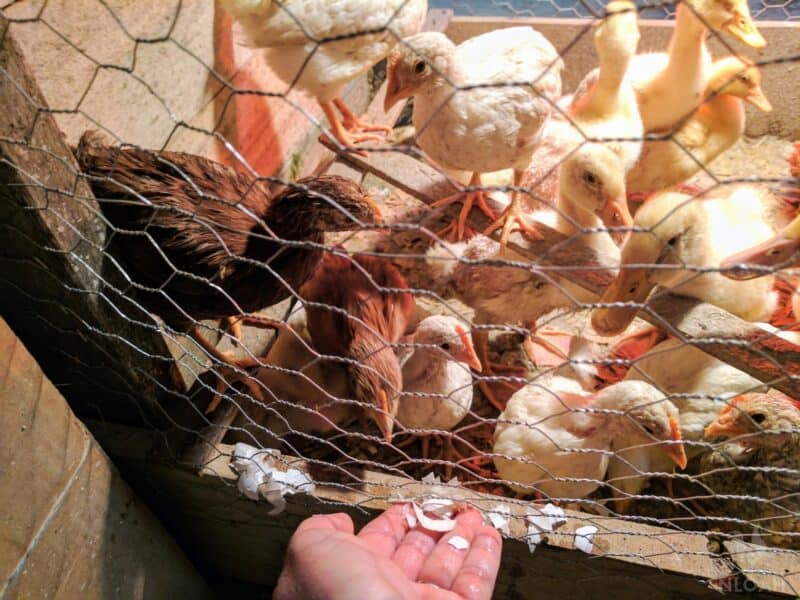
Preparing Grits for Your Flock
Preparation and serving of grits depends on what you want to do: if you want to give your birds raw grits, you can simply scatter it and let them peck at it, mix it in with feed to fortify it, or just hand it over on a bowl or tray.
Cooked grits should be prepared according to the package instructions until they’re considerably softened but will still fall apart easily when touched with a fork or spoon, and preferably made with water only.
Avoid overcooking the grits: if it turns out like a gelatinous formation that holds up like a cake or loaf, you’ve overdone it. Remember that sticky grits are more likely to cause crop and gizzard problems in chickens.
Feeding Grit to Your Chickens
For starters, never put the grit in with their food. You do not want your chickens eating too much grit because they cannot tell what’s what. They will wind up constipated and will not be able to thrive because they cannot extract all the nutrients contained in the food they consume.
Place your grits in a small container away from their feed bowls. Chickens are intelligent and will find the grit bowl on their own.
Your chickens will be able to distinguish what is food and what is grit. They will only eat what they need to digest their food.
The absolute best grits to feed your chickens are granite grits, flint grits, or coarse gravel.
There are some actual foods that if prepared properly can act as grit. You need to remember any food item will be absorbed quickly. This means the grits will not stay in the gizzard long enough to effectively extract the vitamins and minerals from their whole meal.
The Ratio of Grits to Grains
You need to supply grit at a ratio of 1 (grit):4 (feed). Chickens will eat only what they need. Food that can be useful as grits should always be served separately near the supply of effective, longer lasting granite grits, flint grits, or coarse gravel.
Feeding Grit to Free-Range Chickens
Free-range chickens should not need you to add grits into their diet. They will find coarse sand and small rocks for themselves as they forage.
However, before you give up on the idea and celebrate not needing to supply grits to your free-range chickens, you need to do the following:
- Inspect the area where your chickens are foraging to make sure they can access soil and that there are sufficient pebbles for them to consume
- Loosen the soil regularly so that they can get access to the soil
- Pull out chunks of hay, grass, or plants without removing the soil; leave the plant with the soil where you pulled them up
Always remember to check your chicken’s foraging area. If you do not take the time to loosen the soil and give them access to the soil and pebbles they will develop digestive issues.
Remember that chickens need grit every day; that means inspecting daily and turning the soil whenever the chickens cannot access it.
Can Baby Chicks Have Grits, Too?
Yes, but only rarely and in very small quantities…
Baby chicks won’t have any trouble with corn once they are old enough to start trying new foods beyond their starter feed. You should also keep in mind that raw grits are even more challenging for them to digest since they are young and developing.
I highly recommend it if you want to give your chicks a little taste of grits you stick with completely plain cooked grits only, and only give them a few tiny nibbles to try.
They’ll benefit from the energy and nutrition that grits have to offer, but they’re in no way capable of fulfilling all of their nutritional requirements. It is a treat only!
FAQs
What would happen to my chickens if I don’t give them grits?
Not supplying grit can lead to constipation, digestive issues, problems in the crop, malnutrition, and death.
Are Yellow Grits Okay for Chickens?
Yes, yellow grits are just fine and perfectly nutritious for chickens.
Are White Grits Okay?
Yes, they sure are. White grits are basically identical to yellow grits nutritionally and totally fine for your flock.


Get your gift and learn things like:
- how to make this really quick pest spray
- how to prevent egg waste
- two cheap automation devices that will make your life easier
Tom has lived and worked on farms and homesteads from the Carolinas to Kentucky and beyond. He is passionate about helping people prepare for tough times by embracing lifestyles of self-sufficiency.