
Our ducks show all kinds of strange and sometimes funny behaviors. They tend to be inquisitive and sometimes playful with people and each other. Some of my fondest afternoons are spent watching my ducks roam around and explore the yard. But for more than just fun, it pays to be acquainted with the way they act.
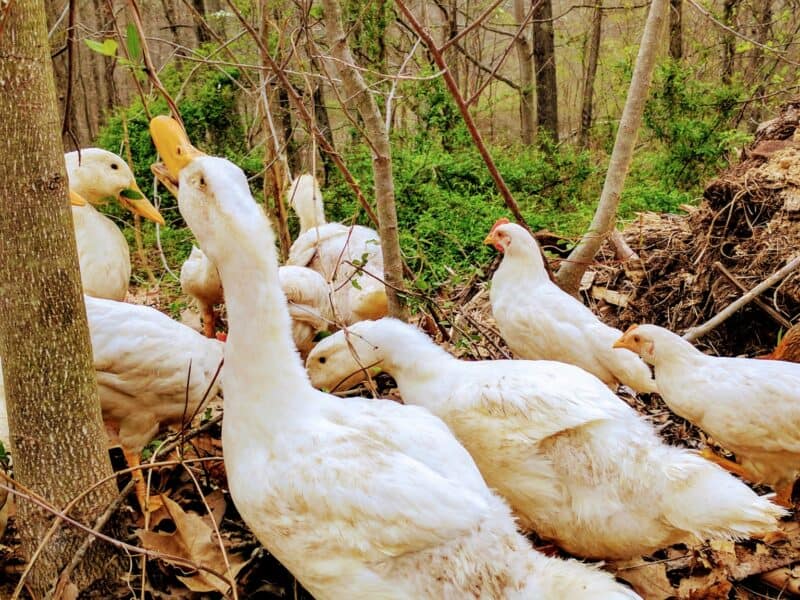
Sometimes their behaviors can tip you off that something is wrong. One behavior that some new owners don’t expect is panting. Yes, that’s right. Ducks and ducklings alike will pant, or at least they will sometimes appear to pant.
This seemingly strange behavior is may or may NOT be something to worry about, as you are about to see. In all cases, you need to investigate and make sure they are all right. Keep reading, and I’ll give you some good reasons why your ducks might be panting.
Duck is Too Hot (Especially Likely for Ducklings!)
The first reason on our list is also the most obvious, or at least the one you probably thought of first. If our ducks and ducklings get too hot, they will pant, which is simply an open bill accompanied by heavy breathing.
Choking
If your duck is pumping its hind end up and down erratically and holding its bill open during or after a meal, or opening and closing it in long stretches, it might be choking. Regrettably, adults and ducklings are both prone to choking, especially if you give them sticky food like mash or if they’re forced to eat dry food without enough water nearby to help them swallow.
Ducks will also happily pick up and try to swallow things that are totally inedible. Obviously, this is a major hazard, and you should try to inspect the back of their mouth, but you should probably refrain from removing the object yourself. Get the bird to a vet right away.
High Stress Levels
Ducks are like any other animals that we might keep in that they can suffer from stress; and it can come from internal or external sources.
If they’re feeling too much pressure from rivals or aggressive mates in the flock, dealing with loud and startling noises, undergoing constant predator attacks, kept in dirty conditions, or too hot or too cold, they will start getting stressed out.
A consequence of sustained, high-stress levels is panting, much in the same way that a dog will do when frightened or stressed. Make it a point to reduce or eliminate these stressors systematically, and your ducks should doing it.
Illness or Injury
Another cause of panting is illness and injury. Injury causes pain, of course, and proportional to the pain will be the stress level that the duck experiences. As we just learned, high stress equals lots of panting.
Illness can be trickier to diagnose, both because ducks are stoic and also because some respiratory diseases can immediately cause panting since they make it harder or painful for the duck to breathe. Things like:
- Aspergillosis (a fungal respiratory disease that has difficulty in breathing among its symptoms),
- avian influenza,
- mycoplasma respiratory infection,
- and others that are non-respiratory, such as duck plague.
If you’ve ruled out stress, problems with food or temperature, and only one or two of your ducks are panting, suspect sickness.
Airway Obstruction
Something else to suspect, particularly in the case of a single duck seeming to pant with no other cause, is obstruction of the airways…
This could be related to illness in the form of mucus or phlegm, or there might be a physical blockage of the airway due to swelling, internal injury, or even the inhalation of something like plastic, twine, or other fine and clingy materials.
Chances are this is nothing you’ll be able to correct yourself, but it will cause the duck considerable stress, and they would probably end up panting continuously. This is not good, so don’t hesitate to take the affected animal to the vet for assistance. Keep in mind that if the situation gets worse, they might suffocate, so act quickly.
Clogged Nasal Passages
This is sort of a rider to the previous cause on our list, but distinct enough that it requires its own entry. Keep an eye on the nostrils of your ducks if they seem to be panting more than usual, and you’ve ruled out the other causes on our list.
If you also notice your duck to be sneezing frequently, it could because they’ve got something in their nose – assuming they aren’t getting sick, of course.
Check their nose for caked-up dust, a tiny sliver of grass, straw or hay, or anything else that could get in there and irritate them. Sometimes they can dunk their head and get it out, but if they can’t, you’ll need to help them, but do so carefully.
Gapeworms
One of the worst possible causes of panting is the gapeworm (Syngamus trachea). This parasite can afflict many kinds of birds, and tends to take up residence in the trachea or the bronchi as part of its reproductive cycle.
Panting, coughing, head shaking, and sometimes sneezing are common symptoms, and if you rule out other causes it definitely warrants a trip to the vet pronto because the longer the infection goes on the more damage they can do to the respiratory system of your poor duck.
This parasite can end up suffocating your ducks, so as you can probably guess, a visit to the vet is in order.
Dehydration
I’ve said it over and over again, and so have lots of other folks trying to educate others about ducks: your birds must have unlimited access to fresh clean drinking water at all times.
Don’t assume that they’ll get all the water they need to stay hydrated when they take a dip in the pond or pool. Plus, that water might be so filthy that they don’t want to drink it – at least it will be if you haven’t been cleaning up after them!
Make sure that their water source is constantly full, clean, and clear. Ducks dehydrate quicker than you think with not enough access to water, and when they do, they will pant.
Actively Swallowing Food
The next reason on our list is thankfully nothing to be worried about. When your ducks are actively swallowing food, they may keep their bill open for a amount of short time or open and close it rhythmically, sort of like a fish.
As long as they stop doing this and then go back to the bowl for more food, or water, you don’t have a thing to worry about. If they keep doing it, especially while or immediately after they are done eating, there might be a problem. Those are the next two entries on our list.


Get your gift and learn things like:
- how to make this really quick pest spray
- how to prevent egg waste
- two cheap automation devices that will make your life easier
Tom has lived and worked on farms and homesteads from the Carolinas to Kentucky and beyond. He is passionate about helping people prepare for tough times by embracing lifestyles of self-sufficiency.