
The lives of many plants start with a single seed. It’s pretty miraculous when you think about it. But that is going to be of no comfort if you run into a seed when snacking on fruit, or if a relative finds one in your homemade pie!
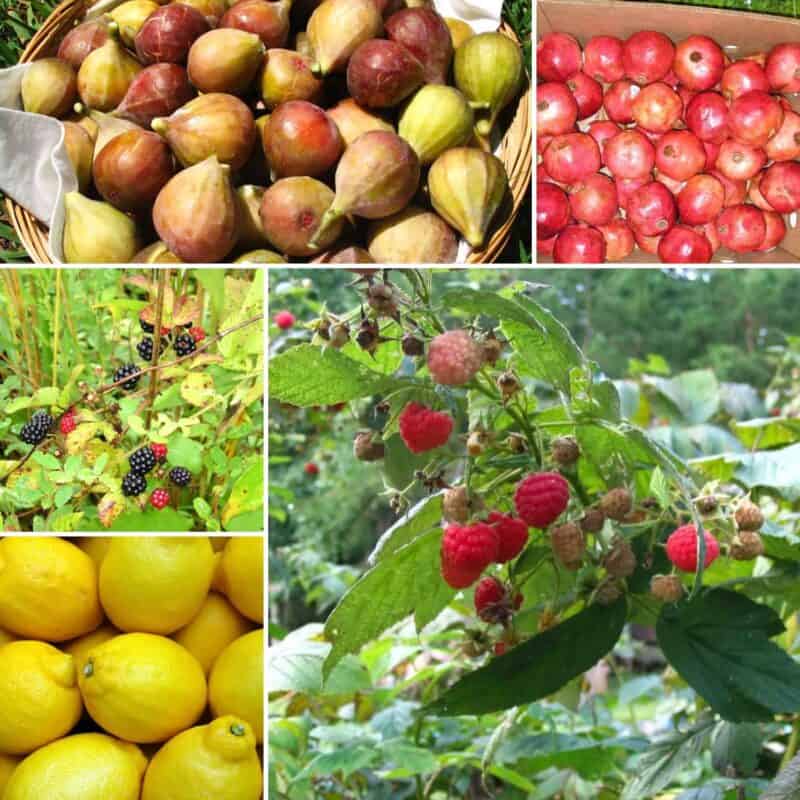
If you’re tired of dealing with annoying seeds while trying to enjoy or use a perfect piece of fruit, you can always choose fruits that have only one seed that is easy to remove. But today I’m bringing you 20 delicious and nutritious fruits that are seedless (or have tiny seeds) and ready to eat as-is or be put to use in all sorts of recipes.
To clear up one quick thing before we go on, some of the fruits on this list are not truly seedless. They might indeed have seeds, but they’re so tiny or even chewable that it’s effectively seedless for all practical purposes – including eating out of hand and cooking! So, with that in mind, let’s get on to the list.
| Fruit | Seedless cultivars | Seed status |
|---|---|---|
| Banana | Cavendish and other cultivated dessert bananas | Normally seedless; aborted/vestigial seeds |
| Kiwi | No established seedless cultivar | Small, edible seeds |
| Raspberry | No established seedless cultivar | Small seeds |
| Blackberry | None established; Arapaho, Stark Black Gem have relatively small seeds | Small seeds |
| Blueberry | No well-established commercial seedless cultivar | Small seeds |
| Strawberry | No seedless cultivar | Small, edible achenes |
| Grape | Thompson Seedless, Crimson Seedless, Black Corinth | Normally seedless; aborted seed tissue |
| Watermelon | Seedless/triploid cultivars | Normally seedless; undeveloped seed traces |
| Pineapple | Most commercial cultivars, e.g. Smooth Cayenne | Normally seedless under normal conditions |
| Orange | Washington Navel and other navel oranges | Normally seedless; occasional seeds |
| Lemon | Meyer | Usually/typically seedless |
| Lime | Persian/Tahitian (including Bearss) | Normally seedless or nearly seedless |
| Clementine | Clemenules, Marisol and other Clementine selections | Conditionally seedless; cross-pollination can produce seeds |
| Persimmon | Fuyu, Hachiya and others can produce seedless fruit | Conditionally seedless; cross-pollination can produce seeds |
| Pomegranate | Eversweet | Not truly seedless; seeds are soft/less noticeable |
| Passionfruit | Some low-seed/seedless selections | Usually seeded |
| Dragonfruit | No need for seedless cultivar | Tiny, edible seeds |
| Guava | Indonesian Seedless; some triploid/seedless types; some “White Seedless” types | Seedless or low-seed depending on type |
| Starfruit | Some cultivars have few/small seeds | Small seeds |
| Fig | Brown Turkey, Celeste, Chicago Hardy | Typically/conditionally seedless |
1. Bananas
The single most popular tropical fruit in the world, though no longer the delicacy it was once considered. Bananas are virtually seedless as any seeds they do have are so small they are almost undetectable. Those tiny black specks you see in the center after cutting one? That’s them.
But keep in mind you’ll mostly find these very small seeds in cultivated bananas. Other varieties that grow in the wild can have really hard and large seeds.
Bananas are packed with essential nutrients such as potassium, fiber, and vitamin C. They are a great snack on their own or can be used as a sweet addition to smoothies or oatmeal.
2. Kiwis
One of the most interesting tropical fruits, and also one with a flavor that is highly variable. Some are quite tart, while others can be extremely sweet. Kiwi also has a unique texture with its fuzzy skin and juicy interior hiding edible seeds that are too small to worry over.
A serving of kiwi has good amounts of of vitamin C, potassium, and fiber. Kiwi pairs perfectly with berries in a fruit salad, or can be enjoyed on its own as a refreshing snack.
3. Raspberries
Among the most popular berries out there, and these have teeny tiny seeds that add a lovely little crunch to jams, jellies and preserves.
At least, until one gets annoyingly stuck between your teeth! Raspberries are high in antioxidants and vitamin C, and are perfect for adding to smoothies, yogurt, or as a simple and healthy snack eaten out of hand.
4. Blackberries
You can think of blackberries as really just bigger and sweeter raspberries, with a slight tartness. And it makes sense because the two are closely related botanically. Their seeds are inside these sort of pods called drupelets that you can see with the naked eye, but are much smaller than the ones found in most other fruits.
They are jam-packed with vitamin C, fiber, and antioxidants which have lots of benefits for our bodies Blackberries make for a delicious snack as-is or can be made into superlative jam or preserves.
5. Blueberries
Perfectly ripe, plump blueberries are one of life’s greatest pleasures, and this is one pleasure you won’t need to worry over seeding. While most do contain edible seeds, they very, very small.
Blueberries are loaded with antioxidants, fiber, and vitamin C, and make a healthy and delicious snack on their own, too.
6. Strawberries
There is hardly any fruit on this list that contains more seeds than a strawberry, and you’ve been eating them all your life. The kiwi probably has more, starting from several hundred to over 2,000 depending on cultivar, while strawberries “only” have about 200…
These “seeds” are in fact called achenes, and are all over the outside of the berry, those little golden or brown divots your see. While these look like seeds, these are botanically the fruit, with each achene being a one-seeded dry fruit.
Strawberries are rich in fiber, vitamin C, and folate, and are perfect for adding to smoothies or making homemade jam.
7. Grapes
Grapes can have seeds or be seedless, but seedless grapes are a common supermarket staple, as they make for easy snacking without the hassle of seeds. Many cultivars have been modified to be seedless, for example Thompson Seedless, Black Corinth, Crimson.
Grapes are packed with antioxidants and vitamins, and are always a wonderful addition to any cheese board or fruit salad.
8. Watermelon
There are more watermelon cultivars out there than you can shake a stick at. Watermelon is full of hydrating water, vitamin A, and vitamin C, and is perfect for a refreshing summer snack.
Some have seeds, some don’t, and some are variable depending on how they are bred and how they are pollinated. The seedless varieties are typically produced by plants that have three sets of chromosomes.
While seedless watermelons may not be truly seedless, they do have some traces of seeds or underdeveloped seeds, just like grapes.
9. Pineapple
Almost all commercial cultivars are entirely or practically seedless, and this is because they are propagated vegetatively and are grown without pollen sources that are compatible. This delicious fruit pairs well with savory dishes or serves as the prime ingredient in all kinds of desserts.
10. Oranges
Some of you are bound to raise a hand over this one, but I have included oranges for a good reason. Popular oranges come in seedless varieties (Washington Navel, etc.) but do note that sometimes they will have seeds.
A popular choice for snacking and juicing, oranges are high in vitamin C, folate, and fiber, and make a great addition to breakfast or savory marinades.
11. Lemons
Although rarely a fruit that is eaten on its own, lemons are an essential ingredient in many beverages, desserts, and other dishes and are available in seedless varieties.
Lemons are very high in vitamin C, and citric acid, and have many other health benefits. Look for Meyer lemons, a hybrid, which tend to produce seedless fruit and are slightly sweeter than regular ones.
12. Limes
Just like their lemon cousins, limes are a common ingredient in many dishes and beverages, and also just like lemons they are also available in seedless varieties (Persian, Tahitian, etc.)
Limes are packed with vitamin C and have many other benefits, and it is nice to enjoy that indescribably refreshing zest without worrying over those darned seeds.
13. Clementines
Clementines are not oranges, but are instead a kind of tangerine and some varieties are known for being seedless and easy to peel (when cross-pollinated is prevented). They are rich in dietary fiber, vitamin C, and vitamin B1 and are delicately sweet.
Clementines are a perfect and convenient healthy snack when on-the-go, and are also a regular ingredient in citrus marinades, confections and desserts. You can also juice them, but it takes a bunch to make even a little juice!
14. Persimmon
Persimmons are an interesting fall fruit that can be found in both seedless and seeded varieties. A seedless cultivar is the Fuyu, when it’s not cross-pollinated, at least, which has a bright orange-red skin when ripe, and stays firm when eaten.
It is not as sweet as other persimmons, but it still packs a lot of flavor and nutrition: they are loaded with vitamin A, vitamin C, and fiber. A rare but inspired addition to fruit salad or just enjoyed as they are.
15. Pomegranate
Pomegranates are one of the most interesting fruits on this list. Pomegranates can have hundreds of seeds inside depending on the cultivar, and you cannot miss them. The seeds are not visible, though: what you see are actually called arils and the seeds are nested inside.
The arils themselves are sweet and tangy, while the rest of the “fruit” is a hard shell or spongy membrane. So, the pomegranate is in no way seedless, but since the arils are the soft part we eat, it goes on this list.
16. Passionfruit
Another tropical fruit, and one with a beguiling sweet aroma and tart flavor, this round fruit can be found in seeded and seedless varieties, although it’s not always easy to tell them apart.
Even so, the seeds themselves are tiny and don’t get in the way of eating that uniquely sweet flesh. It is worth noting that the “true” seedless variety of passionfruit is a little more acidic and tangier than the one with seeds which is sweeter – but both pairs wonderfully with ice creams or custards.
Packed with fiber, vitamins A and C, and potassium, passionfruit is another stupendously good and sometimes seedless fruit on our list.
17. Dragonfruit
Properly called pitayas, these are an extremely popular fruit in Asia, but one that actually hails from the Americas. These cactus-grown, leathery, scaled fruits looks like something that would grow on another planet, and are full of soft, creamy white flesh and tiny black seeds that give it a pleasant crunch.
Dragonfruit can be used in much the same way that kiwis can, though they are somewhat milder than kiwis.
18. Guava
Most guava varieties do have seeds, but those are actually edible – and crunchy! On the other hand, the varieties you typically find in supermarkets do not have seeds. But if you really want a seedless variety, Indonesian guava.
Guava is rich in antioxidants, vitamin C, and fiber, and is a common fixture in beverages, relishes, salsas and more.
19. Starfruit
Starfruit is a totally unique tropical fruit because of its shape: as the name implies, it’s in the shape of a star, or rather a star-shaped barrel with long, ridged staves. Starfruit has an exotic flavor that can be bitter or sweet depending on many factors.
It is nonetheless healthy, high in fiber and Vitamin C, and can be used in many traditional Asian dishes with a little know-how.
20. Figs
A fruit enjoyed and written about since antiquity, figs are rich in fiber, potassium, and calcium, and are perfect for adding to oatmeal or enjoying on their own as an energizing and delicately sweet snack.
Figs can be seeded or seedless, with some cultivars of the common fig species (Ficus carica) being practically without any. Brown Turkey, Celeste, and Chicago Hardy cultivars can be seedless or have very small, soft seeds.

Get your gift and learn things like:
- how to make this really quick pest spray
- how to prevent egg waste
- two cheap automation devices that will make your life easier
Tom has lived and worked on farms and homesteads from the Carolinas to Kentucky and beyond. He is passionate about helping people prepare for tough times by embracing lifestyles of self-sufficiency.