
If you are new to raising chickens, the question may have crossed your mind – can I breed chickens of my own You sure can! You can easily breed your own hens and roosters so that you have hatching eggs for adorable chicks.
No doubt, you’re filled with questions, and likely worried you might screw up and have a dozen chickens die on you. Have no fear, I’m here to answer any pressing questions you may have…
And let’s start with probably the most obvious of them all:
How Do Chickens Actually Mate?
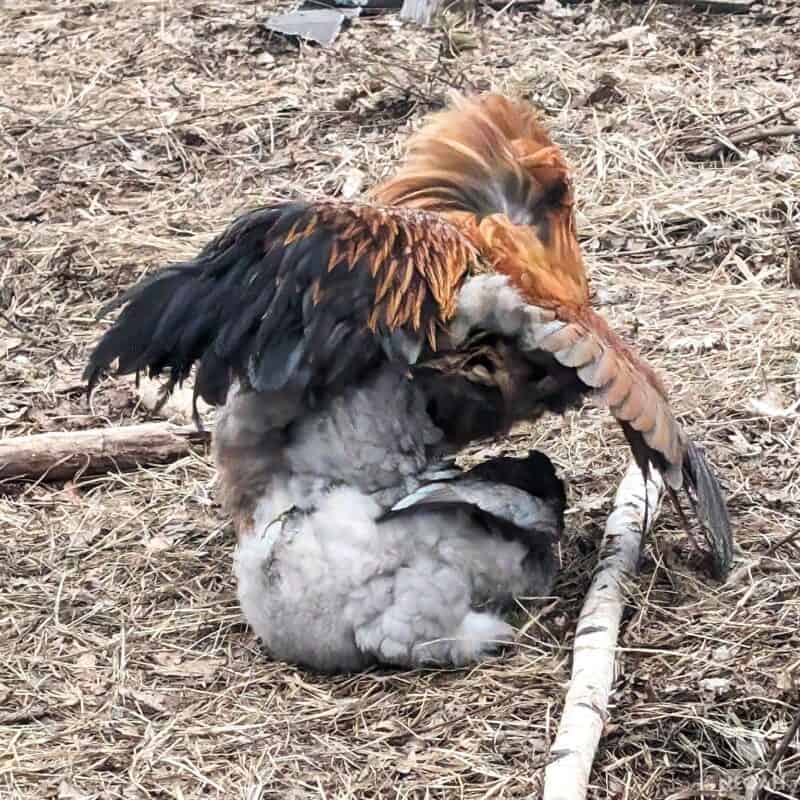
Mating starts with the rooster mounting the hen after courtship, typically consisting of a mating dance, vocalizations, and bribing her with some choice treats that he found or kept.
Once the female submits, she will lower herself down to the ground and spread her wings for balance. The male rooster will then climb on top of her, lower his tail below hers, and press his cloaca, or vent, to the hens.
At this point sperm will flow from the testes through the papilla, out the rooster’s vent and into the females through direct contact, colloquially referred to as a “cloacal kiss.” Charming, I know.
Anyway, once this occurs, the sperm will find its way up and into the oviduct of the hen to fertilize the eggs.
The whole process is pretty quick and goes on without much fuss except for some flapping and possibly some vocalizations. It is concluded rapidly after which the rooster will hop off, both birds shake themselves out, and then go on about their day.
How Old Do Chickens Have to Be to Breed? When Do They Start?
Which came first – the chicken or the egg?
If you’re trying to hatch your own eggs, you’ve got to start with the chicken – and you’ve got to make sure that chicken is actually ready to be bred!
Most chickens will reach sexual maturity around 18 to 21 weeks of age. That’s true for both roosters and hens. Roosters can start mating at 4 months of age, while hens will start at around 5 months.
This can vary, though, and peak reproductive ability isn’t reached for some time after (until a bird is around eight months of age).
It’s important to note that heritage breeds tend to reach maturity later. This means they take longer to lay eggs and also for those eggs to be fertile.
As you likely know, a rooster’s presence isn’t necessary for a hen to lay eggs. However, it is needed for those eggs to be fertile.
Some roosters reach sexual maturity a bit sooner, around four or five months of age – which is when you’ll notice telltale “rooster” behaviors like crowing and strutting around.
The quality and quantity of a rooster’s sperm decreases as he ages, though most remain fertile for several years.
What’s the Ideal Rooster to Hen Ratio?
There is a common misconception that you can’t keep more than one rooster in a flock of chickens or it will lead to fighting. That is only partially true.
It is true that having multiple roosters who are fighting over hens can be detrimental. However, as long as there are plenty of hens to go around, you shouldn’t have any issue with your roosters. Make sure each rooster has at least four to five hens of his own, and you will be fine.
In keeping to this ratio, it’s possible to have a flock with dozens of roosters – you just need lots of hens. The photo above wasn’t a joke!
Can Eggs Only Be Fertilized At Certain Times of the Month or Year?
Both hens and roosters take a brief hiatus from breeding in the winter months. They can breed at any time of the month in the warmer periods of the year, but in the late fall, winter, and early spring, the likelihood of a hen hatching eggs is much less.
This is because shortened daylight hours trigger two things – one, a decline in the number of eggs a hen lays, and two, a molt.
Hens stop laying as many eggs (sometimes not laying eggs at all) as less daylight hours are available. Her reproductive size will actually shrink back to the size it was when she was a pullet. Roosters take a break, too, with their fertility declining until the spring.
While it’s possible to hatch eggs during the winter, it’s unlikely.
Can Hens Hatch Eggs in Winter? Can the Eggs Freeze?
Hens can hatch eggs in the winter, but it’s not as common for several reasons…
The first is that hens, as mentioned earlier, don’t lay as many eggs when daylight hours are reduced and roosters aren’t quite as fertile.
Hens also lose their natural instinct to sit on eggs as the chance of the chicks surviving, in nature, would be much lower in the winter.
Not only that, but eggs that have frozen are unlikely to hatch. If you plan on hatching your own eggs in the winter, you’ll want to collect them as soon as possible after they have been laid.
You’ll also want to plan on hatching eggs yourself, in an incubator, rather than relying on a hen to do it – the conditions just aren’t optimal at this time of the year.
Instead, plan to breed chickens and hatch eggs in the spring only. Your hens will be more focused on laying eggs than on staying warm – and you won’t have to worry about the eggs freezing in the coop, either.
Do You Have to Have Certain Breeds of Chicken?
Can different breeds of chickens mate? Absolutely. In most cases, chickens of different breeds can successfully mate with no ill effects – you might just notice some interesting appearances among your flock!
However, there are some breeds that you really shouldn’t attempt to breed. Hybrid chickens are usually included in this category.
Birds that have been hybridized for fast growth and typically, meat production, can lay eggs, but the resulting offspring won’t be true to breed, and may have lots of health problems.
How Many Eggs Will a Hen Hatch Have?
If allowed to sit on her own clutch of eggs, a chicken can hatch anywhere up to 12 eggs. However, this isn’t as common, with most hens sitting on just five or six at a time.
It all depends on the disposition of the bird, and her inclination toward broodiness. She’ll collect about a dozen or so before sitting on them but many of them won’t ultimately live to hatch.
What to Do if a Hen Won’t Sit On Her Eggs?
This post contains affiliate links. If you click them and buy, I may earn a commission. Read my disclosure policy.
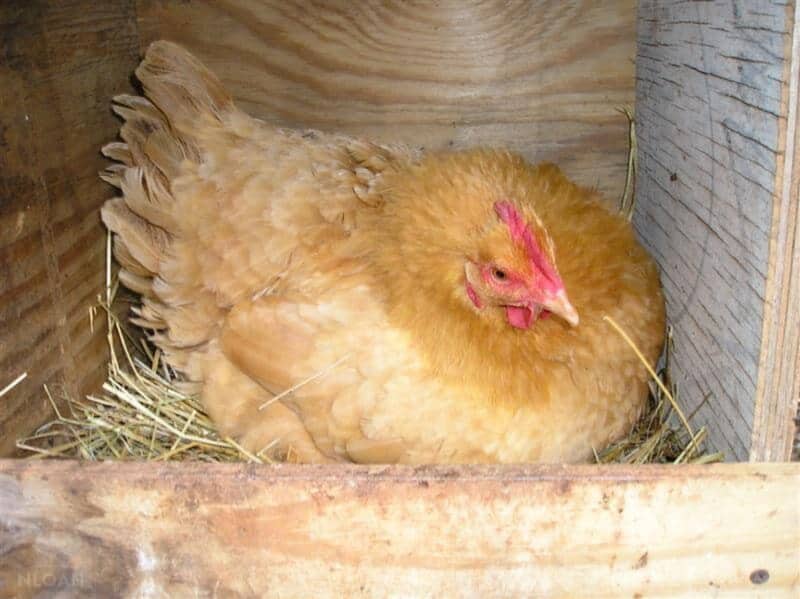
If a hen refuses to sit on her eggs, you aren’t going to be very successful in forcing her to go broody. Therefore, you will need to incubate them yourself.
That sounds intimidating, but it’s not.
It takes 21 days to hatch an egg. You can buy a reliable incubator like a Hova Bator. You’ll need to keep the eggs at 99.5 degrees at all times and about 40 to 50 percent humidity for the first 18 days (65 to 75 percent therefore).
You can make your own incubator out of an insulated box and an adjustable heating pad, but I recommend buying an actual incubator. That way, the variables will all be provided for you – you just need to control things like temperature and humidity.
If a hen won’t sit on her eggs, all you need to do is collect them and keep them in a cool, dry location until you have enough eggs to fill an incubator. Then you can fire it up, and hatch your own baby chicks!
Do Hens Always Stay On Their Eggs?
Left unattended, a broody hen will stay broody for around 21 days – conveniently, the time it takes to hatch a clutch of fertile eggs!
She’ll stay on her eggs for most of that period, getting up only occasionally to eat, drink, and poop.
Don’t panic when you see her doing this – you don’t need to intervene. In fact, this is why we turn our eggs if we are hatching them in an incubator. The brief period of disruption mimics the disruption that would occur if a mother stepped away from her eggs in the nest.
There are some situations, though, in which a hen abandons her nest altogether. Often, this is because her nest is infested with mites. Treating it with a diatomaceous earth powder can help get rid of the mites in a safe way.
Sometimes a hen will abandon her nest simply because she is young and confused. Unfortunately, there’s not much you can do until she learns the ropes on her own.
If you are interested in having a hen hatch her own clutch of eggs – rather than you needing to incubate them – you may want to choose a breed of hen that’s more inclined to go broody, like Australorps, Buff Rocks, Partridge Rocks, Speckled Sussex, or Silkies.
Are All Eggs Fertilized?
No, not all eggs are fertilized, though you will likely find that most are…
A hen will lay a fertile egg as soon as the second day after a fertile rooster is introduced to the flock. It can take a few days for him to get to all of the hens, so you might not reach peak fertility until a week or so after a rooster is introduced.
After roosters mate with hens, the hen stores sperm in the sperm host glands. The sperm can live here for two weeks, so no worries if your rooster has a large flock to attend to. She’ll lay fertile eggs for a while after he’s gone!
Will a Hen Lay a Whole Clutch to Sit on At Once?
No. A hen will lay just one egg a day or every other day and sit on the nest once she has a dozen or so eggs.
Watch a Rooster’s Behavior to Tell if He is Ready
While hens and roostrs both become fertile at approximately the same time, watching your rooster can give you a good idea of whether he is ready to breed.
Some will be more aggressive, for instance.
However, it’s important that you watch your rooster for this aggression even after you’re sure he’s already breeding. The breeding process can be somewhat violent, with a rooster using his beak to grab the hen’s neck or comb, jumping on her back, and using his feet to stabilize himself.
Most of the time, this aggression during breeding is nothing to worry about, but if you notice your hens getting bloddied up or losing feathers, you may have to use a different rooster – he might be too overzealous.
How Can You Tell If an Egg Is Fertilized?
There are a few ways to tell if an egg is fertilized, but unfortunately, most of the time, they involve destroying the egg.
If you crack it open and notice a small white spot on the top of the yolk, about four millimeters wide, this is known as a germinal disc. It tells you that the egg has been fertilized.
You can also candle an egg, which won’t require you to open it. Use a small flashlight beneath the egg. If it’s fertilized, the egg will be mostly opaque.
Selectively Breeding Chickens – is it Possible?
When you chose your flock of chickens, you probably did so because you had a certain goal that you were trying to meet. Perhaps you were interested in raising a flock of egg laying birds. Maybe you wanted to produce your own meat…
Whatever the case may be, you may also be wondering if it’s possible to selectively breed your flock so that the best producers pass on the top genes.
In most cases, it is. However, you will need to take extra measures to make sure your chickens that need to be bred stay separated from those that you do not wish to breed.
It’s impossible to tell which hens have been bred (and by which rooster). Keep chickens in separate pens and coops if you want this, and don’t ever allow them to intermingle.
When selecting any kind of chickens that you want to breed, look for good overall health and vigor, friendly temperaments, and other characteristics that might be important based on your goals.
Also, you don’t need to worry about inbreeding, as it’s not very likely it will cause any problems (only after 5-6 generations of continuous inbreeding).
How Many Eggs Can a Hen Hatch Per Year?
The average hen lays around 250 eggs per year. However, not all of those will be fertile. The fertility rate is high, in most cases – around 93% – but hatchability is another category entirely.
You can expect an 85% hatch rate under perfect conditions, so around 200 eggs – but that’s being extremely optimistic!
However, knowing exactly how a hen and rooster’s reproductive systems work – and the best methods for collecting eggs that you plan on hatching – is a good way to increase your likelihood of success.
Hopefully, the tips above have been useful in teaching you everything you need to know about breeding chickens! Now go collect those eggs!

Get your gift and learn things like:
- how to make this really quick pest spray
- how to prevent egg waste
- two cheap automation devices that will make your life easier

Rebekah is a high-school English teacher n New York, where she lives on a 22 acre homestead. She raises and grows chickens, bees, and veggies such as zucchini (among other things).
I can’t find the answer to this anywhere. Will the hatched chick be the breed of the hen, the rooster, or some combination?