
DIY liquid hand soap is not only super easy to make, it will save you a lot of money without subjecting your body to harsh chemicals found in many commercial liquid soaps.
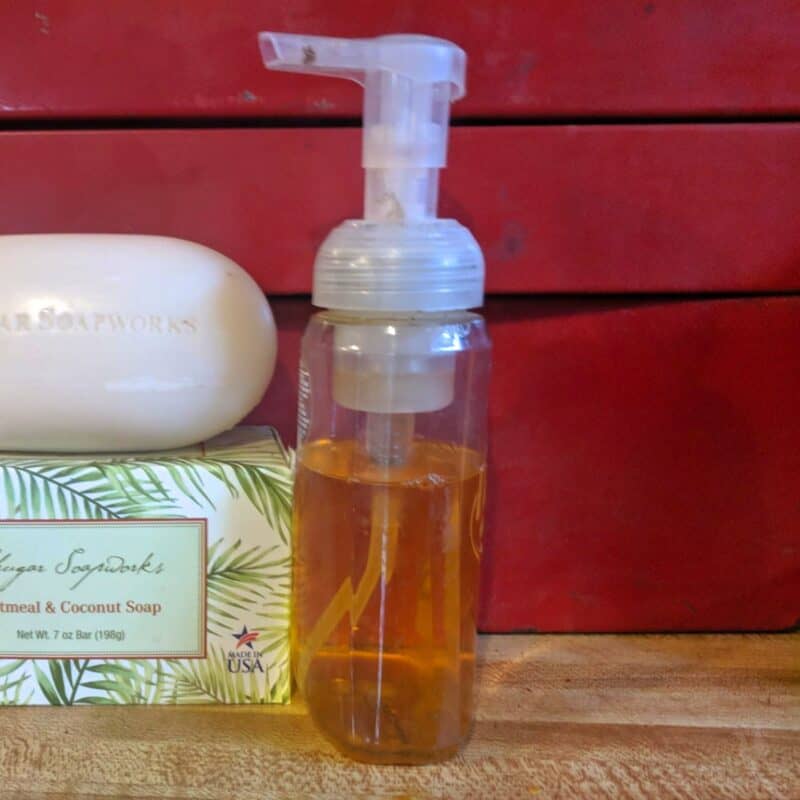
Learning how to inexpensively make your own DIY liquid hand soap, laundry soap, shampoo, conditioner, and body wash (all of which use similar ingredients) will keep your body, clothing, washcloths, towels, and bedding clean… obviously!
Typically, a store-bought bottle of liquid soap would cost about $3, but you can make it yourself at home for only around $.50 per bottle. If you go through two bottles of liquid hand soap per month, that would be a savings of $60 a year, on average. On our homestead we go through a bottle of liquid hand soap once a week, so that’s $120 in yearly savings for us.

What Is Castile Soap, Anyway?
This is merely a concentrated and natural vegetable-based soap. We made our own Castile soap from lye, olive oil, and distilled water, and it turned out great! It is a hard white or mottled and fine soap traditionally made from lye, and olive oil – but you will sometimes find hemp oil, almond oil, avocado oil, or coconut oil being used.
The grease grabbing ability of Castile soap make it ideal for cleaning pots and pans, stove tops, and oven hoods. It is also often used in DIY household cleaners designed to remove dirt, grit, and germs from commodes, countertops, bathtubs, and sinks.
Alternatives to Castile Soap
Most DIY liquid soap recipes (and soap recipes in general) you will find on the internet call for Castile soap (either liquid or solid).
While it has a copious amount of uses, it’s not always easy to find… If you live in a rural region like I do, you have to resort to buying online and sometimes paying a fairly steep price, in the process.
The way you go about it is you start with a finished bar of Castile soap, grate it, then add a bunch of ingredients to make liquid soap. This will, of course, reduce the soap component and, thus, its potency.
Although this is the most often recommended type of soap to use when making liquid hand soap or laundry soap, it’s perfectly fine to use other natural ingredient and vegetable fat-based bar soaps as well.
The options here are not that many, sadly. You basically have two.
Option 1 is to use lye directly, which is also the most important ingredient in Castile soap, a.k.a. sodium hydroxide (NaOH).
Option #2 is to use another type of lye, which is potassium hydroxide (KOH). This is also called “potash lye”, while sodium hydroxide is also known as “soda lye”.
Note: both sodium hydroxide and potassium hydroxide are caustic substances, so you need to be extra careful when using them. But the soap bars, if we’re talking about the finished soap bar that’s been fully cured, though it too is based on sodium hydroxide, is not caustic, so it’s safer and easier to process

Coconut Oil As An Ingredient
Adding coconut oil is a fantastic idea because it complements Castile soap (or its substitutes) beautifully. The coconut molecules disperse in water and, not only do they make a nice foam, they help remove particles of dirt and debris. It sort of acts like a degreaser, just be sure not to add too much in your recipes.
Essential Oils as Ingredients
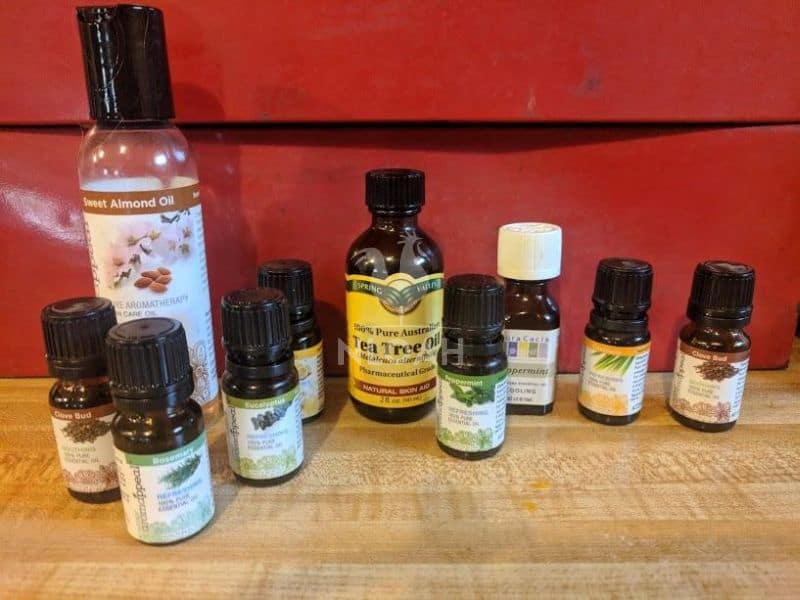
Some of these recipes call for essential oils, but “call” is kind of a strong word – because you don’t really need them! Most don’t help clean your hands any better, and they certainly don’t have other any proven benefits (with tea tree oil being the exception, here). The only reason to add them is for fragrance. This means you are free to pick whichever ones you like the smell of, but just in case you want some suggestions, I have a few just below:
- Jojoba oil
- Peppermint oil
- Grapefruit oil
- Tea tree oil
- Eucalyptus oil
- Sandalwood oil
- Lemon oil
- Cinnamon oil
- Bergamot oil
How much to add? You can find instructions in each recipe that calls for them, but as a rule of thumb, aim for 10 to 20 drops per cup (= 240 ml). You can start with 10 drops and increase the amount the next time you make it if you don’t find the smell strong enough.
Hand Soap Recipes With Potassium Hydroxide (Without Castile)
🧴 Liquid Soap with With Potassium Hydroxide and Olive Oil
If you don’t have or don’t want to use Castile soap, this is probably the best recipe you can make that will actually do a good job at thoroughly cleaning your hands. You’re stuck to either use lye, or potassium hydroxide (KOH), and this recipe uses the latter.
The rest of the ingredients are pretty common: vegetable glycerine, coconut oil and a few others. Again, KOH is caustic so be sure to follow every precaution measure possible.
🧴 Liquid Soap with With Potassium Hydroxide and Coconut Oil
Another one that uses KOH, but this one replaces olive oil with coconut oil. Coconut oil is known for being gentle on the skin when used on its own; its moisturizing properties have made it pretty popular. But when you use it in a soap base, the saponified coconut oil can be drying, and it can strip the skin’s natural oils pretty quickly!
As you can probably guess, the recipe does call for the use of lye (potassium hydroxide), but this is the only good alternative if you don’t want to use Castile soap!
🧴Liquid Soap with Honey Recipe
Maybe the idea of adding honey to your hand soap makes you cringe… or maybe you think it’s a must-try. If you do want to try this recipe, be sure to only add a little to avoid the soap being too sticky. Not only will your hands feel the same, but too much honey can clog your soap dispenser!
🧴 DIY Unscented Liquid Hand Soap Recipe
Ingredients
- 1 standard bar of Castile soap or alternative soap bar
- 4 cups of boiling water
Directions
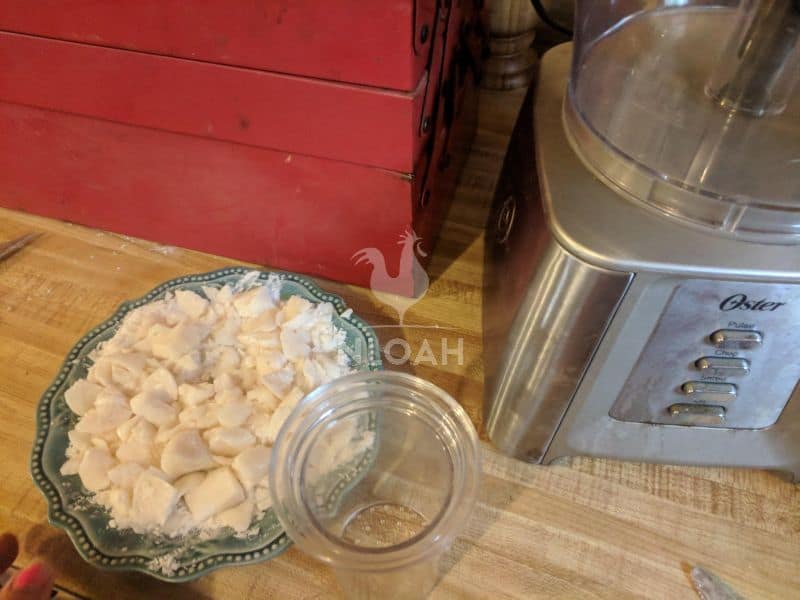
1. Grate the bar of soap as finely as possible – running it through a food processor after chopping it into manageable pieces, is highly recommended. This is how fine I do it myself:
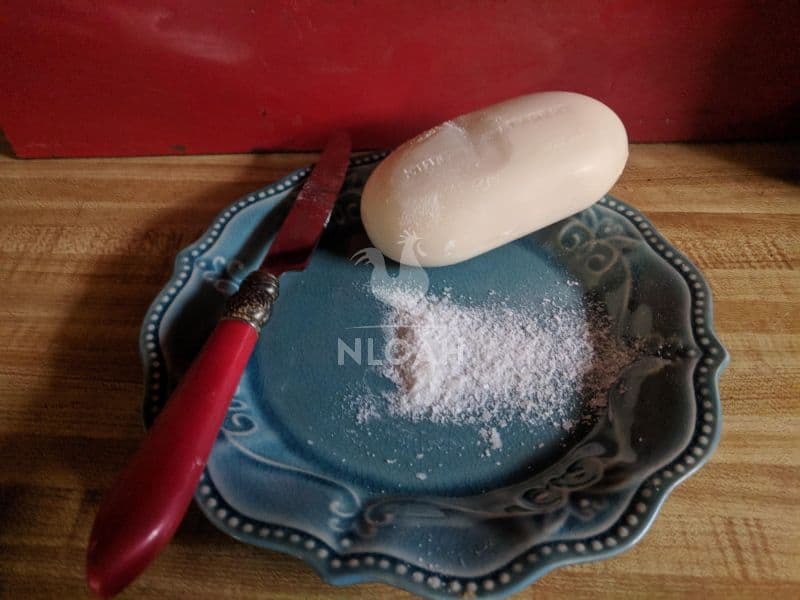
You can use a cheese grater or a butter knife with a serrated edge, like I did. To finely scrape this much of the soap only took about 10 seconds. Scraping or grating a large bar of soap like the one in the photo could take up to an hour:
2. Bring the water to a rolling boil
3. Turn off the heat to the pot of boiling water.
4. Pour in your soap flakes and stir
5. Let the soap mixture to cool for about 15 minutes before pouring it into a plastic soap dispenser. Allowing the mixture to cool for several hours or even overnight, is also fine.
🧴 DIY Liquid Hand Soap Recipe from Soap Bar
Ingredients
- bar of Castile or other soap
- 4 cups of water
- food processor, cheese grater, or a sharp knife
- essential oils – optional
Directions
- Finely chop or grate the bar of soap. You should end up with a minimum of four ounces of soap. If you end up with less, chop up part of another bar.
- Bring the water to a rolling boil.
- Remove the pot from the heat source and stir in the soap particles.
- Stir in up to 1 tablespoon of your favorite essential oils for scent. Again, some types and dosages of essential oils could be harmful to young children and pets.
- Allow the mixture to cool for at least 15 minutes, but hours or overnight is fine too. Then pour it into your dispenser.
Olive oil is the foundation of Castile soap and can be used as a substitute when a soap recipe calls for liquid Castile soap. Even if you are using liquid Castile soap, you can still add a little bit (up to a teaspoon) of olive oil directly to most recipes to yield a better final product.
Lavender Liquid Hand Soap Recipe
Ah, lavender! Light and spicy without being overwhelming – provided you don’t overdo it. Lavender has been a popular scent for years, and that’s not going to change anytime soon. Try making your own lavender-scented liquid soap here.
Castile-Based Soap Recipe with Green Tea, Lemongrass, and Ginger
Ginger and lemongrass are two scents that work very well together, but you need to be careful not to overdo it. Too much of either isn’t going to be too pleasant even when balanced by the green tea scent. That said, if you want to try this one yourself, you can get a good recipe here.
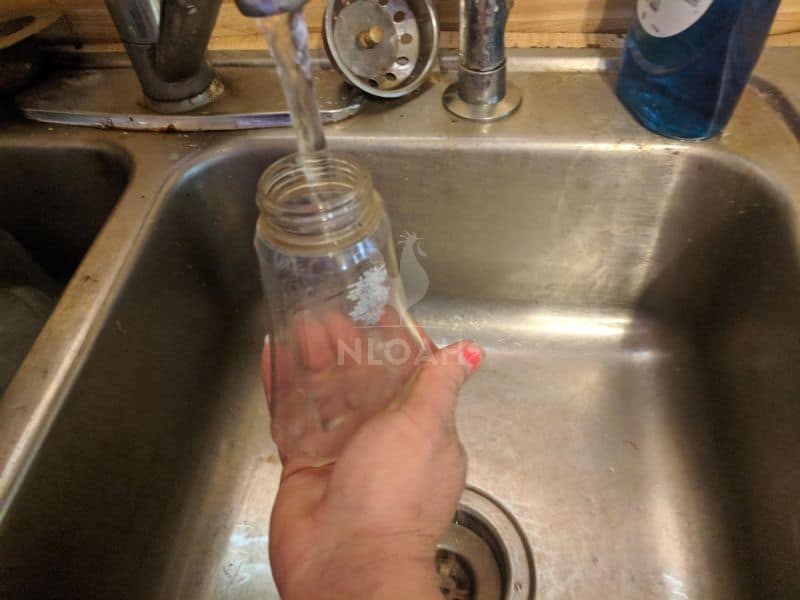
You can save a bottle of foaming hand soap you bought and the store and re-use it or order such a bottle online from suppliers who sell new containers designed for home soap, cleaner, and cosmetic making, for a fairly nominal price.
DIY Foaming Hand Soap Recipe
Some folks prefer washing with foaming hand soap for various reasons. If you do not mind using a foam soap instead of a liquid version, you can save even more money on your annual soap expenses.
One 64 ounce bottle of liquid hand soap (either homemade or store bought) will make around 60 bottles of foaming hand soap.
When making foaming hand soap, you can use a liquid hand soap as the base recipe.
Ingredients
- 1 Tablespoon of coconut oil – allow it to warm to a liquid form before using
- 2 tablespoons of liquid Castile soap or an alternative as noted above
- up to 10 drops total of your favorite essential oils
- 4 cups of warm water
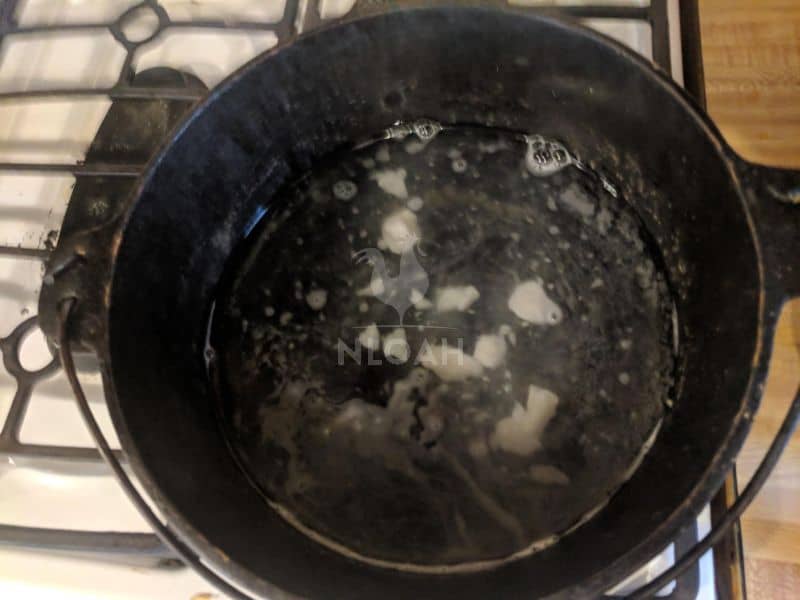
You can melt either shaved or grated soap flakes or chunks in a pot with boiling water. Melting chunks will take longer to dissolve than flakes, about five minutes longer. When using either soap chunks or flakes, make sure to stir constantly to avoid scorching or sticking.
Directions
- Pour both the coconut oil and Castile soap (or alternative) into a foaming hand soap dispenser.
- Pour in essential oils – optional.
- Pour the warm water into the dispenser, filling no more than three quarters of the available space.
- Shake vigorously.
- Put the pump cap on the dispenser and use as desired.
Liquid Soapmaking Tips
- The soap made from these recipes and likely many others, should keep for months at a time.
- If your recipe turns out too thick, bring it to a low boil again, while stirring frequently, and add a bit more water until the desired density is achieved.
- All essential oils or high doses of them, may not be safe for either young children or pets.
- Olive oil-based soaps often do not work well in foaming hand soap dispensers – they tend to clog the pump.
- If you run out of liquid hand soap to use in foaming hand soap dispenser, substitute your recipe with the same amount of Blue Dawn – it works great in a pinch, but keep in mind it strips your skin of its natural oils and won’t do anything to hydrate your skin.
- Add a teaspoon of glycerin to any foaming hand soap recipe to increase its ability to infuse moisture into the skin.
Making your own liquid hand soap typically does not take any longer than 30 minutes, provided you use a food processor to grate your soap or are using liquid Castile soap and not a solid bar.

Get your gift and learn things like:
- how to make this really quick pest spray
- how to prevent egg waste
- two cheap automation devices that will make your life easier

Tara lives on a 56 acres farm in the Appalachian Mountains, where she faces homesteading and farming challenges every single day, raising chickens, goats, horses, and tons of vegetables. She’s an expert in all sorts of homesteading skills such as hide tanning, doll making, tree tapping, and many more.
I reuse the foaming soap dispensers by filling with water and adding a few squirts of dish soap.
Thx for the recipe! Looking forward to the laundry soap one:) I’d wait til the soap cools to add the essential oils, as heat & light destroy some of their properties.
I’m lazy… I save ends of bars of soap, break them up, and stick them into a re-used pump dispenser with some water and a couple of marbles, and just let it soften up. If it gets too thick, add some water and shake (the marbles help mix it up). If it seems too thin, add a sliver of soap. Self-perpetuating!
what a great tutorial on making liquid hand soap;I’m thinking a great idea for holiday gifting.Would just like to say I appreciate how you put in that some essential oils are not good for pets or young children as many don’t know-as soon as I saw tea tree oil in the first recipe and a warning bell went off,you mentioned that not all essential oils are safe for young ones and pets-thanks for adding that.