
No matter what sort of plants you are growing, they all have a few things in common. They’ll need light, of course, and plenty of water. And they all need the right nutrition if you want them to grow and thrive. Whether you want to get a bumper crop of fruits and veggies or you just want the nicest-looking lawn you can possibly get, fertilization is one chore you’ll need to attend to…
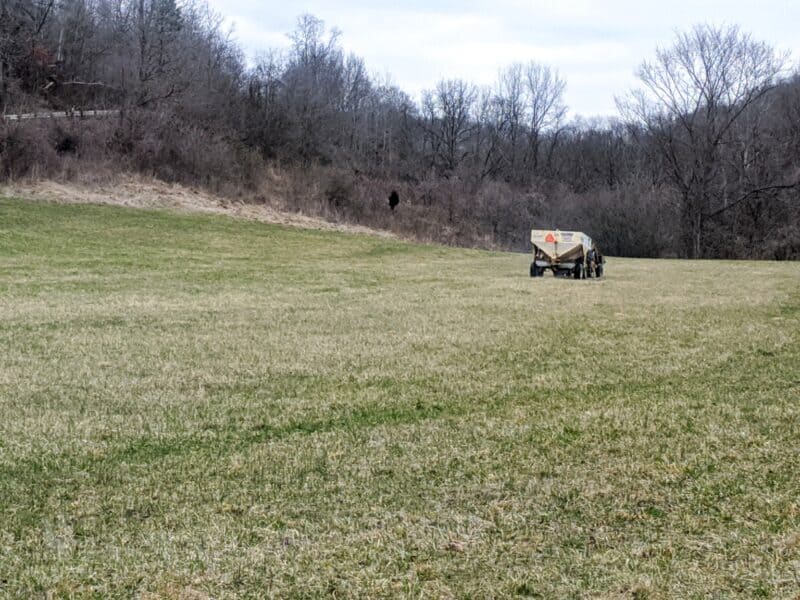
Unfortunately, fertilizing your plants or lawn can be pretty tricky. Each and every species has its own nutritional needs, you’ll need to check soil levels, and wade through the many different fertilizers that are on the market. Make a mistake at any point, and your plants will suffer. But you don’t need to worry because I’m here with a guide to help you figure things out.
Today we are looking at 30-0-4, a high nitrogen fertilizer that only provides a little bit of potassium in addition. I’ll tell you what you need to know about it in the rest of this article.
What Does 30-0-4 Fertilizer Mean?
The digits in this type of fertilizer, and all other fertilizers, form a sort of code telling you how much essential nutrients it contains, each expressed as a percentage. This is what is referred to as the NPK grade, with N standing for nitrogen, P for phosphorus and K for potassium.
Don’t get confused; the letters are taken from the atomic symbol of each element right off of the periodic table and that is why potassium is rendered as K and not another P.
Anyway, knowing this we know that 30-0-4 contains 30% nitrogen, very little phosphorus if any, and just 4% potassium. But, the last two are actually oxides, so we’re not talking about phosphorus but phosphorus pentoxide, and we don’t have elemental potassium, but soluble potash.
You can also use this info when assessing any other kind of fertilizer on the market. Just remember NPK and you’ll be all set.
Benefits
30-0-4 is definitely a high nitrogen fertilizer, and that’s pretty much its only benefit aside from just a token amount of potassium. Although it might seem like a peculiar, even nonsensical formula considering that most plants actually need phosphorus as well, why on Earth would you use 30-0-4?
There are actually several reasons: the first is that you are fertilizing plants that simply don’t need much phosphorus compared to others. Likewise, if the soil levels already have a lot of phosphorus, adding more is not only wasteful but can actively be harmful contaminating soil and water alike.
And lastly, there is a purely an administrative reason why you might have to forgo adding any phosphorus; some jurisdictions actually restrict the use of phosphorus in fertilizers, meaning you’ll have to figure out some other way to get it to your plants. If this is the case, 30-0-4 might be a good choice if you need a lot of nitrogen.
What Are the Ingredients in 30-0-4 Fertilizer?
So we know that 30-0-4 has lots of nitrogen and a little bit of potassium, but does it contain anything else? They can actually have a lot of other things. Sometimes, depending on the maker, this fertilizer might contain other inactive ingredients or fillers, or might have a lot of supposedly beneficial additives like soil conditioners, media that will help retain water, natural media or chemical insecticides, and a lot more.
Some blends might be more natural, while others could have lots of synthetic ingredients. There is a difference between a fertilizer-only product, and a weed-and-feed product. Whether this is important to you or not depends entirely on your goals, but in any case you’ll want to read that ingredients list carefully to know exactly what you’re putting into your soil.
How Should You Apply 30-0-4 Fertilizer?
How you apply 30-0-4 is determined by what form it is in. It is fairly common even though it’s somewhat specialized, and manufactures make both solid and liquid versions.
If you have a solid variety, chances are it will be in powder form or a type of granule or pellet. These can be spread with a broadcaster or a spreader, or you can spread them with any variety of manual tools (or even by hand if the instructions allow it).
Liquid varieties of 30-0-4 sometimes need dilution, and you had better pay close attention when doing it! This stuff is already a potent source of nitrogen, and if you make a mistake when diluting it or, even worse, apply it undiluted when you shouldn’t, it is absolutely going to damage your plants.
Whether you have yours in solid or liquid form, definitely check the instructions on whether you need to dilute it, and how to apply it in the garden.
Which Plants Benefit From 30-0-4 Fertilizer
30-0-4 is suitable for various plants in different situations. First and most obviously, any nitrogen-hungry plant or grass is going to love this stuff. Some plants that will need it include:
- cool-season lawn grasses (Kentucky bluegrass, perennial ryegrass)
- leafy greens (spinach, Swiss chard, romaine lettuce)
- and some fruit trees like apple, pear and peach!
Caveat: I’m not saying you absolutely need to use it just because you grow some of these plants! Perform a soil test to figure out if they really need it, and only use it if they do! Balance is always key, so don’t give them more than they need…
This fertilizer is also good for helping out plants that’ve been neglected but still have plenty of phosphorus in the soil – but again, you need to make sure they really need it before you give it to them…
Is 30-0-4 Good for Gardens?
Yes, so long as you use it with care. You don’t want to use it on any delicate plants or any plant that doesn’t have a strong need for nitrogen.
Leafy greens are good candidates in the garden depending on what you’re growing, but be very, very careful of getting it too close to potatoes, tomatoes, peppers, and eggplant. Just keep in mind that too much nitrogen can just as well affect them, so don’t fertilize them willy-nilly…
Is 30-0-4 Good for Trees?
Yes, 30-0-4 can be pretty good choice for trees as they need lots of nitrogen to produce all of those leaves to initiate and sustain photosynthesis.
It can help support fruit trees such as peach, pear, and apple trees, especially if they’ve had a highly productive season – but keep in mind that it provides no phosphorus which they also need, and also that trees and shrubs don’t usually need fertilizer.
Is 30-0-4 Fertilizer Good for Your Lawn?
Definitely. Many kinds of grass and cool season grasses particularly love nitrogen, and they’ll get plenty of it with 30-0-4. But you do want to be cautious and avoid using it too often because the nitrogen content can overwhelm a healthy lawn.
Use if your soil tests tells you to, either at the beginning of the season or to help reestablish a badly stressed lawn that has started to turn yellow.
Is 30-0-4 Good for House Plants?
Yes, but with extreme caution and generally rarely. 30-0-4 can help some house plants that needs lots of nitrogen, as with all the other plant life we’ve discussed, but it can easily roast delicate house plants so pay close attention if you decide to use it. Some of the plants that could use it include:
- monstera
- pothos
- boston fern
So don’t assume any indoor plant needs it. Even if you grow some of the foliage plants above, you first need to be sure that they really need the nutrients.
How And When Should You Use 30-0-4 Fertilizer?
It depends on your specific use case: if you are using 30-0-4 primarily for lawn care, you can use it as your go-to fertilizer assuming your lawn is healthy and you use it periodically.
It’s especially good for winter grasses as mentioned.
For all other plants, if you know they need lots of nitrogen or if they are seriously lacking nitrogen and looking neglected, is a good option.
You can also use it to quickly restore any soils that are badly depleted of nitrogen prior to planting.
What’s the Best Time of Day to Apply 30-0-4?
Always early in the morning or late in the evening.
Too much nitrogen applied to your plants can easily damage them, and the severity of the damage will increase dramatically if you apply 30-0-4 or any other nitrogen-rich fertilizer to them in the heat of the day or when the sun is high in the sky.
How Much 30-0-4 Fertilizer Do You Need per Acre?
It’s tough to say because it is highly dependent on what you are doing with it, what you are planting, and the condition of your soil. The best advice I can give you is to check the manufacturer’s instructions or data sheet for specific info on quantities.
The typical rule of thumb for fertilization per acre is that you want to use about 1 pound of fertilizer for every thousand square feet you are fertilizing. Not bad advice, but when you’re dealing with fertilizer that is this rich in nitrogen it is easy to go overboard and it’s entirely conceivable that you might need less, or that your soil might need phosphorus or a lot more potassium.
As always, test your soil and then make a decision. Remember that you can always add more later if need be, but you can’t take it back!
Who Makes the Best 30-0-4 Fertilizer?
Pennington makes a really nice “weed and feed” 30-0-4 that will help your grass obtain that beautiful vibrant green we are all after, and kill weeds at the same time. It’s a winner in my book, but do note that it has some herbicides in it, in particular 2,4-D, 2-ethylhexyl ester.
Where Can You Find 30-0-4 Fertilizer?
30-0-4 is a popular lawn care fertilizer, and also popular as the basis for all-in-one lawn and turf solutions, so you’ll usually find it at most home improvement stores, garden centers, or nurseries. You can also get it from a variety of retailers online.

Get your gift and learn things like:
- how to make this really quick pest spray
- how to prevent egg waste
- two cheap automation devices that will make your life easier
Tom has lived and worked on farms and homesteads from the Carolinas to Kentucky and beyond. He is passionate about helping people prepare for tough times by embracing lifestyles of self-sufficiency.