
Lettuce is one of the most versatile, and prolific, garden veggies that you can plant. So many new gardeners, and that includes me back in the day, got started by trying our hand at growing our own lettuce.
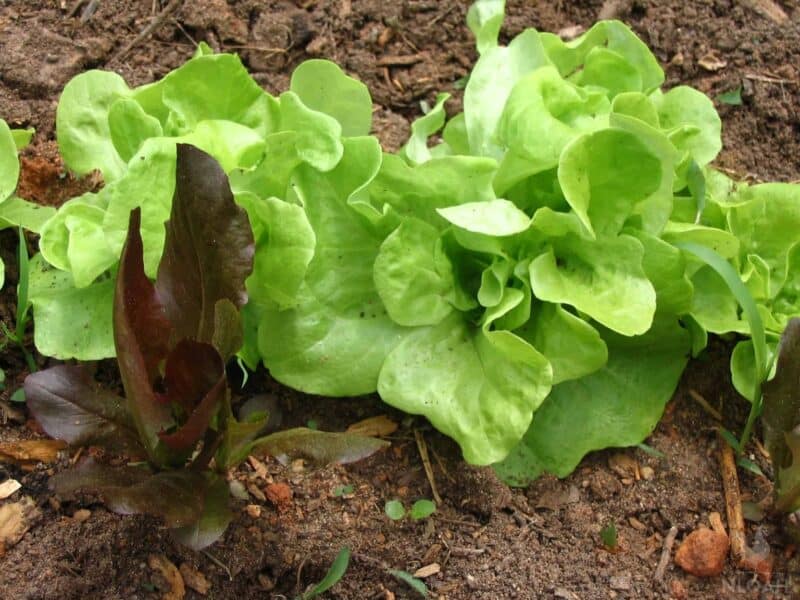
It’s about as easy as it gets, but if you want a truly stellar crop of lettuce that is big, full, crisp, flavorful, and nutritious, you need to step your game up. I’m here to help with 10 specific tips that will help you bring in a big crop of perfect lettuce plants. No time to waste, let’s dive in.
Time Your Planting for Cool Weather
Lettuce is a cool weather plant, even though it can be grown successfully in warmer conditions. For best results, start your seeds or transplant outdoors in early spring or summer, depending on zone, once the daytime temperatures are consistently at or above 50°F.
An early spring planting will get you a late spring harvest with most varieties, or an early summer harvest at the latest.
Wait too long and your lettuce will have to contend with elevated temperatures which will hurt flavor and increase the likelihood of bolting.
If You Live in a Warmer Zone, Pick a Heat-Resistant Variety
Now, if you live in the Southwest, Deep South, or any area that is prone to warm springs, don’t despair. You simply need to seek out and pick a cultivar that does better in such a warmer climate.
Good picks that I’ve had excellent results with in the past include Sunland, Little Gem, and Black-Seeded Simpson.
Many of these warm weather cultivars can still turn out big, flavorful, and perfect, and they are also a great option for folks living in cooler zones but prefer to plant a little bit later in the springtime. I guess the short version is that you should pick your cultivar based on your zone but also your seasonal preferences!
Set Spacing Based on Type
Like every other garden veggie, lettuce has its own spacing requirements. But over and over again I see a generic answer given when it comes to the spacing of individual lettuce plants, and that can set the stage for crowding and subsequently disaster!
Here’s the kicker: there is no one-size-fits-all spacing for lettuce. It depends on the type. Crisphead, loose leaf, and romaine all have different requirements.
Crisphead is as big as it gets, and you’ll want to plant or thin to 16 inches apart. Romaine, and butterhead types for that matter, should be spaced at 8 inches and loose leaf types at 4 inches.
In all cases, space your rows 12 to 16 inches apart according to type.
Never Let the Soil Dry Out
Lettuce, like all other leafy vegetables, loves water. You must never, no matter what, let the soil dry out. You also can’t overwater it so the soil becomes soggy because this will promote rot and fungal infection.
Assuming you are starting with well-draining soil that has lots of organic matter in there, your soil should feel about as damp as a well-wrung sponge.
If you let the soil dry out, you’ll notice your plants starting to wilt and die back quickly. Don’t let that happen!
Don’t Water Lettuce from Overhead
On the subject of watering, don’t make the newbie mistake of watering your lettuce plants directly. It seems self-evident, but what this will do is dramatically increase the prevalence of mold, fungus, and other leaf diseases.
Many of these diseases don’t have effective cures, meaning at least some of your plants and maybe your whole crop could be a total loss.
Worse, some fungal spores will contaminate the soil necessitating expensive excavation and replacement or holding off on replanting for a couple of years at least! Water lettuce root zones directly with a soaker hose or a nozzle extension on your garden hose.
Intensive Pest Control is a Must
Most seasoned gardeners will tell you that enemy number one concerning the health of your lettuce plants are garden pests, and they are right. This is a make-or-break factor: fail to get pests under control quickly enough and they will scourge your entire crop.
Aphids, slugs, cutworms, earwigs, and whiteflies are common attackers. You can protect against insects using insecticidal soap mixtures or mesh row covers. Larger critters can be picked off before they reproduce.
Traps are effective against earwigs and slugs, and you can also use copper tape or plant collars to deter them, or lay a dense ring of diatomaceous earth around your plants as a barrier.
Shade Plants to Protect Against Bolting
If you get hit with a heat wave or, for whatever reason, you waited a little too long to get your lettuce plants in the ground, intense afternoon sun, especially in the summer, can spell doom. And by doom I mean bolting.
Stop that from happening by giving your plants some shade as needed, using mesh, row covers, or anything else. In warmer zones, it’s a good idea to plant your lettuce where it will have some natural afternoon shade.
Extra Nitrogen Makes for Big, Crisp Heads
Lettuce isn’t the heaviest feeder but it really benefits from extra nitrogen. Naturally, it’s because it’s so leafy!
Accordingly, you are smart to give the soil some pre-season preparation with a balanced, nitrogen-rich fertilizer like 10-10-10, and then side dress with a nitrogen-rich amendment midway through the season. This will give individual plants the resources they need to finish growing healthy and big.

Companion Plant with Chives or Garlic to Fend Off Aphids
Here’s a pro tip I got from an old Master Gardener: plant a ring of chives or garlic around your lettuce.
Both plants naturally and safely repel aphids which can otherwise be a persistent and immensely destructive menace. Better yet, you can use both plants together along with your lettuce to form a kind of salad garden!
Weed Around Lettuce Cautiously
Here’s a subtle mistake that is all too easy to make. Good gardeners are on the lookout for weeds which can interfere with or even take over lettuce beds. But when you see weeds that need plucking, don’t just rip them out of the ground haphazardly or go after them with a tool.
Work them out carefully and gently if they are near your lettuce plants; lettuce roots are incredibly delicate and it’s easy to damage them when removing errant weeds.
I found out the hard way when several of my plants started to get sick and die back for seemingly no reason. I intuited later that I likely damaged the roots during a weeding session…

Tom has lived and worked on farms and homesteads from the Carolinas to Kentucky and beyond. He is passionate about helping people prepare for tough times by embracing lifestyles of self-sufficiency.