
I’ve been thinking about the coolness of having some saponin rich plants which I could use as a body wash and laundry soap. Wouldn’t it be so great to be able to go out into your yard and pick a handful of roots or flowers, and rub them between your palms to wash up?
There are quite a few plants that have enough saponins to produce a nice lather, but I’m going to highlight a few that have particularly caught my eye.
You might remember that I wrote about the Soapberry Tree a while back. Soapberry Trees produce those well-known Soap Nuts that lots of people enjoy washing their laundry with. But trees take a long time to grow to maturity. Planting a nice cluster of small, fast growing soap flowers is a great alternative.
Here are some of the top plants that are high in saponins – as well as some tips for making your own soap with them.
What Are Saponins?
Saponins are a class of naturally-occurring chemicals that have a wide range of effects. They are glycosides that can be found in a wide variety of plants, including several species of soapwort. When some of these compounds are mixed with water and KOH or NaOH (so with sodium or potassium hydroxide), they form a soapy lather.
This surfactant action is due to the saponins’ ability to lower the surface tension of water. Some of these saponins are also thought to have some insecticidal and herbicidal activity… though keep in mind the plants, as well as the saponins they contain, are chemically diverse.
For many years, soapwort was the main source of saponins for soap production, with the resulting soap being used a lot to wash wool (among other things). Today, though, most soapmakers use other plant-derived or synthetic saponins. When used in this way, the saponin-rich roots or leaves are boiled in water to extract their surfactant properties. And soapwort isn’t your only option!
Below, I’ll detail a few other saponin-rich plants you can use to make your own soap. Let’s start off with a table showing the average amounts of saponins in each plant – though these numbers can vary a lot depending on the cultivar, growing conditions, climate, and more…
| Plant | Scientific Name | Approx. Saponin Content (% dry weight) |
|---|---|---|
| Licorice root | Glycyrrhiza glabra | 3 – 10% glycyrrhizin |
| Quillaja (soapbark) | Quillaja saponaria | 9 – 10% |
| Yucca | Yucca schidigera | 8 – 10% |
| Primula | Primula spp. | 5 – 10% |
| Fenugreek | Trigonella foenum-graecum | 4 – 6% |
| Sugar beet leaves | Beta vulgaris | 5.8% |
| Eggplant | Solanum melongena | 5.8% |
| American ginseng (mature leaves) | Panax quinquefolius | 4.14 – 5.58% |
| Bracken fern | Pteridium aquilinum | 3.7% |
| Soapwort | Saponaria officinalis | 2 – 5% |
| American ginseng (roots) | Panax quinquefolius | 2.44 – 3.88% |
| Crocus (saffron plant) | Crocus sativus | 2 – 3.4% |
| Alfalfa (sprouts / young growth) | Medicago sativa | 0.1 – 1.7% |
| Soybean (some cultivars) | Glycine max | 0.2 – 0.5% |
| Quinoa (bitter varieties) | Chenopodium quinoa | 0.14 – 2.3% |
Top Plants Highest in Saponins
Amole Lily
The Amole Lily, also known as the Soap Plant, Soap Lily, or California Soaproot, is an amazingly useful plant.
Both the Indians and the early pioneers used it as a soap. They stripped the outer coating from the bulb and used the crushed pulp to wash with. It makes an excellent lather. As a shampoo, it leaves the hair soft and silky. The large bulbs are covered with a thick, fibrous, coconut-like husk, which was used for brushes by the Indians. Also used as a poison oak remedy.
Horizon Herbs
As a side note, the saponins of this plant are toxic to fish, which is why it was used to stun them.
These perennials typically grow between 24-36 in tall, and should be spaced 18-24 in apart. They prefer to grow in full sun, in rocky soil or clay. It’s native to California and Oregon, but it will grow anywhere where it doesn’t get below -15*.
Soapwort
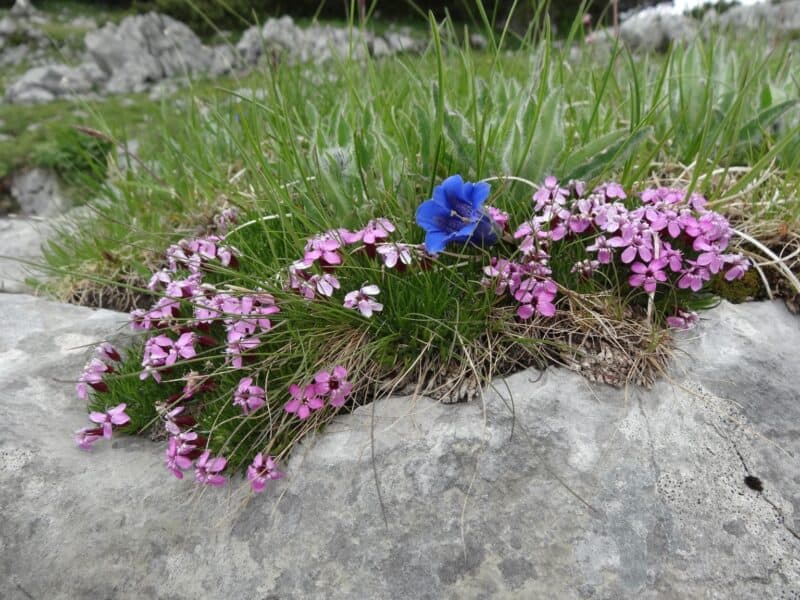
Soapwort or Bouncing Bet is a beautiful flower used in many English gardens. If you soak the whole plant, but particularly the root in warm water, it will produce a gentle, sudsy wash water. You can also boil the plant and roots to produce a nice soapy solution.
For a quick wash, rub the leaves or root with water for a reasonable lather. This plant is great for washing delicate items and baby clothing, but it would not be suitable for bathing a baby as the suds will irritate the eyes, and it should not be swallowed.
Grows best in full sun, and well drained soil. Hardy in zones 2a to 8b. Spreads readily.
Yucca (Soaptree)
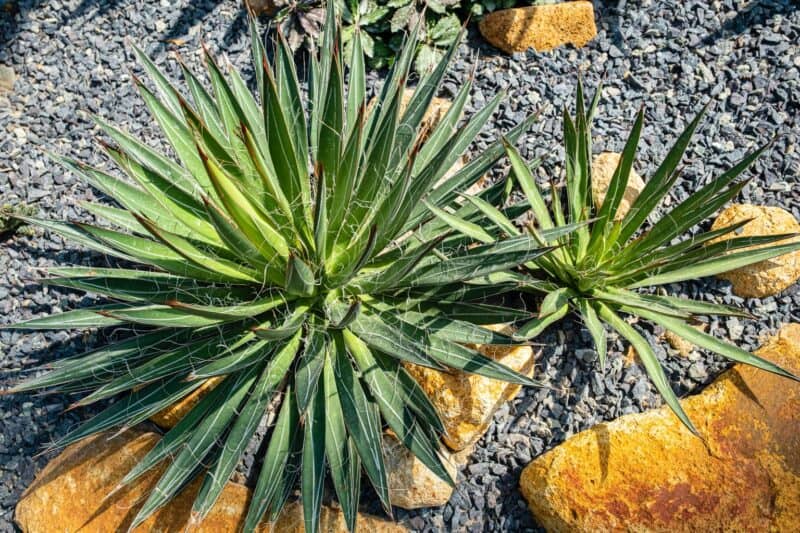
The trunk and crushed roots of the soapweed yucca or yucca glauca are exceptionally concentrated with saponins, and make a fine soap or hydrating shampoo. The dried leaves can also be made into baskets, sandals and rope.
Yucca thrives in the Southwest region of the US, but also in Canada. It can tolerate temperatures between -40 ºF (-42 ºC) to 105 ºF (40 ºC). Requires full sun and fast draining soil.
You can order all of these plants/seeds from Horizon Herbs. Personally, I’ll be ordering the Amole Lily and the Soapwort. I’d like to experiment with them both, and see which I like the best. Unfortunately, Yucca probably wouldn’t grow too well here in the Southeast.
English Ivy
English Ivy (Hedera helix) is a widely planted evergreen vine that is prized for its dense foliage and ability to climb walls and other structures. However, English Ivy is also high in saponins.
The problem with this plant, and the reason you can’t use it to make soap, is that it is a known allergen and skin irritant.
Horse Chestnuts
Horse Chestnuts are a type of tree that is native to parts of Europe, Asia, and northwestern Africa. The tree produces large, spiky fruits that contain large seeds. These seeds are rich in saponins, which is why it’s on this list.
The other reason why horse chestnut is includes is because you can make laundry “soap”. Soap may not be the best way to call it, but rather, a saponins-based detergent or cleanser. Sometimes it’s used as a skin cleanser, though most of the time, it seems to be used for laundry…
Bracken
This is one plant traditionally used to make soap, but one I highly recommend not to try. Indeed, it’s use has been documented as far back as medieval times in Europe (England, Scotland, France, etc.), but the plant’s saponins were not merely extracted to make soap.
What people did instead, was they burned the plant to make the so-called potash (potassium carbonate and other alkaline salts), and then they would use the ash to make soap…
Ragged Robin
The ragged robin plant (Silene flos-cuculi) is a wildflower that grows in damp meadows and woods across much of Europe. It’s easily recognizable by its pink flowers, which have five petals that are deeply divided into ragged lobes.
This one has its saponins particularly in its roots, and the way you extract them is by simply boiling the root in water. use this one to make laundry soap, and avoid washing yourself with soaps that contain it.
White Campion (Silene latifolia)
This is a flowering plant native to Europe and Asia. It grows to a height of about two feet and has a short, stalky root system. The leaves are opposite, oblong, and have toothed margins. The stems are hairy and sticky. The flowers have five petals and are borne in clusters. The fruit is a capsule with many seeds.
But you’re not here for the description, are you? You want to know if you can use it to make soap and, in this, case, you most certainly can! White campion has been used to make soap for a long time by mashing the roots and then boiling them.
You can see similar reports on Red Campion being used to make “soap” and even use that soap to wash one’s hair, but both can be used to do laundry. There aren’t any documented uses of this type of cleanser being used as a body or face wash.
I would not advise you use this plant to make actual soap. Instead, you can make this laundry and hair cleanser, and it’s actually pretty easy if you follow tradition. You need to mash the roots, simmer (not hard) boil them in water to extract the saponins, strain, and then use the liquid.
Soap Nuts (Sapindus spp.)
Soap nut plants are a natural source of saponins, which are a class of compounds that have soap-like properties. For centuries, saponins have been used as a natural alternative to conventional detergents and soaps.
These days, soap nuts are commonly used in eco-friendly laundry detergents and sometimes in shampoos. But, of more interest to us, they can also be used to make a plant-based cleanser at home. Note that this is not actual soap, it’s more of a cleanser…
To do this, simply simmer the soap nuts in water to release the saponins, just like you would with the White Campion plant above. And the usage advice is the same as above: avoid using it on the face or skin, and try it on your hair or, better yet, on your laundry.
Clematis
While clematis plants can be found in many parts of the world, they are most commonly associated with Asia. Clematis plants can be difficult to grow, but once established, they are relatively low maintenance.
In traditional Chinese medicine, clematis plants are used to treat a variety of ailments including skin infections and wounds. The saponins in Clematis are thought to have some insecticidal properties.
You know what that means, right? There are no documented uses of this plant being used as a cleanser, in spit of its saponins content and traditional uses in other areas. You can go ahead and skip it.
Ceanothus spp. (Mountain lilac, Redstem ceanothus, Catalina mountain lilac, etc.)
Mountain lilac (Ceanothus velutinus), also known as snowbrush, is a shrub native to the western United States. It grows in mountainous regions from California to Alaska. The plant has lance-shaped leaves and clusters of white or blue flowers.
Then you have Redstem ceanothus (Ceanothus sanguineus), whose flowers are known to foam “when shaken with water”.
Yet another plant of this species, Ceanothus thyrsiflorus, has also been used to make a cleanser from water and its dried leaves… and this one is actually delicate enough to be used on the body and face. The Pomo, a Californian Native American tribe, would simply soak the flowers in water, then rub them on their face to produce a saponins- rich lather.
Baby’s Breath (Gypsophila paniculata)
Baby’s breath plants, often used in bouquets and arrangements, are one of the highest source of saponins on this list.
These pretty flowers are native to Europe and Asia, and they have been used medicinally for centuries. The dried flowers can be added to hot water to make a tea, and the roots can be steeped in cold water overnight and then used in soap-making recipes.
Wild Mock Orange
Wild mock orange plants are a good source of saponins, and they can be used to make a variety of different types of soap. These plants are also a good choice for making glycerin soap, as the saponins help to emulsify the oils and create a rich, creamy lather.
Buffaloberry
The buffaloberry plant (Shepherdia argentea) is a shrub native to North America. It is closely related to the soapberry tree (Sapindus saponaria), which is also used for soap making.
Buffaloberry plants are high in saponins, which are natural surfactants that can be used to make soap. The berries can be crushed and mixed with water to create a sudsy solution, which can be used for cleaning clothes, dishes, or skin.
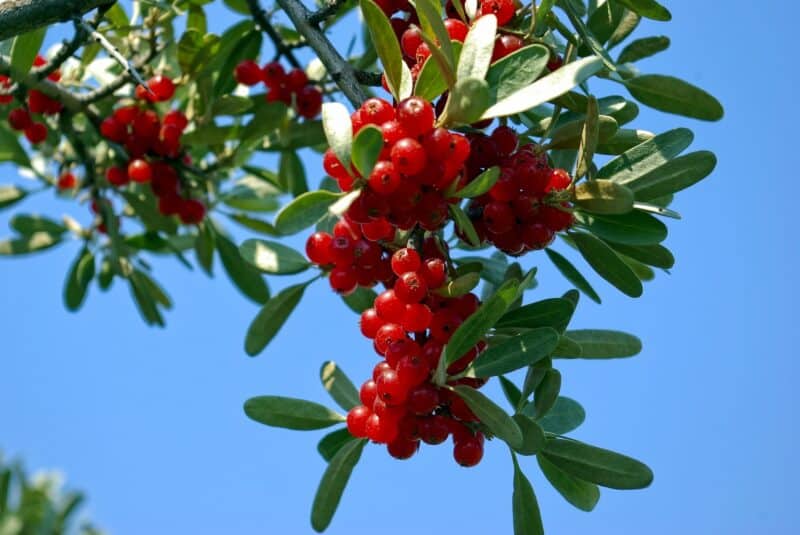
In addition to being a good source of saponins, buffaloberry plants are also nitrogen-fixers, meaning they help to improve the quality of the soil.
California Soaproot
California Soaproot (Chlorogalum pomeridianum) is a common flowering plant in the western United States. The saponins present in the plant’s roots and leaves can be used to make soap.
In fact, this plant was a primary source of soap for Native Americans and early settlers in California. The plants grow best in full sun and well-drained soil.
California Soaproot typically blooms in late spring or early summer. The white flowers are borne on tall stalks and are pollinated by a variety of insects, including bees, butterflies, and moths.
Wild Yam
Wild yam plants have long been used in the soap-making process. In recent years, though, wild yam plants have also been used for other purposes, such as making food and cosmetics. The plant’s saponin content makes it a versatile ingredient with a range of potential uses.
Soapbush Tree
Last but not least, the Soapbush Tree. This is a species of plant that is indigenous to parts of North and South America.
The tree gets its name from the fact that it produces saponins. In fact, saponin was historically used by Native Americans for this purpose.
Today, the Soapbush Tree is still harvested for its saponin content. The tree’s leaves and bark are boiled in water to extract the saponin, which is then used to create natural soap products.
If you’re looking for a sustainable and eco-friendly option for soap-making, consider using saponin from the Soapbush Tree.
How to Use These Plants to Make Soap
To make soap from these plants, the first step is to extract the saponin. This can be done by simmering the plant material in water for several hours. Once that is done, it can be combined with fat and lye to create soap. When added to hot oils or fats, they react with the oil molecules to create soap. This is known as saponification.
The exact proportions will vary depending on the plant being used, but a typical recipe would call for 1 part saponin to 2 parts fat to 3 parts lye.
Soap made these plants is often gentler on the skin than traditional soap, making it a good choice for people with sensitive skin.
Final Thoughts
These are just a couple of the plants you can get a lather from. There are many others you can find, including more common ones like kidney beans, chickpeas, asparagus, alfalfa, soybeans, and more.
Just keep in mind these don’t tend to be as useful for soap making due to lower quantities and differing properties (though they do offer their own unique health benefits).
Have you had a chance to play with getting a soapy lather from any plants? What’s your favorite saponin rich greenery?

Get your gift and learn things like:
- how to make this really quick pest spray
- how to prevent egg waste
- two cheap automation devices that will make your life easier

A city girl learning to homestead on an acre of land in the country. Wife and homeschooling mother of four. Enjoying life, and everything that has to do with self sufficient living.
Does anyone know if Saponaria Ocymoides also works to make soap? So far everything that I’ve found on using soapwort for soap is about using Saponaria Officinalis.
I’ve been experimenting with yucca for a short while now. There are two main types: yucca shidigera (sword like leaves) and yuca (also known as the Joshua tree). They often get confused. The former is rich with saponins and the latter is not. I just wanted to share that here so your readers know what to look for.
Thank you, Keith! I had no idea.
Mullen plant and Polk berry’s and black walnut are high in saponins.
Does the soap nut tree grow in Minnesota and if it does where can I get one?
I am very interested in learning to make my own shampoo and facial scrubs using all natural ingredients. Could you tell me where i could buy some Soapwort/bouncing bet? Also could you tell me how much it would cost?
Yucca grows in a surprising variety of climates. My mother hated it in rural Indiana because she could not, no matter how carefully she extracted the roots from a garden bed in our yard, get rid of it. She would always miss one little side shoot and it would pop right back up. It was beautiful, though. The winters then (and now) were really harsh – often getting well below zero for several days at a time. As long as the roots are a bit deeper than where the soil freezes, I think they’re able to keep growing. It’s probably still growing there today, and was all over that neighborhood.
Hi Kendra! Life’s been nuts, so this comment is so late! I haven’t been to visit your blog in ages, sorry! I had to tell you, though, do NOT plant yucca. It is extremely invasive and almost impossible to get rid of once it gets out of hand. It is prickly, annoying, and just a major pain. I dug one up to get to the roots to attempt the soap thing…It didn’t work, not even one little bit, and it destroyed my food processor to boot! I’d read several tutorials that all seemed to say the same thing, but all I ended up with was a bunch of grossness. I did manage to make an incredible face wash with Castile soap, though, that you can find here if you would like to give it a shot. I have crazy sensitive skin and it has cleared it up in a way NO store-bought face washes do.
http://wookiewifey-crafts.blogspot.com/2013/07/soaps-pt-2-facial-cleanser-body-washand.html
Well Hi Stranger!! 🙂 Thanks for the tips on Yucca. I still haven’t planted any yet. I’ll check out your facial wash. Good to hear from you!
Yucca can be grown very easily in large pots to avoid the issue of the dreaded invasion! It also makes harvesting the roots much easier.
i read a lot of excellent information on the internet when i searched, plants that contain saponin.many of them are edible,are antioxidants,reduce cholesterol,inflammation,and are used to make many pharmaceuticals.some of which fight cancer and tumors.as well as psoriasis,internal parasites,candida,the list goes on and on.one site that i was particularly impressed with was “define saponin,dictionary and theosaurus,saponin.askdefine.com so its not just to wash with,saponins are an important part of healthful eating,and living.i am thankful for . the information that you shared about where to buy soap lily and soapwart seeds and plants.i have already ordered them,and am very anxious for them to arrive.happy healthing.
Well I’m so excited. I thought I’d better double to be certain that the yucca’s mentioned here are the same ones that we have growing. Indeed, they are. I am amazed to think that we had such a wonderful natural resources right here – and have even dug them up and transplanted them for my parents in East TN where they are thriving. The flowering portion grew to over 12 feet tall this past summer. Thank you, again, so much sharing.
Why thank you! We have an abundance of yucca’s right growing in West Tennessee as well. Looking forward to giving this a try.
Just thought I’d let you know that yucca can be more temperature tolerant than you might think. I thought it was a strange landscaping choice when we found it growing on our new farm a few years ago, but it seems to do just fine. And we’re in southwest Michigan! I’ll have to try out some of it’s soapy uses – thanks for sharing! 🙂
I’ve grown soapwort (Saponaria Ocymoides) off and on over the years and love it. It’s really beautiful, and a great addition to tumble over a rock wall. It’s easy to find and easy to grow.
It can reseed easily, but I didn’t have much issue with it spreading a lot. It was a bit more tender than the resources lead you to believe. It lasted well for a few years then died out. Just a heads up on the possibility that it can be a bit tender with more severe conditions.
Some sources list the seeds as poisonous, FYI. Never was an issue at our house.
Very good to know about Soapwort. I’m eager to get some growing here. Thanks!!
I lived in the desert southwest for almost 30 years and didn’t know about yucca. Now I moved away. lol Maybe I’ll try to find soapwort. 🙂
I have a soapnut tree that I planted from a seed and its about 3 years old. Its about 10 feet high. Its a beautiful plant. Unfortunately, I was told I will have to wait about 5 years for the soapnut to use in my laundry
Janis,
If the tree is three years old, then you probably only have two more years to wait. Enjoy!
You have now given me a new reason to tell my hubby “Kendra said” 🙂
Thank you
Julie,
Hahaha… that always cracks me up 🙂 I better be careful what I say! LOL
Oh my goodness, when i think of how ugly yucca plants are and yet how they thrive in my region, i will most definitely reconsider putting them in my back yard. Any thoughts on how best to treat them (boiling, etc) to make use of their saponins?
Amy,
Here’s a good article by Mother Earth News on how to use Yucca for soap and shampoo 🙂 http://www.motherearthnews.com/natural-health/yucca-soap-yucca-shampoo-zmaz81mjzraw.aspx#axzz2JfKxYLHz