
So your turkeys are dying. Why is this happening, and what can be done to prevent it? Long story short, baby turkeys often die because of poor brooding and temperature management, they aren’t getting enough food or water, due to disease, overcrowding, or because predators get to them…
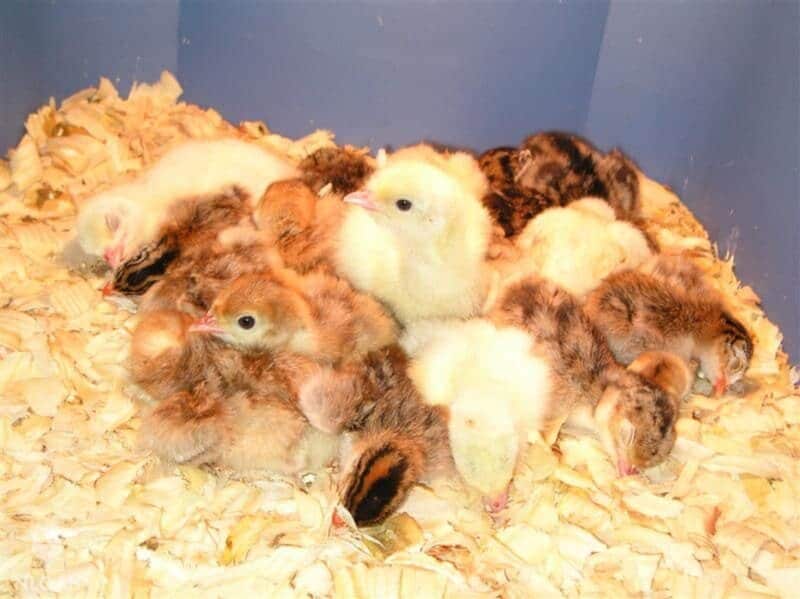
There are a variety of diseases that can kill them, too, something that unfortunately leads to their high mortality rate.
In what follows, we’ll take a look some of the possible reasons why turkeys are dying and what you can do to keep your turkeys healthy. I’ll also give you a list of questions you might ask as you are trying to figure out why your turkeys keep dying. Let’s get started!
The Survival Rate of Baby Turkeys
Baby turkeys, also known as poults, die before reaching adulthood for a host of reasons – all discussed below – not to mention that young birds are very delicate and can easily get injured.
Now, the survival rate for domestic turkeys has increased over time, but if you have to improve that of your flock, you need to take some precautions… Experience plays a huge role in this, you will be able to reduce the mortality rate over time, so don’t expect a 100% survival rate after reading this!
Top Reasons Why Your Birds May be Dying
OK, so on to the list…
1. Wrong Temperature
This is probably the biggest killer among poults. Even PennState Extension admits it:
Improper brooding is a leading cause of mortality in turkey flocks
Small-Flock Turkey Production
Most baby animals need a warm environment when they’re born, and this includes turkeys. They need a place that’s about 95 degrees Fahrenheit (35 ºC) for the first week of their lives, then the temperature can be lowered by five degrees each week fir the first 5-6 weeks of their lives.
Really, it’s important to not lower it too quickly, as this can stress the bird out. When they’re fully grown, turkeys can handle colder temperatures, but if it gets too hot – around 85 degrees Fahrenheit (30 ºC) – they may start showing signs of heat stress.
When outdoor temperatures start to rise, turkeys will know how to take care of themselves and spend more time in the shade. But if the heat becomes too extreme, they may pant and droop their wings in an attempt to cool down. This is your cue you need to do something…
Move the birds to a cooler place and give them plenty of water. If necessary, you can also use a fan. Also make sure there aren’t too many fluctuations in brooder temperature, either. A sudden swing from warm to cold or vice versa can be just as dangerous as temperatures that are consistently high or low.
2. Too Soon to Go Outside
At what age are baby turkeys free to roam outside from the brooder? This depends on a few things, including the weather and the size of the turkey. But in general, they can be moved outside when they are around 5 to 6 weeks of age – if the temperatures outside allows it.
So if it’s still cold or there is a chance of frost, it’s best to wait until they are a bit older and fully feathered. You don’t want to wait until your turkeys are fully feathered before you put them outside necessarily, either. They won’t be able to handle cold temperatures even without fully-developed feathers.
Start by letting them out for short periods of time, gradually increasing the length as they become more acclimated to their new surroundings. Once they’re comfortable venturing outside, they’ll be able to enjoy all that fresh air and exercise.
3. Poisonous Foods
While turkeys are generally very hardy birds, there are a few things that can be poisonous to them. For example, things like onions and garlic are both harmful, particularly in high amounts. Allium toxicity can cause oxidative damage to red blood cell and this will lead to hemolytic anemia. Chocolate is also toxic, and can lead to gastrointestinal and even heart issues if they eat too much of it.
In general, yo don’t want to feed your young birds most treats, even if they are safe for adult birds. For now stick to safe foods.
4. Disease
So some of the more common illnesses that turkeys can get include respiratory infections, parasites, and avian influenza.
Respiratory infections are often spread through contact with other birds or contaminated areas, and they can cause symptoms such as sneezing and wheezing.
Parasites can also be contracted from other birds or contaminated areas, and this can lead to weight loss, lethargy, and diarrhea. Some of the most common diseases include:
- histomoniasis (turkey are highly susceptible to it and the mortality rate is between 80% and 100%!)
- coccidiosis (caused by a protozoan parasite and can lead to intestinal bleeding and dehydration),
- salmonellosis (a bacterial infection that causes, poor growth, lethargy, and diarrhea),
- fowl pox (can produce lesions on unfeathered skin, but also internal ones inside the mouth and respiratory tract),
- and avian influenza (a.k.a. bird flu, a virus that can be deadly to turkeys, and it is often spread through contact with infected waterfowl, contaminated tools, and even through manure!)
If you suspect your bird may be sick, there’s no way around it: take it to the vet immediately for treatment. With prompt medical care, some of these illnesses can be successfully treated.
Sadly, many of these can’t even at the vet, and in some cases, the vet might need to come to you to check the whole flock! These can spread quickly through the homestead, so put biosecurity practices high up on your to-do list.
Things like keeping the turkey coop clean and disinfected, segregating new birds from the rest of the flock, and always giving them clean water and food. You also want to separate the turkey from the chickens because diseases such as blackhead but other pathogens as well can spread like wildfire to baby chicks as well.
In addition, many of the most common turkey diseases have vaccinations available that can be given to young poults. Be sure to check with your vet for that.

5. Lack of Protein
Needless to say that without enough protein, they will quickly become malnourished and their growth will be stunted. Plus, their immune systems will be weakened, making them more susceptible to disease. In severe cases, a lack of protein can even lead to death.
This is why it is so important for turkeys to have access to high-quality protein sources. Turkey poults need a lot more protein than chicks, so pay attention to your feed labels! Use a turkey starter in your feeder (not a chick starter!) to make sure they get the right amounts. To be more specific, they should be getting 28% turkey crumbles for the first 3 weeks, then 26% crumbles or pellets for the next two weeks.
Keep in mindprotein is only part of their nutritional equation. You need to give them ALL of the nutrients they need for them to stay healthy and thrive.
6. No Shade
Shade is important for baby turkeys, as you might expect. This is because it helps to protect them from the sun’s harsh rays. Too much can lead to heat stress, which can, as you might expect, be fatal for them… Keep in mind that, if you’re dealing with a heat wave, shade won’t be enough to protect them because radiant heat and humidity will lead to stress as well.
7. Predators
Poults are very vulnerable to predators such as coyotes, foxes, raccoons, and skunks. In fact, many don’t survive their first week of life in the wild, with mortality rates being at least 30% in the first week of their lives! But this can happen to the poults in your backyard as well, and there are a couple of things that you can do to help reduce the risk…
First, make sure to provide plenty of cover. Tall grasses, shrubs, and trees will all help to hide them from predators. Second, do not leave the poults alone for long periods of time. Predators are more likely to attack when there are no adults around to defend their young.
Finally, keep an eye out for footprints or feathers near the nest. If you see any, then I’m sorry to say the predators are likely already got to them.
8. Thirst
Dehydration can occur for a number of reasons, including a lack of access to clean water, an insufficient amount of water, or extreme heat. Baby turkeys are particularly susceptible to it because they haven’t yet developed the ability to regulate their body temperature. This is the case in particular with birds that are less than 10 days old. Plus, young birds have a high metabolism and require more water than adults.
For these reasons, it is important to make sure that baby turkeys always have access to clean, fresh water. If you suspect that your turkey is dehydrated, you should immediately contact a veterinarian.
Dehydration can be fatal if it is not treated promptly.
9. Overcrowding
If baby turkeys don’t enough space to move around, this can lead to deformities and injuries. Overcrowding is, as such, a major problem for the turkey industry, but it can happen in your brooder as well, particularly when they all gather around a single heat source. A good rule of thumb is to have no more than one to 1.5 poults per square foot if they are younger than 6 weeks.
Sometimes, with overcrowding comes a lack of clean, fresh air. This can sometimes lead to respiratory problems, which are further exacerbated by ammonia-filled air. We’ll talk more about this in a moment…
10. Stress
Though it’s common to think of stress as something people experience, this is well documented in animals as well. Poults that are raised in commercial settings are often subject to high levels of stress, sometimes with deadly consequences. The combination of these factors puts considerable stress on the birds’ immune system, making them more susceptible to disease.
11. Moist Bedding or Wet Feed
Wet bedding or wet feed can also cause respiratory problems, as the wet conditions provide an ideal environment for bacteria to grow. In addition, wet bedding or wet feed can make it difficult for turkeys to regulate their body temperature, leading to chilling and death.
You need to keep turkeys dry and free from moisture, regardless of whether you are using cardboard, straw, pine shavings, or something else or wet feed. Remove the bird from the wet stuff and place it in a dry, warm location until you change the bedding.
12. Loneliness
This is actually more common than you think. And it doesn’t happen just to young turkeys, but baby chicks as well. They need the warmth of a group to survive, plain and simple.

13. They Just Don’t Know How to Eat!
Yup, you read that right. This is called starve-out. Sometimes, the little ones can sit right next to the food and it doesn’t hit on them to try and eat it. They’ll stand there peeping while being hungry at the same time!
Some folks bring in some baby chicks so they can teach them how to eat! But if you don’t have any, there is another trick: simply tap with one of your fingers into the food in a pecking motion. They should start doing the same once they see you do it!
Dying Turkeys: My Story, A Cautionary Tale
The last time I wrote about the turkeys was when we first got them in the mail. A lot has happened since then. We started out with an order of 15 to split among friends.
One became weak after the first 24 hours, though, and even though we gave him some sugar water hoping to perk him up he ended up dying the second day.
14 turkeys! We kept four, we gave four to another friend, and two other friends got three each. Ours were three Narragansetts and one gorgeous Bourbon Red. They were SO much fun to watch! And they were way friendlier and sweeter than chickens are. Ours did really well initially.
Fortunately, a friend gave me a heads-up that turkeys need higher protein than baby chicks do or they’ll die. So we fed them Chick Starter (NOT Chick Starter/Grower)n. Two of our friends fed their turkeys Chick starter/grower, which has lower protein, and two out of three of their turkeys died and they were each left with only one bird.

We kept our babies inside in a large plastic tote under a heat lamp for several weeks. One day I noticed that one of the turkeys was strutting his stuff around another poult, like we’ve seen the roosters do to the hens, and we figured he must be a tom. We all cracked up at such a little guy acting so big and bad!
He was my favorite. I could put my hand down in front of him, and he’d climb in and sit down on my palm for as long as I’d let him stay there.
When they fully feathered out and didn’t huddle underneath the light anymore, we took the lamp out. At this point we figured they were probably ready to enjoy some grass beneath their feet, so we took them outside and let them roam in a movable pen.
As soon as they touched the ground for the first time, all four of them laid down on their sides in the dirt. I smiled with pleasure, “Oh look, they love it! They’re taking a dirt bath like the chickens!”
Little did I know.
In reality, the sudden temperature change from air conditioning to almost 90* was too much for them to handle. And even though I put shade over them, and gave them plenty of water, one died later that day.
It was my favorite tom.
I was so, so sad. In hind sight, I was so dumb.
I couldn’t figure it out. Why’d he die? I noticed that their water container had been knocked over, and I assumed maybe he died from thirst. Can turkeys die from thirst in a matter of hours? I brought the remaining three inside again for the night.
The next day, I took our three lively turkeys back outside to enjoy some fresh air. I put them in a shady place in the yard, and went about my day.
A few hours later I went to check on them and noticed that their pen was now in full sun. And in horror I discovered another dead turkey. This time the water was still full, and I confirmed that it was the heat that had done them in.
We were more careful after that. We only had two left! But they were getting big, and really starting to stink in the house. I decided to put them back outside during the day, but I’d be more careful to keep them in full shade the whole time.
Unfortunately, even that wasn’t good enough. We lost the beautiful Bourbon Red (the light colored one in the photo) a few days later to the heat. Even in the shade she still got too hot.
I called my other friend to check on her four turkey babies. I couldn’t believe it when her daughter told me that three of theirs had died from the heat as well!
Man! What were we supposed to do?! We couldn’t keep them in the house forever.
With only one left we had to be really careful. I still took him outside, but only for like an hour or two, and then I brought him back into the laundry room. He made a lot of noise though, so at night he slept in the closed up greenhouse.
Finally we decided that it was just time to build a permanent place for him outdoors. So, three days ago Jerry rigged a fence around our old goat shed (which is in the cool woods) and we moved the turkey in.
We stuck the two guineas in with him (or her?) so he wouldn’t be lonely. They did fine the first two days. That is, until this morning.
When I went out to check on them earlier today, the turkey and the guineas were nowhere to be found. I looked everywhere, calling for them. And then I spotted it… a scattering of gray feathers, and a hole under the fence. A fox must have done it. Dang it!
I found one of the guineas a little while later, hanging out around the chicken coop. And I held out hope that maybe the turkey would miraculously show up. But it hasn’t. We’re out of luck.
Turkeys Are Still Good Birds to Raise
By understanding the most common causes of death in turkeys, you can take steps to prevent it in your flock. In addition to providing a healthy diet and plenty of exercise, make sure your birds have access to clean water and fresh air. If you notice any signs of illness or distress in your turkeys, seek veterinary help right away.
With proper care, your turkeys should enjoy a long and healthy life. Have you had success keeping your turkeys alive? What tips would you add? Have you ever tried raising turkeys? How’d it go for you? Any tips on what I should have done differently?


Get your gift and learn things like:
- how to make this really quick pest spray
- how to prevent egg waste
- two cheap automation devices that will make your life easier

A city girl learning to homestead on an acre of land in the country. Wife and homeschooling mother of four. Enjoying life, and everything that has to do with self sufficient living.
Hi Kendra,
I was surfing the web looking for information about turkeys and came across your blog! It’s so helpful, and so are all of these comments!
We got turkeys 2 months ago. 5 of them – just to try, and 5 is plenty for our needs. We’re way up in a Northern climate, so the weather can be a little harsh sometimes. We specifically got wild turkey crosses, just so that we had what we thought were hardier birds. All of our turkeys did just fine…until yesterday, when my husband went out to do the chores & found one of them dead.
The rest of the four seemed fine, and so we thought “Odd, but okay.” They always have plenty of food & water, we recently started letting them outside (in an almost entirely shaded area), they get lots of fresh air with the door open at all times, and they are in a huge 10×5 pen. For their size at two months…lots of room we thought. But we had lost another one when we checked the following morning.
Later yesterday evening, we checked on them. Doing okay – one didn’t look as well, but still eating & drinking & flying around. This morning, dead. Along with the other 2 that were left. I am having difficulty understanding what the issue is, because I had thought we did everything right. Maybe their space wasn’t clean enough? Maybe they picked up something outside and got sick really quickly? To me, it seems as though it may have been a parasite of some sort. To lose all 5 in a matter of 48 hours…when they all had nothing seemingly wrong with them…is just heartbreaking.
Yes, they were for food, but it’s just so disappointing. Any thoughts? I’m just looking for answers.
We have had no luck with our Turkeys either. We started with 6 and I have one left.
This is our first time with turkeys and I have a question which may sound supid, but the turkey seems lonely when we leave him/her alone. It follows is around and we love him, but feel so bad when he’s crying out for us. There are chickens and ducks but hangs out with us or alone. Can he die of loneliness? Should we get him more?
Would appreciate any suggestions.
Thanks
Debbie
i would highly reccomend it. because any time i separate mine the other one goes and lies down and is super loud
We couldn’t get our baby turkeys to eat no matter how we’d try to entice them. We mixed turkey starter food with water like a porridge. Pried their beak open with my fingernail and fed the porridge to them with a popsicle stick. I believe this kept them alive even though it seemed rough It was a last resort. As they got stronger we’d “peck” with the popsicle stick in their food or put some in our hand and they seemed to eat it more readily. They weren’t chirping so loudly once we forced some food down them in the first couple of days. They’re a week old now eating on their own and thriving.
I raise Chocolate Heritage turkeys. The first time I ordered them I lost one right away but the rest survived. I took them out each day to forage for an hour or so then back in the house. Now I just let the adults set, hatch and raise the poults and I don’t sell them till the momma’s start sending them off. About day three after they hatch I throw a piece of watermelon proportionate to the size of the clutch. That stimulates eating and a natural sugar boost to get them going. I do understand and I’m sorry for your loss, they are a wonderful creature and I enjoy watching them walking around the farm.
I had five turkeys was doing really good. But them they were two months old they died one right after another. When I just had one left I tried every thing to keep it a live. But now I no the problem not enough protein. They were so beautiful loved them so much feed them by hand.
So far, just as bad or worse. I picked up my baby turkeys Wednesday afternoon. Yesterday when I went to check on them one was dead and another wasn’t looking so good. My husband did the morning chores and the other had died. I just went out a half hour ago and found a third one dead. Down to two and one is not looking great. What is the secret?? I have raised, ducks, chicks and quinea hens and never lost one. Maybe I have been lucky? Knock wood. I was thinking about Geese. Are they any easier. It is quite the BUMMER.
I am glad I found this thread, I thought we were doing something wrong. We got ours mail order, first one died within 24 hours. Then a few days later, same thing. Today another died. I’ve raised guinea keets, ducklings and chicks, but didn’t have them keeling over so fast! Too bad we don’t have dog food anymore.
So far we’ve lost three, but the day isn’t over yet! Seems like they aren’t too interested in eating either (bad sign?). Some of them are perky-ish, but most seem ‘sleepy’, if that makes sense. I’m so bummed as well, so far it’s over 30 bucks not including shipping down the drain. We’ve got 13 poults left out of 16 and they aren’t even two weeks old yet.
Do turkeys raised by their own mothers do better? We got Naragansets and Broad breasted bronze (standard). From what the hatchery said, the Naragansets make the best mothers. Hopefully we’ll have enough survive so they can reproduce for next year. Geez!
It probably wasn’t the heat that killed the turkeys. There environments have to stay above 95 degrees.
MIne don’t seem interested in eating either. Weird.
I feed mine dry dog food never lost any
Hi Kendra, Did you end up having any live? We only have a hen. Do you have a tom? Come and see her at Miracle Farm Homestead. She thinks she is a cross between a dog and a cat. Blessings Hope
How long should I give wild baby turkeys electolites
Sorry, Chuck. I don’t have experience raising wild baby turkeys.
I felt the same way when my dog killed one of my baby ?. So silly, how could I be so silly to let that happen. He (my dog) really thought they were toys, he knows now they weren’t but too late. I took the rest (4 remaining and 4 beautiful chicks)to the Humane Society and gave a big donation. I feel awful ?
Kendra,
I’ve been a subscriber for a couple years and really enjoy your blog. I just linked to this post in answer to a reader comment about raising turkeys. My post she commented on is about a newbies perspective on raising and butchering meat chickens, Do You Have the Guts To Butcher a Chicken
Hi Kendra
Sorry you have lost your birds, it is very sad to hear of expensive losses. Just a few thoughts to add to the other excellent suggestions if I may.
A lot of the commercial breeds sold as day olds and upwards are for shed rearing, you know the kind, the vast soul less places many of us hate. The white fast growing breeds ( the names differ over here so I will stick to type ) are really a shed breed needing high protein diet to grow quickly. They give a dry, white meat.
The darker coloured breeds are nearer genetically to your wild bird, that is what we would term a slow grower, a darker, moister and more gamier meat. Still shed reared for some, but free range for most and command a much higher price.
It is always worth remembering that like commercial chicken and duck breeds, that rearing conditions are controlled. Humidity, temperature and feed ratio, even light is increased to encourage feeding, hence fast growth. To try and raise the commercial white in traditional and more humane conditions hits problems straight away. The conditions frankly do not seem to suit the “type”, I have noticed this with different birds over the years and avoid buying them as chicks for this very reason.
Finally, and a possible alternative with less heartache, have you considered raising larger breeds of chicken for table use? I think I remember back in our FB days mentioning this. The larger Brahma and Orpington types can put on excellent weight. They are easy to rear and finish, seem less fussier than turkey or guinea fowl. Also in their last few months will fatten nicely on clipped maize if kept on grass, I have managed to get them to around 7 to 8 lbs in a good year.
Just a suggestion as always! I do so enjoy reading what other folks find successful or not as the case maybe.
God bless
Why wouldn’t you do it in reverse? bring them in in the heat of the day take them out at night. We do that with baby rabbits watch the temp anytime over 100 in they come until evening. the Bucks and Does get water filled frozen Mountain Dew bottles to cuddle instead.
My 84 year old aunt says turkeys can’t be on the ground – must be in a raised pen.
Suz,
I guess I figured they’d just sleep through the night, so it wouldn’t do much good to put them on grass to graze at night. Plus, I’d be afraid a raccoon would get them. The temp. pen we had them in was only nylon bird netting, not wire.
False
So sorry to heat about your loss. I know that the main goal is to raise them for a food source but you can’t help but go attached to them. Our first set of turkey chicks all died or ran away (aka we able to escape through the fence to never return). Our second go of turkey raising we had bought 6 week turkeys from a friend needless to say their alive.
I’m wondering if the temp change from going from inside to outside helped contribute to it. We’ve raised lots of chickens from eggs and there some “batches” that we just have lots of casualites with. Perhaps the hatchery unknowingly sold sick turkeys. Just a thought since your friends turkeys didnt fair as well either.
Sorry again for your loss 🙁
This is my first year I have order birds by mail, I usually bought what was local on craigslist but I wanted something more “exotic” well everything I bought by mail died. I live in FL and learned there is a reason most everyone has the same breeds. I thought you fed turkeys game starter?
This is our 3rd year raising turkeys and I can vouch for the fact that they are NOT as easy to raise as chickens. The first year we raised 2 BBB and they did great. Our 2nd year we raised 1 BBB and it died around 14wks old. This year we started off with a Burbon Red and it died less than 48 hours after we brought it home. I then purchased 2 more BBB and they have been so hardy (knock on wood!) They are both now about 12wks old.
A few things I have learned about turkeys:
1. Heat is hard on them. (As you have obviously learned.) Maybe getting them early in the year, since hertiage breed turkeys take longer to get to butcher weight anyway, is a good idea so that when they do start to make the transition to outside, it’s not as severe.
2. NEVER raise a turkey alone. I don’t know if it’s that they are dumb (beacuse they are) or a compaionship thing but they do not do well solo. We raised a chick that was born the same day as the turkeys with them, so they are a little pair of three. Since the chicken is smarter as well, it can show the trukeys the ropes. 🙂
3. Always have pro-biotics or electrolytes on hand to give to birds that even start to look poorly.
4. Find a cheap source to get turkeys. I have purchased BBB poults for as much as $9.50 and our Bourbon Red was $15. Then I found a feed store that sells BBB for only $2 a poult. I went and bought them THE DAY that they arrived from the hatchery. Then, if you do lose one, it’s not as large of a loss.
Hope that some of that helps!
Kendra,
I’m sorry you had such trouble with your turkeys. In my case, I was expecting trouble with our four Blue Slate and Bourbon Red turkeys and they have turned out to be hardy little suckers.
They had to go outside in the middle of our 100 degree plus heat wave simply because at seven weeks of age they were too big and stinky to be in the house any longer. I put them in our newly completed duck house with an attached run. I made sure they had an area of shade and water at all times. On the 110 degree days, I went outside and spritzed them off a bit with cool water (they love water, unlike my chickens), but otherwise gave them no special care.
They are thriving and are HUGE. Here’s a link to my last blog post about them. They’ve grown quite a bit more since then.
http://theharriedhomemakerpreps.blogspot.com/2012/07/turkeys-excellent-outdoor-adventure.html
I have no idea why I’ve had such good luck with turkeys. I was truly expecting the worst because I have heard from multiple sources just how fragile they are.
I’m so sorry to hear that you lost all of your turkeys. That is a very hard loss to take. And I understand completely how attached you were to them. They have so much more personality than chickens.
I am raising turkeys for the first time this year and have been surprised at how well they have done. I have lost 1 out of 17…so far. Don’t want to jinx it by thinking I’m out of the woods at 3+ weeks.
I am planning to write more about my experience with the turkeys on my blog in the coming weeks. Hope you can stop by for a virtual visit.
Once again, my condolences on your loss. Raising livestock can be so rewarding, and so painful at times too.
Oh…I was wondering what the outdoor temps were like in your area when you lost the little ones to the heat?
Lisa Lynn,
I hope yours continue to do well. Ours were very well up until about six-seven weeks old, then it all went downhill. Of course, that’s when we started putting them outside. I think it was around 90* outdoors. Good luck!!
So sorry to hear of your loss. I didn’t realize they were so difficult to raise.
My turkey came home from the neighbors barn with 10 babies in tow. I caught all of them up and put them in a brooder box, as we have cats and a red fox has been lurking around. I only have 1 left. All the other times we have had babies, the hens would bring home 1 or 2 and they did fine. I have decided that the next round of babies, I am going to let the hen raise them. If the wild turkeys can keep their babies safe, I will let my bronze try her “hand” at it. We had a flock of wild turkeys come up the other day in the pasture with all of their babies. We think one of the hens is one we hatched in our incubator. She has stayed close for a couple of years now.
Kendra so sorry to hear about your turkeys. I started out 2 months ago with 18, I sold 2, One morning I found 1 dead(no clues) Then One day I put them out into a larger pen. I left for a couple hours and when I came back one was dancing all over one I don’t know if he killed it or he was mourning it. Then the other night a coon got inside the coop and took one(I was lucky he didn’t clean house)The coop is now very secure but I’m down to 14.
As for the feed, for two months I’ve been feeding them flock raiser, they did fine on the chick starter. The last few weeks they’ve been starving, they’ve been eating $25 worth of feed a week. Today I went to a small family owned feed store and they told me they needed more protein, they actually had turkey feed. Don’t know what tomorrow will bring but keeping my fingers crossed. One thing for sure there not cheap to raise, but very much enjoy them. I had someone stop and take pictures the other day because I was mowing the lawn and they were following me back and fourth on the lawn.
Over all it’s been interesting.
Janice
Janice,
I’m sorry to hear about your troubles as well. But it sounds like overall you’ve done very well, with 14 left! I laughed at the picture of you mowing with the turkeys following you around. That’s too funny 😉 Best of luck to you!
Thank you for sharing your story. We love turkeys and, if not for them, we would not be able to grow our market garden since we don’t use chemicals and are overrun by grasshoppers otherwise. Our poults go into the garden with a “nanny” when they are 6-8 weeks old and start bug patrol.
We’ve raised Midget White turkeys for years now and I can’t recommend them enough for their foraging, broodiness, calm nature, winter-hardiness and intelligence. If you get over you loss and want to take another run at turkeys you might want to try this breed.
Darren,
That’s what I need… hardy, broody, smart turkeys. *Maybe* if we ever try again, I’ll look into that breed. Thanks for the tip! I’m glad to hear at least you’ve done well with them!