
There are so many ways to preserve eggs I’ve lost count, but there are only a few ways to preserve whole eggs, and even fewer that keep them super tasty and ready to eat.
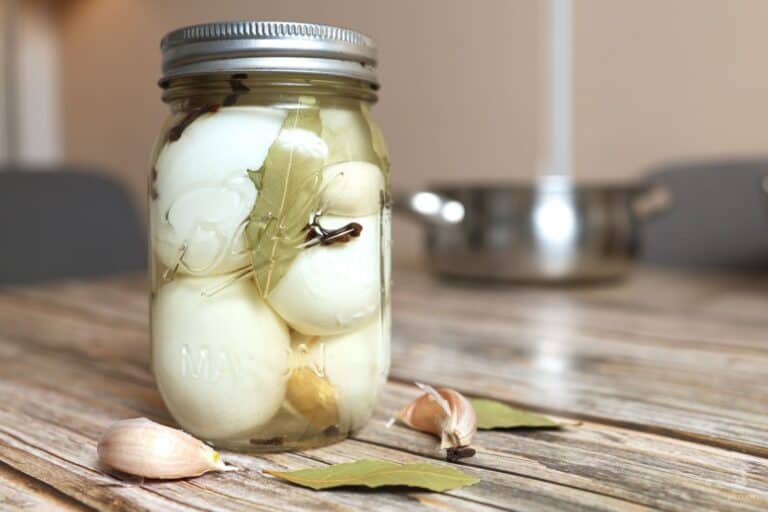
Among these few ways, the very best is pickling. Pickled eggs are scrumptious, whether they are eaten as a snack, added to other recipes or enjoyed as hors d’oeuvres. Pickling is just as much an art as it is a science, but luckily pickling eggs is as easy as it gets.
Below you’ll find my foolproof guide for pickling eggs according to your taste, and it’s the perfect recipe to get started with food preservation. Roll up your sleeves and we will get into it.
What You’ll Need
White Vinegar: common white vinegar is all you need, nothing fancy. You’ll need more or less depending on the size of the batch you want to make, but plan on about three cups for a batch of 10 to 12 pickled eggs.
Salt: kosher salt, preferably, since it always works best for pickling. You’ll need a tablespoon for the batch described above, or roughly one teaspoon for every cup of white vinegar. You can add a little more or a little less to your taste if desired.
Sugar: You’ll need a quarter cup for the batch described above. If you’re making a larger batch, or a smaller one, simply remember the correct ratio; one part white sugar for every 12 parts of white vinegar.
Garlic: two to three cloves of fresh, peeled garlic will add a delicious, savory flavor to your pickled eggs that combines wonderfully with the salt and sugar. Any type of garlic you want to use works fine, and again feel free to experiment adding more or leaving it out entirely if desired.
Eggs, small, 10-12: use the freshest eggs possible, and try to avoid using large or jumbo sizes if at all possible. Small eggs work best from an efficiency and texture standpoint.
Herbs and Spices (optional): there are loads of pickling spice recipes out there, and many of them work great with pickled eggs. Popular inclusions include bay leaf and clove.
Saucepan: used for boiling the eggs and preparing the brine. A 2-quart saucepan is plenty.
Slotted Spoon: for stirring the eggs and carefully getting them out of the hot water if needed.
Colander: helpful for quickly and evenly chilling the eggs under running water once we’re done boiling them.
Mason Jar, with Lid, 1-quart: if you’re making a batch of pickled eggs as I’ve described it above, a 1-quart Mason jar should be more than enough to hold everything if you’re using small eggs. If all you have are smaller jars, that’s okay, but you’ll need to use more of them. Make sure your jar has a nicely fitting lid and ring or other closure that will produce a good, tight seal.
That’s everything you need. Nothing to it, right? In the next section I’ll walk you through prepping and pickling the eggs step-by-step…
Step by Step Instructions
Take a moment to read through these completely before you start so you know what to expect. Also, get all of your ingredients out and your workspace cleared ahead of time to make the process smooth and easy.
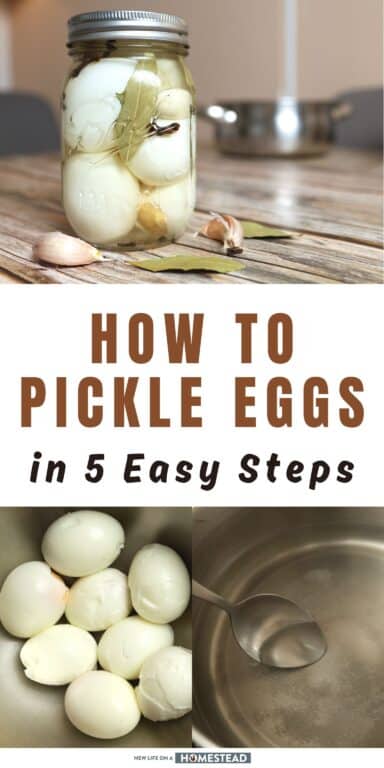
Step 1: Boil eggs in saucepan. Gently lay all of your eggs in your saucepan and then cover them with water, about an inch over the top. Place the saucepan on the burner, bring the water to a boil, and stay nearby, watching it. As soon as the water has reached a rolling boil, turn off the burner, remove it from the heat, and let the eggs stand in the water for 15 minutes.
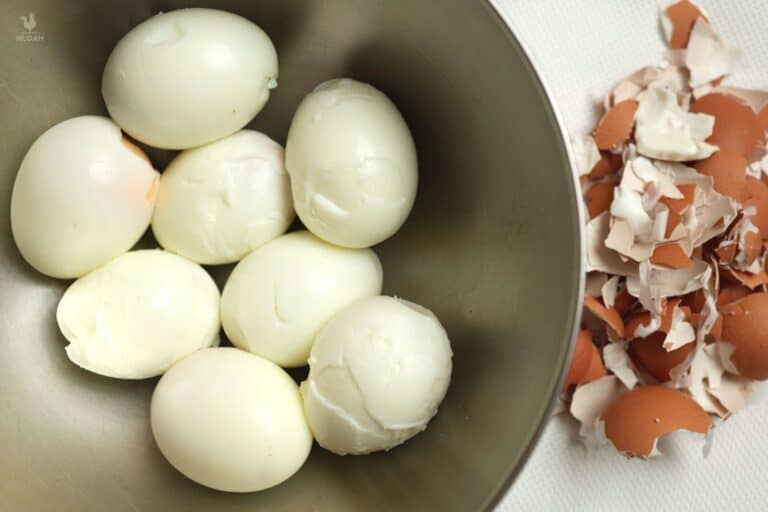
Step 2: Chill and peel eggs. Being careful, use your slotted spoon to carefully transfer each egg to your colander. Take your colander to the sink and rinse the eggs thoroughly under cold, running water until chilled. Now peel the eggs so that every piece of shell is removed. Set them aside.
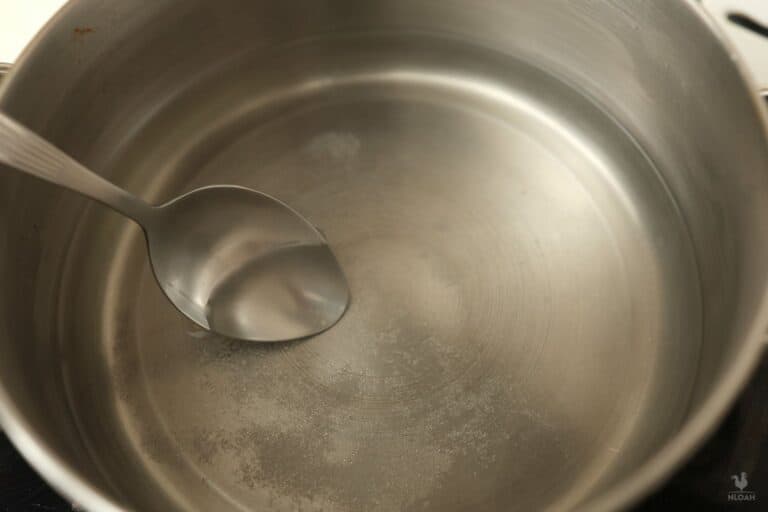
Step 3: Prepare brine. Pour the water out of the saucepan and replace it with the vinegar, sugar, and salt. Give it a quick stir and then boil until both the sugar and salt are fully dissolved. Cut the heat and move quickly through the next steps.
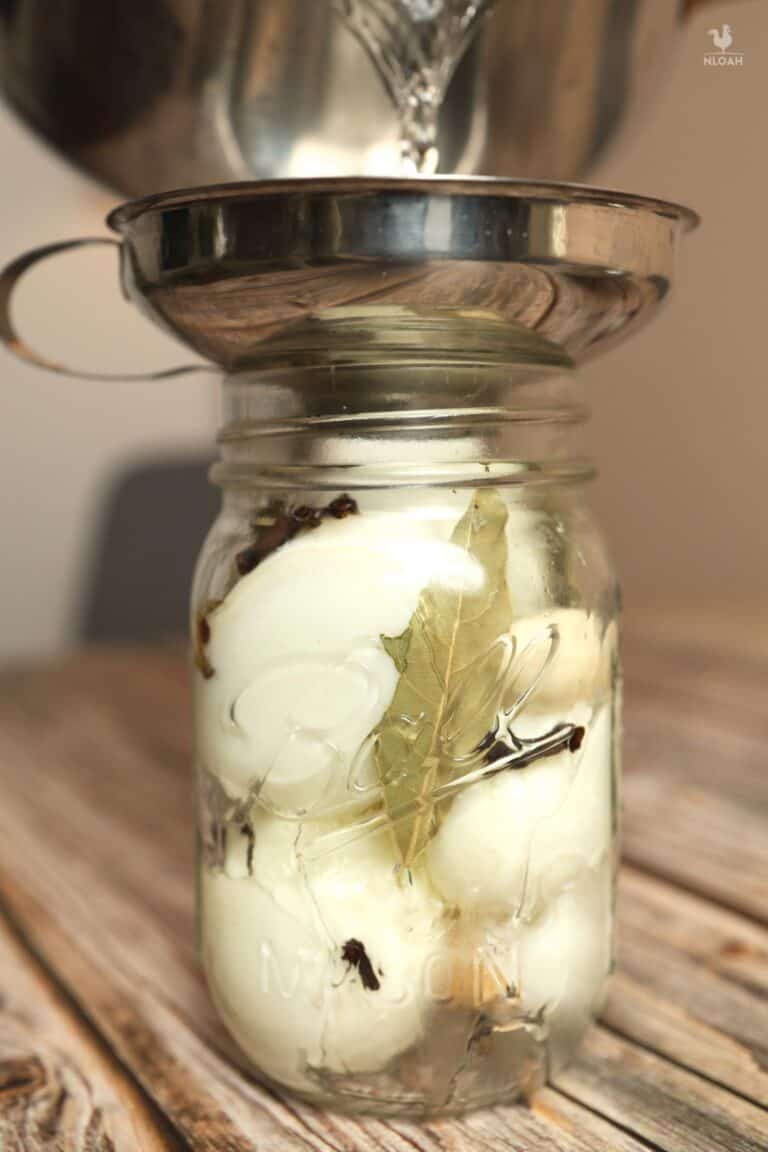
Step 4: Pour brine over eggs and seasonings, seal jar. Gently load your peeled eggs into the Mason jar. Add the garlic and any other spices and seasonings you’re using. Then, being very careful so you don’t get burned, slowly pour the hot brine into the jar until the eggs are completely covered. Leave just a little bit of room at the top so you can secure the lid without an overflow. Make sure the lid is tight and securely attached.
Step 5: Rest for 1 week. Let the jar cool down to room temperature or slightly warmer (for about an hour), then place it in the refrigerator for at least 7 days before you eat your eggs. This way they’ll develop maximum flavor. Enjoy!
Tips and Tricks
Small eggs give better results.
If you love eggs ,the temptation to use large or jumbo ones will be strong when you want to pickle, but don’t do it; you can fit more small eggs in a jar, and they have a superior texture when pickled.
Try adding different pickling spices.
The sky is the limit when it comes to pickling spices. As mentioned, garlic, bay leaf and cloves are the triple crown, but you shouldn’t hesitate to try black peppercorns, cinnamon, jalapenos, ginger and a whole lot more. This is a great way to jazz them up for a specific recipe.
Peel eggs easier with a dash of vinegar or a short rest.
Peeling a boiled egg can be downright tricky and time-consuming. Make the job easier by adding just a little splash of white vinegar to the water when boiling them, or giving them a couple of minutes to rest out of the water before you chill them. The shells should pop right off in larger pieces than.
Add pickled eggs to salads, sandwiches, noodle dishes and more.
These pickled eggs are stupendously good just as they are, but you can take them to the next level by adding them to your favorite dishes. They add a note of creamy richness to sandwiches, are perfect for topping a ramen bowl, adding to salads and so much more.

Get your gift and learn things like:
- how to make this really quick pest spray
- how to prevent egg waste
- two cheap automation devices that will make your life easier
Tom has lived and worked on farms and homesteads from the Carolinas to Kentucky and beyond. He is passionate about helping people prepare for tough times by embracing lifestyles of self-sufficiency.
How long will pickled eggs last? Can they be water-bathed shelf stable?