
When it comes to livestock, cows can be some of the most intimidating animals around for homesteaders. It’s easy to see why: they are huge, expensive, need tons of room and lots of food. Plus, they can be genuinely dangerous and hard to handle. And at the end of the day, if you aren’t keeping a large herd, it hardly seems worth it.
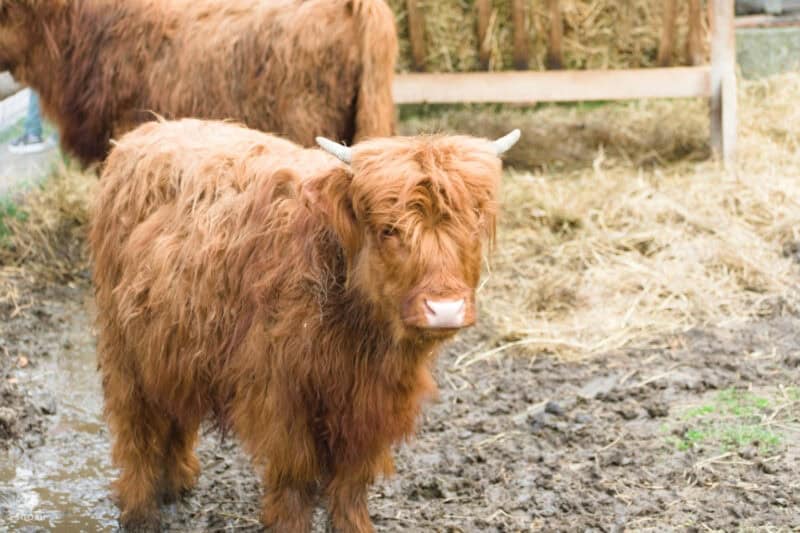
But times are definitely changing, and every day more homesteaders are coming around to the idea of keeping a family cow or two, and much smaller breeds to boot. Mini cows are becoming big business and not just for the cute factor: they are often valuable in terms of efficiency, and they tend to be easier to handle, at least for a time!
And when it comes to mini breeds, the Mini Highland rules them all thanks to its incredibly friendly temperament, adorable shaggy coat, and mop of hair, expressive eyes, and those cute, long eyelashes. But they have more to offer than just good looks and can be a great choice for homesteaders generally. I’ll tell you everything you need to know about them in this guide.
Breed Overview
The Mini Highland is, as the name suggests, a miniaturized breed of the famous Scottish heritage breed, the Highland cow.
Highlands are famous for their hardiness, self-sufficiency at pasture, good temperament, and extreme resistance to cold. They are instantly recognizable for their long, shaggy woolen coats and wide-set, tapering horns. These cows are also known for a strict herd hierarchy that reduces aggression and maintains order once dominance has been established among males and senior females.
Although the standard Highland cow we know today has been around since at least 1880, and interest in the miniaturized version of the breed we’re discussing today has been increasingly popular ever since, it is thought that the standard Highland was much smaller earlier in the 1800s and even as far back as the 1700s; we can argue whether the mini or the standard was actually first, but we know for sure that the mini variety is incredibly popular today with more breeders springing up all the time.
How Big Do Mini Highlands Get?
Surprisingly big! Keep in mind we are talking about a cow that is miniature by the standards of regular cows which can be downright gigantic.
The Mini Highland falls into either true miniature cow or midsize miniature cow classification, standing between 36 and 42 inches tall at the withers, and weighing anywhere from 500 to 1,000 pounds on average, although it’s not unheard of for sizable bulls to clear 1,000 pounds.
Although far smaller than their standard counterparts which can weigh over 1,700 pounds, these are still big, powerful cows so make sure you know exactly what you are getting into when you are kneeling there petting that adorable calf at the breeder! When they are born, they might only be about as big as a big dog, weighing around 70 pounds or so, but they will not stay that way for long!
Are Mini Highlands a True Miniature Cow?
Yes, they are. This isn’t just a tiny breed: Mini Highlands are a combination of standard Highland stock and other cattle breeds, being selectively bred for their much smaller size while retaining the most iconic characteristics of their lineage, including the horns, shaggy double coat, and more.
How Friendly are Mini Highlands?
Very! In fact, Mini Highlands have a reputation as among the friendliest and easiest to handle cows out there.
They form strong bonds with people, and their unique behavior in a herd setting means that conflicts between cows are very rare once hierarchy has been established. As long as you have spent time with them while they are young and treat them right, you should have no trouble interacting with them or getting them to behave.
They are so friendly and affectionate with people that they are among the most popular pet cows. You heard me right: some people actually keep Mini Highlands strictly as pets! With those gorgeous good looks and great attitudes, it’s easy to see why.
Do These Cows Always Have Horns?
Typically, but not always. Highland cattle have horns and it is a characteristic of the breed. However, because the Mini Highland has been crossbred with other cows, it is possible that they will be naturally polled depending on the genetics they inherit.
It is also possible to disbud or dehorn them before their horns develop or after they start to come in, respectively. Something to keep in mind is that, compared to many other cows, the Highlands having horns is less of an issue much of the time because of their famously good temperament.
What are Mini Highland Cows Kept For?
Mini Highland cows are often kept as pets, or as outreach animals. They are sometimes kept for milk and beef. Standard Highlands, as mentioned above, are typically a beef breed and renowned for producing very lean but highly flavorful cuts.
Mini Highlands can likewise produce good beef, although the overall quality can vary depending on their exact lineage.
How Much Milk Can You Get From Mini Highlands?
Surprisingly, quite a bit! A young Mini Highland cow will yield anywhere from one gallon to one and a half gallons of milk a day. That isn’t very much compared to some notable dairy breeds like Holsteins, but certainly more than enough to keep a family in milk if that is what you are after, and a small herd of them can still form the core of a profitable, boutique dairy operation.
Can You Slaughter Them for Meat?
Mini Highlands have a typical carcass yield of meat of around 63% of their live weight. That means you’ll get anywhere from 315 pounds to 630 pounds of meat depending on the live weight of the cow.
As mentioned, they have a reputation for producing lean, tasty cuts like their full-size counterpart, but you should also know that these cows tend to mature and put on weight slowly compared to other breeds, so they are far from the most efficient if you plan on selling meat. However, there are other good attributes and smaller size means they might still be viable if you are working with less land or subpar pasturage.
What Do Mini Highlands Eat?
Mini Highland cows eat what all other cows eat: grass, hay, and various grains, along with a few choice fruits and veggies as treats.
These cows are intensive and effective grazers, and are known to maintain and gain weight even if the quality of forage is pretty middling. This means you can get by even if the grass and other plants out on your pasture are not particularly nutritious by the standards of other cattle.
Food Requirements
Mini Highlands need around 2% of their body weight daily in food. If you are feeding them hay, that means they’ll need anywhere from 10 to 20 pounds of it each and every day, but do keep in mind that this number is a rough guideline.
Depending on their growth, activity level, and the nutritional content of the hay or forage, they might need more in order to stay healthy and thrive! Don’t be surprised if they need 25 or even 30 pounds a day in order to maintain and gain weight.
Also, remember that young, growing cows will need a lot more calories than mature cows that aren’t growing anymore. Likewise, lactating mothers need more calories, protein, and calcium generally for milk production.
Climate Concerns
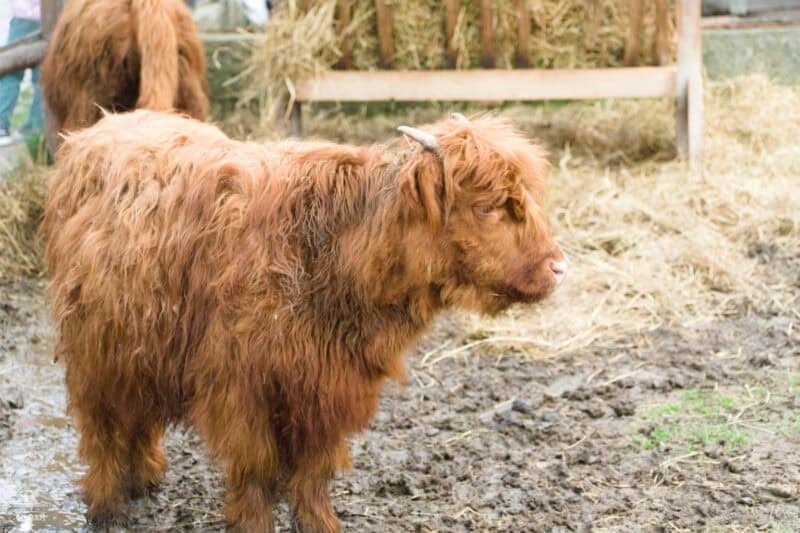
As cute as they are, these cows are remarkably rugged animals just like their larger, full-size cousins. Thanks to that unique double coat that gives them that cute, shaggy appearance, these cows can resist cold, wet weather like no other.
How cold? How about down to -20° F with no worries! These remarkable animals can withstand temps that are closer to the norm for tundra and polar-dwelling animals like reindeer! That’s incredible.
However, because they benefit from that extraordinary insulation in cold weather it comes at the cost of hot weather resistance, as you might expect. These cows will do fine when the temperature is around 70° F to 75° F but if the temperature exceeds 80° F they can be in trouble and we’ll need help staying cool.
Anytime the weather is warm or hot, they must have free access to shade in order to avoid overheating! Some well-placed trees will do the trick, but if not they’ll need a pole barn or some other shelter to get in out of the sun when they want to.
Needed Space Inside and Outside
Being smaller than typical cattle, Mini Highlands don’t need as much room indoors or out, but they still need more than you are probably thinking.
At a minimum, consider an acre per adult head to be the standard, and an acre and a quarter or an acre and a half is better to ensure ample forage for all cows. Obviously, how bountiful your pasture is and the nutritional content of that pasture will also make a difference.
If your pasture is rich, an acre will do fine but if it is meager you’ll need more. Don’t forget to assess it during the summer and winter for edible grasses and other forage, and supplement their diet with hay and other food as needed at those times.
For shelters of any kind, plan on at least 25 square feet per head. More is better, obviously, but you can get away with this little if cows are only going to be put up or seek shelter during the very worst weather. Ideally, they won’t be in there very long.
Are There Any Specific Health Requirements to Worry About?
Only a couple. The long, thick coat of the Mini Highland gives them a degree of protection from certain external parasites like flies, but other creepy crawlies like fleas, ticks, lice, and mites can have a field day. These cows will always be happier and healthier if you take the time to brush them regularly and keep their coats detangled and in good shape.
Likewise, that long, floppy hair on their head can get in the way of their eyes and exacerbate illness or injury that results in discharge or other goop, and potentially blind them if it gets stuck over their eye. Stay on top of it, and don’t hesitate to give them a haircut from time to time to alleviate this issue.
Lastly, all cows are herd animals and need the company of their own kind to really feel secure and thrive. I know, I’m sure they really love you too but that just isn’t enough. That said, Highland cows, including minis here, have remarkably tight social bonds with their own kind. Plan on getting at least two of these cows for that reason.
How Much Do Mini Highland Cows Cost?
I wasn’t exaggerating when I said that Mini Highlands are showing explosive popularity right now, and the market is yet scrambling to catch up.
Accordingly, you will pay for the privilege of owning one of these adorable, sweet-natured, and remarkably practical cows: they will retail anywhere from $1,000 to $5,000, and individuals from excellent lineages produced by venerated breeders can go for over $10,000.
You don’t need me to tell you that this is an expense you must plan and prepare for accordingly, and that doesn’t include the land and everything else they need!
Where Can You Buy Your Own Mini Highland Cows?
It’s getting increasingly easy to track down Mini Highland breeders using online tools. A good resource is the American Highland Cattle Association, as they have directories specifically for mini breeders, too.
Get your gift and learn things like:
- how to make this really quick pest spray
- how to prevent egg waste
- two cheap automation devices that will make your life easier
Tom has lived and worked on farms and homesteads from the Carolinas to Kentucky and beyond. He is passionate about helping people prepare for tough times by embracing lifestyles of self-sufficiency.