
Winter is invariably a challenging season. Intense cold makes everything harder, people and animals are more prone to getting sick, and quality forage is either dead or concealed under snow, meaning you’ve got to provide your livestock with food around the clock.
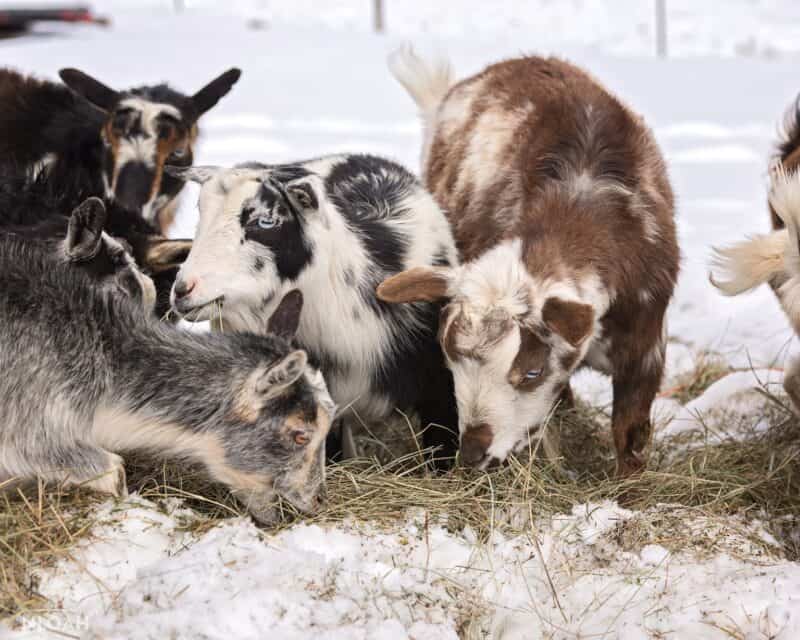
Different livestock species handle winter weather better or worse, and when it comes to goats, they have a reputation for taking it pretty rough. It turns out, this is partially due to poor management decisions and is no fault of the goats themselves!
If you have goats of your own, or are thinking about getting a herd but you’re worried about the winter chill, don’t fret: follow these winter care tips, and your animals will stay happy and healthy through the cold season.
Healthy Goats Can Handle Cold Weather Better
The first lesson you must learn when it comes to caring for goats in the wintertime is that healthy goats are going to handle the cold so much better.
If you have goats that are nutrient deficient, underweight, sick, or injured, it is critical that you do everything possible to get them healthy and well before winter properly sets in.
Goats that have scraggly coats or are missing vital minerals, or are underweight generally, are far more vulnerable to the cold and have a much harder time maintaining their body temperature.
This can turn into a sort of vicious cycle that’s difficult to stop: cold goats get more stressed, and stressed goats don’t put on weight or heal. And so on and so on.
A sick goat or one that is dealing with some other affliction that can’t be corrected in time should have special arrangements made to keep them as comfortable and warm as possible without endangering other goats. We’ll talk more about that later.
Healthy Goats Can Handle Temps Below 0°F!
The good news is that your average goat, assuming it’s healthy and has some time to acclimatize to the cold, can handle temperatures at or even a bit below zero degrees Fahrenheit. It’s true!
I know plenty of people that think goats start getting into the danger zone as the temperatures fall close to freezing, but this isn’t the case unless they are horribly mismanaged or already have compromised health as described above.
And the truth of this speaks for itself: goats are raised all across the coldest reaches of North America and elsewhere in the world, including much of Canada and Alaska. They couldn’t make it in those places if they couldn’t tolerate a little cold!
Winter Feeding Concerns
Keeping goats fed during the wintertime is particularly challenging and requires good judgment on your part. The biggest consideration for folks living in snowy regions is that goats really won’t be able to get at much of their usual food because it will be under snow.
That’s assuming they are even willing to go out there and get it! Many will prefer to stay inside a shelter.
Goats also need extra calories generally in the winter to help them stay warm. If goats are digesting food, and if their rumen is fermenting, they will stay nice and toasty.
A good baseline is to give your goats between 2% and 4% of their body weight in dry matter daily as usual. Hay will be your mainstay here.
Calculate the weight of that food as a portion, and then for every degree below freezing that the temperature drops, increase their daily ration by 1% of the calculated weight.
And when in doubt, give them extra food that they are used to. For goats that seem sluggish or just a little out of it, the cold is probably taking a toll on them. Consider a shot of nutri-drench for safe, high-energy food additives like shredded beet pulp.
Keeping Water from Freezing
Another one of the biggest challenges you will face is keeping your goats’ water drinkable. I’ll tell you right up front: if you can employ a heated trough or drinking water bucket for your goats, do that.
Most of us aren’t fortunate enough to have electricity run out to our goat shelters or barns, and that means using something like heated troughs or buckets won’t be possible. In such a case, you’ll have to improvise…
Depending on the weather conditions, you might be able to add buckets of hot water to the trough or other containers to help keep it from freezing over. It might simply be a matter of breaking up the ice and clearing it so that animals can drink normally.
One thing your goats will really love is a dedicated bucket of hot water in the morning when they get up. Goats really enjoy it in the cold, and it will help to warm them up and shake off the chill. Yes, this is a lot of extra work for you, but caring for animals is a lot of work in the wintertime!
Goats Must Have Shelter to Stay Warm in Cold Weather
I said up above that goats are quite resistant to cold temperatures as long as they are acclimated and healthy. They are, but this also assumes that they are dry and aren’t facing extreme wind.
In the coldest regions, during bad weather or just during chilly nights, goats must have a shelter to go to.
They can use something as intricate as a barn or as simple as a three-sided shelter as long as some basic requirements are met. First, the shelter must block the wind. It won’t do any good if it is facing prevailing winds. This means it must also be mostly free of drafts.
Second, it must be dry. A wet, nasty shelter will chill your goats and they’ll get sick, and likely die, in short order. Obviously, you’ll have to take care of leaks, but you must also be cautious to prevent groundwater and snow melt from infiltrating and then soaking the ground or bedding.
Lastly, they must have enough space. Overcrowding in a winter shelter is a major cause of stress, and that will lead to illness. Aim for about 10 square feet of space per goat.
As long as the shelter is in good shape, their body heat will keep the entire shelter warm, or warm enough, and they’ll snuggle with each other when needed…
Bedding Management is Critical
I mentioned a concern about bedding getting wet in the previous section, and that’s because bedding is so crucial for the health of your herd in the winter.
If you live in an area with reasonably mild winters, like the American South or Southwest, your goats will probably be fine on dirt as long as it’s dry and the shelter is in good shape. Their body heat will do the rest.
However, anywhere else or if you want to provide extra protection against record lows, you’ll need lots and lots of straw.
Straw is a great insulator, cheap and it works wonderfully as a deep litter ground cover. Instead of mucking out the soiled bedding throughout the winter, you can just lay more and more fresh straw bedding over it.
This will keep them dry and also help the lowest layers decompose, which will generate additional heat to help keep them warm.
Just don’t let the layer they’re in contact with get too nasty before you put down fresh, and always put down a new, thick layer if it gets soaked.
Do Goats Need Supplemental Heat in the Wintertime?
No, as a rule. I know the first thing most people think of for their goat shelter when a harsh winter closes in is a heat lamp, but this is usually a recipe for disaster. Heat lamps are, far and away, the number one cause of shelter and barn fires.
Running any kind of cord around goats is always risky, and no matter how securely you mount a heat lamp, they always seem to find a way to pop off, fall, or fail.
If you have a large and sophisticated barn with climate control, by all means, use it to keep your goats perfectly comfortable throughout the whole winter. But you don’t need to worry about that as long as their shelter is cozy and in good repair, as detailed above.
Don’t Use Goat Coats
One quick tip: don’t use goat coats unless it’s an emergency to help a goat that is going hypothermic. They look cute, and lots of homesteaders love them, but they actually do more harm than good because they prevent goats from acclimating to cold weather.
Goats that are exposed to cold will start to grow an insulating undercoat of cashmere. The process takes time, but they must be exposed to the cold for it to happen. But once they do, they’ll be a lot better off. Goat coats actually stifle this process.
If you have a goat that is in real trouble, don’t be afraid to pop a coat on them and move them to a warm location to help them snap out, but don’t keep them in the coat after that.
Keeping Kids Born in the Winter Warm
Keeping newborn winter kids warm is mostly a matter of drying them off as quickly as possible and getting them out of the cold, assuming they weren’t born in a kidding pen or shelter. The doe should start to dry off her newborn or newborns immediately, but you might need to assist. If it’s particularly chilly, this is a time when having a heat lamp handy, and under your direct supervision, can help.
Once the kid is dry, get them feeding right away because the sooner they start digesting food, the sooner they’ll start to warm up significantly. Keep a close watch on the newborn, and make sure they aren’t having any trouble latching or that the mom is rejecting them.
Usually, this is all that is required, but watch their body condition and be prepared to supplement with minerals if needed. Remember, optimum nutrition means goats can withstand cold better and that includes kids!
Should You Breed Your Goats in the Winter?
You can, but do keep in mind the breeding season for various breeds: Toggenburgs, Saanens, and Alpines are seasonal breeders and can breed in early winter for springtime kidding.
Year-round breeders like Boers, Spanish, Pygmies, and Nigerian Dwarfs can breed year-round, and so can breed in the winter. However, if they are stressed in the winter, they might refuse to breed, as most goats prefer milder, kinder weather if they’re going to get in the mood.
Watch for Signs of Illness and Manage Stress
You must constantly be on the lookout for signs of excessive stress and illness in your goats during the cold season. I’ve said several times already that stress will eventually result in sickness, and sickness can devastate your herd if it is transmissible.
Particularly, if you’re dealing with wild winter weather that has substantial temperature variations from day to day, be on high alert! It sounds a little peculiar, but this is extremely hard on your animals. Likewise, goats that get wet or are continually exposed to a stiff wind will start to chill.
Constantly be on watch for the following indicators of cold stress:
- Drainage from Nose or Eyes
- Lack of Appetite
- Shivering
- Sluggishness
- Refusal to Stand or Walk
Goats that are showing any of these symptoms, and especially showing multiple symptoms, should have their temperatures taken and then be moved to a warm shelter, given some nutri-drench, and a coat if needed.
This isn’t overreacting: goats can become vulnerable to pneumonia very quickly if pushed too far in the cold, and once pneumonia takes hold it can kill a previously healthy goat in less than 24 hours. If your goats are cold and in a crowded, inadequate shelter, your entire herd could be wiped out.
If your goats are out in the cold and even if they are standing close together but don’t show any signs above, they should be fine. Just make sure they always have access to their shelter, plenty of food, liquid water, and good, warm bedding! Nothing to it!


Get your gift and learn things like:
- how to make this really quick pest spray
- how to prevent egg waste
- two cheap automation devices that will make your life easier
Tom has lived and worked on farms and homesteads from the Carolinas to Kentucky and beyond. He is passionate about helping people prepare for tough times by embracing lifestyles of self-sufficiency.